
With all the new people transitioning into a low carb diet and the increasing popularity of the standard ketogenic diet, we decided to put together a comprehensive keto FAQ on the questions that are often asked when someone is beginning their ketogenic lifestyle.
This is meant to be a quick reference guide with answers to the most common questions and concerns about going keto. If you have any other questions you’d like to be added, changed, or are unsure about – please feel free to leave a comment below so we can fully explain or make changes to the answers on this page.
Best wishes, and if you’re a new keto dieter reading this, good luck on your keto journey!
Top 30 Most Common Keto FAQs Answered
Click any of the questions below, and it will take you to the answer. If you don’t see your question below, check out our keto diet knowledge base for the answer. Most answers will be straightforward and concise, with a link to a more in-depth article(s) on the topic if you’d like to learn more.
- What Is A Standard Ketogenic Diet?
- What Does It Mean To Be Ketogenic?
- What is Nutritional Ketosis & How Does It Work?
- How Long Does It Take To Get Into Ketosis?
- How Do I Increase My Ketone Levels Naturally?
- How Can I Tell If I Am In Ketosis?
- Where Can I Find Low Carb And Keto-Friendly Recipes?
- How Should I Track My Carb Intake?
- Do I Need To Count Calories?
- Can I Eat Too Much Fat?
- How Much Weight Will I Lose?
- What About Heart Attacks From All This Fat?
- What Are Macros And Should I Count Them?
- Should I Limit Protein Intake On Keto?
- What Foods Can I Eat?
- Do You Have A Sample Menu I Can Look At?
- Is There A Free Keto Diet Plan I Can Try?
- Can I Do Keto If I Don’t Eat Dairy?
- Can I Do Keto If I’m A Vegetarian/Vegan?
- Can I Intermittent Fast With Keto?
- I Just Started And Feel Like Crap. What Should I Do?
- I Have Constipation After Starting Keto, What Do I Do?
- Can I Drink Alcohol On This Diet?
- I Stopped Losing Weight. What Can I Do?
- I Am Gaining Weight. What Should I Do?
- Can Athletes, Weightlifters, and Weekend Warriors Follow Keto?
- Can Keto Help With Elevated Blood Sugar Levels?
- What Supplements Should I Take to Boost Keto Results?
- Should I Take Exogenous Ketones And/Or MCT Oil?
- Can I Use Sweeteners Or Sugar Alcohols On Keto?
- Common Keto Terms and What They Mean
What is a Standard Ketogenic Diet?
The keto diet can be described in many different ways, but the simplest way I’ve found to conceptualize a ketogenic diet is this:
If you restrict carbs to the point that you enter and sustain ketosis, you are on keto.
Typically, this requires us to be on a high-fat, very low-carb, low-to-moderate protein diet.
What Does it Mean to be Keto or Ketogenic?
A diet that is keto (the short-hand term for “ketogenic”) is one that stimulates the production of ketones in the liver via a process called ketogenesis. Limiting carb intake is the healthiest way to promote sustained ketone production.
When carbs are restricted for a long enough time (i.e., 2-7 days), we eventually enter a metabolic state called nutritional ketosis.
What is Nutritional Ketosis? How Does Ketosis Work?
Ketosis is a metabolic state in which your body consistently uses and burns a highly efficient alternative fuel called ketones. The healthiest way to do this is by limiting carb consumption low enough that it forces your body to burn fat and ketones as its primary fuel source instead of sugar.
You can find our in-depth article about Ketones, Ketosis, and How It All Works if you’re interested in the science behind it all.
How Long Does It Take To Get Into Ketosis?
It takes time for your body to adjust and enter into ketosis. This process can take anywhere from 2 – 7 days, depending on your body type, activity levels, what you’re eating, your current health status, and your previous diet.
The fastest way to get into ketosis is to start your morning off with a caffeinated beverage + a ketogenic MCT oil, exercise on an empty stomach, and restrict your carbohydrate intake to 20g or less per day.
To accelerate the rate at which you enter ketosis, there is a method called the Fat Fasting Technique. We’ve written an article on Fat Fasting on a Ketogenic Diet and everything involved with it. Make sure you only use this method for a few days (otherwise, it can lead to nutritional deficiencies).

How Do I Increase My Ketone Levels Naturally?
The best way to increase ketone levels is with a ketogenic diet. Typically, this will require you to limit your daily carbohydrate intake to 35 grams of total carbs and 25 grams of net carbs. (Net carbs are found by subtracting the grams of the fiber from the total grams of carbs.)
As mentioned in the previous question, you can restrict carb intake below 20g to increase ketone levels more quickly.
To boost your ketone levels even further, you can also try:
- Supplementing with MCT Oil.
- Drinking a caffeinated beverage in the morning (caffeine increases ketone production).
- Intermittent fasting.
- Implementing the fat fasting technique.
- Adding exercise to your daily routine (fasted exercise can help boost ketone levels even more).
How Can I Tell If I Am In Ketosis?
Though there are signs of ketosis you can look out for, the most accessible way to find out is using Ketostix. They can be picked up online or at your local pharmacy.
Keep in mind, however, that Ketostix measure the amount of acetone in your urine, which are unused ketones. The primary ketone that is used by your body and brain for energy is called Beta-hydroxybutyrate (BHB) and is not measured by Ketostix.
The most reliable and accurate way to measure your ketone levels is by using a blood ketone meter. This will directly measure how much BHB is in your blood.
For more info on checking ketone levels, check out our in-depth article on measuring ketosis.
Where Can I Find Low Carb and Keto-friendly Recipes?
A quick Google search for a particular keto or low carb recipe will yield you hundreds of results. Nowadays, you will be able to find a keto-friendly version of almost any high-carb favorite. For example, french fries, pizza, lasagna, pasta, cookies, cakes, cereal, and even ice cream can be made keto (click the links to find out how).
Ruled.me has hundreds of recipes you can check out, ranging from breakfast to dinner and even dessert. Check out our Keto Recipes section to get inspired in the kitchen!
How Should I Track My Carb Intake?
The most common way to track carbohydrate intake is by using MyFitnessPal, Cronometer, or the Carb Manager app. We created a comprehensive guide to monitoring carbs using each app which you can find by clicking this link.
Do I Need To Count Calories?
Calories matter, but this doesn’t mean you must count them to lose weight.
With a ketogenic diet, for example, you rarely have to worry about calorie intake because keto foods tend to fill us up and keep us fuller longer than heavily-processed carb-laden foods.
That being said, it is still possible to eat too little or too many calories on keto.
If you’re not getting the results you expect, or if your wellbeing has decreased substantially, then you may need to track calories for a few weeks to get a better idea of how much you should be eating at each meal.

Can I Eat Too Much Fat?
In short, yes, you can eat too much fat.
By eating an excessive amount of dietary fat, you will burn through fat you just ate rather than your stored body fat. This will result in slowed weight loss, weight loss stalls, and in some cases, weight gain.
To help you recalibrate your fat intake needs, use our keto calculator. This simple tool will help estimate your macros and determine how much fats, proteins, and carbs you should be eating each day.
Keep in mind when you fill this out, you can edit the values of your protein and carbs (and should do so, depending on your activity levels). If you have any questions on this, please let us know in the comments.
How Much Weight Will I Lose on Keto?
During the first week of the keto diet, people typically see rapid weight loss — anywhere from 2 to 10 pounds. Though this is unrivaled by any other diet, most of this weight is from shedding body fluid rather than body fat.
Once you’ve made it through the first week of keto and you’re in ketosis, fat will steadily fall off your body (as long as you are in a calorie deficit). The average weight loss at this point is around 1-2 pounds per week — the majority of it coming from fat.
That said, the amount of weight you lose is totally dependent on you, your body, and your keto lifestyle. By adding exercise to your regimen, for example, you can help speed up your fat loss and preserve muscle mass along the way.
If you’d like to learn more about weight loss results on keto, check out our guide to losing weight.
What About High Cholesterol and Heart Attacks From All This Fat?
The current literature indicates that the keto diet typically has the following effects on blood lipids:
- Increases HDL cholesterol levels.
- Increases LDL cholesterol levels, primarily by increasing LDL particle size. This may be optimal because larger LDL particles are less harmful than smaller varieties.
- Decreases triglyceride levels.
Furthermore, keto eating can improve several other risk factors for heart disease, including high blood pressure, type 2 diabetes, and abdominal obesity.
In general, there is plenty of high-quality data supporting that the keto diet can improve blood lipids and reduce the risk of heart disease for most people. This is particularly true if most of your fat intake is coming from minimally-processed sources of polyunsaturated, monounsaturated, and saturated fats.
The only universally bad fats you should avoid are artificial trans fats, partially/fully hydrogenated oils, and refined oils that are high in omega-6 fatty acids.
That being said, there are a few subsets of the population that can experience a worsening of blood lipid levels after following a high fat, low carb diet. This is why it is crucial to monitor your health when making any major dietary change.
For an in-depth breakdown of the research and practical strategies for optimizing your blood lipids and heart health, please read through these articles:
- The Ketogenic Diet and Cholesterol
- What Is the Best Triglyceride Lowering Diet?
- The Ketogenic Diet and Heart Disease
What Are Macros and Should I Count Them?
“Macros” is the abbreviated term for “macronutrients.” The “big 3” macronutrients are fats, proteins, and carbohydrates. Almost all of our energy comes from these macros, which is why they contribute calories to our diet.
Other than monitoring carbs for ketosis, this is another reason why some keto dieters track their macros. You’d be surprised how easy it is to underestimate how much fat and carbs we get from the food we eat.
Counting your keto macros is also helpful if you come to a stall in your weight loss results.
In fact, it is one of the most effective strategies for recalibrating your keto meals and getting back on track toward your weight loss goals.
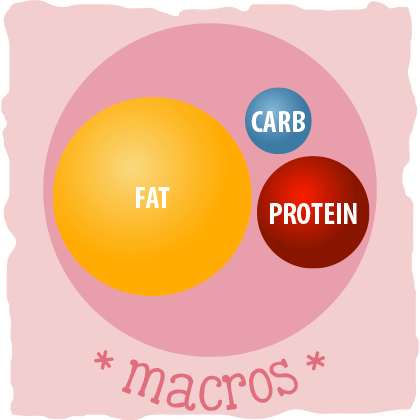
Keep in mind that you have some wiggle room with your macros. In most cases, as long as you’re within 10-15 g of your intake goals for fat and protein, you’ll stay on track!
You can find a more in-depth article on macronutrients and why they are important to us by clicking here.
Should I Limit Protein Intake For Ketosis?
Although overeating protein can indeed decrease your ketone levels, it is difficult to reach this point without trying. In general, as long as you stay within these ranges (and keep your carbs below 35 grams), you should have no problem entering and staying in ketosis:
- If you are sedentary — consume 0.6 – 0.8g of protein per pound of lean body mass.
- If you are regularly active — have 0.8 – 1.0g of protein per pound of lean body mass.
- If you lift weights — eat 1.0 – 1.2g of protein per pound of lean body mass.
For those of you who want more precise protein intake recommendations, the best resource is our keto calculator. From there, feel free to experiment with higher protein intakes while measuring your blood ketone levels if you’d like to find your personal protein limit for ketosis.
What Foods Can I Eat?
This is arguably the most common keto FAQ. The main thing is to stay away from high-carb foods, including sugars, baked goods, flour, pasta, rice, potatoes, grains, and sugar-sweetened drinks.
It might sound so simple when you look at it that way, but you’d be surprised at how common carbs are in our favorite foods. Potato chips, tomato sauce, and even salad dressings can have excessive amounts of carbs in them.
Most of your keto meals will consist of fresh cuts of meat/seafood and non-starchy veggies with additional cheese, fats/oils, and herbs/seasonings.
Click this link to be brought to a comprehensive keto food list to get you started on building a shopping list and meal plan. You can also find our keto food pyramid by clicking here.
Once you develop a better idea of high-carb vs. keto-approved foods, I recommend learning more about clean keto foods and the lazy, dirty keto approach to help you create a balanced keto lifestyle that fits your schedule and food preferences. For more info on clean keto foods and dirty lazy keto convenience options, check out our clean vs. dirty guide.
Do You Have a Sample Menu I Can Look At?
To access all the recipes on a keto menu, check out our recipe catalog.
Or, if you’re looking for keto-friendly options for a specific meal, click the relevant link below:
Keep in mind that the amount of calories, fats, proteins, and carbs change per person. Use our keto calculator and split your macros among your favorite keto recipes to figure out what your personal meal plan may look like.
Is There A Free Keto Diet Plan I Can Try?
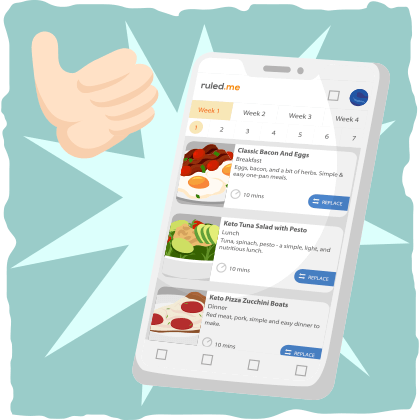
If you’re looking for a way to experiment with keto, we’ve put together a 14 Day Keto Diet Plan with a shopping list and budget breakdown. This will help you get a better idea of what an average keto dieter will eat regularly and how it all plays into calculating your macros.
The key with keto meal plans like this is to make it fit into your own macros. That means adjusting the portion sizes to make the calories higher or lower.
You may need to adjust fat content (taking away cheese or fats/oils, adding cheese or fats/oils), change protein content to meet your needs, and adjust the carb count if necessary.
Can I Do Keto If I Don’t Eat Dairy?
Though cheese, butter, and cream are everyday staples, it is surprisingly easy to go keto without dairy products.
Get your fats from coconut, olive, and avocado products, low-carb nuts and nut butters, fresh cuts of meat, and fatty fish. Cook with extra virgin olive oil and refined coconut oil, and try using coconut cream as a substitute for heavy cream. (There are plenty of plant-based keto-friendly cheeses you can try as well.)
For a complete guide on dairy-free keto, click this link.
Can I Do Keto If I’m A Vegetarian/Vegan?
Going vegetarian or plant-based with a keto diet is possible, but it will require a bit more planning and mindful food selection. Since a standard ketogenic diet typically emphasizes meat, dairy, and seafood as primary fat and protein sources, it is crucial to make sure you are getting enough protein and nutrition without excess carbs.
Here is a link to our vegetarian keto guide for a comprehensive outline of how to make it work for you.
Vegan keto dieting will require another step up in mindful food choices and meal planning to pull off successfully. For a comprehensive guide on how to implement a ketogenic vegan diet, click this link.
Can I Use Intermittent Fasting on Keto?
Yes, intermittent fasting and keto diets work wonderfully together!
Not only will intermittent fasting help boost your ketone levels, but the keto diet will help you fast for longer without feeling hungry and tired.
For a complete guide on how to integrate these two dietary approaches, check out our keto intermittent fasting article.
I Just Started to Feel Like Crap. Is This the Keto Flu & What Should I Do?
Keto beginners often experience flu-like symptoms such as headaches, fatigue, and “brain fogginess” as their body is adapting to carb restriction and ketosis. This is typically the result of rapid water and electrolyte excretion.
You can usually remedy this by staying hydrated and eating plenty of electrolytes (i.e., broth, salty foods like bacon and deli meat, salted nuts, avocado, and keto chocolate). These are good things to consume while you’re transitioning into ketosis to help you feel and function better.
MCT oil and keto electrolyte supplements are some other proven remedies that can help with the keto adaptation process. You can find a comprehensive article on keto flu, its symptoms, and cures by clicking this link.
What Can I Do If I Am Constipated?
It’s fairly common for people starting out on keto to have irregular bowel movements. Below is a list of common advice given to people for constipation or bowel movement problems:
- Drink plenty of water with electrolytes
- Eat more low-carb vegetables, nuts, and seeds
- Try coffee or tea
- Take a magnesium supplement
- Take a psyllium husk fiber supplement
Can I Drink Alcohol On This Diet?
Alcohol can be consumed while on keto, but you must be cautious. Most alcoholic beverages are packed with enough sugar and calories to impair your keto results.
The main takeaway here is to stick with unflavored hard liquor. Wine, beer, and cocktails all have carbohydrates in them. Clear liquor is your best bet, but make sure you are steering clear of flavored liquors, as they have added sugars in them.
For specific alcohol drink recommendations and tips, check out our guide to keto and alcohol.
I Stopped Losing Weight. What Can I Do?
Weight loss plateaus are more common than you might think. There are several methods that may help you out – ranging from cutting certain foods out of your diet to changing your eating patterns through intermittent fasting or fat fasting.
Here’s a list of common suggestions that are normally advised to people that aren’t losing weight:
- Recalculate and track your macros for a few weeks to recalibrate your diet
- Cut out some dairy
- Reduce how much fat/oil you add to meals
- Decrease your carb intake
- Stop eating nuts
- Stop eating gluten
- Cut out artificial sweeteners
- Look for hidden carbs
- Begin cutting processed food from the diet
- Switch to measuring instead of weighing
- Start your morning with coffee and ketogenic MCTs followed by exercise
To learn more, read through our in-depth article on weight loss plateaus and how to break through them.
I Am Gaining Weight On Keto. What Should I Do?
If you’re experiencing unexpected weight gain, these tend to be the most common triggers:
- Adding too much fat/oil to meals
- Not eating enough micronutrient-rich foods
- Snacking on high-fat snacks without being mindful of portion sizes
- Overeating on cheat day(s)
- Drinking too much alcohol
- Neglecting the importance of stress relief and sleep quality
- Being less physically active than usual
- Eating too many carbs
Start with the easiest option for your lifestyle and build off of that momentum.
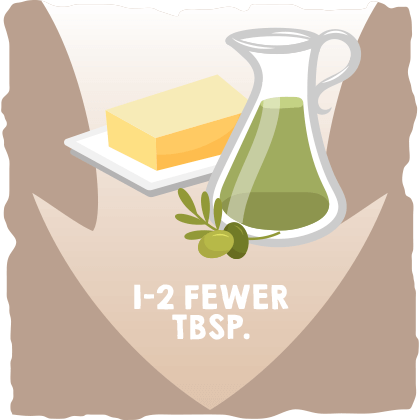
For example, sometimes all it takes is using 1-2 fewer tablespoons of butter or oil in your meals to encourage fat loss again.
To learn about the causes of and solutions for unexpected increases in weight (as well as hunger) on keto, click this link.
Can Athletes, Weightlifters, And Runners Follow Keto?
If you’re someone who does a lot of cardio – endurance running, biking, marathons, or the like — then you don’t need to worry. Studies show that aerobic training (endurance training) isn’t affected by low carbohydrate diets. (Here’s a more in-depth article on training on a ketogenic diet.)
However, if you’re training at high-intensities, such as heavy weightlifting, sprinting, and high-intensity interval training, carbohydrates will help your performance and workout recovery. That means faster gains and better strength and power performance in your training sessions. If you’d like to incorporate carbs into your diet for high-intensity performance, there are two main approaches: TKD and CKD.
- TKD is a targeted ketogenic diet, where you strategically target carb intake before your workout. This will supply your muscles with the quick-burning glucose they need to support high-intensity activity. Once it is used up after you finish your workout, your body will ramp up ketone production again. You can read more on the targeted ketogenic diet by clicking this link.
- CKD is a cyclical ketogenic diet. This is more for bodybuilding and competitors that want to stay on a ketogenic diet while still building muscle with high-intensity workouts. It is also used to shed or increase water weight as needed for weigh-ins and aesthetics. In this method, you stay on a regular ketogenic diet for a period of time (usually 5 days) and then do what is known as a carb-up (usually two days or the weekend). In a CKD, you are essentially replenishing all of your glycogen stores for your high-intensity training sessions during the week. You can read more on a cyclical ketogenic diet in the article I wrote.
For everything you need to know about exercising on the ketogenic diet in one place, check out our comprehensive guide on the subject.
What Will Keto Do To My Blood Sugar Levels?
Limiting carbohydrate intake typically results in a subsequent decrease in blood glucose levels. This is why diets that limit total carbs are often recommended for managing type 2 diabetes and can be used as a strategy to reduce insulin requirements in type 1 diabetes.
In fact, some research suggests that the keto diet effectively manages and, in some cases, reverses type 2 diabetes.
What Supplements Should I Take?
Sometimes we can get cramps or just not feel “right” after starting a ketogenic diet. Some supplements that are commonly suggested for keto dieters include:
- Multivitamin for Women
- Multivitamin for Men
- Magnesium Supplement
- Vitamin B Complex
- Vitamin D Supplement
- Potassium Supplement
Always check with your doctor before introducing vitamins into your diet.
For an in-depth look at the best supplements for your keto lifestyle, check out our keto supplements guide.
Should I Take Exogenous Ketones And/Or MCT Oil?
You’ll come across many keto diet supplements that claim to boost ketosis and fat loss, such as keto pills, exogenous ketone salt powders, and MCT oil.
Exogenous ketones and keto pills will boost ketosis, but they will also impair your natural ability to produce ketones in the process. This is why we recommend supplementing your diet with ketogenic medium chain triglycerides (MCTs) if you want to boost nutritional ketosis and energy levels.
Ketogenic MCTs are a type of saturated fat that can be directly absorbed into the liver and converted to ketones. To put it more succinctly: Ingesting ketogenic MCTs will help enhance ketone production and support your body’s ability to enter and maintain nutritional ketosis, while keto pills and exogenous ketones will not.
For a closer look at ketones and ketone-boosting supplements, check out our comprehensive article on ketones.
Can I Eat Sugar-Free Sweeteners And Sugar Alcohols On Keto?
Yes, but not all “sugar-free” sweeteners and sugar alcohols will have the same impact on our bodies. There are a bunch of low-calorie sweeteners and sugar alcohols on the market now that will contribute more net carbs to our diet than they claim on the label.
For this reason, we recommend sticking with pure erythritol, monk fruit extract, and stevia (or a blend of these natural keto sweeteners) because they typically don’t cause blood sugar or insulin spikes. When used in combination, they seem to cancel out the aftertaste that each has and sweeten just perfectly.
For a comprehensive look at all of the best and worst sweeteners for keto, click here. In this article, we break down every popular sweetener along with its carb content and glycemic index to give you a better idea of what you should use and what you should avoid.
Common Keto Diet Terms and What They Mean
- AS: This means Artificial Sweetener, which is a category of sweetener that doesn’t exist naturally and is used to sweeten our foods with a reduced or zero carb count.
- BHB: Beta-hydroxybutyrate. The primary ketone that our body uses for energy. The main ingredient of exogenous ketones (which are not needed).
- BPC: This is known as Bulletproof coffee. We adapted the recipe to make it more ketogenic with our Ketoproof Coffee recipe. Essentially, you’ll be blending grass-fed butter, MCT oil, and coffee with an emulsion blender to help up your fat content, boost ketone levels, and give you a “full” feeling through the morning.
- CICO: Calories in, calories out. The basic idea is that energy stored = energy in – energy out.
- CKD: Cyclical ketogenic diet. Alternating between a standard keto diet and a higher carb diet to help aid high-intensity exercise performance.
- Fat Bomb: These are generally packed full of oils and fats to up our fat content for the day. Some people have trouble keeping up with their fat content, so they make a fat bomb to help them out. Here is a delicious fat bomb recipe for you to try. You can find more recipes and DIY options in our keto fat bomb guide.
- Gluconeogenesis: the biochemical process of breaking down amino acids into glucose. Click here if you’d like to learn more about this process.
- Glycolysis: the biochemical process of breaking down glucose into energy.
- HWC: This stands for Heavy Whipping Cream. Just ordinary cream that, for a lot of us, is a daily staple in our coffee and keto diet.
- IBS: Irritable bowel syndrome. Depending on the person, keto can either improve IBS symptoms or aggravate them.
- IF: The abbreviation for intermittent fasting. This is a diet approach that can be used to increase fat loss and ketosis. There are many IF approaches; the most common is being a 16-hour fasting window followed by an 8-hour feeding window. Learn more by checking out our complete guide to IF on keto.
- IR: This relates to insulin resistance. This is when the body’s cells cannot properly respond to the insulin hormone.
- Keto: Ketogenic. A shorthand term that many people use.
- Ketoacidosis: a metabolic state where an unusually high concentration of ketone bodies leads to acidic blood levels (which can be lethal). This typically only happens in diabetics.
- LCHF: Low Carb High Fat. This is the most sustainable approach for nutritional ketosis.
- MCT: Medium Chain Triglyceride. These can help boost your metabolism and are quite unique. When they are metabolized, they can be turned into ketones straight away. The best MCTs for boosting ketone production are caprylic acid (C8) and capric acid (C10).
- Micro: Micronutrients. The vitamins and minerals that are in our foods.
- Net Carb: The carbs in food that can negatively impact ketosis. To find the net carb content of any food item, you will subtract the number of grams of “Dietary Fiber” from the number of grams of “Total Carbohydrate.”
- NSV: Non-scale victory.
- RDV: Recommended daily value.
- SAD: Standard American Diet. The typical diet of most Americans.
- SF: This means Sugar-Free. There are a range of sugar free foods that a lot of people consume, normally containing artificial sweeteners.
- TKD: Targeted ketogenic diet. Intaking carbs prior to a workout. Usually used with moderate-high intensity workouts when a standard ketogenic diet is not giving enough energy to get through them.
- WOE: Way of Eating. This is just a term used to reference someone’s diet.
Terms Related Fat and Fat Intake
Triglycerides: 3 fatty acids attached to a glycerol backbone.
Fatty acids: the fats that we digest from the foods we eat. The three main fats we get from foods are:
- MUFA – Monounsaturated fatty acid.
- SFA — Saturated fatty acid.
- PUFA – Polyunsaturated fatty acid. The two types of polyunsaturated fats are omega-3 and omega-6 fatty acids.
Omega-3 – Omega 3 Fatty Acid. There are three types:
- EPA – Eicosapentaenoic acid.
- DHA – Docosahexaenoic acid.
- ALA – Alpha-linolenic acid. Only available in nuts and seeds.
Omega-6 – Omega 6 Fatty Acid. Here are the most common types:
- GLA – Gamma-linolenic acid.
- CLA – Conjugated linoleic acid.
- LA – Linoleic acid.
- ARA – Arachidonic acid.
If we didn’t answer one of your keto questions, search our keto diet knowledge base for the answer or leave a comment below.
Excellent comment and facts.
I started Keto diet 1 week ago. Lost 3.2lbs that first week. Not particularly craving carbs, but its wed aready and my scale hasn’t moved. Also, i received my keto monitoring and it read 0.2 (way too low)
Any comments, suggestions are welcomed.
Questions made the Vanilla Latte Cookies and day two they are turning dark from inside out. Is that normal?
How are you storing them? I’ve noticed if I store them outside of the fridge they will start to re-distribute some of the fats in the cookies and create a darker look, though I would get weary to make sure that they’re not spoiled (smell/mold usually grows when they are on almond flour).
I’m getting ready to start my first keto diet ever and just had some clarifying questions. First, when picking foods, what exactly needs to be avoided/watched? I know that carbs, fat and protein (obviously) need to be taken into account and avoiding sugar but what about other ingredients? Preservatives? I have done Whole30 a few times and of course on there you avoid most things outside of natural/organic (and excluded items). Is keto the same or more lax on that end? And secondly, what key vitamins (and amounts) are suggested? A multi-vitamin is recommended along with a few key supplements but is there any specific ones to look for when picking a multi-vitamin or additional suggested additions?
Thank you all in advance. I am so looking forward to starting the keot diet soon 🙂
Hey Mimi. I would say keto is however you want it to be. You can be a bit more lax with the preservatives/organic ingredients, but if you prefer them then by all means choose them. Multi vitamin and fish oil are always a good addition, though depending on your electrolytes you may need to add a potassium/magnesium supplement.
Hope that helps and I hope you have an awesome journey!
I am in the starting phase of the Keto Diet and have limited myself to 15g of net carbs a day. If I go over a couple of grams, can I workout to “lose” some of those carbs? I want to make sure I get into ketosis as quickly as possible, but am afraid going over the 15g will hinder that.
You shouldn’t need to worry if you go over slightly, but yes – usually HIIT or lifting will be best for “burning” carbs (this isn’t really a thing, but it’s a very simple breakdown). I’d just recommend staying under 30g total carbs and you’ll be fine.
I’ve been diagnosed with type 2 diabetes 3 years ago and never been a fan of doctors or medicines, I’ve started yesterday, I’m extremely happy and motivated, I’ve heard a lot of successful stories and I can’t wait to write mine! 🙂 Happy healthy lifestyle everybody!
I wish you the best in your journey. There’s tons of Type 2 diabetics that have been phenomenal results – I hope you do as well!
Thanks for all of the tips and recipes! I’m enjoying the change! One question… I’m still getting dizzy upon standing and don’t have as much endurance. How long does this typically last? (I’ve only been on the diet for 1 1/2 wk.)
Hey Julie – it sounds like an imbalance of electrolytes. You shouldn’t feel dizzy. A pretty easy way to get past this is to drink a powderade zero in the morning. If the dizziness continues, it could be that you need extra magnesium. You can also use Lo Salt, which is added sodium and potassium.
Thanks. I think you’re right. I always got dizzy when I went low-carb for fitness competitions, but it’s probably always been a hydration/electrolyte situation. It’s already much better, as I started eating your egg drop soup daily.
For the Keto diet is it more important to track net carbs or totals carbs?
Net carbs are definitely the most important, but keeping track of both is always a good idea.
I’ve heard that staying in Ketosis for more than a few weeks at a time is horrible for your Kidneys. Is this true?
As long as you’re eating properly and keeping hydrated, kidneys do just fine 🙂 I’ve been doing keto for nearly 8 years now and all my bloodwork comes back perfect.
I just used the keto calculator and it shows I should be eating nearly 4,000 calories a day and nearly 400 fat grams. How can anyone eat that much fat in a day?
What kind of information are you inputting into the calculator?
What is a health promotion campaign the ketogenic diet follows? e.g. 5 + a day, or eatmovelive..
I’m not really sure what you mean by that question, Emily.
The recipes have cheese, cream and butter in them but I’m lactose intolerant. If I ate those things, the food would go right through me. What do you suggest?
Some of the dairy on keto are very low lactose content (hence 0g carbs); you can get away with ghee if you’re sensitive and for the dairy, very aged cheddar is also low in lactose. Though if you want to avoid it completely, you may have to edit some recipes to fulfill your needs and your macros needs.
Hi Craig. Do I need to make sure my fat count, protein count and carb count hit the levels as indicated by the calculator or is it ok to be below them? For example today I ate breakfats lunch and dinner,but I was below all thresholds. Is that ok or do i need to purposefully stay as close as possible to the levels as recommended by the calculator (obviously I understand you can’t go over them, my concern is if you are under them). Thanks!
You want to be under or on point for carbs and on point for protein. The fat you can be a little lower, but you generally want to be somewhere in the ballpark.
I have just downloaded the accelerated weight loss program, and I can’t help but notice the low protein allocation for each of the meals as I browsed through the program. The daily proteins are only at an average of 60g per day. What should I do if I need 120g per day?
My mother-in law has been following keto 2 months and has lost 15 lbs I checked her blood ketones tonight for the first time and it was 5.3!! Should we be worried??
Diet works but body types respond differently.
Is there any chance of developing a “fatty liver”?
There definitely is but keeping green intake moderate and drinking plenty of water should be enough to combat it. Many people on keto actually see vast improvement with fatty liver disease.
I have been doing keto for four months and have lost 35 lbs. I follow my macros, calories and intake very closely. All of the sudden I have hit a plateau I can not get past. I tried the 3-day fat fast and lost a half pound! What am I doing wrong all of the sudden?
It may just be the fat intake is not enough usually. Do you track consistently? I know when I was ~4-5 months into keto I got relatively lazy with my tracking (only to go back). I was consuming way too much protein.
I recalculated my macros. I was at median protein and I lowered it to low. So I now have: 1500cal/20g carb/64g pro/127g fat. Does that look appropriate for mostly sedentary activity?
Yes, it does 🙂
It’s always best to have a proper portion of fat/protein in each meal, but if you’re in a rush (or aren’t going to do this consistently), it would be fine.
HELP!I have been on Keto for 3 mo now. I find it to be very satisfying and my sweet tooth is almost completely gone.My energy level is SO MUCH Better too.. I have decided to do Keto for health reasons but certainly need to lose some weight. I started at 170 lbs and am now at 160 which I feel is pretty good for being pretty inactive. I am 53 yrs old 5″6″ 31.8% body fat (at start), very inactive due to arthritis but I do try to ride my bike 1 mile 3x-4x/week. I have had both hips replaced and I am facing spinal surgery in the future(hopefully distant) for stenosis L4-S1 aka I HAVE PAIN. mostly with and after activity. I have some atrophy and have extreme muscle/joint pain 1-2 days after exercise requiring 1-2 days recovery. With all this said, I have not only hit a wall with weight loss but I had bloodwork done last week and my cholesterol has gone UP! Prev chol 211. current 241 Trig prev. 56 current 75 HDL prev 67 current 68, LDL prev 133 current 158. This is terrible and I dont know what to do! I feel I can increase my exercising to daily bike rides and figured my marcos (which I had not prev done) at: 1386 Calories 112 gr fat
75 gr Protein and sticking with 20 gr Carbs. After 2 weeks I have not loss any weight. I am doing a pretty good job at staying within these ranges. Sometimes my calories are low and protein low Carbs a little high somedays but never above 30gr
fat is between 115- 130gr so I will lower this. Do you feel this plan is good or should I adjust it even more.
Thank you for any help you have to offer.
Feeling defeated…
Martha
Hey Martha – sorry for the late reply. For the cholesterol, it’s pretty normal to see increases when starting keto and also undergoing some weight loss. I would suggest strictly tracking your numbers and seeing how you do – dialing in each day. It’s not a huge issue to go below on fat, but try to keep carbs lower than goal and protein around the goal.
I hope you’re still sticking with it and things are starting to improve 🙂
With your hips and spine would it not be easier to walk daily rather than bike? I have had three cervical spine surgeries and am on disability due to it, plus I’m almost positive I have multiple autoimmune disorders. I’m on a lot of meds mostly to manage pain. I started doing paleo which helped my pain greatly, due to eating lots of turmeric and cutting out the sugar and carbs, allows the inflammation to decrease greatly. Which image you have a problem with also. I’m seriously thinking of doing the keto diet due to brain fog, forgetting everything, and no energy. Also have you tried copper infused sleeves? My hips knees and ankles are horrible, yet I do my elliptical daily. I wear copper infused shorts, knee sleeves, and ankle supports, and wrists ones when I do yoga, which I haven’t been doing the past for months. I think that may help you with your pain a lot, specially for after any kind of exercise. Until I found them I was having a very hard time on the elliptical. Even for a short period of time. So I can totally understand how you feel. I hope this helps at least a little.
If the Ketone diet has so many benefits and is so good for you, why does it state not to stay on it for more than 90 days?
I’m not sure where you read about this. It’s complete safe and I’ve been on keto for over 7 years.
I watched twol videos on utube. One by Dr Axe and another by Dr. Berg, they all say you should not stay on this for more than 3 months, max. Links below
https://www.youtube.com/wat…
https://www.youtube.com/wat…
I read the descriptions of both videos and didn’t see any reasoning behind the 3 month “rule”. I can definitely say that you can be on keto for long periods of time, though. The diet was originally created for epilepsy treatment and there’s many cases where people are on keto for their entire lives with no medical complications. It’s an extremely healthy way to eat.
If your Keytone strip shows a med to high Keytone value what do you do, eat more carbs, eat less fat?
Stay the same. The ketone sticks really only tell you if you’re in ketosis. The “darkness” isn’t really anything (can change on so many factors, including hydration levels).
I just downloaded this and can’t wait to start. I want to incorporate this in my family as well. I have a husband, and 5 kids… how do I go about making enough food for the family with these recipes? And if anyone has any
tips that have helped them, please share!
Just double, triple, or quadruple the recipe and cook as intended. You can store and freeze leftovers, too. One thing to keep in mind is that high fat diets for people that are eating high carbs is unhealthy. It’s all or nothing with keto.
Is there a mobile app for the documents and tracking of food we eat per day? If not what is recommended?
MyFitnessPal and Fatsecret are the most common 2.
That is great Shelly!
First off, I love your website. It is very helpful. One thing I am confused about is which supplements to take. I do not want to go over board by taking too many but I most definitely want to avoid the “keto flu” if I can. I assume I will need the magnesium but what else? What about the GARDEN OF LIFE VITAMIN CODE RAW MULTIVITAMIN, vitamin D or the fish oil (i do not want to burp that nasty fish taste/smell lol). I am a female and I weight I believe 140ish and I am 38 if you needed that information. I currently do not take any type of vitamins except probiotics for females. Any help you can provide is appreciated. Oh and I a currently on day 3. Thank you!!!!
Sorry for the late reply! I recommend for simplicity just a multivitamin and fish oil. If you don’t get much sunlight, add in vitamin D. You can usually grab Powerade Zero or things like that if you’re finding you have a bit of a headache (usually a sign of needing electrolytes – magnesium, potassium, sodium).
The article states that for the first few days, most of the weight loss is water. So, my questions: When do you actually start losing fat after starting the new regime? How many days it takes to actually start losing fat? Thanks.
I mean your body will start to use fat almost immediately. Weight takes time to come off though. It takes months to lose weight. I just make sure that the water weight fact is known, as some people see 6 lbs. coming off in a day and expect that to continue on to their goal weight. That’s just an unhealthy way to look at things.
Great. Thanks! I started the ketosis approach 5 days ago and already feel the sudden change, although now it is slowing down, which is ok with me. I have 2 more questions for you: Question 1.- Is it allowed to combine 2 proteins in one meal? Example: eggs and bacon, or, burger beef and cheese, or , burger beef and bacon? Question 2.- I am getting huge cravings for chicken wings, but I am not good at preparing them? So, may I have naked/no breaded chicken wings from a restaurant? Or that is not allowed? Thanks again!
Hi EliB! How is it going? It’s fine to have more than one protein in a meal. We have lots of recipes that do this, including deviled eggs with bacon. 🙂
Some restaurants do have keto friendly chicken wings without breading. A lot of the times they are naked, or garlic and Parmesan. Just make sure that you check the nutritional information that is on the restaurants website before you eat them.
Where do i find the recipes for the 30 day meal plan?
Hi Donnis! They are included in the meal plan at the back of the book. The pages in the meal plan are clickable, so when you have the daily pages for the plan open you can just click over to the recipe.
My husband does not like ranch or creamy salad dressing. Is there a suitable substitute?
How about some olive oil, vinegar, and some herbs?
What happens on a cheat day? I had about 57 grams of carbs, 121 grams of protein, 19 grams of fiber and 136 grams of fat. Will I get kicked out of ketosis?
What can I do to get back in? Will I avoid all that by just working out and burning the carbs?
It depends on your activity levels as well. Just go back to being strict 🙂
Hey everyone, just want to recommend Cronometer for tracking – they list net carbs! And it’s free.
Thanks for the tip!
Do I count all carbs to stay in ketosis or just the net carbs?
We do net carbs…some people like to do total carbs, but net carbs is a lot easier to stick to and works for most people.
Forgive me… what is the difference between net carbs and total? I thought net = total?
Hi James. Total carbs includes fiber, sugar-alcohols, etc. Net carbs subtract those things from the total carbs because it’s largely indigestible. In some parts of the world I understand that the carbs listed are the net carbs, but where we are at we have to subtract things like fiber manually.
Question – how would this work for my household? I am very obese and very sick, which has made me extremely sedentary – my husband is fairly fit and extremely active.. I’m wanting to purchase but don’t want to waste money if it wouldn’t work for our household or trying to cook multiple meals. Thanks!
Hi Ashley! Check out the success stories section of our website, there are a lot of people who started out obese but were able to turn their health around on a ketogenic diet. My husband doesn’t need to lose any weight but he enjoys when I cook a lot of keto foods too. I think the 30 day plan is more suited for an individual, but you can make larger batches of the recipes if you want everyone else in the house to eat the same foods. I think you might enjoy staring out with slow cooker recipes because it makes things so easy.
Step one is TALK TO YOUR HUSBAND. You will need him to buy in to your plans in order for him to support you. Yes, this will mean he needs to change some things he is doing…but no, it does not mean he’ll be in diet jail. Discuss plans, menus, schedules, etc. Look at recipes that you will both like. Make it clear that at home you will be doing this, but when he is away from home he can do what he wants.
Step two is to google once-a-month or once-a-week cooking. This is where you dedicate one day a month (if you have a deep freeze) or one day a week (with only a fridge-top freezer) to cook for the rest of the time period. Either you cook something fully and freeze it, or prepare it, freeze it, take it out of the freezer the night before, and put it in the crock pot in the morning. This minimizes the time both of you will spend cooking and cleaning, means you have a hot meal waiting when you come home, and lets you and your husband pick recipes that you both like and suit your needs. This also gives you a safety valve against potential bad decisions: avoiding the “what are we going to eat for dinner” when you’re both hungry.
If an autoimmune disease is what is making you so ill, google the Autoimmune Protocol and the Wahls Paleo Diet. Both of these are elimination diets that take out foods that commonly cause inflammation issues, and variations of them have been demonstrated to be useful lifestyle mods for managing autoimmunity. After 2-3 months on the full protocol, you start re-introducing things and see what exactly is setting you off. IMPORTANT: if you’re under a doctor’s supervision, talk to them before making big dietary changes. While both are healthy and neither is likely to make you sicker, if you are on medications to manage your illness (biologics, immunosuppressants, thyroid hormone, etc) it may change your need for those meds.
I have done the Autoimmune Protocol for 3 years, have done keto on and off during that time, and do a weekly cook-and-freeze session.
I’ve done the once a month cooking before and I highly recommend it as well!
Hoping someone can help me. I think I am doing everything right, but I am just not getting the results I would expect. I am 44, 5’8″, 173lbs, and have eaten paleo very clean for over a year. I can’t seem to lose any weight, so decided to try ketogenic, and was in ketosis within 24 hours as I never ate grains or processed foods anyway. Basically, I just had to increase my good fats and cut back on vegetables and cut out sweet potatoes. I have been in ketosis for 16 days not, my daily macros stay right around within a couple percents of my calculated macros of 5% carbs (i’m usually around 3 well under 20), 30% protein (I lift 3 times per week and walk at least 3 miles 5x’s per week), and 65% fats. I keep my calories between 1300 and 1600 (typically ending the day around 1450. I drink over 100oz of water a day.
I feel great. I would say I look and feel better. But in 2.5 weeks of being on this diet and knowing I am in ketosis, macros are spot on, and counting calories, I have only lost 1.5 pounds. I read so much success all over from everyone. Is anyone else experience such slow loss doing everything right?
Thanks for any encouragement and tips anyone can offer. I don’t eat much dairy or nuts, I’ve read everything to understand why I just can’t seem to lose and am beginning to feel it’s just hormones and age and it’s so discouraging.
Hi, i have a question.
I started eating keto 3 weeks ago and its going great! I have been on a weightloss journey for 8 weeks now and lost 20 pounds.
I’m struggling with my workout schedule.
I alternate between moderate cardio (30-40min) and hiit (15-20min) mo-fri. On the days when i don’t do hiit i do weight trainig for 30 min.
My question is, is this enough to lose fat and maintain muscle? Or is this to much while on a keto diet.
I hope somebody can help me!
Hello! Quick question, when doing week 3 and doing the ketoproof coffee when it states to double the butter, cream, and coconut oil, does that mean i have to add another cup of coffee too? Or just double the oils in one cup of coffe? 2 cups of coffee make me nauseated
It appears to me to mean two cups of coffee, but if you can get the second serving of fats blended into one cup of coffee I don’t see why you can’t try and get it into one. 🙂 (You can also do it with tea too.)
I see a lot of the recipes include dairy, I am completely dairy free. Is it ok to substitute my dairy free options for all of the current dairy requirements or should I be supplementing with something else?
For recipes that call for milk/cream I’ve had success using almond milk or coconut cream. Cheese is harder because most dairy-free options are quite high in carbs.
I was wonder how long is it safe to stay in ketosis….is there a time limit? Could there be health issues after a lone period of time? I was hoping to stay in this WOE forever. Any thoughts?
Hey Myrna! Thanks for the questions.
As long as you are drinking plenty of water and eating plenty of meat, seafood, and low-carb vegetables AND you feel better with this WOE, you should do just fine maintaining ketosis for the long term. Studies that put people on the ketogenic diet for up to a year seem to suggest the same thing.
However, it is important to know that some changes do occur in the body while you are on keto that can cause issues for some people. I go deeper into this topic in this article: https://www.ruled.me/side-effects-low-carb-diet/
Overall, if you are feeling better with this WOE, then I suggest sticking to it.
i would really like my daughter to try the keto diet, because of the many health benefits. She has said she would like to but feels she can’t because her gallbladder has been removed, and she has read that your body can’t process fat without a gallbladder.
is there a safe way she can be on the keto diet without her gallbladder?
Any information regarding a keto diet, when you no longer have a gallbladder, would be greatly appreciated.
Hi Judy, I have seen a lot of people without a gallbladder do this diet successfully. I have a friend without a gallbladder who recently started keto and has lost 30 lbs already. You might want to talk to your doctor about it. You can also talk to other people without a gallbladder in our Facebook group (ketogenic living.) There are quite a few people in there who are in the same boat and they might have some advice or tips for your daughter.
Thank you, Laura. Your post is very encouraging. I will check out your Facebook group.
I haven’t started this diet yet but am trying to learn as much as possible before I do. There is so much information out there and much of it seems to be conflicting. In your list of food, you list full fat dairy and nuts. However when I google ” foods for a Keto diet, Lists pop up that say to cut out all dairy and nuts. Help! A little background about me, Ive been seeing a nutritionist trying to set myself to rights. I am about 80 pounds overweight with high cholesterol, and borderline diabetes. I’ve lost 35 pounds on a well balanced diet and exercise. I’ve hit a plateau that I just can’t get beyond it seems. It also appear that I may be gluten intolerant, given some of my symptoms. We both decided that Keto diet might be the way to go and a big part of my problem may be gluten. I really just need a clear cut explanation about dairy and nuts, especially nuts as these are my go to snack.
Eating dairy or nuts is entirely up to you. Cutting out both entirely would make the diet too restrictive for most people. Most people on a keto diet do eat nuts and dairy, but some don’t. You’ll run into people who do keto very restrictively with whole foods only, and people who are extremely lax and have no problems with diet sodas or things of that nature.
The important thing is to eat according to your macros so that you remain in ketosis. You don’t want to eat so many nuts that you get kicked out, or so much cheese that you can’t lose weight because you’re consuming so many calories. (Lower fat dairy can be high in carbs too, so go for full fat.)
And of course since you may be gluten intolerant, you might want to avoid keto recipes that have some gluten in it. (Some recipes may have small amounts of soy sauce for instance.)
I think you might like our 30 day meal plan. You can just go get the ingredients for the first week and get started pretty quickly. That way everything is kinda of plotted out for you while you get used to this style of eating.
https://www.ruled.me/30-day…
I’m new to the group. Please I have a quick question . In place of bullet proof coffee can I just take my coffee lack? Nothing g added? I prefer it that way really. And bow many ups of coffee can I take I a day? Thank you
Of course! Some people like to have fat with their coffee as a meal replacement, but it’s certainly not required.
I just got Keto Academy and will be following Acceletated weight Loss however I dont eat pork and quite a few of the recipes call for pork or bacon. How do I substitute for these items and maintain Macro.
Hi Pearl, you can most easily substitute with a similar beef product. There is beef bacon out there, but it can be really hard to find. The macros will probably be different though.
I would disagree with you about cardio and the low carb diet. I have successfully done low card many times and I also do cardio exercise on a regular basis (5 times a week). I exercise on a machine and set the resistance to maintain my heart level around 120-125 on a consistent basis. When I am on low carb I have noticed that my heart rate increases while exercising. This happens every time I do low carb so it has to be real, at least for me. It is not a problem 99% of the time but always happens. If you are planning a hike or 10K I would recommend upping your carbs temporarily.
Hey Frank,
Yes, with the cardio that you are doing, you are most likely burning mostly fat and very little carbs. Once you increase the intensity (I.e., competitive running or hiking up a steep incline), then you will start burning more carbs and will benefit from a targeted keto diet (TKD) or cyclical keto diet (CKD).
I agree. I am probably burning mainly fat because I don’t have many carbs in my diet at those times. It is not a problem just something I have noticed that applies to me. Thanks for your input!
Question! I am working out on this diet – one cardio workout a day and a strength workout 5 days a week as well, with one day of rest. When I input my exercise results into MyFitnessPal, it changes all of the goals for the food I should consume versus the targets I have already previously set. My question is – the caloric intake and types of calories that we set using your Macro calculator… are those regardless of caloric output or exercise? Or if, say, I do a bootcamp burning 500 calories (mix of running and weights) plus 250 calories burned while swimming… does that mean I need to increase my calorie intake target from the 1400 or so according to my macros to 2150? Or do I want to keep at about 1400?
Depending on what activity level you marked on the keto calculator, your calorie values will change.
There are two ways you can go about adjusting your macros according to how many calories you burned:
1. Stick to what our keto calculator says (mark yourself as moderately active) and plug that information into your macronutrient goals on MyFitnessPal and don’t log your workouts on the app.
2. Mark yourself as sedentary in the keto calculator, plug the info from the keto calculator into MyFitnessPal, and log your workouts. In this case, the app will tell you to eat some extra calories on your workout days to make up for the extra calories burned so that you can meet your macronutrient goals.
Both options will require some trial and error because your calorie burning and daily calorie needs are estimates. You may need to increase or decrease your calories depending on the results you get after you check your results every couple of weeks.
If you need any help setting up MyFitnessPal, so it has the right macronutrient goals, you can find out how in this article: https://www.ruled.me/carb-tracking-for-keto-diet/
and here’s a link to the keto calculator for your convenience: https://www.ruled.me/keto-calculator/
For morning coffee do we add butter, coconut oil and whipped cream? can we have 2 or more cups? I like to enjoy coffee mid day. Wine recommendations?
You can create a coffee like that if you’d like, just be sure to track the macros because a lot of times this kind of coffee ends up equating a meal.
Craig wrote an article about alcohol on keto with his wine recommendations. You can find that here:
https://www.ruled.me/ketogenic-diet-and-alcohol/#redwine
Hi! I am 1.64 cm and 115 kg. I would like to start the keto diet, but I would like to know if there are any restrictions or problems if I have a subtotal longitudinal gastrectomy. I have biliary reflux problems and gastric reflux and malabsorption of vitamin B12 and D3. What are the risks and if I can follow the keto diet to lose weight?
Tks in advance for your answer!
Hi Dariana, I’ve seen a lot of people who’ve had similar surgeries do well on a keto diet but this sounds like something you really might want to talk about with your doctor. If you need help explaining the diet to your doctor you might want to print this FAQ out and bring it with you. 🙂
Hi Laura! Tks for your answer.
My family doctor has forbidden me to keep the keto diet telling me that someone in his family kept this diet, he lost weight, but he did because of diet, atheroma. I can not fight him and there are no pro-keto doctors in my country. I’m alone in this trial and I do not know how my body will react to such a diet. I forgot to say that I also have a cholecystectomy and I am afraid that because of the high fat intake, I will not get sick of my liver or pancreas.
That sounds so trying, I sincerely hope that you are able to get it all figured out and will start to feel better.
wondering why there are no keto snacks (ie bars or other easy to take with items) available on the market? fat bombs, snack bars, whatever…anybody know of a good one?
Atkins has a Dark Chocolate-Coconut bar called: ‘endulge'(R), that tastes just like an Almond Joy! It helped me get my extra fiber and fat in at coffee break, because I don’t use dairy in my coffee. (170 Calories{110from fat} 12gfat,[19g carbs-8gdietary fiber-8gsugar alcohols=3NetCarbs] 5g protein) But this is only a treat and not a daily thing.
https://uploads.disquscdn.c…
My mom and I have been on keto several months because she was diagnosed with cancer. The keto is helping a lot! Is it safe for her to do a carb up/carb refeed meal? I know being in ketosis is very important for her to fight the cancer, but is there a way to work in a refeed without harm?
Hi there, can I do this if I am lactose intolerant? Thanks!
Hi Laura All the recipes have daily calorie intake of about 1600. The keto calculator shows mine to be about 1120. How can I adjust the recipes for my daily caloric intake?
You can reduce the serving size, or possibly just leave some ingredients out of the recipes. (Take out cheese, reduce fat used, etc.) On the days that have a dessert maybe skip or reduce serving size. (I’m assuming you are talking about the meal plan?)
Yes but after looking at all the recipes they are all about 1600+
If I take out fat is the defeating the purpose
I’m sorry I’m so overwhelmed
If you don’t want to have to change the recipe itself it will be easiest to change portion size of the recipe. 🙂 Then the percentages should be the same but within your daily targets.
Hi! I’ve been doing keto for a few months, but my doctor ran an allergy panel, and turns out I’m super sensitive to eggs, both yolks and whites. 🙁 So many recipes use eggs, is there any substitute? I know not for just eggs themselves (like eggs benedict or fried eggs), but as ingredients in breads or other recipes? TIA!
Oh no! I know a common vegan trick is to create a “flax egg.” I don’t have a lot of experience with those. I think it can work as a binder, but might not work in baking recipes that rely on an egg to puff up. If you’re OK with eating soy, tofu scrambles take some getting used to but can be a good breakfast option.