


Calorie counting is a great tool for people to use to get a rough idea of caloric intakes, as well as a way to pinpoint mistakes they might have made if they hit a plateau. This may raise the question, “How many calories should I eat on keto?” Well, that depends…
You might have been told that counting calories is not needed on a ketogenic diet because it causes more weight loss than other diets. That’s not exactly true. Would you be burning more calories than a low-fat diet? Most likely, but that’s because of your protein intake.
What about high carb vs. low carb? The truth is, there are no studies that properly show a fat loss advantage between low carb and high carb diets.
There have been over 20 long-term studies done in the last 50 years trying to give a solid conclusion on this, but all of the results have been the same: there is no significant difference in weight loss between a low carb and high carb diet. [1][2][3]
Keto Calories: The Ketogenic Diet and How This Ties In
The thing about a ketogenic diet is if you tell people to eat as much as they want, they will tend to eat slightly less than other diets. Naturally, you will eat less if you’re eating food that can satiate you easier.
You will have more fullness from vegetables, satiety from protein, feel fuller for longer from the fat, and endure higher levels of thermogenesis from unprocessed foods.
So what does that all mean? In a nutshell, it means that you will eat less food and therefore fewer calories. Your body can dig into your fat stores, since you’re naturally restricting calories, and you’ll lose weight.
With high carb diets, usually with a good amount of processed foods, you will see swings in blood glucose.
This makes it easy for people to give in to cravings, and succumb to the “carb addiction” created from serotonin and dopamine. There are no magical metabolic advantages to a ketogenic diet. But, the small benefits that make it easier on us is also the reason that it works.
- Weight loss on a high carb diet: calories determine the fat loss.
- Weight loss on a normal carb diet: calories determine the fat loss.
- Weight loss on a ketogenic diet: calories determine the fat loss.
- Weight gain on a high carb diet: calories determine the fat gain.
- Weight gain on a normal carb diet: calories determine the fat gain.
- Weight gain on a ketogenic diet: there’s no scientific data.
If only there was some sort of pattern here. Keto might be magic, but as far as I know there are no studies that support this idea. The scientific consensus is that eating too much will make you fat.
Calories In vs. Calories Out: A Basic Overview
Keep in mind that the basic calorie in/calorie out formula is exactly that – basic. If you are talking in a realistic perspective, the formula stays true but you have to adjust the calorie expenditure for metabolic rates, activity levels, effectiveness of ones endocrine system, etc. The basic formula is:
Energy stored = energy in – energy out
Say your body needs 1800 calories, and you only eat 1300 calories. Weight loss will occur because your body uses roughly 500 calories of body fat to cover the missing 500 calories from your diet:
Energy stored = energy in – energy out
-500 = 1300 – 1800
This leads to a theoretical weight loss of 1 lb per week (3500 kcal per pound of fat). If you ate 1300 calories on keto and lost 2 lbs in a week, you’d have to use 1000 calories from fat stores. That means that 1000 calories of expended energy are external of your diet a day, for 7 days. If that isn’t the case, the formula does not work.
Energy stored = energy in – energy out
-1000? = 1300 – 1800
This fails basic mathematics.
It just doesn’t work in math, and it also doesn’t work in physics. So for keto, or any diet for that matter, to lead to more weight loss – you have to get to a higher energy expenditure of calories for it to hold true. This means increasing your metabolic rate, increasing activity levels, etc.
Energy stored = energy in – energy out
-1000 = 1800 – 2800
So, how many calories should you actually eat? Well obviously that will be different from person to person based on current weight and the current state of their endocrine system. To be short, you never want to go into a caloric deficit that is lower than your fat stores can handle.
How many calories are covered by your fat stores? I went into more depth in this in a previous article, but you can get about 31.4 calories per pound of fat per day. That means if you’re 220 lbs (162 lean mass , 58 lbs fat) you can get about 1821 calories from fat stores.
Self-Reported Studies Debunked
There are a number of self-reported studies that people have been using to “debunk” the whole calorie-in vs. calorie-out debate.
The problem with these is that they are usually misconstrued and presenting incorrect information.
We might take a look at Volke’s study, which is free-living and self-reported. It’s a short-term study that only allowed 21 total days to be counted, where the induction time of ketosis would cover half of the time the study was carried out.
James Krieger also published a meta-analysis of low-carbohydrate and weight loss which he has since claimed is unreliable and most likely wrong. As the knowledge and science improve, our perspective is changing.
The Argument that Calories are Poorly Derived
Some may argue that the calorie is a poorly derived unit of energy, which also poorly translates across carbohydrates, fats, and proteins.
This simply isn’t the case. We understand how cell respiration works, and there are numerous studies on how it works.
Let’s take a look at how we found these values:
- Digestible fiber is 2 calories per gram
- Carbohydrates are 4 calories per gram
- Protein is 4 calories per gram (with 20% thermic effect)
- Fats are 9 calories per gram
Counting calories has shown to be accurate. There’s a large database that exists on the energy expenditure. This study shows that the energy expenditure is actually similar to the recommendations adopted by FAO and WHO.
These recommendations have been adopted because studies have been done on these units, and confirmed that these are good approximate values for human digestion and utilization.
The Argument that We Excrete Excess Nutrients
Some people are saying that we will excrete excess nutrients if we don’t use them – in terms of protein and fats. This study shows that we will only excrete about 3 grams of fat when we eat 2800 calories a day (50% being from fat).
Another study shows that over a 14 day window and multiple diets (high fat, low fat, starvation, overfeeding, etc.) the amount of nutrients lost from excretion is only about 4% of the diet.
We don’t just excrete the nutrients we eat; the energy we eat gets absorbed and used or stored in the body.
Gary Taubes on Calories
Let’s take a look at what Gary Taubes has said, as I know people will be thinking of him as they read this article.

Twenty calories a day times the 365 days in a year comes to a little more than seven thousand calories stored as fat every year—two pounds of excess fat. If it were true that our adiposity is determined by calories-in/calories-out, then this is one implication: you only need to overeat, on average, by twenty calories a day to gain fifty extra pounds of fat in twenty years. You need only to rein yourself in by this amount—undereat by twenty calories a day—to undo it. Twenty calories is less than a single bite of a McDonald’s hamburger or a croissant. It’s less than two ounces of Coke or Pepsi or the typical beer. Less than three potato chips. Maybe three small bites of an apple. In short, not very much at all. Twenty calories is less than 1 percent of the daily caloric intake that the U.S. National Academy of Sciences has recommended for a middle-aged woman whose idea of regular physical activity is cooking and sewing; it’s less than half a percent of the daily quota of calories recommended for an equally sedentary middle-aged man. That it’s such an insignificant amount is what makes it so telling about the calories-in/calories-out idea.
The fatal flaw in this reasoning is that we don’t have the same energy expenditure as our fat mass increases. I just want to point out that the calories in/calories out system don’t claim to predict exact energy expenditure, weight gain, or weight loss. It’s just a system that shows how energy intake and expenditure are linked with energy storage and energy loss for the average person.
Whether the system is exactly accurate down to “20 calories” or not doesn’t really matter, as that’s not the intended purpose. What it does is give a reference point for people to individualize their intended weight loss.
Let me dispute what Gary Taubes said with Gary Taubes, in a 2010 interview with Andreas Eenfeldt, “Gary Taubes about why we get fat.”
If we get bigger, if we get fatter, if we get heavier we have to take in more calories. There’s absolutely no doubt about it. And if we want to get lighter we have to expend more calories than we consume. Absolutely no doubt about it.
In his book “Why We Get Fat”, chapter six: “Thermodynamics for Dummies, Part 1“.
Health experts think that the first law is relevant to why we get fat because they say to themselves and then to us, as the The New York Times did, “Those who consume more calories than they expend in energy will gain weight.” This is true. It has to be. To get fatter and heavier, we have to overeat. We have to consume more calories than we expend. That’s a given. But thermodynamics tells us nothing about why this happens, why we consume more calories than we expend. It only says that if we do, we will get heavier, and if we get heavier, then we did.
Gary Taubes, Dr. Robert Lustig, and the Insulin Theory of Obesity
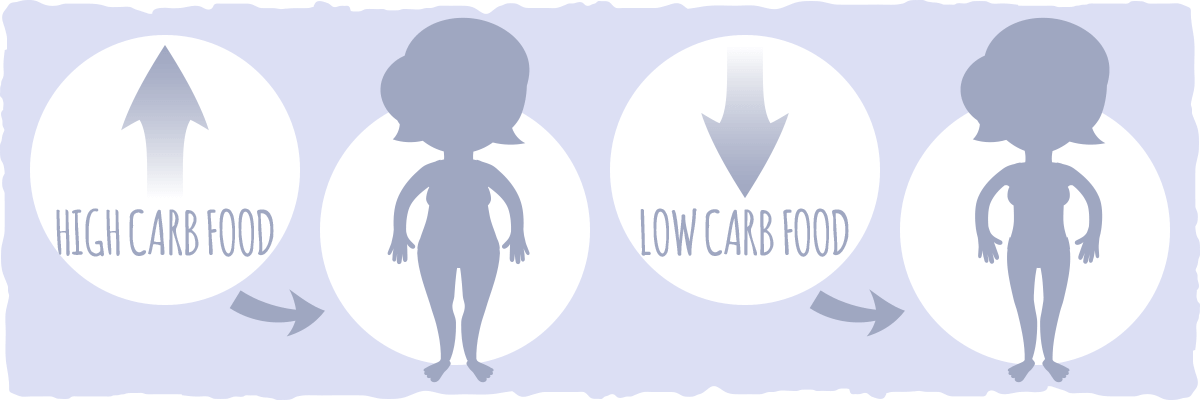
Although Taubes thinks that calories matter, He, as well as other low-carb proponents like Dr. Lustig and Dr. Fung, believe that something else plays a more prominent role in causing obesity. That “something else” is commonly referred to as the insulin theory of obesity.
The insulin theory of obesity, in short, declares that the primary cause of obesity is higher carbohydrate diets because these diets increase insulin secretion more than any other diet. When insulin levels are high, fat storage will increase significantly and “starve” muscles and organs of energy. This causes increased hunger and overeating that results in obesity.
The reason why low-carb diets work, according to this theory, is that the lowered levels of insulin (caused by restricting carbs) allow for the body to begin metabolizing fat and increase energy expenditure. Some proponents of the theory think that the reason restricting carbohydrates works is because of a “metabolic advantage” (i.e., a person on a low carb diet burns more calories than a person eating a diet higher in carbohydrate).
The best part about the insulin theory of obesity is that we can conduct experiments that can, beyond a reasonable doubt, figure out if this theory holds any merit. All we need is someone to look at the results from all of the studies that compare low-carb with low-fat diets with calories and protein intake matched.
An Objective Look At Low-Carb vs. High-Carb and Calories vs. The Insulin Theory of Obesity
In 2017, Drs. Kevin Hall and Juen Guo published what may be the first meta-analysis of controlled feeding studies that compared diets of equal calorie and protein content but differing in carbohydrate and fat content [4]. They made sure only to include studies in which all of the food was provided by the researchers. With these criteria, Drs. Kevin Hall and Juen Guo were able to ensure that confounding variables like the thermic effect of protein and subjects self-reporting their calorie intake wouldn’t muddle up the findings.
After examining the data, only 8 of the 28 studies in the meta-analysis reported that lower-carbohydrate diets led to a higher energy expenditure than higher-carbohydrate diets, and among those 8, the results were only statistically significant in four.

Regarding higher-carbohydrate diets, 20 studies reported higher energy expenditure, and this increase in energy expenditure was statistically significant in 14 of those studies. Overall, the evidence suggests that the carbohydrate and fat content of the diet has little impact on energy expenditure. In other words, low-carb diets do not have a significant metabolic advantage like many insulin theory proponents believe.
But what about body fat? Hall and Guo investigated 20 controlled feeding studies that reported changes in body fatness on equal-calorie diets differing in fat and carbohydrate content. They found that each diet has similar effects on body fatness, which makes sense when you consider the finding that neither diet provides a significant metabolic advantage. (Yet higher-carbohydrate diets seem to cause a slightly more substantial loss of body fat per calorie — a 16 gram per day difference.)
Given this new meta-analysis, it’s safe to say that low-carb and high-carb diets with protein matched have similar effects on energy expenditure and body fatness. However, this doesn’t mean that the insulin theory of obesity is entirely wrong — these results simply suggest that the theory carries much less significance than calorie intake in general.
Bringing the Research to Life: What This Means for Your Weight Loss Goals
Overall, the current literature indicates that altering the carbohydrate-to-fat ratio of your diet won’t work magic on your metabolic rate and fat loss. Instead, it is best to follow a diet that controls your calorie intake effectively and sustainably.
One of the best ways to do this is by eliminating all processed foods that are high in both carbs and fat from your diet (because of how easy it is to binge on them). Replace those foods with protein-rich and fiber-rich whole foods, and your overall calorie intake will decrease substantially.
If you think about it, one of the diets that encourages this the most is the low-carb, ketogenic diet. It focuses on highly-satiating foods like meat and low-carb vegetables while cutting out all processed, carb-ridden, and binge-worthy foods.
By eating in this way, many people experience tremendous amounts of fat loss — not because their insulin levels dropped, not because their bodies got a metabolic advantage from burning fat, but because keto dieters tend to eat significantly fewer calories than before without realizing it.
Though this is simple in principle, it may not be easy at first. This is why we often recommend using calorie counting to get you on the right track, not as something you must do indefinitely.
Practical Takeaway: How to Use Calorie Counting as a Tool for Keto Success
After seeing the science behind energy balance and macronutrients, you may get tricked into thinking that you must track everything you eat for the rest of your life. In reality, however, this rigid approach to weight loss often increases the likelihood that we gain the weight back.
Instead, a more sustainable tracking strategy is to use it as a short-term tool to recalibrate what you put on your plate. In other words, if you aren’t getting the results you want, try counting your calories and macros for 2-3 weeks.
This short-term experiment will help you develop a greater awareness of how much fat, protein, and carbs you are eating. By doing so, you can fine-tune your intuition based on what your body needs at each meal.
To get started with your calorie-tracking experiment, you’ll need the following tools:
- A food scale — This helps take the guesswork out of how much you are eating.
- Our keto calculator — By plugging your info into the calculator, you’ll get science-based estimates of how much you should eat to get the results you want.
- A keto-friendly tracking app — With the help of the right tracking app, you can use the numbers from the food scale and keto calculator to personalize your keto meals.
Which Calorie Counting App Should You Use? The Top Three Options for the Keto Diet
Choosing the right app from the dozens of diet trackers can be overwhelming. To help simplify your decision, we’ve asked the keto community for their favorites and experimented with each one.
Here is what we found to be the top three tracking apps for keto:
- Cronometer — This is the best option for anyone looking to track macronutrients, net carbs, vitamins, and minerals with greater accuracy and precision (to the tenths decimal place). However, it can be time-consuming to add keto recipes and less common foods/ingredients.
- MyFitnessPal — A great choice if you make a lot of keto recipes and use wide array foods/ingredients. Unfortunately, it is not as precise as Cronometer and requires you to subtract total fiber from total carbs to find your net carb intake.
- CarbManager — This app has the same advantages as MyFitnessPal, but with the added ability to track different types of carbs. However, it is not as accurate as Cronometer and uses aggressive pop-up ads.
If you’d like to learn more about each app and how to use them for counting your calories and keto macros, read through our comprehensive guide to tracking on the ketogenic diet.
Putting It All Together — Calorie Counting, Keto, and Weight Loss
Though the key to weight loss is maintaining a calorie deficit, this doesn’t mean
that you should always track what you eat for optimal weight loss.
In reality, one of the most successful strategies for sustainable results is eating highly-satiating foods that keep you satisfied as you lose weight.
Does this mean you can eat as much as you want and never gain weight on a ketogenic diet? Of course not. Even on a zero-carb diet, overeating calories will cause you to gain weight.
If cutting carbs isn’t working as expected, your overall calorie intake may be the reason why. This is when tracking what you eat for 2-3 weeks can be a helpful tool.
To get started, follow these three steps:
- Order and use a food scale to measure what you eat.
- Download and configure a keto-friendly tracking app.
- Personalize your macro targets and meals using our keto calculator.
Alternatively, if tracking becomes too stressful and time-consuming, we also offer a personalized keto meal planning app that will do most of the work for you.
I lost 45 pounds in 6 months, monitoring only my carb load (under 50g/day) and protein load (between 75g and 100g). The few times that I stalled, I noticed that I had gone back to “ritual” eating (eating when friends eat, or 3 times a day or more). When I went back to my rule of “don’t eat when you’re not hungry, even if that means pushing the plate away mid-meal”, the pounds started falling off again. Now that I’m in maintenance mode, I can eat pretty much whatever I want, as long as the carbs stay under 100g-150g. If I start climbing up a bit, I just go back to the more strict plan that helped me lose the weight in the first place, and within a week or two I’m back to my goal.
That’s great, congratulations on the weight loss! For most people, satiety will be enough for people to naturally count calories – I just wanted to point out that not everyone works the same.
Sometimes calories have to be counted, since they may overeat or undereat, but if what you’re doing is working fine for you then keep at it!
I started doing the low carb bigher protein meals stacked with intermittent fasting but i also walk after every meal. I try to stay under 50 grams of carbs but i do pass it here and there. I breads no sugar. I lost 61 pounds. Started at 226 and i am around 163. I do work out 3 days a week and use a peloton bike but weight loss starts in thr kitchen
I love your quote: Weight loss starts in the kitchen.
Well, you’re a guy. This is a lot easier for them.
It can be equally as hard for men to lose weight as women, it’s more of a person-to-person thing. I think minimizing their success with such a generalized statement is insulting, though. Focus on yourself and your own progress rather than putting other people down.
I’m so confused about how many calories I should be eating to lose weight in Ketosis. I started 5 days ago. The last 2 days were Keto Flu hell but today I woke up feeling great!
I’m an average 5″6 height female who weighs 59.8kgs = 9 stone 41 = 131.8lbs. I literally just want to lose a bit of fat – particularly around my stomach as my terrible junk food eating habits put me up a few dress sizes.
So far, I feel so full after every meal. I’ve declined offers of chocolates and snacks at work with no problem. (I’ve always over eaten on junk so I’m immensely proud of being able to say no!)
I used my Fitness Pal to calculate how many calories I ate today and its roughly 1395 calories. Is that enough to make me lose fat or should I be reducing my calorie count further?
Everywhere I read has conflicting answers 🙁
Ruby,
I prefer to answer “personalized” questions like that in the facebook group. I’ll say that your calorie intake is probably too low at the moment. You don’t have that much excess bodyfat, so you need to make sure your deficits aren’t too low. I can elaborate in the group or by message on facebook. The link to join is in the sidebar 🙂
Did you answer this question on FB? If so can you post the link here from the FB thread so we can read it?
Heidi, I most likely answered it in a private message on facebook. It’s a pretty old comment so I’m not sure I’d be able to find it.
You shouldn’t still be touting calories in, calories out. You have it wrong. Maybe your ego won’t allow you to get past your aversion to being wrong, but the mechanism for storing fat is insulin. Carbs drive insulin. Peter Attia and Gary Taubes both site several examples of higher calorie high fat diets being much more efficient reducing than high carb, lower calorie diets. You simply need insulin to store fat, and without it you simply cannot store fat. So many good examples of high sugar diets, low in calories, resulting in obesity. Gary Taubes sites not just one or two of these examples, but several. Peter Attia uses his own self experimentation with performance and diet, and his high fat ketogenic diet with a much higher caloric intake was drastically fat reducing in comparison. You don’t want to believe you have been wrong all this time, but apparently you’re stubborn … wrong about calories in, calories out. It’s hormones, not calories, that is the mechanism to store fat. Correlation is not causation.
I think your ego might need to be checked considering how condescending you sound in your post. First off, yes – insulin is the main problem. I have no problem saying that. But you have to take into account other hormones too.
Plenty of studies on low carb diets vs low fat/high carb diets show similar results (weight loss wise). Your “high sugar diets, low in calories” may be because of the fat intake that they cause a problem. But that doesn’t change the fact that weight loss can be done on a non-keto diet also. I don’t know why you’re so prompt in seeming like that’s not true.
I’m not sure if you even read the article to be honest, just skimmed it and jumped right in to post your own bash against calories in/calories out? Basic thermodynamics show us that you’re incorrect in that. The thing is, MOST people (without hormone/endocrine problems) will have no problem with this – they don’t need to worry about counting calories. Our bodies are quite sensitive to fats, so eating them will satiate us quite quickly and we won’t want to eat more.
That said, it’s not always the case. You are insinuating that if you ate 4000+ calories a day (and yes, it’s possible with hormone/endocrine problems) of mostly fat, that you wouldn’t gain weight. Your body will use dietary fats before they use your stored fat, and excess fat can be stored – so I don’t really see what you’re getting at.
The whole beginning of this article pretty much says that low carb diets naturally become calorie restricted anyway…maybe I didn’t make it clear enough for you, but I find it pretty clear.
Either way, you should consider what you write before writing it. If you’re going to make all these claims without showing sources (I’ve seen Gary Taubes sources and Peter Attias, and I will still hold my own opinions) then I suggest not making claims at all.
I’m confused a bit…. If you need insulin to store fat and you aren’t producing insulin on keto, how does the excess calories (fat) get stored if you eat too much???
Sorry but I’m a noob at the science part of this. Hope my question made sense.
Tinder,
We actually need insulin to survive. Your body will produce insulin no matter what you eat via gluconeogenesis. But, on keto, the body only produces as much as it needs. That means if you’re overeating, those excess calories can still be stored as fat.
The thing is, it’s just unlikely to overeat too much on keto because of the satiation properties of fats and proteins, but it still can happen. I just wanted to write this article because I see people saying that calories don’t matter at all. Most normal people won’t overeat on keto, but someone with endocrine problems or hormone problems still can.
Just a few nit – picky points:
The previous comment about needing insulin to store fat is absolutely valid. Yes, not taking in carbohydrates will drastically reduce the large insulin spikes that come after a meal to drive sugar into cells and out of the bloodstream. But insulin is necessary for life (type 1 diabetics lose their ability to make insulin and without taking insulin are at risk of ending up in a very dangerous catabolic state called diabetic ketoacidosis), and healthy people make insulin, so to assume low carb means no insulin, therefore no weight gain, is an over simplification. Also, protein is able to drive insulin levels (likely the reason people find they may be stalling if they overdo the protein), because specific amino acids stimulate insulin release, and can drive gluconeogenesis in the liver, which is the process by which the liver uses amino acids to make glucose (certain cell types–red blood cells, the retina– require glucose because they do not have the molecular machinery to make use of fatty acids, so there is always a need for some blood sugar). So while the protein. Itself doesn’t contain sugar, the amino acids become a substrate for sugar production and that can still increase insulin as the body reacts to an elevated blood glucose. This may have been what you meant, Craig, by saying gluconeogenesis leads to insulin production, but it is more accurate to say that a non – type 1 diabetic has a basal level of insulin, made by the he pancreas, which is necessary for life. And if you overwhelm the body with fuel it doesn’t need for energy, that will get stored in tissue. So the amount of food you take in does count, but there are some very good reasons to think that a keto diet can be particularly helpful in preventing certain individuals from overeating.
This article is bunk. The person who wrote it really needs to re-read Atkins’ book on the ketogenic diet. The simple fact, as Atkins explains in his book, is that if you lower carb intake to less than 20 grams per day, and the rest of your diet is high in fat, then you should burn fat for energy. Burning a gram of fat gives nine calories, but COSTS more than that (I think it costs 12 calories to turn a gram of fat into it’s ATP product, but it might be more), so if you are eating plenty of fat, you are operating at a CALORIE DEFICIT, just from metabolizing the fat into ATP. Calories, in this case, do NOT count, and you shouldn’t have to count calories on a ketogenic diet. Think of it this way: You take in one gram of fat, and it costs you twelve calories to turn it into ATP, but it only yields nine calories, so for every gram of fat that you put into your body, you are losing three calories. That’s why the diet works, even though fat has more calories than carbs do.
I really get sick of people who have no idea of what they’re talking about writing treatises on this topic.
Melanie – I wrote this article actually. I’m not sure where you read that burning 1g of fat costs 12 calories and that will put you in a deficit. Fat slightly raises the TDEE, but it doesn’t come close to putting you in a negative deficit. This is why you see people being able to eat slightly higher calories on keto and not really having that big of an issue with it.
That said, even on a zero carb diet, we will still produce glucose from carbon substrates like glycerol, and amino acids via gluconeogenesis. This means if you massively overeat, those excess calories can still be stored as fat. Yes, it’s unlikely because it’s quite difficult to do so on a high fat diet (because satiation is higher) – but it’s definitely still possible for people with endocrine and hormone problems (which is a large amount of people that are overweight). And definitely likely if someone is doing this on a regular basis.
I, personally, have seen that you can gain weight while still in ketosis – because it’s happened to me before. I would overeat almost every night on high fat/moderate protein foods and was able to put on 50+ pounds in fat.
If you aren’t raising insulin, you aren’t raising blood glucose and sure, you don’t have as much DGAT, but you can still store fat via ASP because of the protein you consume. Protein stimulates the metabolism much more than fat, but not enough to burn all of that fat off – and you’d start losing muscle mass without the inclusion of protein in your diet.
So all in all, it doesn’t always only matter if you are eating below 20g of carbs. You can still store fat via protein and ASP. And you can do this by overeating.
Hi, will i ever lose fat if i use my maintaining calories but i switch the carbs with fats? Thanks!
Melvin,
It depends which calculator you use and what you are doing activity wise. You can lose fat at a maintenance calories, but it would be extremely slow (if you’re not very active).
Good article. However after reading you rant against Taubes, I found myself wondering if you have read Peter Attia’s post regarding calorie counting. Check it out when you can, it is an interesting argument. If you could refute his article, I’ll stand by your side… but until then… I’m with Attia 🙂
Cheers,
Nik
Hey Nik,
I think me and Attia have a similar standpoint on this. I push calorie counting because it helps people understand the basic requirements of their body. I’ve worked with a lot of people to get their weight down, and calorie counting helps them on a few different levels. You have people that:
Severely under eat and cause metabolic damage.
Severely over eat and gain weight (even if they’re in keto) due to hormones or chemical reactions in their brain (stress/eating disorders/etc.)
Understand what they need to do to lose weight.
Since there’s a big divide between the types of people I’ve helped, I thought this article would be useful for those that fall into the first and second category. To use calorie counting merely as a tool and to adjust to your own needs as you go along. This article wasn’t really meant to “refute” anyone or try to glorify the calories in/calories out mentality, but merely show that calorie counting can and should be used as a tool for many people. It does refute a few of the self-studies I’ve seen, though, where they pretty much say you can eat however much you want (5000+ calories a day) and lose weight.
I say in the beginning of the article: “While you don’t have to be 100% accurate, you can use calorie counting as a starting point. It’s a way to measure how much energy you are actually taking in, and then adjust it to your needs.” This is probably a similar point of view that me and Attia have. I do agree with him that what happens to the food in our body makes a massive difference in the basic view of the calories in/calories out method – and I say that it is just a basic overview of this system. He also argues that genetics will make a difference, and I mention that in the article also: “Obviously a faster/slower metabolism, activity levels, endocrine problems, etc. will affect the amount of energy you will be expending, and therefore will affect the amount of calories you need to take in.”
At the end of the day, I think I’m in agreement with Attia, but I am a bit more “strict” in the sense that I think calorie counting should be done because it is a great tool in weight loss. People don’t measure the nutrient denseness of their foods and they certainly don’t eat as strictly as they should or could (I know I don’t), so calorie counting is just a tool that can be used to help you attain your goals.
I hope that all made sense 🙂
I appreciate you writing this article, especially with the kind of back lash you received. I am in the “calories in/calories out” is bull shit camp, however, I do believe that if you eat beyond your needs your body will not lose weight. I notice that I can overeat and as long as it remains lchf, I won’t gain weight very easily. But why would I want to “overeat” on purpose, over and over again? People need to realize that eating as much as you want does not also mean eating more than your body needs. When I’m in a truly ketotic state, my calories naturally diminish due to appetite suppressing effects of ketosis, and the weight goes down. Where I’m not a fan of “calories in/calories out” is that people need to first count their food/nutrients and let the calories factor be lower on the priorities list. Like you said, it can be a helpful tool, and I completely agree.
Thanks Alexandra,
I definitely thought that writing an article like this would receive some backlash, but I don’t mind it so much. The problem with many overweight people on keto is that their hormones aren’t always great, so they can overeat with ease (even if fats/protein are naturally satiating). That’s really the only problem with the notion of “eating until you’re full”. That’s why I say calorie counting can be a great tool.
I’m in agreement with you that if your hormones are normal, not many would overeat, and many would find it difficult to actually do so on keto. I’m also definitely not a fan of “calories in/calories out” as it’s way too oversimplified and can’t exactly be thought of like this anymore (there’s many things that matter including the quality of food, the thermal properties of food, etc.) but it is a good way to simplify it so that regular people can understand and follow it easily.
Thanks for leaving a comment!
> The truth is, there are no studies that properly show a fat loss advantage between low carb and high carb diets.
Actually there are. I have yet to see a single study comparing low-fat with LCHF diets that hasn’t found a significant difference in favour of LCHF in all measured biological markers, including body fat, weight loss, and waist circumference.
As far as calorie counting goes, listening to your hunger is enough for the vast majority of people, after a period of keto-adaptation. Fat is *very* satiating and filling. Unless you have an appetite disorder, you’d have to forcefully stuff yourself to go very far beyond your needs. Fat metabolizes much slower than carbs, so a single excessive meal, or even three, isn’t going to matter in the long run. You’ll be much less hungry over the next 12-24 hours.
Listening to your body is much less viable before you are keto-adapted, but even during transition, I would suggest you don’t count calories unless absolutely necessary. Just keep the carbs low, the protein moderate, and eat enough fat to not be hungry. And don’t forget the water and minerals, or you’ll feel lousy.
tl;dr: keep calm and keto on through the transition period, and then just listen to your body. Eat when hungry, stop eating when satiated. Drink a lot of water, up your sodium and potassium, count only net carbs to make sure you remain in nutritional ketosis.
Can you cite a few studies where there are significant differences? There are differences, but they are quite insignificant (+/- pretty little considering time frame) from the ones that I’ve read. I’d love to give some new ones a read if I missed out on any.
I’m actually curious about what you’ve read that says otherwise. The Art And Science of Low Carbohydrate Living has an entire chapter, that cites multiple studies and meta-studies on this subject. If you have a copy, chapter 9 is most relevant, but chapter 10 is also interesting in this regard.
The most relevant reference in those chapters ought to be #80:
Volek, J.S., et al., Body composition and hormonal responses to a carbohydrate-restricted diet. Metabolism, 2002. 51(7)> p.864-70.
The general idea appears to be that low-carb makes most people lose more weight and more fat, and also preserves muscle better than low-fat diets.
Calories do matter, certainly. It’s just a lot less necessary when the high amount of fat in your diet keeps you satisfied, while it is a lot more (and probably absolutely) necessary on a low-fat hypocaloric diet, where hunger is much more of an issue.
There’s about 30 other studies done that were pretty insignificant in weight lost total. The bodyfat % and muscle comp do favor low-carb, but only slightly. I do have Art and Science of Low Carbohydrate Living – but this book was also originally written in the context of athletes. Which, most of the people doing keto for weight loss are sedentary. Many of the other studies use sedentary models rather than active ones.
Lastly, protein satiates, but fat keeps you full – rather than fat just satiating. Many people that are highly overweight and starting keto have hormone imbalances, thyroid issues, or high ghrelin levels. So, especially in the beginning, many do have to track to be able to stay on track properly.
But, it’s just my own 2 cents that I’ve written. This is how I follow keto when I want to lose weight. This is how I advise others to follow keto to lose weight – and has worked for many. But if you’re doing fine with your own methods (as I know many also can use the “eat when hungry” method – including myself on maintenance), then keep at it 🙂
Two months in to ketosis and I have lost only 8 lbs. A couple of days ago II began tracking my macros on MFP to see where I might be messing up. I wonder about ghrelin over-production because I still feel hungry eating more than 80% fat and 1300-1500 calories a day. I tried drinking more water and tea made with water and ceylon cinnamon. I’m wish I could understand my weird appetite.
Perhaps you consider the how your satiety level being affected by your physical level of fullness. That is how your meal is filling up your stomach and stimulating the stretch receptors. Has your stomach been given time to shrink? Do you eat three or more times per day eating foods with a lot of bulk and fiber keeping your stomach “large”? I have decreased the capacity of my stomach through intermittent fasting (in 24 hours I do not eat for 16 hours straight then able to eat for the last 8 hours but not reaching physical fullness, just mental satiety) . . . Just a thought.
Hey Lil J,
The reason why many people lose weight by using the dietary strategies you described is that they naturally eat fewer calories at each meal because of their increased feeling of fullness.
Unfortunately, it is still possible for some to overeat while consuming a lot of fiber and implementing an intermittent fasting schedule (This is something that I struggle with personally). For these people, tracking calories may be a more helpful strategy because they will have a better idea of how much they need to eat to lose weight.
Gins, I would be so happy losing 4 lbs a month! I lost 120 pounds over about 2 + years and kept it off. I stopped dieting so strictly, gained back 10 over a couple of years, but need to lose more. On Keto I have a hard time getting under 1600 with all that fat. It seems like one needs to skip meals. I don’t get hungry EXCEPT if I skip lunch or at night before I go to bed I want to snack. Anyway it’s four years later and I hope you succeeded.
You can squabble all day long with is the best diet. Low fat. Low carb. High fat. High protein. Yada yada. Over time, it doesn’t matter which diet protocol you choose. What determines whether you keep the fat off you’ve lost is your ability to adhere to the diet. Weight loss success is more of a function of a person’s ability to stick to their diet protocol long enough so that it becomes a lifelong habit.
In fat people’s case that’s how much hunger you can stand. Your bodies drive to eat is very powerful when you are hungry. I’m 200lb and feel hungry on 1500 cals but don’t really lose weight significantly enough for any progress until I get to 1200 cals. At which I’m constantly starving, because I can’t access all that fat store.
Now I was seriously ill 10 years back I lost 3 stone in 3 months without trying. Why? Because I had no drive to eat. One mange tout and I was full.
Thin people always feel superior to fat I’ve noticed. It’s maybe that the access their fat stores easily and have a broken drive to eat.
Adhering to a diet has nothing to do with weight loss. You expose yourself as a CICOpath.
Although I enjoy reading about the science behind all of this, no one anywhere will answer my question about how MANY calories one should eat on this diet. I eat around 1500-1700 calories per day and my macros remain around the 75-20-5% range of fat, protein, carbs. I rarely ever go over 20 grams of carbs a day. Am I consuming too many calories? or not enough? So confused.
We have a keto calculator on the website for that exact question 🙂
I see how any times you are asked to repeat yourself. Your argument for counting calories as a tool seems pretty solid and very logical to me. I know it would be unethical to run a study of subjects on a keto diet eating 5000+ calories a day. But I would be very surprised to find out that those subject lose weight still. just because most keto people can eat what they want and lose weight does not mean that another wont be subject to more cravings or simply have a psychological issue where food becomes an outlet for enjoyment and thus can easily over eat while on keto. I think understanding your average calories burned and finding out how many calories are in the food you consume can be a great tool in understanding yourself and educating yourself. Besides if you’re like me calorie counting is simply a documentation method or journal so to speak on my Intake. The more information I have about my nutrition weather it be calories or macros or micros will all be a helpful tool in fueling my progress for weight loss or muscle gains. I also monitor my sleep and mood. And the scale and measurements. Makes it simple for me to note and changes and come to conclutions as to why those changes may have happened (good or bad) if I have more data about myself.
Thanks! I think the whole “eat what you want” mentality comes from the fact that many people get satiated from fats/protein. This isn’t always the case with overweight people, because hormones are thrown off (and hunger hormones may be more prevalent).
There was actually a guy that did an n=1 study on himself and ate 5000+ kcals a day and “lost weight”. Many people cited this as a reasoning for eating whatever you wanted, but he later came out and said that he made it up.
Keep it up!
By your logic, for maximum weight loss you should just eat infinity calories of pure fat every day. Each gram of fat eaten is actually a 3kcal deficit, right? Let’s see how well that works out for you.
What happens when you’re keto adapted and you have more carbs than usual.
Generally if you’re truly keto adapted, you could get away with a bit of extra carbs. If you’re talking about a lot of carbs, then your body will get back into ketosis slightly quicker.
I know this is a really old article but still hoping to get a response. I am about a month into Keto. I still have some questions about how much fat I should be eating and was wondering if I could go into more of a deficit since I have a lot of fat to loose. I did the Macro Calculator and worked this out:
1200 calories
Carbohydrates 5% 15g
Protein 20% 60g
Fat 75% 100g
I logged that into MyFitnessPal goals.
I also went and did a Bod Pod just so I could track my results and see how much actual fat I had.
Total Weight: 194.4
Fat Weight: 50.8% 98.8 pounds
Resting Metabolic Rate (RMR): 1300 kcal/day
estimated Total Energy Expendeture(TEE) (Sedentary): 1611 kcal/day
So I figure I burn 1700 kcal/day (My Fit Bit shows more). I intake 1200 from food leaving me with a 500 calorie deficit a day.
According to your article I can get 31.4 calories from pound of fat per day.
98.8 x 31.4 = 3102.32
Therfore, I could potentially burm over 3000 calories a day from my fat stores.
I start of the day with Bullet Proof Coffee. I then fast till eveing while drinking water. I then make myself eat to try to get atleast the rest of my fat and some of the protein in. Things like Spinach Omlets, Bunless burger, lettuce wrapped tacos, etc. I’ve lso found many recipes for fat bombs.
I know I shouldn’t stop eating all together. But, could I drastically lower the amount I take in to burn more stored fat fat as long as I stay under the Carbohydrate guidelines?
I get mixed answers depending on which articles I read.
You could, however your calories seem a tad low. I got around:
1322kcal Daily Calorie Intake
20g Net Carbs (6%, 80 kcal)
67g Protein (20%, 268 kcal)
108g Fat (74%, 975 kcal)
For eating, I’d recommend breaking it up so you can try to get a bit more in. You can do a deficit, but I never recommend going above 30% of your TDEE.
As far as I have researched, I believe the article has an error. You do burn more calories when you are following the keto diet. This is due to the fact that when a body produces ketones from fatty acids for energy, it can not change them back to fat. And if you do not use them, you body discards them in your pee. So there is definitely more calorie burn with Keto, but the only question is how much. The studies I have seen range from 300 to 10.
What’s interesting is that recent research has found that high carb diets can increase calorie burning as well.
http://www.gastrojournal.or…
According to this meta-analysis, subbing in carbs for fat may have a slight metabolic advantage. In other words, when protein is the same between diets, a higher carb diet causes slightly more calorie burning on average than a low carb diet.
Do you know if the studies that you looked at matched calories and protein between diets? If they didn’t then it’d be much harder to tell if the increased calorie burning was due to ketone burning or more protein consumption.
Going back to the meta-analysis I shared with you, some of the studies they analyzed did show a metabolic advantage with the low carb diet, but as a whole, a low carb diet doesn’t seem to provide more of a metabolic advantage than a high carb diet when you look at all of the data.
“we will only excrete about 3 grams of fat when we eat 2800 calories a day”. That’s a telling statement, since 3 grams of fat is 27 kcal, or 35% MORE than the 20 kcal/day example used by Gary Taubes. How does this figure into the overall analysis?
Hey Penelope,
I love the question!
Overall, the small amount of fat that is excreted doesn’t have a major impact when you consider other factors like satiety, the thermic effect of different macros, stress, sleep, protein intake, exercise, food availability, etc.
All of these factors play a much more substantial role in how much food we eat and how many calories we burn that excreting 3 grams of fat doesn’t really mean much when you look at the bigger picture.
Im trying to start the Keto diet and a little confused. What is the ratio of intake for carbs protein and fat. at 174lbs?
Hi Marilyn, you can input all your information into our calculator to get your specific macros. Be sure to have a good estimate of your body fat percentage plus activity level for most accurate results:
https://www.ruled.me/keto-c…
which app do you think is best for the keto diet? I’ve looked at a few and they all say different percentage. Please help me..
I want to say thank you for being the only person in the Keto realm that I’ve found who will tell you that tracking is important. Every body works differently, but I know for me that even if I eat zero carbs a day I still can’t gorge myself on butter and bacon and expect to lose weight. I would be the last survivor of any famine lol.
I’ve been on keto 3 days now and I’ve only noticed a slight headache. I’ve also noticed I’ve not been hungry at all. Do I need to feel stuffed all the time on a keto diet to do it right? People seem to say you need so much fat, I just don’t feel like eating 3 meals a day. Seems 2 meals is all I can stand. About 1000 to 1100 calories is about what I average. Any suggestions???
Hi Deborah, it’s pretty normal to lose your appetite on keto. I think that’s one of the benefits/why it works so well. A lot of people like to fast for a good portion of the day then get all their macros into one or two meals.
I spent the 1980s as a competitive body builder, and have owned and operated athletic clubs. Once I figured out that winning is 20% workout, and 80% diet, I started winning. I have had 40 years to test my theories on successful dieting and can say without hesitation, that the only diets that ever worked for me, were diets that strictly limited carbohydrates. If you want to look and feel great, and maintain it…the carbs gotta go. Any other form of diet will just be temporary. I am 58 years old now, and am ripped with abs, and look better than 95% of any 25 year old’s out there. Oh and one other thing…Carbs contribute greatly to autoimmune diseases. If you are in constant pain, dump the carbs and watch what happens. Once I gave up carbs, my joints started feeling much better, and so did the rest of me.
I’m just curious – this is day one for my strict keto (I’ve been gradually cutting carbs every week to prep for it). But at the end of today, my macros look amazing BUT I didn’t even scratch 900 calories. I didn’t have any cravings, I stayed full, and even struggled to finish dinner. Is that normal? Should I find ways to make myself eat more? Add a workout to force some hunger maybe?
I think it’s normal for people on keto to lose their appetite. If you start feeling not well then you may want to try and get your calories up closer to where your recommended macros are though. 🙂 Most people feel comfortable at about a 10-20% deficit.
That’s totally normal (I eat around 1150-1200 calories lately). Your body fat is making up the rest of the ‘deficit’. Your body doesn’t actually see it as a deficit and so your metabolism won’t slow down. If you work out, you’re probably just going to sabotage your weight loss goals. It’s not required for weight loss. Don’t worry about this – keep going and watch the weight come off. This is working as intended.
There are a couple of key concepts I want to clarify here. Your body fat does make up for the deficit, but your brain is also trying to protect you from future starvation. Because of this, our metabolism will slow a bit to reduce our energy needs.
When we are in a severe calorie deficit, our metabolism will slow down significantly to prevent us from burning through our energy stores so quickly. This is why we recommend staying below a 30% calorie deficit.
What is also helpful to know is that you can do resistance training to counteract the decrease in metabolic rate in many cases. This is due to the fact that muscle mass increases our calorie expenditure, and resistance training is the most effective way to build and maintain muscle mass.
So, as long as you have a healthy caloric deficit (<30%), your metabolic rate will only slow down a bit, but you will still lose weight. And the type of exercise that’ll be most helpful is resistance training, but it is not necessary for weight loss.
Thanks for your comments, Katie! You are really getting to the core concepts that help us understand what is going on in our bodies.
If she’s eating to satiety (which means leptin and peptide-yy are triggering) and ghrelin is not firing like crazy while she’s fasting, then she’s fine and she’s not going to have a metabolic disaster or slow-down. The body doesn’t see it as a restriction – there’s plenty of body fat there to use. If her leptin wasn’t triggering and/or her stomach was growling, I would agree with you – that’s not a good situation to be in. But both scenarios are not equal.
It sounds like we arrived at some similar conclusions, but with slightly different mechanistic understandings.
Healthy weight loss will cause a normal decrease in metabolic rate, but this isn’t a “metabolic disaster”. It’s just one of the many things that happens to prevent us from losing too much weight. Without these evolutionary mechanisms, humans would be extinct.
If our metabolism didn’t decrease as we lost weight, then we would never stop losing weight (unless we eat roughly the same number of calories as we needed when we were at our highest weight).
I understand how you came to your conclusions based on the relationships between various hunger and satiety hormones, but these aren’t the only things that determine how much we eat and how much weight we lose/gain.
Regardless, all that really matters at the end of the day is that the person is reaching their goals in a sustainable way that improves their health and well being.
A calorie is NOT a calorie. The calories from fructose, for example, are much worse for you – as they go directly to fat and don’t even give you energy. Excess glucose is similar, but fructose is the worst. Fructose paired with protein – thing barbecue or honey-garlic chicken or ribs and lots of chinese food – is much worse in terms of how the body’s biological processes affect this. Fat, on the other hand, really does seem to be variable. Even on days I thought I consumed way, way too much fat, I never gained weight. I always either stayed the same, or still managed to lose weight anyway somehow, despite being the biggest couch and desk-potato. In fact, in 2 months, the scale has never gone up every morning – ever – all fluctuations have either been the same weight as the day before, or lower, while practicing keto as perfect as I am able (meaning, only 2 meals, 16:8 or 18:6 fasts, no snacks, no sugar, etc.). If all of this calorie is not a calorie thing sounds like woo woo to you, just listen to Dr. Lustig from the University of California – he will set you straight and actually explain the biology for why this is the case.
Hey Katie,
This calorie is not a calorie talk does not sound woo woo to me at all. My first understanding of this issue was that calories don’t matter, and the key to weight loss is avoiding processed carbs (especially fructose). I came to this conclusion after listening to Dr.Lustig’s lectures.
However, after taking a look at the totality of the research and known mechanisms of human biology, it became clear to me that calories matter and placing the blame on one macronutrient is not the answer.
Although calorie sources like saturated fat, polyunsaturated fat, fructose, and glucose are all metabolized in different ways, we cannot ignore the fact that they all serve as potential calorie (energy) sources. When we are thinking about calories from exclusively a weight loss perspective, a calorie is a calorie regardless of where it comes from.
The majority of the fructose we consume, for example, is converted into glucose and used as energy. Thus, it contributes calories to our diet. Yes, it is true that fructose isn’t a direct energy source, but it will be converted into one.
The problem with fructose and weight gain arises when fructose is consumed in the presence of a calorie surplus. This will increase the likelihood that the fructose will be stored as glycogen and fat in the liver and cause issues.
Conversely, if you drink a soda in the presence of a calorie-restricted diet, you will be much more likely to convert the fructose into glucose and burn it rather than storing it.
Based on what you told me about your diet, it seems like you found a way of eating that works best for you to maintain or lose weight without having to track calories at all. That’s awesome!
I have a hunch, based on the research I’ve read and stories I’ve heard, that if you track your calorie intake precisely, you’d find that it coincides with your results. And if you were to eat enough calories from fat to put you in a calorie surplus for a week or so, you would see the number on the scale go up.
So, to sum up my major point: Anything that has calories will be metabolized or stored as energy in some way. From this perspective, a calorie is a calorie. Thus, the key to weight loss is being in a calorie deficit.
If you want to take a closer look at how the keto diet helps you lose weight and the research behind my comments, I suggest checking out this article:
https://www.ruled.me/how-to…
Does all of this make sense? If you have any questions, please let me know.
Calories don’t make sense for me though. Over the last 2 months i have lost an average of 4.3 pounds per week, losing 34.4 pounds in less than 60 days while on paleo/keto.
How does the calorie is a calorie model account for this? I ate at least 1250 calories per day… 80g protein and 90g fat and about 20g carbs. I sometimes indulge in a massive ribeye or iron flank grass fed and fonished steak too, and on those days i probably eat 1400 or 1500 calories.
In order to lose 4.3 pounds a week, i would have had to restrict more than 2000 calories per day. But i promise you i am almost a couch potatoe. I only walk 2km per day in the morning before my fast ends. How does the calorie model explain my rapid fat loss? And it is fat loss. We are way past the point of the initial loss in water weight. I’ve lost at least 4 inches off my bust size, hips and waist. The calorie model doesn’t explain my results adequately.
Hey Katie,
There are a handful of variables that we’d have to track throughout your diet (i.e., your calorie consumption and everything that plays into your daily energy expenditure) to see if the calories in calories out model explains your weight loss.
However, this isn’t feasible (and since you are getting outstanding results, it’s not worth fussing over). All I can do is go off of my personal experience and the weight loss research that compares low carb and keto diets with other diets. The bulk of the research shows that calories in calories out is what matters most when it comes to weight loss. This is also evident anecdotally by the fact that many people gain weight when they are on the keto diet, and by simply cutting down their calorie consumption, they are able to lose weight.
I have a feeling that by going low carb you were able to naturally restrict calories much lower than ever before, and that led to rapid fat loss.
In the future, you may experience one or both of these scenarios (and if you do, the calorie model will be the best explanation for these occurrences):
-you are losing weight more slowly than you did before
-you eventually hit a weight loss plateau despite eating the same way you always have been
If these things never happen, then you would theoretically continue to lose weight as long as you cut out the sugar and carbs – even when you pass your goal weight. (If this happens and you keep losing weight at the same rate, please let us know.)
Congrats again on the results!
If you’d like to take a look at the research that I refer to in this comment, I recommend checking out this article:
https://www.ruled.me/how-to…
Thanks.
I’ll read the link. I will say, it’s 12 days later from my last post and I’m down to 40 pounds lost – 185.0 from 225 on April 6th. No signs of stopping. If I do plateau, I know what to do – fast for 48-72 hours to kick the body into action again, boost metabolism, boost human growth hormone, boost the rate of lipolysis, etc. and then keep doing the same thing for 1-2 more months. Rinse and repeat.
I just did such a prolonged fast 2 days ago actually, since I had some Konjac noodles which really messed up with my digestion system and I wanted to give it a break. Feel great now.
There’s a lot of other reasons the low-carb diets are way better than the high-carb diets too. I did some blood work and saw my doctor yesterday, and my blood pressure was 103/74 – a massive drop from the 143/89 it used to be on April 6th when I went to the ER. Heart Rate dropped 50 bpms. My sugar is low, which is expected when cutting all sugar, fruits and most carbs. My ldl was the lowest it was ever been. I absolutely crushed the triglycerides number – it’s very low (like 23), and nowhere near 150. My hdl is very high. The rest of my markers are better by miles, and it’s only getting better. Basically heart disease and type 2 diabetes is not in my future anymore. I will never consume a grain ever again. Good riddance.
Update: I lost 4.6 pounds this week – I’m 181.0 as of this morning.
I’m 176 today. Again, no signs of this slow metabolism boogie man. Look, I only have 30 pounds more to go after having lost the first 50. Just when is the boogie man going to show up? 🙂
I’ve done research on this further, and the science explains why this slow metabolism thing isn’t going to happen on a well-formulated ketogenic diet. You have demonstrable evidence showing the beiging of white fat, the lipid waste in urine, and ketones being exhaled (especially during sleep) to show that calories in != calories out. In fact, the difference is quite alarming. Then you just have counter-evidence of people’s results. Even Dr. Stephen Phinney just did a presentation showing no slow down in weight loss in a controlled study after an entire year of being on keto.
I think you really need to update your position on this. Stop scaring people about this metabolism thing. If you’re doing keto correctly, you won’t harm it.
Awesome results!
The “boogie man” has already shown up, but not in the way you think – let me explain.
In general, metabolic rate decreases as we lose weight (and it will level out when our weight levels out), this is normal and healthy.
The only time metabolic rate will slow down to an unhealthy degree is on a diet that severely restricts calorie consumption (this is why we don’t recommend anything more than a 30% calorie deficit).
In your case, if your metabolism truly wasn’t slowing down at all, then your weight loss rate would hypothetically increase with each pound you lost (because your body would still be burning off the same amount of energy as you did at your max weight). This would be much scarier than a reduction in metabolic rate because you wouldn’t be able to stop your weight loss unless you ate enough calories to match the metabolic rate you had when you weighed the most.
And regarding what you said here: “You have demonstrable evidence showing the beiging of white fat, the lipid waste in urine, and ketones being exhaled (especially during sleep) to show that calories in != calories out.”
This is true, but how much of a calorie difference does it actually translate to? Is it significant?
A recent meta-analysis comparing low-fat vs. low-carb diets shows us that these changes render insignificant differences compared to low-fat diets. It also provides more evidence to the theory that maintaining a calorie deficit is the key to weight loss.
Here’s a link to the study:
https://www.ncbi.nlm.nih.gov/pmc/articles/PMC5568065/
This article really scared me. Now I’m physically shaking because of anxiety. This website even has a calculator which indicates how much calories you should eat and macro to count. I’m supposed to eat only 1200 cal, I have done calorie restricted diet with workouts or without, both kinds and I have lost 22-28 lbs each time. I was kind of happy at that time because I had lost weight, but inside I was so miserable because I wasn’t free when it comes to food selection and the amount of food consumption. I was getting very stressed and rather neurotic in a way because while I envy other people’s freedom of choice for food, I was trapped by counting calories and macro to keep my body slim. However eventually, I couldn’t hold my desire to eat freely and started eating like other people. Of course, I slowly began putting weight and went back to square one. I noticed while only a few people succeed in long term diet, a lot who do strict calorie restriction rebound eventually. Because calorie restriction is like a chain in their heart.
I know I can lose weight by keeping my calorie consumption under 1200 cal a day, but I always feel miserable, tired and sad when I do it, or even I become like “I want to run to make it to the light but I can’t because I’m out of breath although the crosswalk is right there”.
So yes, calorie counting help people lose weight for sure, but you have to remember by pushing this idea also causes problems like eating disorders.
I know many people who think the end justifies the means when it comes to weight loss. That’s why while there are people who overeat and throw up, others think “I can lose faster if I eat much less than 1200 cal!”.
I know some girls did calorie restricted diet and ended up not having period for months. You think it’s ok to push calorie counting idea for losing weight because you talk about sort of healthy balancing diet? It’s not. People just read whatever online and interpret it however. The tone of this article seem irresponsible. Maybe if the reader is morbidly obese, this wouldn’t hurt, but for weight loss obsessing young girls, it’s dangerous.
I strongly want to believe there’s more than calorie in/out to lose weight. Because the thought of watching calories for the rest of my life kills a big part of me. Food cravings are not just wanting to feel full, it much more than that.
Keto diet gave my life a hope from dieting =counting numbers obsessions, but now this article ruined it. I’m very scared I may have been eating too much while on keto diet. I really don’t wanna go back to 1200 cal diet days to lose weight, but you planted the seed in my head. I can’t help thinking I might screw up my diet again.
Hey Coco,
I have struggled with similar issues myself. I’ve been through years of excessive calorie restriction, bulimic tendencies, yo-yo dieting, and body dysmorphia. It’s been a tough journey to say the least.
My relationship with food started to shift when I realized that excessive calorie restriction would only impair my health and that I don’t have to obsessively count calories to lose weight.
Although it is true that calories matter and we cannot lose weight without a calorie deficit, this doesn’t mean that we have to count calories. This also doesn’t mean that we have to constantly restrict ourselves and what we eat.
Take intermittent fasting for example. Many people lose weight by only eating 1-2 meals per day and sustain that weight loss without counting calories. This is because they naturally eat fewer calories throughout the day as a result of having fewer meals.
This is actually my preferred method for losing weight and keeping it off. I don’t restrict what foods I eat (I’ll even eat sugary desserts sometimes), I just skip breakfast and don’t eat snacks.
Other changes you can make revolve around adjusting your food environment. Eating from smaller plates, asking the restaurant to wrap up half of your meal to-go, making healthy food easily accessible, and removing unhealthy foods from your home are examples of how we can change our food environment to help us achieve and maintain a healthier weight.
Another great way to lose weight without feeling like you are restricting yourself is by following the Keto Diet. Since it cuts out a lot of unhealthy, calorie-dense foods and focuses on very satiating foods, many ketoers naturally eat less and lose weight without tracking.
In short, tracking calories is helpful, but it is not necessary at all. The most effective ways to lose weight and keep it off are those that you can stick to, and counting calories is not something that people like me and you want to stick to. For us strategies like intermittent fasting, changing our food environment, and following diets that make us feel full without overeating will probably be much more effective from a weight loss and mental health perspective.
Do these suggestions make sense? If they are confusing or anything, please let me know. I’ll do my best to help you out.
very helpful thanks. I was getting incredibly confused by those who said, you don’t need to count calories because I was like, if I don’t and I exercise, won’t I be bulking up? (which IDON’TWANT) So I’m glad you wrote this article. I guess not counting cals is fine if you WANT to gain muscle mass, but if like me, you just want to lose fat and keep your muscle mass at where it is, then you NEED to count calories or else, you’ll be gain a heck tone of muscle.
Calorie counting in general usually provides better results than not counting macros. Some people have imbalances in hormones and metabolism as well – so I think calorie counting provides a good root into reality for many people. I hope you have great success in your journey!
Hey Ahrielle,
Thanks for your comment!
For some people, the opposite is true as well. For example, I tend to naturally eat less and lose weight when I don’t track calories, and if I want to gain muscle I must track calories to make sure I am eating enough calories and protein.
Interesting, right?
In general, whether you are aiming to gain or lose weight, tracking calories is a super helpful tool and tends to provide us with much better results.
Im Jess 5’6 starting weight 185lbs
BMI says I need to be around 140lbs . I’d be happy at 150.
I’m now 179 after 2 weeks but I’m new to keto and well I’m baffled by calories and what I should or shouldn’t be counting
My carb manager app says
24 net carbs
149 fat
120 protein
1918 calories
Well I have a physically demanding job and burn 2500-3000 calories a day
Which makes me deficient
I don’t know how to adjust my #s for best results
Please help advice would be awesome
Hey Jess,
The most important thing for weight loss is being in a calorie deficit. If you are eating fewer calories than you need to maintain your weight, then you will lose weight. To decrease the amount of weight you lose from muscle mass (and maximize fat loss), you must also make sure you eat enough protein (120 grams looks like a good amount to aim for).
If you want to follow keto correctly, you must also track net carbs and keep them low enough so that you enter ketosis (which can help you lose more weight).
To figure out how much you need to eat, I recommend plugging your info into our keto calculator (with a “Very Active” activity level):
https://www.ruled.me/keto-calculator/
Start with these results and see how you feel after eating this amount of calories. If you are super hungry and fatigued at this calorie intake, then I recommend increasing your fat intake (with keto snacks and/or bigger meals) until you are feeling energized and satiated for most of the day while you are losing weight.
Does that sound like a good place to start for you? If you have any other questions or concerns, please let me know.
I have fought with being overweight most of my adult life. I have tried all kinds of diets, and some have worked to a certain extent, but none have worked as well for me as fast as low carb. With LCHF diet, you are eating non-refined foods that have low impact on blood sugar, keep you satiated faster and longer, and you don’t have to count calories simply because…how much protein, fat and vegetables can you stuff in yourself? You end of eating less calories because you can only snack on so many boiled eggs before feeling sick.
After 6 months of low carb, my weight dropped 15 LBS, my A1C which was in the prediabetic range normalized and my cholesterol is completely in the normal range. I don’t need no fricken studies to tell me it works.
Yes, diets that restrict calories thru eating less work, but they are torture as your body fights back to hold on to the fat it has built up over time. I am not saying that LCHF diets are easy, they are not as your body has to go thru an adjustment period, you need to follow the diet pretty strictly in the first month, and you need to put a lot into food preparation, snacks etc. Breakfasts, lunches and dinners need to be planned carefully, and thankfully my wife (God bless her) takes care of those things for me.
Just wanted to say that everyone is different and there is nothing magical about LCHF. I rapidly gained 40 pounds and 4 sizes on a LCHF diet (half of that was while zero carb, just meat, eggs, butter, and cheese). However, I got down to my lowest weight (lost 70 pounds) and a size zero on a flexible diet, basically everything in moderation.
This is an opinion piece made to look official. There are so many studies proving that high carb is bad all the way around and low carb cures many ailments. Calories in/calories out is an out dated theory and it is only a theory. Science evolves as people look further into it. Different diets might work differently for different people. This article has no more proof to back up what it states than it claims keto has.
Calories in/calories out is only a theory, but it is the most accurate theory when it comes to predicting weight loss — much more accurate than any other weight loss hypothesis it has been tested against.
It is not an exact science because so many variables impact what happens to the calories we consume, but it is the best explanation we have for why both low-fat and low-carb diets both can be used to lose weight. To understand what I am basing my statements off of, please take a look at the studies I reference throughout the article.
And although it is true that low carb and keto can help people with a variety of conditions that a higher carb diet cannot, this doesn’t mean low carb or keto is the best diet for everyone. There are many people that should not follow a low-carb diet because it makes their health worse, which proves your point that ‘different diets might work differently for different people.”
With that being said, the one diet that I wouldn’t recommend for anyone is a high carb diet that derives most of its calories from highly-processed foods. I think this is what you are referring to when you bring up how bad high carb is. However, this doesn’t mean that all higher carb diets are bad and everyone should be on a keto or low-carb diet.
This is not true. You may be confusing fat metabolism with the thermal effect of protein metabolism. But neither have a net consumption of calories when utilized.
Also worth considering is the diet research literature and physiology behind how different calorie intakes affect weight loss and weight gain. Here is a quick summary of the current scientific consensus on calorie intake and weight loss/gain:
– When we are in a calorie deficit, our bodies rely on stored energy sources (including stored fat) to meet our energy needs. Conversely, when we are in a calorie excess, our bodies will burn the food that we eat and store the extra energy as glycogen and/or fat.
This is the primary mechanism behind what causes us to lose and gain weight.
The main reason why the keto diet is effective for so many people is that it forces us to cut out most of the foods that we tend to overeat and replaces them with foods that are much more satiating. As a result, keto dieters tend to eat much fewer calories than before which helps them maintain a calorie deficit without having to track calories. While they are in a calorie deficit, their bodies will then start to burn more stored fat for fuel, resulting in fat loss.
This also means that we can gain weight regardless of how much we restrict carbs, which explains why many people end up hitting weight loss plateaus or gaining weight as they follow the keto diet.
One dietary strategy that may be extremely effective for these people is tracking calories. By doing so, they can get a better idea of how much they eat and how much they need to eat to lose weight.
Counting calories isn’t necessary for everyone, but it can be very helpful, especially for anyone who is struggling to lose weight.
That is SUCH a simplistic view! People who are insulin resistant can cut calories if they want, but if they’re consuming carbohydrates, they’re not burning fat. While it’s true you need to burn more calories than you consume, it’s not also true that burning more calories than you consume will burn fat. Study of this shows you burn muscle.
Thanks for the comment! I love diving into the nuances of weight loss and calories.
The view we communicate throughout this article is what the research continues to show as being the most accurate regarding weight loss. The same is true for insulin resistant patients, who also have been shown to lose fat when they are in a calorie deficit regardless of macronutrient distribution.
What’s also fascinating is that a very low calorie diet with ~40% carbs shows the most promise for reversing type 2 diabetes (insulin resistance) while the Keto Diet has only been shown to help manage the condition at this point.
(If you’d like, I can explain the potential mechanisms behind this. In short, carbs and insulin are not the only things that can drive insulin resistance and fat storage. In fact, research shows that very low carb, high-calorie diets can also induce insulin resistance and fat gain.)
Also, burning more calories than you consume will cause you to burn fat, just not 100% fat. Part of our energy requirements in a calorie deficit will be met by glycogen and muscle protein as well.
The percentage of fat vs. muscle protein and glycogen you burn depends on many variables including protein intake, carb intake, activity levels, and what types of physical activity you do. Finding the exact impact that each of these factors has on the percentage of fat we burn would be nearly impossible, but controlled feeding studies do indicate similar amounts of fat free mass loss and fat loss when protein and calories are matched.
Yeah, that’s simply not true. The carbs and low fat drastically reduce satiety. I’ve already lost 35 pounds on keto in just a few months. Obviously, if you overeat on keto or eat too much protein, you will not be keto.
If you actually ARE diabetic, you know all this from personal experience. It’s irresponsible to tell people otherwise.
Moderate carb diets are actually more sustainable and satiating for some people, while others find a low carb approach to be better for them.
The same applies to people who have type 2 diabetes as well. Some find low carb to be more sustainable for them, while others benefit from a different approach.
I am not diabetic myself, but I have learned this from hearing about the experiences of others and reading the research literature.
There is no one-size-fits-all diet.
I’ve found that the slightest carbs make my blood sugar skyrocket, and if I don’t keep them low, I’ll never detox my liver.
…and if there’s no one-size-fits-all diet, there’s no keto diet that’s low-fat and “moderate” carbs. That’s either called starvation or sustaining the insulin pump.
I don’t clearly understand the point you are trying to make here. Perhaps because we are looking at this from different angles.
By “there is no one-size-fits-all diet” I mean that so many factors impact the health effects and sustainability of a diet for each individual that the Keto Diet cannot be the best diet for weight loss or for treating type 2 diabetes. It may be highly effective for some people, but not for all people.
If a low carb approach is not sustainable or healthy for someone who is overweight and insulin resistant, they can still lose significant amounts of fat and optimize blood sugar levels. This has been shown by many research studies and is very promising for people who don’t respond well to low carb diets.
Someone with diabetes needs to cleans his liver, or he will always have diabetes.
By “clean” the liver, I am assuming you mean to decrease liver fat and restore insulin sensitivity in liver cells so the liver can function properly?
This can be done using many different approaches including keto and low carb diets.
Magic?
Very informative article! Thank you!
I’m having the opposite problem, I’m undereating and although keto feels great at first, eventually I feel like garbage. Just started tracking calories and found that I’m only eating 800kcals per day on due to the feeling of fullness. Going to start drinking/eating keto bombs so that I’m eating at least 2000 kcals per day, because I train very hard and need to recover.
Sounds like a good plan. Tracking can certainly be important for the first few months to make sure everything is staying on track with your macros and micronutrients.
I tried the bulletproof coffee this morning and started eating more nuts, was able to get alot more calories in that way. Keto is just a means to an end, thermodynamics still apply. Will do, thanks!
I have been keto for 10 months and am 5 pounds from goal weight but have stalled. I feel like I’m gaining muscle still so my body is changing, however the calorie in out is still so confusing. The number of calories needed daily to function that you get from anyone of these sites is that the number you need to have a 500 calorie deficit from to lose weight?
Hey Pam,
Try thinking of it as the calories you need to maintain weight instead of the calories you need to function.
You will still function regardless if you are in a calorie deficit or calorie excess. What will change is how much weight you gain or lose.
For example, when you are in a calorie deficit, your body is not getting enough calories from food to maintain its weight. So, to properly function, it must burn stored energy. Some of the stored energy it will burn is body fat. This leads to fat loss.
In contrast, when we are in a calorie excess (I.e., when we overeat), we do not need to burn our body fat because we have more than enough energy available from the food we eat. Thus, our cells will use the energy we consumed instead of the energy we have in our body fat, and the excess energy we don’t need will then be stored (some of it will be stored as body fat). This leads to fat gain.
I hope this clears up the confusion. If you have any further questions, please let me know.
Thank you . Much better so if I stay at the calorie number my carb manager states I should maintain but if I can get a deficient than I will
Loose?
The carb manager app calculates the calories for you based on the goal you entered in. If you put that you wanted to lose weight, then the calories it gives you is a rough estimate of what you need to maintain a calorie deficit and lose weight.
If you set your goal for weight maintenance, then it will give you the calories you should aim for to keep your weight steady.
Does that make sense? If you have further questions, please let me know.
Great article. I suspected all above before, so I appreciate the studies links. I am using Keto for cancer (in remission, hoping to halt recurrence). I think my oncologist doesn’t think it works, but he is humoring me, I suspect. Anyway I am religious about getting all my macros and nutrients. I read the studies and it looks to me like they only say that one loses weight so it’s good for cancer. I can’t interpret them. Do you have any writings about all this? Thank you!
Hey Carol,
Yes, we actually have an in-depth article on Keto & cancer that you can find here:
https://www.ruled.me/ketoge…
If you have any further questions after reading the article, just comment on that article and we’ll continue the conversation there!
What this doesn’t address is why some people burn more calories than others. I am 60 and struggle to lose weight at 200lb on a 1200 calorie diet. My daughter in law at 30vand 110lb eats 1600 calories a day and stays trim. I run 40miles a week. She does about the equivalent in outdoor work.
Yes calories vs calories out, but why the difference in expenditure…. Now that’s where the treasure lay.
Great point, Jane! What you are referring to is NEAT (Non-exercise activity thermogenesis), which naturally decreases when calorie intake is too low for most people. To counteract this, you could take a diet break (a few days a week or for a few weeks) or take a “low and slow” approach to weight loss (following a smaller calorie deficit and aiming for 4 to 8 lbs of weight loss per month).
We go over a few other strategies for addressing weight loss stalls in this article as well:
https://www.ruled.me/ketoge…
If you have any further questions, please let me know. 🙂
Trouble is a few days diet break I put on the weight it’s taken me 2 months to lose. Set Point and drive to eat. I need a way to set the set point lower, ghrelin and other appetite hormones seem to play a huge role. NEAT has been shown to drop when dieting, yes. but I run uto 100 miles a week and lose weight at about 2lb a month, theres not much time for NEAT if you are out hiking and running for 30 hours a week. Its actuallu increadibly depressing to see people make small lifestyle changes,like giving up alcohol, or just eating a little less junk food when you do everything in your power to make good choices and are judged for your looks…ie fatness by thin people. I know some peole who can eat shite by the cake plate full, pizza, beer and do a few laps of the garden and lose weight. W just arent all the same and to be judged so is incredibley unfair.
The next person who tells me to eat less and exercise more will get a clout. :-0
also gut microbiome health and diversity, female hormone ratios, empty calories vs nutrition intake, quality and quantity of sleep, vitamin D levels, cortiso levels, muscle mass, malnutrition via Leaky Gut/SIBO/Dysbiosis…. why some struggle more than others
How do you determine how your total calories in keto
Hey Andy,
This is the easiest way to estimate what your total calorie intake should be:
https://www.ruled.me/keto-c…
Yes, the original Atkins book from the 70’s, not the newer version that’s been softened by his staff to sell more Atkins bars. Atkins was high fatty protein more than High Fat and moderate protein and protein raises insulin so now people wh havent read the book need to count calories really to keep protein in check because surely they are keeping carbs to 20 TOTAL grams. I like to tell newbies to just do a Fat Fast and stop asking me questions. Ha!
I am concerned that we are putting insulin in place of calories here. Chasing lower insulin levels is just as problematic as chasing lower calorie intake, especially since the current literature on different weight loss diets shows little support for the carbohydrate-insulin model of obesity.
This is why we place an emphasis on eating highly-satiating foods that keep you satisfied as you lose weight, rather than rigidly restricting carb, protein, or calorie intake.
From this perspective, calorie tracking can be used as a short-term tool to develop a better idea of how much energy we are consuming. In turn, this can help us create meals that promote fat loss and satisfy our appetite.
That said, calorie tracking is not for everyone and can be unnecessarily stressful, so we’ve included alternatives in this article as well.
I hope this clears up any concerns you may have had about the content of the article. If you have any questions, please let me know.
Thank you for the detailed article! It can be hard to find facts when reading about keto. A lot of sites give a completely different (and fantastical) view, presenting it as a magic cure that doesn’t require you to monitor anything besides carb intake. You just eat eggs, bacon, and cheese for every meal, and you’re guaranteed to drop weight. LOL. I’ve done keto several times and, while I do feel better eating fewer carbs, I’ve never lost more than 10 pounds. I drop the water weight quite quickly and then everything stops. No matter how much time I spend in the gym or how long I use the apps to track every morsel that goes in my mouth, nothing shifts it. I realized long ago that I’m one of those people who can’t lose weight. The scale only goes one direction, but I keep coming back to keto because eating this way gives me more energy than loading down with carbs. If I can’t look better, I can at least feel better.
Cheers!
Glad you enjoyed it! I don’t think keto is a “magic pill” but I do think it can help a lot of people. Not only for weight loss and health, but in general teaching people to look at ingredients and nutrition labels and understand what food contains. Keto does have a great positive for people with hunger issues, too, since protein will fill you up and fat will keep you satiated over longer periods.
Some people can transition to keto and naturally lower calories just from that point alone, but others don’t get exactly the same results so tracking (especially in the beginning) is something I highly recommend.
If you haven’t seen the results you want, I’d say to try out intermittent fasting. Try to stick to very simple meals (no pre-made keto foods). Cook in bulk and freeze if needed so you have meals available when you’re not in the mood to cook. Try not to snack – just 2 somewhat large meals a day and plenty of water between meals. If you had been eating a lot of sweets made with sweeteners in the past, try limiting those.
I hope that helps some. Though even if you just feel better that is always a huge positive!