

The Targeted Ketogenic Diet (TKD), simply put, is a standard keto diet that is supplemented with carbohydrate intake around your workout times. That means any day you exercise, you will typically be consuming pre workout carbs.
The TKD is meant to improve exercise performance for high-intensity workouts or extended bouts of activity. On the other hand, if you are sedentary or only do low-moderate intensity exercise, then the standard ketogenic diet is all you need.
For more about targeted keto, let’s take a closer look at the following topics:
- What is a TKD?
- How does it work?
- What are the benefits of targeted keto?
- What to eat & how many carbs should you eat with this keto approach?
- Targeted carbohydrate intake and ketosis
- Should you implement a TKD or stick with a traditional keto diet?
- How to start a targeted keto diet
- Targeted keto FAQs
- Key takeaways: Keto, exercise, and long-term weight loss results
What is a Targeted Keto Diet?
Targeted Keto is a “compromise” between a Standard Ketogenic Diet and a Cyclical Ketogenic Diet, meaning you increase net carb intake to promote high-intensity exercise performance, but you won’t have to be out of nutritional ketosis for long periods of time.
For most people’s purposes, TKD can help us maintain high-intensity exercise performance and aid recovery. It’s most appropriate for beginner or intermediate strength trainers, high-intensity sporting athletes, or for those who cannot use cyclical keto (due to scheduling conflicts or health reasons).
How Targeted Keto Works: Exercise Physiology 101
By targeting carb intake around high-intensity exercise, you’re providing your muscle cells with the fast-burning fuel essential for max (or near-max) effort activities lasting between 10 seconds and 2 minutes.
Carbohydrates are essential because — after around 10 seconds of near-maximal to all-out effort — the muscles start to rely on glucose for energy by using a metabolic pathway called glycolysis instead of the phosphagen system (which depends on creatine phosphate and ATP, not glucose).
On the other hand, fats and ketones are burned at such a slow rate that they are only used at low and moderate intensities. For most, this occurs during activities that last longer than 2-3 minutes without rest, such as cycling, jogging, hiking, or brisk walking.
Keep in mind, however, that the timing of each metabolic pathway depends on the person. Some people may be able to maintain their performance for high-intensity efforts that last 30 seconds without having to burn carbs, while others may burn out after 10 seconds of all-out effort.
Benefits of a TKD
With the exercise physiology section in mind, it’s easier to understand the potential benefits of targeted keto vs. a very low-carb, high fat diet. Not only will you experience similar benefits as a traditional keto diet, but you’ll be able to take advantage of glucose (from pre workout carb intake) for high-intensity exercise performance.
In fact, many keto dieters who use a targeted approach report strength and endurance improvements during high-intensity activities when nothing else seems to work.
Current research indicates that endurance athletes and moderate-intensity exercisers can benefit from the targeted ketogenic diet when participating in activities that last an hour and a half or longer. Studies show that supplementing with carbohydrate intake before long endurance tasks, like running a half marathon, can improve performance and reduce the perceived exertion of the runners without impairing ketosis.
In other words, using pre-workout carbs can help improve performance and reduce how difficult the activity feels. Although this was only found to occur in studies on endurance runners during a half-marathon, this phenomenon may also explain why many keto dieters report having increased strength and endurance during high-intensity exercise as well.
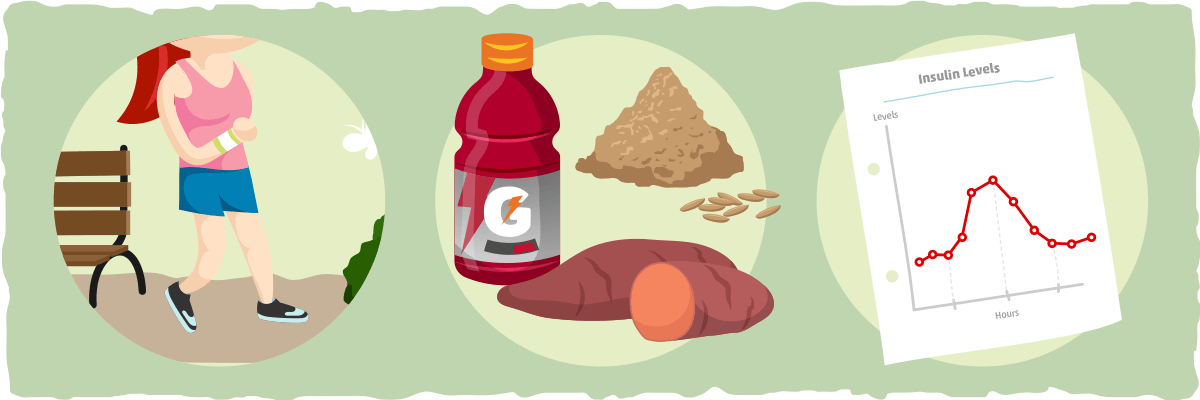
Another benefit of consuming carbohydrates prior to working out is the effect that it has on insulin levels. Yes, high insulin levels are the exact opposite of what you want on a standard ketogenic diet — but when it’s released at the right times, insulin can have an anabolic effect that prevents muscle breakdown and promotes increases in lean muscle mass.
The Takeaway: To sum up this section simply, if you’re an athlete or if you exercise regularly and your performance has been suffering, then try experimenting with extra carbohydrate intake before your training. By doing this, you’ll provide fast-burning fuel for your muscles, replenish muscle glycogen, decrease how strenuous the exercise feels, boost recovery, and improve overall performance.
What To Eat on The Targeted Ketogenic Diet (TKD)
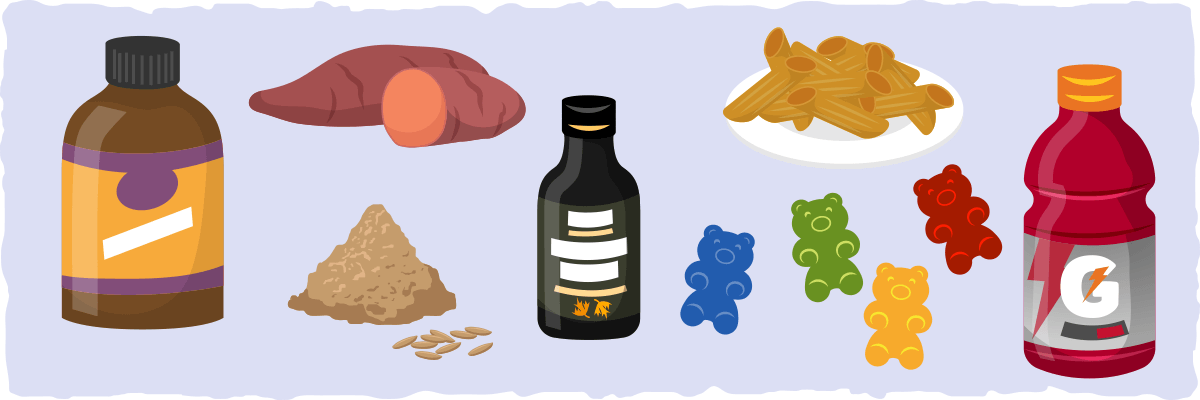
Most people experimenting with TKD find that 25-50g of carbohydrates taken 30 minutes prior to exercise gives them the best performance. Most suggest eating simple, easily digestible carbs, such as liquids or high glycemic foods that absorb fast into the body — sweet tarts, white bread, candy bars.
However, the best sources of carbs for a successful TKD would be dextrose and glucose. You want to avoid fructose, as it tends to go directly to the liver to replenish liver glycogen (instead of going to the muscle, which is what we want). The highest fructose foods tend to be natural foods like fruit and honey.
On the other hand, some good carb sources for TKD are things like gummy bears, hard candies, Gatorade, and Powerade. People also have shown great results taking in natural maple syrup prior to workouts. However, all of these options still contain a decent amount of fructose.
To get the purest form of glucose, try supplementing with dextrose tablets or glucose gel packets. These will provide you with a pure source of glucose without any fructose, making them the cleanest carb sources for the TKD.
Regardless of what carb source you choose, it should be consumed on its own or with protein (for a muscle building effect). Fat consumption should generally be avoided immediately before and after exercise. Dietary fat tends to slow the digestion of protein and carbohydrate, which is something you don’t want while you are implementing the TKD.
The only fats that won’t impact carb or protein digestion are medium chain triglycerides (MCTs) because they are digested more quickly than any other fat. As a side bonus, they also help increase ketone levels whether you eat carbs or not. This makes MCTs a great addition to your pre or post workout meal if you are looking to increase your ketone levels.
The Takeaway: Eat 25-50 grams of carbs from high-glucose, non-fat foods like gummy bears, hard candies, Gatorade, Powerade, and natural maple syrup. Cleaner forms of glucose like dextrose supplements and glucose gel packs may be even more effective. Consume protein with your carbs to boost muscle growth and/or MCTs to increase ketone levels.
Will The TKD Kick Me Out of Ketosis?
With the influx of carbs that you will be taking in before exercise, your ketones levels will inevitably decrease. By how much will they drop? It depends.
Many will find that they drop out of ketosis for a few hours after their workout, due to the increased insulin levels. The good news is that working out will make various systemic changes that help you get back into ketosis.
For example, working out can help increase insulin sensitivity, which means that less insulin will be needed to handle the 25-50 grams that you eat on the TKD. Cell membrane proteins called glucose transporters will also be more active as a result of the exercise, turning muscles into a glucose magnet that suck up sugar from the blood. The combination of increased insulin sensitivity and glucose transporter activity will ensure that the carbs are used up by muscle, insulin levels drop, and ketone production will be ramped up sooner rather than later.
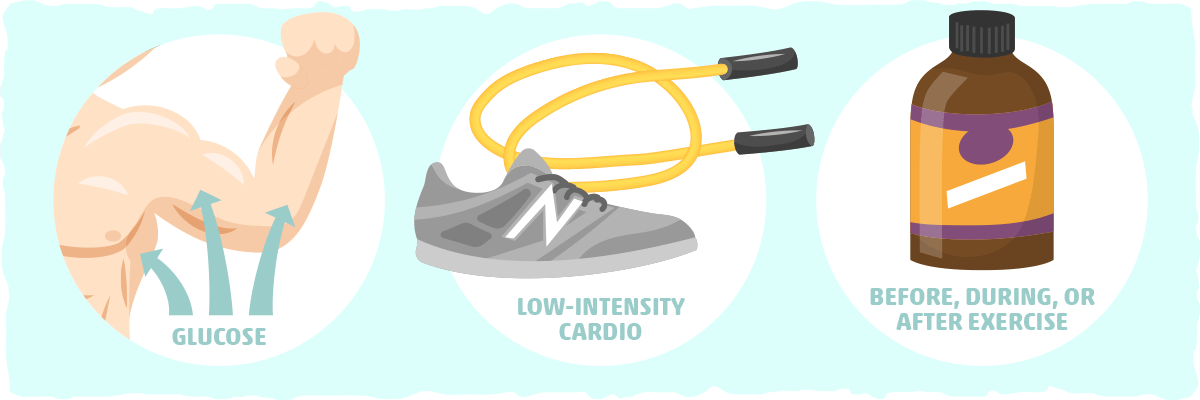
If you want to boost your ketone levels naturally, you can do some low-intensity cardio to help lower insulin even more and increase the free fatty acids in your blood (more free fatty acids = more ketones). Another strategy that you can use to boost ketone levels is to supplement with MCTs before, during, or after exercise. These fatty acids will be converted into ketones regardless of your insulin and blood sugar levels.
It is important to realize, however, that you may not need to use either one of these ketone boosting strategies. Your ketone levels depend on many factors including your workout intensity, workout duration, stress levels, how keto-adapted you are, and your insulin levels, so you might stay in ketosis after you ingest the pre-workout carbohydrates. On the other hand, you may stop producing ketones completely for a couple of hours.
Does this mean you should rigidly track your ketone levels before, during, and after your workouts on TKD?
Although you can measure your ketones to find out if you are in ketosis or not, this is completely unnecessary. The most important thing is that you stick to your ketogenic diet plan after your workout. If you do so, you will be in ketosis in a couple of hours, and your results will not suffer at all.
The Takeaway: Eating carbs pre-workout will decrease your ketones levels. How much your ketone levels decrease depends on many factors, but — as long as you stick to the ketogenic diet — you will have no problem getting back into ketosis. If you would like to give your ketone levels a boost, then do some low-intensity exercise after your workout and/or supplement with MCTs.
Should I Implement a Targeted Keto Diet?
If you are a beginner or intermediate weight lifter, athlete, and/or training at high intensities regularly, then you might want to try a TKD. This dietary approach may provide you with the performance boost you need but are not getting from following the SKD alone.
Remember, the goal with a targeted keto approach is to get JUST enough carbs to provide glucose for the workout, allowing you to boost performance and build more lean muscle mass while keeping body fat down.
After you are keto-adapted, however, the extra carbs may not be helpful anymore. This represents that your body has now developed the ability to replenish its own glycogen stores and maintain sufficient muscle glycogen levels without the need for additional dietary carbs. Studies show this can happen after around four weeks for athletes on a strict keto diet.
For this reason, you may experience that the TKD doesn’t do anything for you after you are on the keto diet for 1-2 months and you are keto-adapted. If this is the case, then you should stick with the SKD or try the Cyclical Ketogenic Diet (best for high-intensity athletes/exercisers).
How Do I Start a TKD?
Here’s a step-by-step guide on how you can execute the targeted keto diet properly and get the best results:
1. Setting Up Your Keto Macros and Carb Intake
If you’re beginning an SKD and want to perform high-intensity exercise, you may have to consume net carbs before your workout.
The way you calculate your macros will be exactly the same, except you must take into account the extra calories you’ll get from eating carbs – adjust your fats as needed.
More specifically, every gram of carbohydrate equals 4 calories, while every gram of fat is 9 calories. If your goal is weight loss, this means that you should reduce your fat intake by around 11 grams if you consume 25 grams of carbs on workout days.
2. Pre-exercise Timing and Best Carbohydrate Sources
The best time to consume carbs is 30-60 minutes prior to your workout, where you will eat around 25 grams of carbohydrates. High-intensity sessions lasting longer than an hour may require up to 50 grams.
It’s best to ingest quickly absorbing, high GI carbohydrates. Stick to sugar sources that are high in glucose, as fructose can refill liver glycogen and interrupt ketosis post-exercise.
The best carbohydrate sources for the TKD are glucose gels, hard candies, gummy bears, sugary sports drinks (without high fructose corn syrup), natural maple syrup/sugar, and dextrose supplements.
Most fats should be avoided at this time, as they slow the digestion process. If you must have fat before your workout, then have ketogenic MCTs (capric and/or caprylic acid).
3. Optimal Post-exercise Nutrition
Instead of ingesting carbs post-workout, have a high-quality protein shake to boost recovery and lean muscle growth. Having carbs post-workout is entirely unnecessary.
Eating the right amount of fat and protein throughout the day is crucial for maintaining performance, recovering from exercise, and building lean muscle mass.
If you want to build muscle mass and lose fat simultaneously, you may need to follow a high protein ketogenic diet. To learn more about formulating an optimal keto approach for muscle growth, read through our comprehensive keto bodybuilding guide.
Special considerations and tips:
- If you have to ingest more than 50g of carbs around your training, then try to split it up – eat half of those carbs 30 minutes before the workout and half right before you start.
- If you have various training sessions a day, divide your 25-50 grams of carbs between both sessions or adjust your carb dosage depending on the intensity and duration (e.g., 15g for the first session and 25g for the second one).
- Try experimenting with supplements that have been proven to boost performance like creatine, taurine, beta-alanine, L-citrulline, and MCTs. For more information on these supplements and recommended dosages, check out our guide to keto bodybuilding.
- If following the TKD isn’t working for you, consider trying the cyclical ketogenic diet.
FAQs about Targeted Keto and Exercise
What are the 3 keto diets?
There are three main styles of the keto diet:
- Standard Ketogenic Diet (SKD). This is the traditional version of keto that most people follow. It is very low in carbs (typically under 35 g), moderate in protein, and high in fat.
- Cyclical Ketogenic Diet (CKD). A dietary approach that combines carb loading day(s) with the SKD. This may be also be referred to as keto carb cycling or a cyclic ketogenic diet and is typically used by people who are more advanced in terms of high-intensity training.
- Targeted Ketogenic Diet (TKD). A standard keto diet with targeted net carb supplementation prior to high-intensity exercise.
Learn more about these three ketogenic approaches by following this link.
How many carbs are in a targeted keto diet?
In general, targeted keto requires us to supplement a standard keto diet with ~25 g of pre-workout net carbs.
For example, if your carb limit for your traditional keto diet is 35 grams of total carbs and 25 grams of net carbs, then your carb intake will be roughly 60 g total carbs and 50 g net carbs on a high-intensity workout day. To learn more about keto carb limits, follow this link.
Will eating extra carbs impair my health?
Despite the demonization of simple sugars in the keto community, they can have a place in a healthy lifestyle for those who train at high intensities regularly. When consumed as a means to improve exercise performance, they can actually contribute to better health outcomes.
On the other hand, If you are sedentary or doing cardio-type exercises, stick with the standard keto instead. Consuming extra net carbs will not benefit you and may even impair your health & weight loss results.
What is a high-intensity activity?
High-intensity exercises are activities that require continuous near-maximal to maximal effort for roughly 10 seconds – 2 minutes. Examples of this include:
- Lifting weights for >5 rep sets using a weight that is heavy enough to take you to failure (or close to it).
- Sprinting or swimming for longer than 10 seconds (e.g., 100-meter sprint or 50-meter freestyle swim).
- Playing sports with minimal rest breaks and occasional sprinting like soccer, rugby, and lacrosse.
- High-intensity interval training (HIIT).
Though this isn’t a comprehensive list of the activities that carbohydrate restriction will impact, it gives you an idea of the types of exercise that require your body to go into glycolysis and burn glucose for fuel.
Should I take exogenous ketones and MCT oil for exercise performance?
Exogenous ketones and MCT oil will not boost high-intensity exercise performance. However, if you are an ultra-endurance athlete, taking these keto supplements during competition can help preserve muscle glycogen stores for when you need it most (e.g., during the final leg of the race).
On the other hand, those who exercise regularly won’t benefit much from exogenous ketone supplements. In this case, MCT oil (that is composed of 100% caprylic acid and/or capric acid) is the better option.
Though MCT oil won’t provide fuel for high-intensity activities, it can be used as a tool to help boost nutritional ketosis, accelerate the keto-adaptation process, and remedy some keto flu symptoms during your first week of keto.
Key Takeaways: Targeted, Cyclical, and Traditional Keto Diets for Exercise Performance & Weight Loss Results
By restricting carbs, we limit our availability of sugar and muscle glycogen. This is typically not a problem for cardiovascular exercise and low-to-moderate intensity training — but when the activity is more intense, our muscle fibers start looking for sugar to burn rapidly.
As a result, high-intensity exercise performance and recovery may suffer while following a high-fat, low-carb keto diet. There are three potential solutions to this problem:
- Follow a standard ketogenic diet for at least a month to promote keto-adaptation. During this time, your exercise performance and workout recovery will be impaired. However, as your body adapts to carb restriction, you’ll steadily regain the ability to train at a higher level. Adequate protein intake will play a crucial role in this process.
- Try a cyclical ketogenic diet. Those who are more advanced with their training and train at higher volumes may fare better with the CKD. To learn more about combining carb cycling with keto, read our guide to cyclical keto.
- Experiment with targeted keto by adding pre-workout carbohydrates to your routine. Typically, we recommend that exercise beginners (i.e., people who have been training at high-intensities for less than a year) try the TKD. This should only be used if you notice a significant decrease in performance on standard keto.
Regardless of what keto variation you try, make sure you are mindful of how it fits into your keto lifestyle as well. It can be easy to lose track of the bigger picture as we focus on the finer details.
To help you formulate a keto plan that works in the short-term and is sustainable in the long run, read through the following keto resources:
- Complete Guide to Exercise on the Ketogenic Diet — Everything you need to know about keto and exercise.
- How to Maintain Long-Term Keto Weight Loss Results for Life — Learn how to achieve and maintain your results.
- Is the Ketogenic Diet Right for You? — How to know if keto is optimal for you
Sources:
- Effects of a 4-Week Very Low-Carbohydrate Diet on High-Intensity Interval Training Responses — NCBI
- The Effect of a Ketogenic Low-Carbohydrate, High-Fat Diet on Aerobic Capacity and Exercise Performance in Endurance Athletes: A Systematic Review and Meta-Analysis — NCBI
- Effects of 30 days of ketogenic diet on body composition, muscle strength, muscle area, metabolism, and performance in semi-professional soccer players — NCBI
- Complete Guide to Exercise on the Ketogenic Diet — Ruled Me
- CKD vs TKD vs SKD [Types of Keto Diets Explained] — Ruled Me
If i just wanted to increase muscle mass without performance would it be possible without carbs? And howong after and before your workout can you consume fat? And what are the signs where youve used up all the carbs youvd eatten? Im actually looking to gainsome lean mass but afraid to consume carbs as im barely gdtting use to lack of carbs.
Andy,
You can definitely gain muscle mass while consuming a standard keto diet. You can eat fat pre-workout, but try to eat protein post-workout. If you eat fat and protein post-workout, it’ll slow down the absorption of the protein. Once you’re truly fat adapted, you shouldn’t notice many differences in your workouts from when you were consuming carbs.
Hope that helps!
Craig
So post workout, I eat nothing but protein? So do I drink a fat free and carb free protein shake post workout?
Then when I’m truly fat adapted(which I don’t know when) will my muscle growth be as rapid as if I were to eat a carb diet?
In the morning I’ll have a BFC, then go workout. Then I should drink my protein shake free of fat and carbs so that my body can absorb the protein.
Then when I’m fat adapted, regardless of fatty protein shake or not, I should have the same growth and performance.
As soon as I reach my desired weight and body percentage, I do plan on re introducing carbs in the targeted weight loss with gatorade and protein mixture as my sports drink during workouts. Or would that be a bad idea?
BTW I love your site. I will be buying your cookbook soon. I just don’t want to be too tempted at the recipes just yet. Seems to me you really love cooking and photography just like myself.
Thanks Andy! That all sounds pretty good. When you’re actually fat adapted then you shouldn’t need to re-introduce carbs, but you can. You’ll most likely get very similar results with introducing carbs than you would without. That said, it’s your body and you can do as you wish and experiment as you wish to get the results you want.
I have been wanting to try TKD for a while, I have done CKD in the past with a 24 hour re-feed on Saturdays but want to work out more, not the M/T split and full body Friday. I am thinking of just drinking Gaterade pre-workout, and some BCAA’s post. How do the pre-workout carbs factor into my daily carbs?
From the way it reads above, I don’t count the carbs but do include the calories in my total for the day.
Bill, make sure you’ve become fat adapted first to see if TKD or CKD is right for you. Normally before fat adaption, you lose some performance but many report not needing TKD or CKD once that happens. The pre-workout carbs shouldn’t be thought of as your “daily” carb allowance because you should be burning off the glycogen during your workout. You can do protein and BCAAs post-workout if you wish, since nutrient uptake is a little higher afterward (especially if you fast).
Hi Craig,
I’ve been eating LCHF for over a year so I’m fully fat-adapted. I’m at my ideal weight but looking to start weight training to try and build some muscle. Would a CKD or TKD be best for that? You mention that a TKD is best for beginners to weight training but it would seem counter-productive for me to go back to carbs at this stage. At the moment I do kettlebells and HIIT and I don’t have any issues with working out whether in the fasted or the fed state.
Aurora,
No – I think that you should continue an SKD rather than introducing carbs. TKD and CKD are for people that generally can’t perform as well as they used to during lifting. Since you’ve been fat adapted so long, it shouldn’t be an issue (like you said) performance wise. So I’d just stick with an SKD if I were you – it sounds like it’s working just fine 🙂
Thanks so much Craig, I really appreciate the advice.
Sure thing!
Would black strap molasses be a good pre workout carb source?
It would work, yes. It doesn’t taste the best, so you might be able to use pure maple syrup to go down easier – but it’s really up to you.
I have been eating a low carb diet (100-150g/day) for a few months now and would like to try and reduce my carb intake to around 20g as recommended. However, I am an active individual. I weight train 4-5 days a week (around 30-45 minute sessions) and teach a 45 minute high intensity cardio kickboxing class twice a week. Will decreasing my carb intake this drastically affect me negatively? I understand the initial fatigue will occur, but can I remain active without losing too much muscle/performance while on such a low carb intake?
I have a couple ‘noob’ questions as I am trying to understand this diet better.
I am a triathlete, and have been experimenting with a low carb diet the past week, and have been feeling good with it.
My predicament is this:
I perform high intensity endurance work (around 6 days a week) also lift weights (around 4-5 times a week). I want to burn fat, while maintaining muscle mass and seeing strength gains.
Could I use the target keto approach (eating some carbs before a workout) in conjunction the cyclical keto approach (1-2 day of carb re-feed) and still experience the benefits of this diet?
( I noticed that at the end of your Cyclical Keto Diet article you noted that it should not be used for endurance work (?). )
Also, is it absolutely necessary to have a 2 week low carb ‘initiation’ phase in order for my body to adapt to keto?
Finally, what would you say is the limit to the amount of carbs eaten in a day? If I eat 30-50g of carbs before a workout, does that mean I should not eat anymore carbs for the remainder of the day?
If you could help me out I would really appreciate it, I really want to get involved in this diet. I have been feeling very good eliminating carbs, and want to see if I can make a lifestyle change out of this.
Thanks
Marc
Marc,
TKD would probably be a good place to start for you – although I wouldn’t add CKD in there right away. See how TKD does by itself first.
You don’t have to do the “2 week initiation” but it does slightly help. It helps if you’ve been on a standard keto diet for longer than that, too, as your body is used to producing the enzymes that break down and deal with fats.
If you’re going to consume 30g carbs pre-workout, just keep your total net carbs down to 20g or less throughout the day.
Hope that helps!
Thank you very much.
🙂
Hi. I’m new to keto but been enjoying the benefits even though I’m only a week or two in. I have a question around my basketball games. It seems TK is the way to go to help fuel my games and training sessions. If I am playing for an hour to an hour and a half would the 20-50g carbs be enough? Also would sports gels be okay to take? The ones I use have 20g of carbs in them but I notice they have some fructose in them. Thanks heaps.
It sounds like 30-50g carbs would be enough. On the gels, the fructose is a fast acting carbs, so it sounds as though that could be a good solution.
I am into my fourth week of Keto and have lost 6 pounds (my goal is 20 pounds). It may not seem like a lot but I am pretty happy with other non-scale victories as well. Anyway, I just signed up for a six-weeks fitness challenge because I also want to gain strength and get in shape. The challenge will involve 50 minutes of HIIT per day, five days a week. I was wondering if TKD would be a good way to go. How can I figure out how much carbs to take before each workout session?
You shouldn’t need excess carbs with HIIT; it’s more for lifting and doing powerful exercises. You should be able to just do HIIT with some extra added fat and a little extra protein.
So fats should not be eaten with a post workout meal even if you are limiting carbs? For example: simple carbs pre workout, post workout, protein/fats/carbs (from veggies). Thanks.
Yep – that’s exactly it 🙂
so, I lift weights for about 45-60 minutes 3-4 days per week. I take a pre-workout supplement (6th gear) that seems to help me with performance. would a tkd be beneficial to me, or because I don’t have any real issues with performance should I worry. I do notice on active days that my keto strip tests will often show “negative”, is this some thing that I should worry about possibly implementing a tkd in to, or not. my weight loss seems to slow during particularly active weeks as well. any thoughts?
The exercise might just be spiking your glucose levels and giving a false reading on the keto stix (they’re pretty inaccurate as it is). For TKD, you could try it; though if you aren’t noticing a decrease in performance, I don’t see the need to do it.
I’m really new to this Keto Diet, and I’m quiet worried it’ll affect my weightlifting schedule. I’m a college student who has school Tuedays-Saturdays. Right now, I’d like to know why we’re suggested to take the carbs PRIOR to the work out, when isn’t it that your glycogen stores are depleted after your work out or does when you eat carbs not matter?
They should be – though you are replenishing the glycogen prior to working out by approaching a TKD. Lifting wise and keto, you may see some loss in performance in the first 1-2 months, but should see growth pretty quickly after that.
I play ice hockey and last week I used TKD for the first time. Worked great with about 35grams of EFX Karbolyn 30 minutes prior to game and then sipped another 35 during the game. Felt powerful and played well. Try it!
Awesome to hear – hope it’s still going well?
Yes it is. The Karbolyn works well for my ice hockey games. Leaning out at about 1.5lbs per week. Down to 21% bodyfat with a goal of around 12%.
I was wondering if I could take 1 serving of Optimum Nutrition’s Naturally Flavored Whey with Silk Vanilla almond milk as a pre-work out carb boost. The Almond milk is sweetened with 16 g of cane sugar (aka sucrose) and has 16 g of Total Carbs. The ON Whey has 5 g Total Carbs and 2 carbs of sugar. The mix would have 21 grams of carbs. Is this an acceptable TKD pre workout carb source? Thanks!
I’d stick to a straight supplement pre-workout and stick to something that’s faster digested than protein. You want those simple carbs to be broken down immediately.
What about a smoothie before lifting? I use 4 small frozen strawberries, 1 scoop of whey protein, 4-8 ozs. of HWC, and 2 packet of Stevia.
Sometimes I sub out strawberries for cream cheese or peanut butter. OR a small bowl of a whole grain cereal w/diluted whipping cream.
You could do that, but it wouldn’t necessarily be TKD. You want fast digesting carbs for the glycogen.
good to read this.. my pre workout meal (60 mins b4) was usually almond milk, casein protein powder and frozen fruit (bananas, strawberries and blueberries).. was wondering if this would still work for TKD.. now I know.. so I’ll find something else to add to the shake instead of fruit.. (I also grab some caffeine about 15 mins prior).. I wish the idea of maple syrup instead of fruit was appealing. . maybe some sweet tarts blended in to it..
I have been following a SKD for about 5 months and really enjoy the way I feel plus am losing weight. I do Krav Maga and some running sprint training, when we do the intense sections I find after a short time I start to feel nauseous and a couple of times I have had to leave as I thought I was about to vomit. It only happens during the intense exercise, I am hoping that it is the drop in glycogen and if I try TKD I can go back to exercising normally. Why would it make me feel nauseous? I am going to try maple syrup to see how this goes – thank you so much for this site
I workout everyday , fasted cardio in am and heavy lifting mixed with some high rep low weight excersises in evening. I want to shred for summer and I am also a bodybuilder athlete . What is my best keto diet ? I don’t want to lose my strength but I want to lose lots of bf%.
I’m waiting on an answer here as well, please. Thank you
Thanks for this comment. Looks like I missed this question. Thank you for your patience!
A good place to start for you would be with a TKD with your targeted carb intake prior to your evening lifting session. You’ll need to do some experimentation to find what timing and carb intake works best for you, but this approach seems like it’d be a good place to start based on your training and goals.
who is a good fit to do this.
Can Anyone who is trying to improve thier workout use it (not an athlete )
working out 3-5 times a week HIIT
Anyone doing high-intensity training (like HIIT) 3-5 times a week would benefit from a TKD or CKD. Which one you choose is up to you and what works best for you. Generally, the TKD tends to help people who are new to high-intensity exercising and/or keto dieting.
The CKD seems to work better for improving performance in people who have been doing high intensity training regularly for a longer period of time. For a more detailed explanation of the CKD, feel free to check out this article: https://www.ruled.me/cyclical-ketogenic-diet-indepth-look/
The article says you should consume less fats on TKD. What are the parameters?
Here are the specific parameters, Willie:
Calculate how many calories from carbs you are eating on TKD days (1 gram of carbs = 4 calories). Divide that number by 9.
This will tell you how many grams of fat you should subtract from your total daily fat intake on that TKD day.
Hi! I just started the keto diet 10 days ago. I’m down 8 pounds and my clothes all fit better. My energy levels have plummeted quite a bit but are slowly increasing. I run 3 days a week and do a cross train/lift workout 2 days a week. I’m also nursing a baby. So I’m trying to drink tons of fluid. I’m doing about 1500 calories a day with 20g net carbs, 75g protein and 130g fat.
This weekend we will be mountain hiking (lots of ascent) for several hours at a time). I’ll be carrying about 30 lbs of baby and gear. I’m worried about my energy levels. Is this a good time to utilize TKD? If I take carbs prior, should I also plan to eat some during? I don’t want to erase progress, I also don’t want to die on the mountain. 🙂
Hey Danelle,
TKD will help, but you may not need it for hiking. Just make sure you have A LOT of food. According to your description of the hike, you’ll probably burn over 1,000 calories, so make sure you plan for that and have plenty of snack breaks.
If you are planning to push yourself to go as fast as possible, then I’d suggest eating carbs, along with plenty of fat and protein throughout the hike. If you can go at a slow and steady pace, then fat should be more than enough to fuel your trek.
Either way, you will not impair your progress. The key with hiking is getting plenty of calories to make up for how much you will be burning as fuel so that you don’t start burning muscle and feeling drained.
I don’t get the carb sources section because it’s contradicting.
It says we need to avoid fructose and recommends maple syrup.
However if you type highest source of fructos, maple syrup is on the list!
I also want to ask, is TKD needed to build muscle or can I stay on the SKD and still gain muscle? (CKD is hard for me to follow with my hectic schedule).
Hey John,
We recommend maple syrup because it has enough glucose in it to warrant positive results, and it has been used successfully by many keto dieters. It’s hard to find natural sources of easily consumable carbs that don’t have some fructose in it (unless you get a pure glucose or dextrose supplement).
To answer your other question, you don’t need to be on a TKD or CKD to gain muscle. All you really need to do is three things: (1) tailor your workouts around lower rep ranges, (2) increase your training volume throughout your workout program, and (3) eat around 1 gram of protein per pound of lean body weight. I went a bit more in-depth on how to gain muscle on keto in this article if you’d like to get into the specifics:
https://www.ruled.me/comprehensive-guide-bodybuilding-ketogenic-diet/
Do i need to increase my total calories slightly on my weight training days and, if so, where do i increase my calories (carbs, fats or protein)? (some calculators provide a total calories increase of a few hundred or so on training days, but dont state where those extra calories should come from)
Would I increase my carbs pre-workout on top of my usual carb allowance? What if there is still a calorie deficit? do i make it up by increasing my fat intake?
On the odd days I do a HIIT session, am i right that increasing my fat slightly will suffice?
thanks 🙂
Hey Jaime,
You can eat extra calories on workout days, but how many calories you should eat depends on how many calories you burn while you train. Assuming you are already eating around 1 gram of protein per pound of lean body weight (to help gain/maintain muscle), then you should get the extra calories from fat.
However, if you are using the TKD before your workouts, then include those carbs in with your extra calorie intake count for the day and add the extra fat on top of that. These carbs will be added to your carb allowance for that day as well.
For example, if your carb limit is 30 grams and you want to have 15 grams before your workout, then add those 15 grams on top of your carb limit (to make it 45 grams for that day). In this example, you’d be getting 60 extra calories from carbs (15 grams multiplied by 4 calories per gram). If you want to eat more calories on top of that extra 60, then you should get it all from fat (every gram of fat consists of 9 calories).
I hope that answers all of your questions. Let me know if you need anything else cleared up!
hi! i was wondering if the UCAN bars or their powder mix would be good for this, prior to working out? https://uploads.disquscdn.c…
Thanks for the image, Blake! Makes things much easier.
Yes, this would be good to have as a pre-workout meal while you are on the TKD. My only concern is that it will take longer to digest because of the combination of fiber, fat, and protein, so you may need to eat it a bit longer before your workout. For example, you may need to eat it an hour before your workout rather than 30 min before. Experiment with the timing yourself to see what works best for you.
Hi, I started Keto 8 days ago. Great results so far. I am training F45 HIIT about 4-5 times a week for 45min, burning about 700kcal per session. Last 2 sessions I found that I had NO energy, could barely do the exercises and felt very sick to the point of vomiting. I’m on 20g Carbs, 95g Protien and 118g Fat – 1500 kcal.
94kg 29yo Male
Would TKD work well for me to get the energy I need to train? I want to continue Keto but I can barely handle 20min of HIIT before I feel sick.
With TKD what carbs would I consume before training?
Hey Mike,
I think the TKD will help you. What you can consume before training can be found in the TKD article:
https://www.ruled.me/target…
If you have any other questions, please let me know.
I’m new to Keto, Obese and never worked out. 5ft8 weighing 276lbs. I have been on keto for about a week and lost 3lbs which I am happy with but also joined a gym and want to do strength training to build muscles. I am new to strength training and want to gain muscle. Is TKD suitable for me and what is a practical source of carbs. I don’t own any supplements.
Did your article say powerade is a good source?
Hey Nas,
Powerade isn’t a good source because it is typically sweetened with high fructose corn syrup. Try to find a beverage that is sweetened with sugar, cane sugar, or pure glucose (glucose is best).
I recommend reading through our article on keto bodybuilding before starting a TKD:
https://www.ruled.me/comprehensive-guide-bodybuilding-ketogenic-diet/
I have a simple question. Do I have to do standard Ketogenic diet for few days before I switch to TKD or CKD or I can start TKD from the beginning. I do high intensity weight training 4 days a week and cardio 2 days.
Please help.
Hey Anil,
Following an SKD will help you get into ketosis more quickly, so if ketosis is a top priority for you, then do SKD first for around a week.
On the other hand, If your workout performance is suffering on the SKD and you want to keep that from happening, then try using the TKD before your high intensity workouts or try following a CKD — whatever works best for you.
By using the TKD or CKD in the beginning, it may take you longer to get into and maintain ketosis, but your progress won’t be impaired as long as you are eating the right amount of calories and protein.
Does that make sense? If you have any other questions, please let me know.
3 weeks in to SKD… however, I am doing Fit Body Boot Camp which is an high-impact, high-intensity workout. Normally I am fine with this program, but since starting keto, during the routine i have no energy, am shortness of breath, it’s all I can do to complete 30 mins. I’m wondering if I should carb up before going to the gym? 2 years ago when I did this, I was not on keto and I would always eat a banana and a handful of nuts before going to the gym and never had the problems I have had this week.
Hey Sabrina,
I suggest trying out the recommendations you find in this article to see if it works for you.
Let me know if you need help with anything.
I am starting TKD today. I been fat adapted for 4 months and I workout in the gym 2 times a day. I have experienced the “dip”…I am down by 1/2 reps same weight after being on keto. I need to increase the gylcogen stores so I can get back up there.
I am going to take 30 grams of Organic Maple Syrup with NO high fructose corn syrup plus 2 wedges of a Honey Crisp apple for a total of 50 grams of carbs. I decided on maple syrup because it has no fat, High fructose, or protein so it should be metabolized pretty quickly. Based on the calculation of adding this extra 50 grams of carbs I must reduce my fat intake by using this formula (50 carbs * 4) / 9 = 22 carb fat reduction.
Thanks for the information as this was very helpful. Wish me luck.
I heard leucine in BCAA’s spike insulin levels. What is your opinion on BCAA’s in regards to the Ketogenic diet?
Hey Patrick,
Certain amino acids do increase insulin levels, and this happens regardless if you are taking BCAAs or eating a steak. This can decrease your ketone production in the short term, but it’s not really an issue for most keto dieters.
If you are thinking of supplementing with BCAAs, don’t waste your money. You will get better results from consuming a complete protein like whey, meat, fish, and eggs.
Hi– I have been on a standard keto diet for 2 weeks now. I have had some rough days (staring off into nothing, with NOTHING happening in the brain) and pretty painful sour stomachs (among other strange bodily feelings). I am a fairly active 30 yr old female who usually has a lot of energy but I have found that when I go to Zumba, Piyo or weight training, I am DEAD. I can’t go as much as I usually can go, I feel dizzy, slight nausea and overall feeling of “something is wrong.” I don’t like this feeling–at all. Today I was so irritable I felt depressed. My face after workouts looks like I’m anemic/pale. Two people mentioned that I looked very ill. I felt ill. I am eating 20 g of carbs and 87 protein with 97 fats. Well, today I felt so depressed and abnormal I ate a slice of toast and needless to say, felt normal mentally again. I have had good days with positive thinking and mental clarity these last two weeks but it comes at a price it seems. I have slimmed down a few lbs, which I think is just water weight (152.5 to 147.5) but I don’t like how I feel working out. I don’t like the irritability and sadness. I wonder…where is the balance in this form of eating? Would TKD be a better option for me? Upping my carbs to a decent # like 30 or 50? I would really like to slim down to 135-137 and I have struggled to find a way to make this happen. I know it all comes down to eating in the end. What would you advise on this SKD/TKD stuff for me?
Hey Stephanie S.,
There are a couple of ideas that come to mind that may help:
1. Use the TKD on workout days
2. Follow a CKD:
https://www.ruled.me/cyclic…
3. Stick with SKD and follow the suggestions in this article to remedy your symptoms:
https://www.ruled.me/keto-f…
4. If all else fails, follow a paleo type diet with more carbs or create your own weight loss diet by using what you learn from this article about weight loss:
https://www.ruled.me/how-to…
For you, I suggest starting with recommendation #3, and if that doesn’t help, try TKD, CKD, or following a low carb non-keto diet – whatever works best for you and your lifestyle.
If you have any questions, please let me know.
Thank you @disqus_Vf1aZGCgE3:disqus, I appreciate your time and input. I will read the article you provided me and I will go from there. I have messed around with the keto calculator and edited my #s. I also fell off track for the past 3 days and feel very “blah.” Ah, well, I hope to start again tomorrow. I think I’ll get back to SKD and like I mentioned, read up and stick it through. Gosh I hope I feel better during exercise soon! Thanks again Tyler 🙂
Good luck with everything, Stephanie! If you need anything else, let me know 🙂
Little bit confused by this.
I play Floorball (like icehockey basically) and I´ve been wanting to try Ketos for a month or two during off-season training to get rid of some body fat for summer and next season. During off-season I hit the gym 4 times a week (2 UB and 2 LB) and 1-2 HIIT-sessions (at least 20-30 min “working time” per session) a week. Is TKD for the lifting seassions or the Cardio sessions or even both then?
So the food I can choose to eat 30-60 min before workout can be 50g of gummy bears (40g of total carbs)?
Hey Rallih,
I recommend that you only use TKD for the HIIT and lifting sessions (if your performance is suffering with these activities while you are on an SKD). There is no need for carbs to fuel cardio exercise.
Yes, your gummy bear example is one way to implement the TKD before your high-intensity workouts.
We actually just updated this article, so I recommend reading through it again before you get started.
If you have any other questions, please let me know.
Hello! Has anyone tried the TKD for 3 – 8+ hour hikes?
I love to hike and some of my hikes are quite steep and some very long days. I have been keto adapted for about 3 months now but just slowly introducing the longer and more demanding hikes.
This past weekend I did an easier 3-hour hike with some steeper sections and definitely experienced hitting a huge wall when my heart rate went up while hiking the steeper inclines. I felt dizzy and nauseated and my muscles burned after a few minutes like I had been hiking for hours and hours. Drinking electrolytes during this time did not help, nor did eating some macadamia nuts – both made me feel yuckier. The only thing that seemed to help was stopping often to bring my heart rate down. But I don’t want to hike that way!! It will just make the treks way too long and hard to hike with others who are not as slow as me.
On the flip side, I did notice that once we were on the way back down and my heart rate stayed more even while I engaged my larger leg muscles to slow my descent, I felt like a superhero and could have gone on a long time like that. I practically ran down the mountain.
Was it because we had lunch just a half hour before that, or was it the lower intensity on my heart rate?
Supplements I am thinking about are: MCT, L-Citrulline and Glucose gel prior to the hike.
Any help is appreciated! 🙂
Crystal
The supplements sound good and I’d recommend starting with just the supplements to see if it helps any. If not, you could bring along a small amount of fast acting carbs with you and take that if you start feeling really dizzy again?
Typically I try to recommend against TKD unless you really need it. It’s possible that having a heavy lunch could cause some nausea, but I don’t think it would cause the dizziness factor.
Hey Crystal,
Great questions! Hopefully, I can clear up the confusion for you.
During steep inclines, you will be increasing your glucose needs, especially if you keep pushing yourself to keep up the pace. Around 30 min before those steep inclines, try supplementing with the glucose gel, that may be all you need.
MCT oil isn’t really necessary, but it would be helpful for keeping ketone levels high in the presence of increased glucose levels, which will probably increase your overall endurance.
If you want to improve your performance even more, try supplementing with L-citrulline and/or beta-alanine. For a closer look at these supplements and recommended dosages, I suggest going to our keto guide to bodybuilding and scrolling down to the supplement section:
https://www.ruled.me/comprehensive-guide-bodybuilding-ketogenic-diet/
If you have any other questions, please let me know. 🙂
I do calisthenics every other day and run 3-5 miles three times a week. Being an ectomorph, would TKD or CKD work better for me?
Or should i just go on the Paleo diet? Im 16
Do you find that you’re tired with SKD? Usually SKD should do fine for most people who aren’t doing extreme levels of training.
Sorry, I think I just meant what diet to start with, for a person like me who wants to gain weight.
Hi, I am very new to Keto, still doing research and haven’t started yet. I want to make sure I do this correctly and not gain weight. I am 51, I am going through menopause, have gained 60 pounds over the course of 4 years. I work out about 4-5 x’s a week. 3 days I lift weights not heavy, but I alternate between upper and lower body. The other 2 days I will do about 25 minutes high intense cardio and then an ab workout. I have not lost any weight and have been working out pretty consistent over the past 2 years. So with that background do you think I should try the TKD? I am really scared to gain weight and I am trying to read as much as I can and have calculated my macros, have downloaded the MYFitnessPal app, bought your academy, and have my grocery list ready to go because I think I want to do the Accelerated weight loss, but how will that work if I do the TKD? I am trying to figure this out–HELP!
Have you tried a standard ketogenic diet for 4-5 weeks first? It may be best to start with an SKD, track your macros and make sure you are on point with what you need to eat, and then see how you feel and if TKD would be appropriate. I always recommend doing SKD for 4-6 weeks prior to trying TKD.
I am a female, 179#, 43 yo. I have been doing SKD for a month now (have lost 7#). I do about 3-5 intense workouts a week (kickboxing) for 30 min each session. I struggled in the beginning with getting through these workouts but now, it’s no problem on the SKD. However, I am also training for a half marathon and am up to 10-14 miles on the weekends. I typically run 5-10 halfs a year so it seems I am always doing a long run on the weekend. Since SKD, these long runs have felt quite sluggish. Before my keto diet, I would typically eat a handful of Stinger energy chews an hour into my run so I don’t crash. I am thinking of going back to this because I just seem so fatigued in my runs. OR should I just push through and eventually my body will figure out where to grab the energy from? The package of Stingers has 39g carbs, and the energy source is listed as: “glucose, fructose, maltose, sucrose”. Maybe a half pack 30 minutes before my run and a half pack every hour into my run??? Thoughts? Happy to switch to jelly beans too. 🙂
PS: thanks for the great website and all the comments/feedback, they have been very helpful.
Thanks for the question and the username (just reading “white fluffy puppies” made me smile!).
Have you been doing your weekend runs for the past month as well as everything else, and you are still feeling sluggish during the runs? If so, your body probably had enough time to adjust to keto and is feeling sluggish because it requires more fuel for those longer runs. If not, I’d recommend giving it a couple more weeks to see if your energy levels even out when you run.
If you do need more energy for those long runs, your strategy sounds like a good idea. You can try starting with that, and increasing or decreasing the dose depending on how you feel.
If you’d rather limit your sugar intake, you can also try supplementing with MCT oil and/or exogenous ketones. These supplements will give you a readily available ketone source that can help increase endurance and decrease fatigue but may not help you push for a faster pace.
You can also combine the two (ketone-boosting supplements like MCT oil with simple sugar sources like the energy chews). Theoretically, this can help you run at a steady pace for longer without getting fatigued (Thanks to the help of extra ketones) and increase your pace (thanks to the extra sugars).
These are the options that come to mind and all of them can hypothetically help you in some way. Finding out what works best will require you to do some experimentation while you are training for the half marathons (or just stick to what worked in the past if you want to keep it simple).
Does all of this make sense? If you need anything clarified or have any other questions, please let me know. 🙂
Thanks so much Tyler. That does make sense. I just looked up some MCT oil and exogenous ketones powders and I am mostly attracted to the exogenous ketones powders because they had a high content of sodium in it and I think I am sodium deprived when I run. Do you happen to know if the power typically tastes good? If it is tasteless then I can just add it to my water along the way or do should I down a glass before my run? If it taste like protein power then that might suck. I can experiment for sure.
What is a bit odd is last weekend I did 10 miles and forgot my energy chews in the car. doh! But I felt great. Didn’t need any supplements, felt great after, kept a good pace, and I blamed it on the keto diet finally working. I could have never run without supplements before this. THEN today happened….. I ran 11 miles (was actually planning on 12) and by mile 6 I totally crashed. I felt awful. Completely out of energy and it felt like a classic blood sugar crash. I stopped in the store and bought an apple juice (the choices were very limited in this tiny store!). I drank a bit of it, walked for the next 5 min or so and felt better (or at least like I wasn’t going to pass out). Then I dogged it the rest of the way sipping on apple juice. All day I have been out of sorts. I have been in ketosis all week (pretty much for the past 5-6 weeks), maybe a little higher yesterday than normal due to a long work day and not cooking veggies for dinner. Maybe that had something to do with it.
And to answer your question…. yes my running is on top of my kicking boxing. That 30 min workout is still going great and so are my short runs. I have plenty of energy (maybe even more now!). It took a bit to get through but now I feel like a rock star. It’s just these darn long runs. Thanks for the MCT oil and exogenous ketones suggestion. I will give it a try.
Again, what a pleasure it is to get feedback from you! Thanks!
Hi,
I’m an athlete why does daily high intensity, heavy workouts to include sprints and heavy weight sessions. If i’m doing the TKD, is oatmeal a good source of pre-workout carbs? I’m trying to follow your suggestions of a carb that is low in fructose and is easily digestible.
I’ve been doing RKD for about a year and a half and I’ve lost significant body weight and I seems to be able to get into ketosis fairly quickly, but my performance has started to suffer. I think TKD will work better than CKD for my workout schedule because I think that by mid-week, I’ll be completely glucose depleted again and my performance in the latter half of the week will suffer. Thank you for all the great information you provide on the website.
Hey Tony,
Oatmeal could be a good source of pre-workout carbs for TKD, depending on how quickly can digest it. Oats contain fiber, which will slow carb digestion. This is why we recommend carb sources that have little to no fiber because they are much easier to digest pre-workout.
With that being said, if you’d still like to give oatmeal a try, experiment with around 1.25 cups of cooked oatmeal before one of your workouts and see how it affects your exercise performance. It might end up being a good option for you.
Quick question: how many g of protein should we add on to our pre carb potion? Thanks!!
In general, try aiming for around 0.18 g per pound of body weight or whatever amount helps you meet your protein needs for the day.
Eating the right amount of protein per day is much more important than eating a specific amount at any given meal.
If they weigh 150-lbs, your recommendation would only be 27-g, 108-calories or just 5.4% of a 2,000-calorie diet. Even the Dietary Reference Intake recommends twice what you do and that would still just be 10.8% of daily calories. Eating the right amount of protein is important and your recommendations are going to cause severe deficiencies.
I agree with you, John. This is why my recommendation was for ~0.18 g per pound of body weight in one protein shake, not for the whole day.
I get up at 5AM and do CrossFit from 6-7am, I need a good carb and sugar intake but make it to my 8pm target to start fasting, HOW DO I DO THAT????
Thanks in advance!
Hey Supermom!
It depends on how long your fasting window is, but it looks like you would have to move your last meal of the day back a few hours if you want to get some carbs in before your CrossFit session.
Hi! I’ve been doing SKD for almost 4 months now. I lost 30lbs the first 2 1/2 months without exercise. I chose sedentary when calculating my macros. The last 6-7 weeks I have implemented exercise by working out 5x a week. I do 30mins on my elliptical and typically burn 275-400 calories doing that. I’m very active now all day long and my active calories range from 1000-1200 a day. Twice a week I work out twice. I’ll do elliptical for 30 and then I’ll do 30mins of some kind of strength training with weights using beach body on demand. However, my weight has not moved in 1 month exactly. I do not notice inches being lost either in place of the scale. I’m trying to figure out if TKD is the answer to my problem here. I have enough energy to do these work outs but my weight is not budging and I need it too. I am F, 35 and 204#. Right now my macros are set to moderate activity and 21g of net carbs, 135g of fat and 103g of protein and 1711 cals a day (but minus the 1000-1200 cals I actively burn and idk if that means consuming too little). However, That’s not working. If I set the calculator to very active then it ups my protein, fat and daily cals to 2000 and that just seems like a lot and idk how to consume all of that because I’m already satiated and not hungry. Can someone help me figure this out. I am so confused on how to exercise and do keto and lose weight at the same time.
From what you told me, the TKD probably wouldn’t be a good fit for you. I recommend reading through our guide to weight loss plateaus and implementing one or two of the strategies most relevant to your situation instead:
https://www.ruled.me/ketoge…
If you have any further questions after reading it, please let me know.
Hi. I am doing so much research on this TKD but my head is spinning. I am a former bodybuilder and love to do HIIT such as bootcamps and CrossFit. I’ve been doing IF which has been helpful as it still allows me carbs to fuel my workouts but I am interested in the keto diet. I read in some other comments that one should allow .18 g of protein per lb of body weight for the ‘pre carb portion but is there a protein MAX per day that I should be consuming? When I was in competition mode, I was doing 1.25 – 1.50 g protein per lb body weight to build lean muscle and it appears that this may not work on the TKD. Please help..
Hey Lori,
Consuming protein with carbs will help maximize muscle protein synthesis better than carbs alone.
How much you consume with your carbs really depends on how much protein you are trying to fit into your day.
There is no strict protein limit for everyone. However, according to the current research on protein intake for muscle gain, roughly 0.8 grams per pound per day is enough when in a calories excess while higher protein intakes (at around 1 gram per pound) may be best if you are in a calorie deficit for fat loss.
Does this clear up the confusion for you? If you have any further questions, please let me know. 🙂
I have been doing SKD for 5 months . I do 50 km a day of bike intense., I am also doing workout at the gym and I have a bike competition once a month . I born aound 900 K per day . Did you recomend me TDK ?
Hey Manuel,
If you are meeting your exercise performance goals, then there is no need to implement a TKD.
From what you told me, it seems like you may be doing just fine with the SKD.
If you have any other questions, please let me know.
hi i’m looking to start the TKD diet i’m a 15 year old 6’4 basketball player who is carrying to much weight and looking to increase my muscular strength before my trials in October, i’m sitting at 95 kg or 209 pounds and i’m looking to drop a lot of fat weight and define my body more and gain muscle and tone would this diet with regular gym sessions in the morning work for me? i am also needing to document it for a English project in school.
thanks
Hello Mitchell,
So many factors determine whether or not any diet will work for you, so the only way to know is by trying it for yourself and seeing how your body, energy levels, and health respond. Since you are looking to lose fat and gain muscle, I’d recommend reading our guide to keto bodybuilding and following the principles in a way that works for you and your lifestyle:
https://www.ruled.me/compre…
It goes through the key principles of transforming your body in much more detail than our TKD article. If you have any questions after reading through the guide, please let me know.
Hi – you seem to recommend simple carbs for pre-workout, but would like a deeper perspective on complex carbs (say sweet potato or white rice). Someone asked about oatmeal below and digestion time was brought up. Then, is it solely a matter of timing the exercise relative to the snack time, or are there other factors to consider? Pros and cons on simple vs complex carb would be nice because I have this preconception that sugars are great for a quick boost, but the drop when it’s all used up is also dramatic. Just based on my experience with all the GUs on long bike rides. And I wonder if the sugar messes up the gut flora or the body can absorb the sugar fast enough before bacteria can use it.
The primary factor to consider when you try the TKD is how you respond to different carb sources. Some people can respond to sweet potato or white rice as if it is a simple carb while others may digest simple carbs more slowly.
In general, any source that is higher in glucose is easier to absorb and likely won’t lead to a energy drop during exercise.
If you do find your carb source to lead to an energy crash, then you could combine it with MCTs to provide sugar along with substrates for ketone production. (Sort of like providing gas and electricity for a hybrid engine)
Glucose is absorbed in the small intestine very quickly before it could impact the gut flora, and simple carbs are highly unlikely to have a negative impact on your gut health if you only consume them to help fuel your workouts.
Thank you, this is great info! I will experiment with different sources and timing.
You’re welcome. Glad to help!
If you have any questions after experimenting, let me know.
“If your goal is to lose weight, this means that you should reduce your fat intake by around 11 grams if you consume 25 grams of carbs on work out days.)”
Any day you exercise you are going to burn more calories than you do on a day that you don’t exercise so your caloric intake also needs to be increased even if your goal is to lose weight. This means if your normal weight-loss deficit is 1,800-calories, you plan to consume 25-grams or 100-calories of carbs and your workout is going to burn 300-calories then you still need to eat an extra 200-calories from fat and protein to meet the 1,800 limit.
“If you’re on a SKD and want to perform high intensity activity, you will have to consume carbs at some point around your exercise.”
What non-epidemiology study of people that had been on the ketogenic diet for at least 3-months before participating in the study proves this? It can take 3-months just to re-adapt to ketosis, so any study that compares people that just started it with people on a different diet is practically worthless. Epidemiology studies are also practically useless by the very nature of them having too little observation of the participants and there being too many variables to account for, especially over the time period most take to complete.
“The best time to consume carbs is 30-60 minutes prior to your workout, where you will eat around 25-50g of carbohydrates. It’s suggested that you ingest quickly absorbing, high GI carbohydrates.”
According to Harvard Medical School: “The glycemic index of a diet can affect health in various ways. Some of the latest studies suggest that:
a low glycemic index diet can help maintain weight loss
a high glycemic index increases the risk of breast, prostate, colorectal, and pancreatic cancers
a high glycemic index diet increases the risk of developing type 2 diabetes and cardiovascular disease”
A high GI food is going to spike and then crash your blood sugar levels to cause hunger cravings but a low GI and high Insulin Index food like milk will provide only a small blood sugar increase, while leaving plenty of insulin to drive protein into the muscles.
“The best carbohydrate sources for the TKD are hard candies, gummy bears, sugary sports drinks, natural maple syrup/sugar, dextrose supplements, and glucose gels.”
Literally some of if not the worst possible carbohydrate sources, regardless of the diet. Not only does milk provide a significantly lower blood sugar spike than all of those do but it also provides protein to pair with the increase in insulin. Additionally, milk hydrates the body more efficiently than water does.
“Stick to sugar sources that are high in glucose, as fructose can refill liver glycogen and interrupt ketosis.”
Fructose is predominantly processed by the liver into fat. Sticking to glucose makes sense because you’re more likely to get energy from it, not because ketosis will be interrupted. Excess protein won’t inhibit ketosis either because gluconeogenesis is a demand-driven system not a supply-driven one, meaning if you have excess protein in your bloodstream you will simply excrete it as waste.
“Most fats should be avoided at this time, as they slow the digestion process. If you must have fat before your workout, then have MCTs.”
If carbs are the focus of your digestion in this instance then you don’t want fast digestion as that will result in a more significant blood sugar spike and a harder crash before or during your workout.
“If you have to ingest more than 50g of carbs around your training, then try to split it up – eat half of those carbs 30 minutes before the workout and half right before you start.”
If you have to ingest more than 50g of carbs then you need to admit that you’re addicted to carbs(as carbs will activate the brain’s opiate pathway causing opiate-like withdrawal symptoms) and either half your current daily consumption of carbs and increase your protein/fat intake or just stop eating carbs altogether to avoid the temptation.
“If you are consuming post-workout carbs, 25-50g is the limit. (Keep in mind that this strategy will keep you out of ketosis for more extended periods of time.)”
Every time you enter ketosis the ketones in your body induce an oxidative stress to your cells, causing them to upregulate their natural anti-oxidant defenses and increasing their resistance to further oxidative stress so long as ketone levels remain stable. While I know of no research proving it, repeatedly dropping in and out of ketosis, especially when performing strenuous and highly aerobic/oxidative activities, could be bad for the body.
“Instead of ingesting carbs post-workout, have a high-quality protein shake to boost recovery. Having carbs post-workout is entirely unnecessary.”
Or even better, milk, especially raw milk so the only process it has gone through is milking, vs a pharmaceutically processed protein supplement. As stated above, milk hydrates the body more effectively than water does so not only will you be re-hydrating yourself with milk after a work-out but you will also be providing yourself with valuable nutrients, vitamins and minerals.
“Experiment with supplements that have been proven to boost performance like creatine, taurine, beta-alanine, L-citrulline, and MCTs. For more information on these supplements and recommended dosages, check out our guide to keto bodybuilding.”
Or forgo pharmaceutically processed goods in favor of foods that contain those compounds such as grass-fed beef, which has a similar nutrition profile as grain-fed but has only a 2-to-1 omega-6/omega-3 ratio vs the more inflammatory 9-to-1 ratio of grain-fed beef.
Hey John,
Thanks for taking the time to provide critical feedback on this article. I’ll do my best to address your points and questions.
First, I’ll provide some context to the statements that you quoted from the article:
“If your goal is to lose weight, this means that you should reduce your fat intake by around 11 grams if you consume 25 grams of carbs on work out days.)”
This is meant to be applied in the context of a keto diet that has been formulated while taking activity levels into consideration.
“If you’re on a SKD and want to perform high intensity activity, you will have to consume carbs at some point around your exercise.”
This statement is informed by exercise physiology and the metabolic pathways our muscles cells use as exercise intensity increases. I’m not sure how epidemiology could be used to come to this conclusion.
That said, I did a quick literature search for clinical trials, and there seems to be a few recent studies on keto dieting and high-intensity exercise performance. When we update this article again, I’ll take a closer look at this new research and refresh the content as needed.
If you have any studies to back up your points, please let me know and I’ll include them in my literature review as well.
“The best time to consume carbs is 30-60 minutes prior to your workout, where you will eat around 25-50g of carbohydrates. It’s suggested that you ingest quickly absorbing, high GI carbohydrates.”
We made this suggestion because high GI carbs are not inherently unhealthy when they are only used to fuel occasional bouts of high-intensity exercise. For best health, they should not be consumed as a part of our everyday diet (which is what your source is explaining).
—
Now, I’ll directly quote and reply to some of your points:
“Fructose is predominantly processed by the liver into fat. Sticking to glucose makes sense because you’re more likely to get energy from it, not because ketosis will be interrupted. Excess protein won’t inhibit ketosis either because gluconeogenesis is a demand-driven system not a supply-driven one, meaning if you have excess protein in your bloodstream you will simply excrete it as waste.”
Fructose will be used to top off liver glycogen before it is converted into fat. This will interrupt ketosis because our body will burn through that glycogen before ramping up ketone production. In contrast, if we consume 100% glucose, it will be preferentially burned by the muscle cells without topping off liver glycogen stores. After we use that glucose, our liver will start producing ketones much sooner since there is no glycogen buffer.
Insulin directly inhibits ketogenesis. Certain amino acids are insulinogenic upon consumption, so a high-protein bolus can hypothetically reduce ketone production. Gluconeogenesis does not directly or indirectly inhibit ketogenesis.
“If carbs are the focus of your digestion in this instance then you don’t want fast digestion as that will result in a more significant blood sugar spike and a harder crash before or during your workout.”
By following up our carb intake with high-intensity exercise, we can prevent that energy crash. This is because the energy crash is more so caused by a combination of inactivity and reflexively higher insulin levels. Exercise allows us to be less dependent on insulin secretion for blood sugar control. Slowing digestion will increase the likelihood that those carbs will not be used to fuel exercise.
“If you have to ingest more than 50g of carbs then you need to admit that you’re addicted to carbs(as carbs will activate the brain’s opiate pathway causing opiate-like withdrawal symptoms) and either half your current daily consumption of carbs and increase your protein/fat intake or just stop eating carbs altogether to avoid the temptation.”
Opiate withdrawal is a completely different beast than cutting out carbs. (As a brief side note, there are several other foods that activate the same pathways as carbs [including dairy products]: This is part of what makes certain foods pleasurable).
It is important to consider each individual’s inherent differences as well. Some of us simply can’t stay on strict keto while performing at the level we want, and it has nothing to do with carb addiction or how long we’ve been on keto.
“Every time you enter ketosis the ketones in your body induce an oxidative stress to your cells, causing them to upregulate their natural anti-oxidant defenses and increasing their resistance to further oxidative stress so long as ketone levels remain stable. While I know of no research proving it, repeatedly dropping in and out of ketosis, especially when performing strenuous and highly aerobic/oxidative activities, could be bad for the body.”
From the research I’ve read, ketones (particularly BHB) seem to do the opposite. They tend to reduce free radical production compared to sugar-burning and have been found to exhibit an antioxidant effect:
https://www.ruled.me/what-i…
“Or even better, milk, especially raw milk so the only process it has gone through is milking, vs a pharmaceutically processed protein supplement. As stated above, milk hydrates the body more effectively than water does so not only will you be re-hydrating yourself with milk after a work-out but you will also be providing yourself with valuable nutrients, vitamins and minerals.”
There are high-quality protein supplements that aren’t pharmaceutically processed. Whey protein, for example, is relatively easy-to-make with minimal processing. It is also a better option for those who are lactose intolerant or need a lower-carb protein source than milk.
—
Thanks again for taking the time to provide us with so much feedback. If you have any further questions or comments, let me know.
Both your articles on CKD and TKD are very interesting and make sense. However they only mention the =benefit for people who exercise…
Cyclical Keto Diet has been recommended for women as the Standard Keto Diet can cause some hormonal imbalance… What is your view on this?
Hello Diane,
Great question! The answer really depends on age, overall health, activity levels, family history, health conditions, medications, etc.
Some women, for example, may actually experience better hormonal health from SKD vs. CKD. Ultimately, it will require some self-experimentation under the guidance and monitoring of a healthcare practicioner to determine what diet approach works best.
If you’d like to learn more about keto for women, I’ve included a link to our comprehensive guide below:
https://www.ruled.me/keto-g…
If you have any further questions, let me know 🙂