

In the past few years, the ketogenic diet has become one of the most popular lifestyles of weight loss and improved health worldwide. If you’ve been looking for a way to kick off a change in your eating habits, this meal plan will lay out a foundation that you can follow along with.
The downloadable and printable keto diet meal plan features tried and true recipes that you’ll be sure to enjoy. From make-ahead meals, using leftovers, cooking low-carb treats, to incorporating intermittent fasting – this meal plan will show you the different aspects of keto from all angles.
You’ll find over 15 delicious recipes in the meal plan – breakfast, lunch, and dinner every day (except when fasting) along with dessert. Perfect for starting out and seeing a bit of variety in a standard ketogenic diet.
In this article, we’ll go over the basics of keto, from what it is, what to eat, to a full 14-day plan you can follow yourself to see what it’s all about. If you want to skip ahead, feel free to use the links below:
- What is Keto (and How Does It Work)?
- What Foods to Eat
- Premium Meal Plan for Your Macros
- Tips Before Starting
- Preview of Week 1
- Preview of Week 2
- Get the Plan
- Inside the Shopping List
- FAQ & Resources
What is Keto and How Does it Work?
A keto diet is well-known for being a low carb diet, in which the body produces ketones in the liver to be used as energy. It’s referred to by many different names – ketogenic diet, low carb diet, low carb high fat (LCHF), and so on. Though some of these other “names” have different nutritional standards, we’ll stick with the rules of keto.
When you eat something high in carbs, your body will produce glucose and insulin. Glucose is the easiest molecule for your body to convert and use as energy so that it will be chosen over any other energy source. Insulin is produced to process the glucose in your bloodstream, by taking it around the body. Since the glucose is being used as a primary energy, your fats are not needed and are therefore stored.
By lowering the intake of carbs, the body is induced into a state known as ketosis. This allows your body to use the fat you’re eating along with your body fat to create energy called ketones. Instead of using glucose for energy, you now use fat. While this is a basic explanation of how keto works, if you want more information please read through our in-depth guide to ketosis >
Why start a ketogenic diet meal plan? Some researchers swear that it is the best diet for most people to be on, while others think it is just another fad diet. While there isn’t one perfect diet for everyone or every condition, there is plenty of solid research backing up the benefits of keto. In fact, it has been found to be better than most diets at helping people with:
- Weight Loss & Obesity
- Epilepsy
- Type 1 & 2 Diabetes
- High Blood Pressure
- High Blood Sugar Levels
- Heart Disease
- Polycystic Ovary Syndrome (PCOS)
- Cancer
What Foods to Eat on Keto?
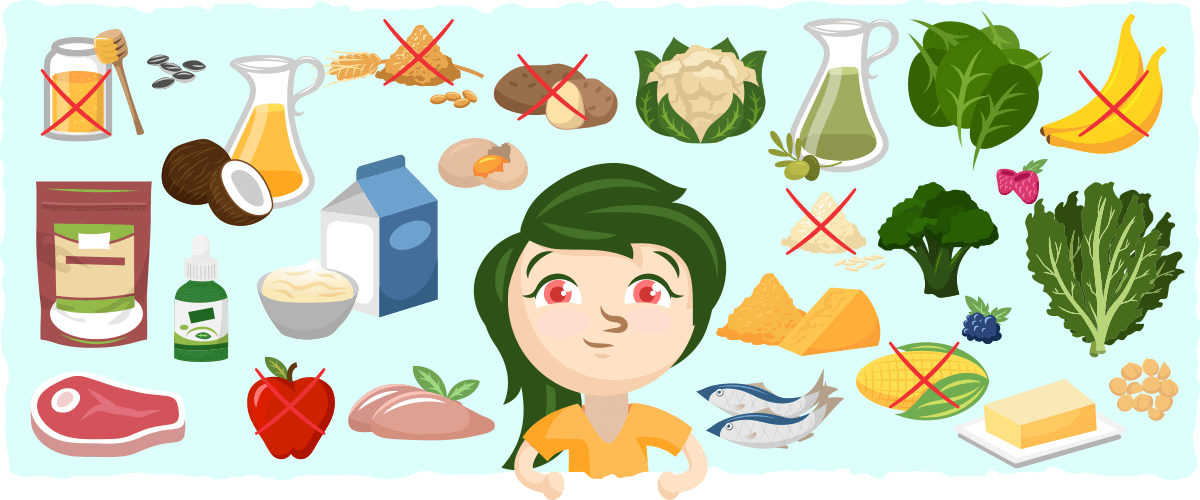
Being on a diet isn’t the easiest thing in the world, especially when you don’t know what you should eat. Below is a quick list of what to eat and what to avoid, but if you want a more in-depth approach on everything you should and shouldn’t eat, check out our ketogenic diet food list >
You want to keep your carbohydrates limited, coming mostly from vegetables, nuts, and dairy. Don’t eat any refined carbohydrates such as wheat (bread, pasta, cereals), starch (potatoes, beans, legumes) or fruit. The small exceptions to this are avocado, star fruit, and berries which can be consumed in moderation.
Do Not Eat
- Grains – wheat, corn, rice, cereal, bread, etc.
- Sugar – honey, agave, maple syrup, corn syrup, etc.
- Large Fruit – apples, bananas, oranges, grapefruit, etc.
- Tubers – potato, yams, etc.
Do Eat
- Meats – fish, beef, lamb, poultry, eggs, etc.
- Leafy Greens – spinach, lettuce, swiss chard, kale, etc. (fresh or frozen)
- Above ground vegetables – cabbage, asparagus, broccoli, cauliflower, zucchini, etc. (fresh or frozen)
- High Fat Dairy – hard and soft cheeses, high fat cream, butter, etc.
- Nuts and seeds – macadamias, walnuts, pecans, almonds, sunflower seeds, etc.
- Avocado and berries – raspberries, blackberries, strawberries, and other low glycemic impact berries
- Sweeteners – stevia, erythritol, monk fruit, and other low-carb sweeteners >
- Other fats – coconut oil, olive oil, MCT oil, high-fat salad dressing, saturated fats, etc.
Here’s a quick video that goes over the full 14-day keto meal plan and what you can expect. The video is condensed into just a few minutes, so keep in mind all of these keto meals are 2 weeks worth. Scroll down to learn more about it and download it to try out yourself!
Get Personalized Meal Plans Made for You
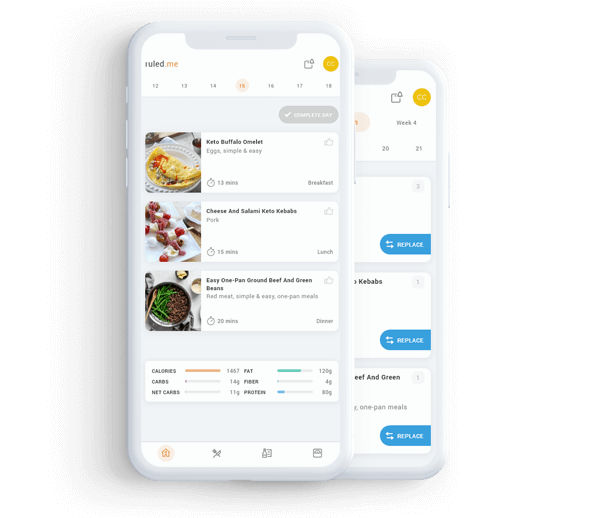
If you’re looking for a simple, long-term solution, the Keto Academy may be right for you. Our program will allow you to create customized keto meal plans made specifically to your macros. This will scale over 1,300 recipes down to your specific macros and let you choose (or swap out) recipes as you want.
It’s simple: you choose the recipes you like and they will always be made to your exact macros. No guesswork and no tracking needed.
You can specify exactly how much time you have to cook, if you want to avoid any foods, and if you want to use leftovers as well. You get full control over what you eat and you just need to follow along with the plan. If you enjoy intermittent fasting for a boost of weight loss, you can also enable that. A shopping list is made and will adapt to any recipe you swap out. You can scale the meal plan for multiple people, too!
Tips Before Starting Your Meal Plan
1. Calculate Your Macros and Adjust Plan
Calories are still something you need to consider on a ketogenic diet. While some people can get away with the “eat until full” philosophy, this doesn’t work for most people. There are tons of hormone, endocrine, and deficiency problems that we still need to take into account.
Use our keto calculator to figure out exactly how much you need to eat and adjust the plan to fit your needs. This meal plan averages 1538 calories, 120g fat, 24g net carbs, and 83g protein over the 2 weeks. If this is different to your macros, consider adjusting the plan to fit your needs.
To increase calories. If you need to increase the fat intake of the plan, add additional oil, cream, cheese, or cream cheese into your recipes; or drink coffee with cream with your first meal. If you need to increase protein, just increase the amount of lean meat that’s added into the recipe.
To decrease calories. If you need to decrease the fat intake of the plan, remove oil, cream, cheese, or cream cheese from the plan. Similarly, if you need to decrease the protein intake of the plan, remove some lean meat that’s added to the recipes.
2. Prepare and Get Ready Ahead of Time
You want to keep your cheats to none. Be prepared, make sure you’re eating what you need in order to be satiated, and make sure you’re satisfied with what you’re eating. If you have to force yourself to eat something, it will never work out in the end. This is just a guideline on how you can eat on a ketogenic diet, so you’re very welcome to change up what kind of foods you eat!
Set a start date. Be realistic with yourself and set a date you want to start. Make sure to get the shopping ready for when you start so that there’s no missing ingredients or surprises. Commit yourself to follow the plan fully and stick to the start date you determine.
Re-organize your fridge and pantry. With temptation looming each time you open the cupboard, it can be difficult to stick to your newfound dietary choices. Ketosis is a process that happens in your body. You can’t just have “that one” cheat meal. If you do, it can hamper progress for up to a week before your body is back in ketosis and burning fat again.
If possible, clear out any high-carb snacks and tempting items from your kitchen so that you can stay on track. There will likely be a few new keto ingredients you’ll need to purchase for the plan, so make sure you read ahead and stock up your fridge as needed.
3. Understand the Keto Flu
The Keto Flu is a combination of symptoms that happen when you first transition to a low-carb way of eating. You may get dizziness, headache, fatigue, cramping, nausea, or fatigue for a few days after starting your keto meal plan. Don’t worry, this is normal and there are ways to combat it.
Keto is also a diuretic and can cause dehydration. With the extra urination, you will deplete both water in your body and your electrolytes quicker. Your T3 (thyroid hormone) will decrease some, and your cortisol levels will raise up. Although the keto flu affects everyone differently, you may feel some of these symptoms but you can do something to reduce the symptoms or completely stop them.
Simply increase your water intake (or drink other keto-friendly beverages) and increase your electrolytes. You can use electrolyte supplements (this is the one we use) or take a multivitamin that includes potassium and magnesium. Additionally, add salt to your food (and/or water) to help.
If you want to get a deeper look into the keto flu and more tips on how to remedy it, take a look at our in-depth article here >
4. Stop Mindless Snacking
Not only does snacking increase the number of calories you’re intaking per day, but it also creates insulin spikes each time you eat a small meal. It’s truly best to cut out all snacking when you’re on keto to see the best results. Keeping snacks to a minimum will allow your body to use your fat stores as energy and allow you to see success.
Last but not least, just do it. It’s fantastic to read, research, and plan but at the end of the day you just have to jump in and make sure that you start. Good luck!
Week 1 of the Keto Diet Meal Plan
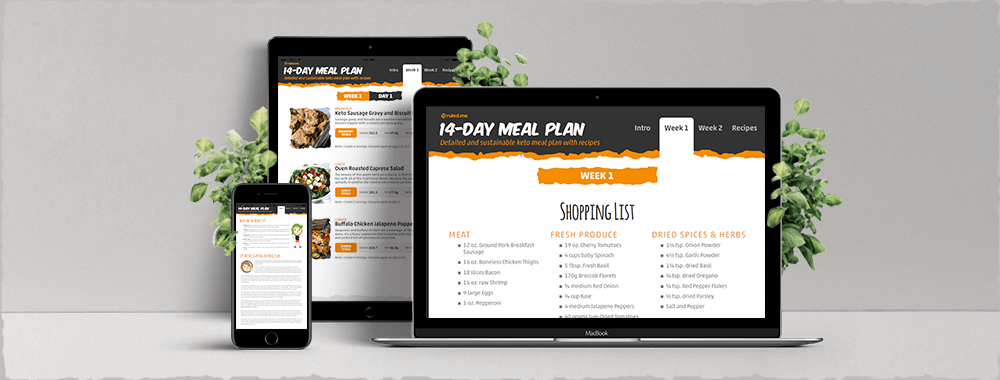
Our main goal here is to stay pretty simple at first. In my eyes, simplicity is key for someone that is just starting out on a low carb diet. You don’t want it to be a difficult transition (kitchen-wise) because it will be hard just to get rid of your cravings in the beginning. You don’t want to spend too much time cooking and slaving away to make meals.
Leftovers will be another thing we will take into consideration. Not only is it easier on you, but why put yourself through the hassle to cook the same food more than once? Breakfast is something I normally do leftover style, where I don’t have to worry about it in the morning, and I certainly don’t have to stress about it. Grab some food out the fridge, pre-made for me, and head out the door. It doesn’t get much easier than that, does it? If you want to take this further, we have a full collection of low-carb freezer meals you can prep once and pull from all week.
Breakfast.
For breakfast, you want to do something that’s pretty quick and tasty, and of course – gives you some leftovers. I suggest starting day one on the weekend. This way, you can make something that will last you for the entire week (or close to it). The first week is all about simplicity with flavor. Nobody wants to be making breakfast before work, and we’re not going to be doing that either! We’ll focus on making flavorful breakfasts that you can either make in a pinch or have leftovers for the week.
There’s a variety of low-carb options so that you can have an idea of a generic week on a ketogenic diet. If you want to add more variety, feel free to browse our breakfast recipes for more ideas. You can replace any of the breakfasts in the plan with recipes of similar nutrition.
Lunch.
We’re also going to keep it simple here. We’re mostly relying on salads that you can make the night before if needed. You can portion out the salad and dressing/components separately beforehand and grab-and-go in the morning.
The salads will be mostly a bit of protein with leafy greens. This helps with our micronutrient intake and will help tremendously with fat intake while keeping it low-carb. You can also add spices and seasonings to your salad to your liking. Just be careful about onion and garlic powder, but most other spices in small amounts have negligible carbs.
Dinner.
Dinner will mostly be casseroles with cooked-in vegetables, so no side dishes required. Casseroles are great on a low-carb, ketogenic diet because you get so many leftovers. It’s not uncommon to see recipes that take quite a long time to make, so when you can save a little time by eating leftovers, it makes a world of difference. Simply stick them in the fridge, reheat as needed, and you have dinner in little to no time at all.
Sides and snacks.
As a general rule of thumb, it’s best to keep snacking to a minimum in order to keep insulin spikes to a minimum.
P.S. No dessert for the first week. Studies show that cravings will be significantly reduced when you skip out on sweetened items for a while.
Week 1 Weekly Macro Averages
| CALORIES | FATS (g) | CARBS (g) | FIBER (g) | NET CARBS (g) | PROTEIN (g) | |
| Day 1 | 1570.2 | 123.1 | 31.1 | 12.1 | 19.6 | 85.2 |
| Day 2 | 1360.7 | 105.9 | 31.4 | 8 | 23.4 | 63.1 |
| Day 3 | 1570.2 | 123.1 | 31.3 | 12.1 | 19.6 | 85.2 |
| Day 4 | 1493.8 | 125.8 | 31.8 | 9 | 22.9 | 66.4 |
| Day 5 | 1651 | 134.1 | 24.5 | 7.3 | 17.6 | 91.3 |
| Day 6 | 1442.7 | 106.4 | 29.3 | 7.5 | 21.9 | 83.3 |
| Day 7 | 1584.3 | 138.8 | 38.2 | 12.8 | 25.9 | 58.8 |
| WEEK TOTALS | 10672.7 | 857.1 | 217.7 | 68.7 | 151 | 533.4 |
| DAILY AVERAGE | 1524.7 | 122.4 | 31.1 | 9.8 | 21.6 | 76.2 |
Recipes Included in Week 1

Sausage Gravy & Biscuit Bake
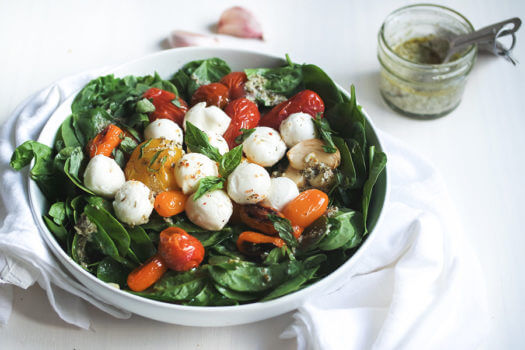
Oven Roasted Caprese Salad
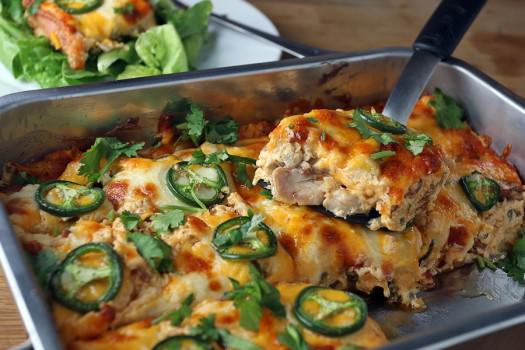
Buffalo Chicken Jalapeno Popper Casserole
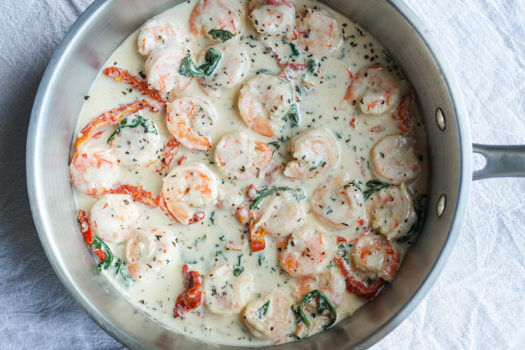
One-Pot Shrimp Alfredo

Cauliflower Pizza Casserole
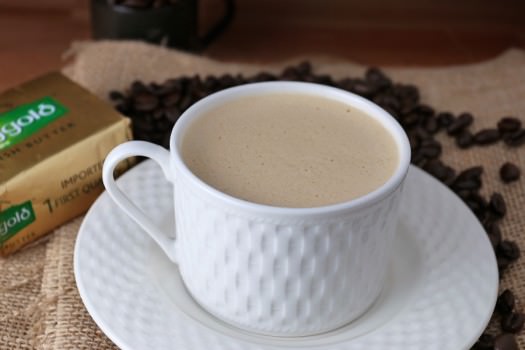
Ketoproof Coffee
It’s important to note that we do use meat and dairy in our recipes. The bulk of the meal plan is based on an average ketogenic diet that most people would follow. If you don’t eat meat, you can still do keto but it will be a bit more challenging. You will rely on plant-based protein and added fats to get to your goal macros. You can see some examples of our vegetarian and vegan keto recipes at the end of this article!
Week 2 of the Keto Diet Meal Plan
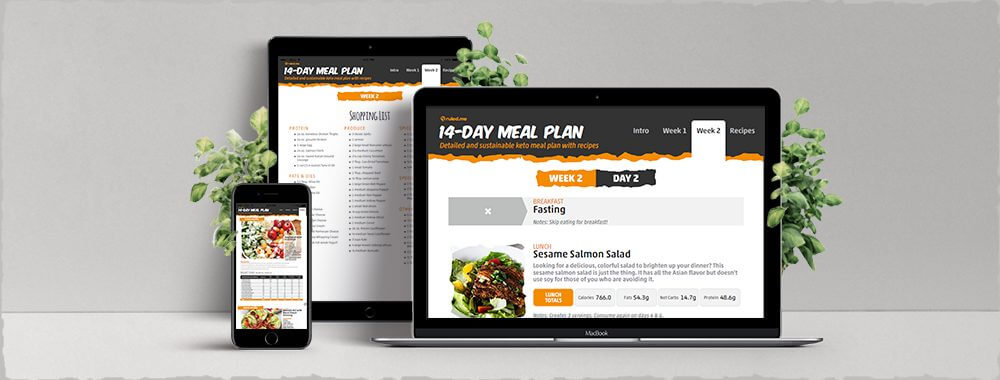
This week we’re going to be keeping it pretty simple again. After finishing off the leftovers, we’ll incorporate intermittent fasting. We’ll also include some desserts to keep your sweet tooth at bay. I’ll introduce you to some of our favorite classic low-carb recipes including new salads, soups, and another casserole.
Breakfast.
We’re fasting! Black coffee if you’re a caffeine addict like me. Tea, if you are not into the coffee so much. Tea can add great health benefits like coffee also. Some of the great benefits of green tea are:
- Polyphenols – These function as antioxidants in your body. The most powerful antioxidant in green tea is Epigallocatechin gallate (EGCG), which has shown to be effective against fatigue.
- Improved Brain Function – Not only does green tea contain caffeine, but it also contains L-theanine, which is an amino acid. L-theanine increases your GABA activity, which improves anxiety, dopamine, and alpha waves.
- Increased Metabolic Rate – Green tea has been shown to improve your metabolic rate. In combination with the caffeine, this can lead up to 15% increased fat oxidization.
Make sure to drink plenty of water throughout the fasting (and through the day). It’s very important to stay well hydrated on keto – I recommend at least 2.5 liters for women and 3.5 liters for men.
Lunch.
Easy to prep salads with lots of leftovers. We’ll alternate between a salmon salad and a meatball bowl. Plenty of leafy greens and protein to fill you up and fantastic to break a fast with. Green vegetables and high-fat dressings (or vinaigrettes) are key. Making sure to balance out the fats with the amounts of protein is very important.
Dinner.
Dinner will be pretty simplistic. We alternate between a soup and a casserole that taste great and develop even more flavor as you use them up as leftovers. On the last day, we’ll have a second salad to give you a bit more variety and a better idea of what type of foods you should be eating on a keto meal plan.
Dessert is included for a few days – if you don’t like coffee with chocolate, just leave the coffee out of the dessert!
Week 2 Weekly Macro Averages
| CALORIES | FATS (g) | CARBS (g) | FIBER (g) | NET CARBS (g) | PROTEIN (g) | |
| Day 1 | 1531.5 | 119.4 | 26 | 8.7 | 17.5 | 90.8 |
| Day 2 | 1645.5 | 127.7 | 43.2 | 11.5 | 31.7 | 85.2 |
| Day 3 | 1502.3 | 110.4 | 35 | 10.4 | 24.6 | 101 |
| Day 4 | 1645.5 | 127.7 | 43.2 | 11.5 | 31.7 | 85.2 |
| Day 5 | 1502.3 | 110.4 | 35 | 10.4 | 24.6 | 101 |
| Day 6 | 1645.5 | 127.7 | 43.2 | 11.5 | 31.7 | 85.2 |
| Day 7 | 1385.1 | 104.5 | 37.8 | 12.6 | 25.1 | 82.1 |
| WEEK TOTALS | 10857.8 | 827.6 | 263.4 | 76.6 | 187 | 630.6 |
| DAILY AVERAGE | 1551.1 | 118.2 | 37.6 | 10.9 | 26.7 | 90.1 |
Recipes Included in Week 2
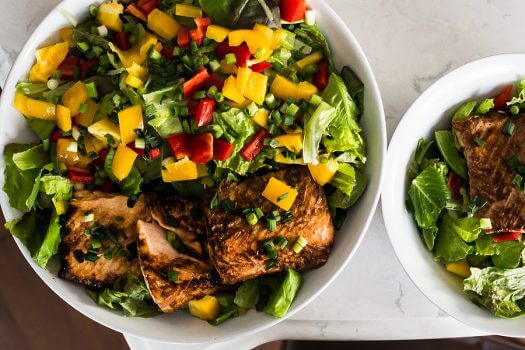
Sesame Salmon Salad

Nacho Chicken Casserole
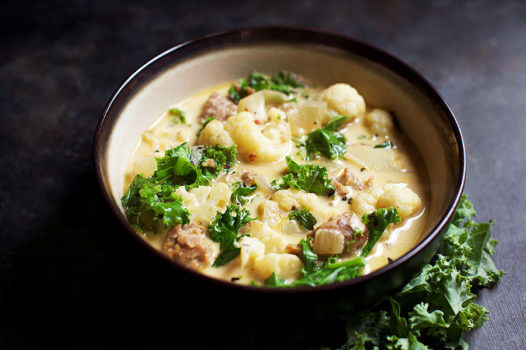
Sausage & Kale Soup
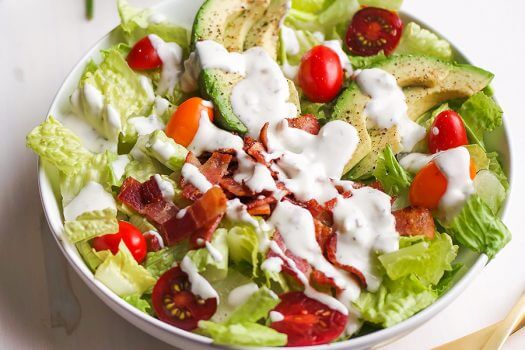
Avocado BLT Salad
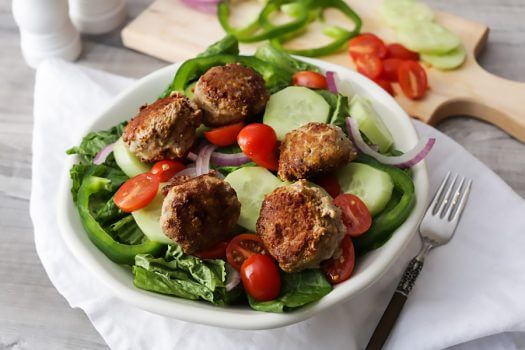
Mediterranean Lunch Bowl

Mocha Mousse
Download Ketogenic Diet Meal Plan
Since this is my full-time job, donations really help allow me to post as much to the website as I do. It’s not often that someone can say “I love my job” and mean it, but this is one that I’m truly able to. I just want to say thank YOU for making that possible. While I do really appreciate any donation you want to give, you can enter $0 in the amount given to download it for free! I’ve added $10 as the suggested price. I think that’s a very fair price considering other websites are charging in the hundreds of dollars and I’ve seen what they are like on the inside.
I have put a lot of work into this and revised it many times, but if you want it for $5 or $10 or $0, feel free to put whatever you want in the amount – I have no hard feelings! You can always download it for free and if you agree that the quality is worth paying for, come back and give a small donation to help me keep doing what I’m doing.
Shopping List for Your Plan
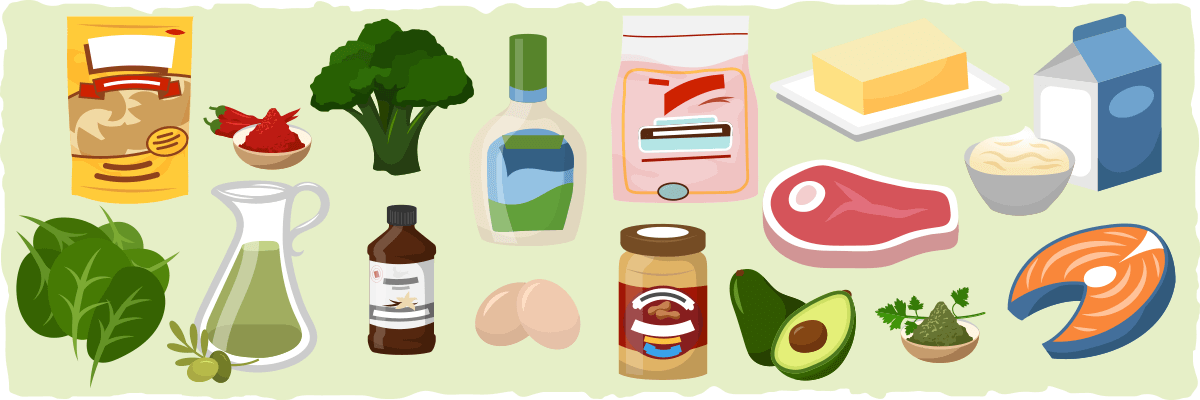
At the beginning of each week, you’ll get a shopping list to use to get all of the groceries you need for your keto meal plan. The shopping list is broken down into categories
- Protein
- Fats & Oils
- Produce
- Dairy
- Spices & Herbs
- Specialty Baking Items
- Other
Feel free to look through the shopping list and adjust to your needs. You may already have some of the spices and baking items in your home. You can usually cut back on cost as well if you are on a budget. Swap out different types of cheeses for 1 type of cheese; use an all-purpose seasoning instead of multiple different seasonings; use 1 type of vinegar instead of multiple.
To save a bit more money, you can usually combine some produce items as well. Instead of getting multi-colored peppers, stick to green. Instead of using fresh herbs, you can use dried herbs which are typically cheaper. If there are multiple types of lettuce, you can usually just get 1 type (spring mix is a favorite of mine for dark leafy greens).
FAQ & More Resources
Once you’ve followed through with the meal plan, you should have a good foundation on where to start and either create your own meal plan, or use a meal planning tool like our Keto Academy. Here are some of the most common questions we get and a few extra resources to help you stay on track:
How can I increase or decrease the calorie amounts in the plan?
If you find that’s you’re too hungry after eating the food, or not hungry enough, then you will likely need to adjust the plan to fit your body and activity level. Make sure to use our keto calculator to find your recommended set of macros.
Using those macros, you can adjust the plan as needed:
- To increase fat: Add additional oil, cream, cheese, or cream cheese to your plan. You can add slightly more vegetables into the plan (and use the additional fat to cook them) as well.
- To increase protein: With any lean meat in the plan, adjust the amount used until your needed protein levels are reached. Try to only increase the use of lean meat as fattier meats will significantly increase the calories as well.
- To decrease fat: Use less added oil, butter, cream, or cheese in a recipe until you get to your needed fat amount.
- To decrease protein: Reduce the use of lean meat in the plan. As an example, if the recipe calls for 8 oz. of shrimp, use 6 oz. instead. Adjust as needed until you get to your protein requirements.
I don’t like a recipe in the plan. Can I use a different one?
Of course! We have a library of over 700 keto recipes on the website. You can swap out any meal that has similar macros, or build upon a meal to get to the needed macros for that specific meal. While not every recipe is a complete meal, you can add low-carb vegetables in to supplement your micronutrient intake.
Can I snack while on this keto plan?
It’s best to not snack while following this plan. Your meals should satiate you and keep you full between the meals. Make sure that you’re drinking plenty of water and staying hydrated (and supplementing with electrolytes if needed).
If you find that you’re regularly hungry on the plan, you should consider checking your macros and adjusting the plan to fit your macros. Snacking will spike your insulin level and you want to have as few insulin spikes as possible while following the plan.
That said, it’s inevitable that some snacking may happen. If that do decide to grab a snack, you should be prepared for if it. We have some great examples of keto snacks to use during your progress.
I don’t eat dairy/nightshades/[insert excluded food]. Can I still use this meal plan?
You can still follow keto if you want to avoid certain foods or have allergies to certain foods. Make sure to search the website (or visit our full FAQ) for more information.
When cutting out dairy, it has shown to improve weight loss and typically help people get past a stall if they encounter while following their meal plan. This guide to dairy-free keto will help you cut out dairy and give some replacement ideas (+ a sample meal plan).
Can I drink alcohol on keto with this plan?
You can drink alcohol on keto, but you have to be mindful of the impact on macros it will have. Usually, every shot of liquor will contain ~100 calories (with no nutrition). If you are a frequent or heavy drinker, this will be very impactful on your overall calorie consumption.
Another thing to keep in mind is that alcohol does slow overall weight loss progress down. That said, it’s expected to have an occasional drink, and if you’d like some ideas you can read our guide to keto and alcohol >
I’m vegetarian/vegan, can I still follow this keto diet plan?
While it can be difficult, going vegetarian or vegan on keto is possible. Whether you’re doing it for improved health benefits, environmental concerns, or ethical reasons we have a few guides that should help.
- If you want to do vegetarian keto, this guide will help break down what you can and can’t eat alongside give some suggestions on meal ideas.
- If you’re wanting to go vegan keto, this guide will give you an overall scope of what to eat and a sample meal plan.
If you have any other questions or just want to learn more about keto in general, check out our other keto diet blog posts or make sure to visit our Full Keto FAQ List >
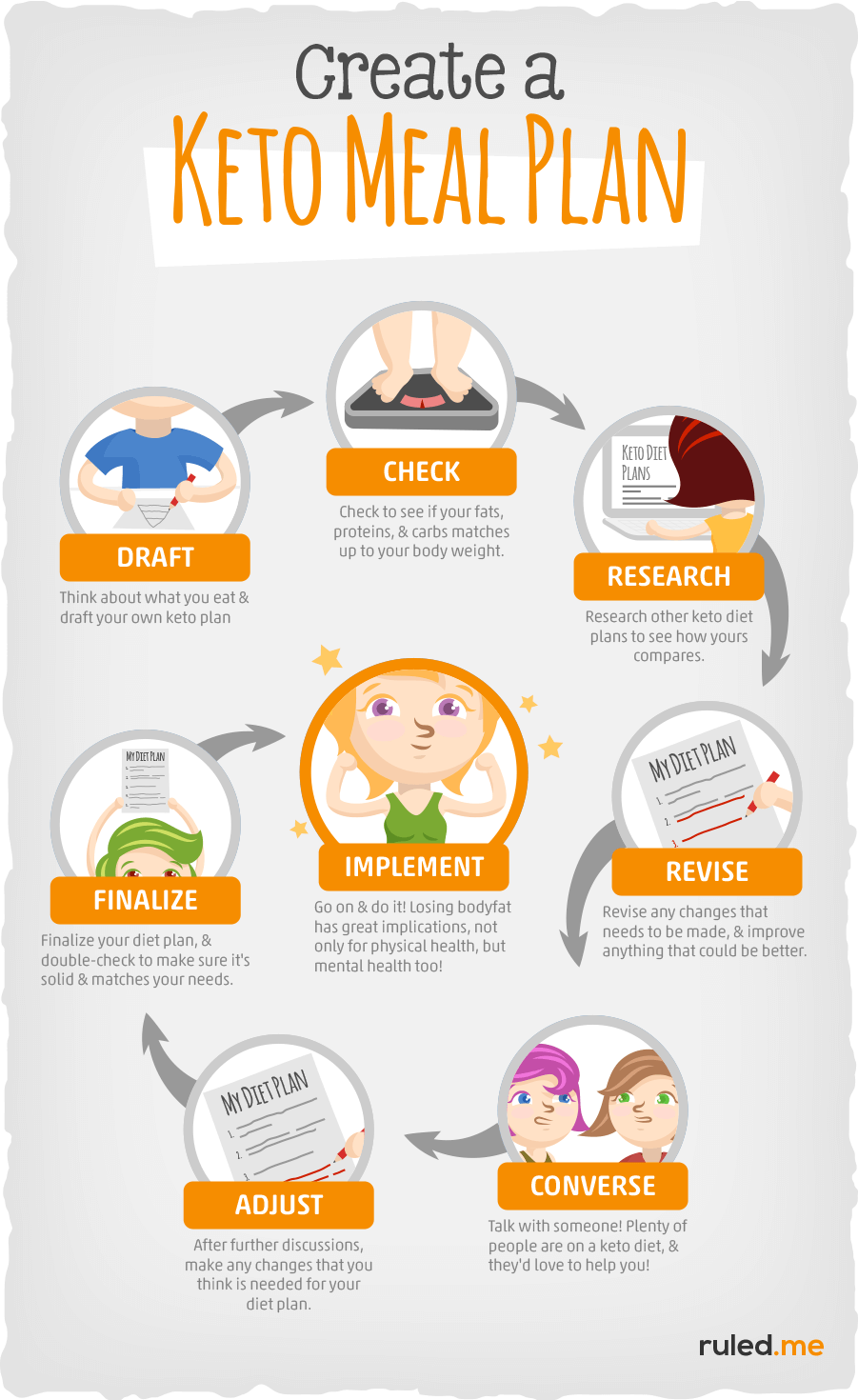
Create Your Own Keto Diet Plan!
You can use my meal plan as a guideline to help you create something that fits into your life and schedule. Keep in mind that hitting (or at least coming close to) your daily macros is the most important thing when it comes to your success. Modify or edit recipes as needed to make them fit within your macros.
You should usually never go above a 25% calorie deficit (to lose weight) or 15% surplus (to gain muscle). Use the keto calculator on the website to determine your macros as a starting point!
Just curious……..how long does it usually take to get a copy of the 30 day plan. I ordered it yesterday and nothing as yet.
So, I really liked the looks of this 30 day plan but found a glitch if you are diabetic. I realize for keto you need to count only net carbs.. But, if you are taking insulin at meal times and dose by what carbs you eat… You dose on Total carbs.. It is difficult without to figure out total carbs all over again. I don’t see that you list those.. it would be helpful or we really can’t use this. 🙁
Thank you for that important feedback Karen! I can see why that would be a really frustrating issue.
So far I have just browsed through your guide and recipes. The Chai Spice mug cake has 2 tbsp almond flour listed twice…is it supposed to?
Yes! It’s added in two stages.
I loved this meal plan. Yesterday was the last day of week 4 for my husband and I. We made a few exceptions here and there but followed the plan for the most part. I lost 20lbs and he lost 35lbs. Word of caution though, my husband developed a fairly large kidney stone from all the spinach in the first couple of week of the plan. When we restart the meal plan I will be substituting the spinach out for lettuce instead. Other than that I loved the meal plan. Thank you
Thank you Sarah, I’m sorry to hear your husband had that issue! I hope that the lettuce substitution works well for you both.
It takes month or years for kidney stones to form. In most cases the prime suspect is soda pop and sugary soft drinks. I’ve never heard that spinach causes kidney stones. However, suddenly getting good nutrition may facilitate passing those old stones.
This is one-hundred percent the case. Unfortunately, I am too preoccupied to find several of the college research articles I recently took note of, however, a sudden change in diet ABSOLUTELY facilitates and actually directly influences the passing of old kidney stones developed as a result of poor dietary consumption over time. A collection of some other health/diet related thoughts as well…
The mentality and diet ideology of kinogenics is one of the best in the business around the globe, so I second everything else Sara said. Ketogenic diets are so healthy for you and while I maintain my own ketogenic diet, which happens to leave me with 6% body fat and zero health issues (resulting from and complimented by my exercise routine), I am sure your diet plan follows all the same principals and meets the very best standards. If you’re reading this, make the change!!!
I additionally just want to add, for men, looking to build that muscle but maintain a lean figure (ie stay away from excessive bulk), eggs, fish, and chicken are the way to go (IN MODERATION). Stay away from all red meat. No exceptions unless its a truly special occasion and you just can’t say no to the beer, wine, and ribeye. I indulge that cheat night once every month or two, as long as I’m maintaining my exercise regimen. Turkey bacon is just as good if you season it right, though I myself stick primarily to low-mercury fish and eggs, with a scatter of chicken every now and then. There is enough protein in other foods that we scarcely think about containing enough protein to actively sculpt those muscles so long as your lifting light weights every other day with excess repetitions. This will help boost your metabolism too because weight-lifting functions in the same way as HIIT training in that it keeps your metabolism up long after you are finished with the exercises. (The opposite of this is long-distance cardio, which –while good for your heart and other areas– only burns calories in the moment, and not afterwards. In fact, some studies actually show that LD cardio has allegations of leading to weight gain because of how the body reacts and stores fat after you are done with said cardio).
Lastly, because you are removing carbohydrates from your diet (if you haven’t already), be aware that because you are doing so, your body will naturally crave more sugars. While sugars may not always contribute to weight loss, they are essential to healthy bodily function. I eat copious amounts of grapefruit, because it meets my sugar-intake and studies show that when consumed before meals, they lead to healthier and increased digestive patterns and weight loss (also contain tons of vitamin C like lemons and oranges). If the body abandons sugar altogether, especially while avoiding carbs as well, the body will start to crave foods that are far worse than fruits (which contain an abundance of healthy and natural sugars that exponentially increase your overall health and provide all kinds of essential vitamins). Grapes are low-calorie, delicious, and good for the heart. Bananas are full of potassium and help circulate blood flow (one of my favorite fruits because running 30 minutes after eating these will lead to almost zero cramping, and additionally they increase sex-drive so have fun with that). That said, if you cannot exercise as much as I may like, fruit can lead to weight gain like anything else so be cautious as to how much you consume. I definitely recommend add these in though, especially if combine with regular HIIT exercises.
Humans are not meant to lead sedimentary lifestyles, regardless of work schedules or occupational obligations. There are literally hundreds of bodyweight/HIIT/endurance/cardio exercises you can do with zero equipment from your own home. Just to toss out a few, throughout the day I regularly do elevated push-ups, high intensity jumping jacks, planks, and pull ups around my house. Exercise is HUGE, HUGE, HUGE for brain function and mental health. Endorphins (released during exercise) are some of the surest natural combatants used to abolish depression and anxiety, if you experience such things.
Good luck!
Actually, you are partially correct. It depends on what type of stones your body forms. The most common is calcium oxalate and most doctors recommend lowering intake of foods that are high in oxalates. Spinach is one of the foods with the highest amount of oxalates so if you know the type of stones your body creates (mine were calcium oxalate, then you can adjust your diet and either eat them in lesser amounts or cut them out altogether. I have been eating healthily and organically for a long time, I don’t drink soda or sugary drinks, and I haven’t in over 30 years. I also do not eat a lot of sweets. However, I have experienced stones in the last 8 years. As with so many things in life, each individual ultimately has to find what is best for him or her. Be well 🙂
I have been doing so well with this diet. I love ketogenics. In the 4 weeks, I’ve lost 20 lbs. I was wondering however, instead of going on with my own meal plans, this and that, could I just start over from week 1 and do it again? Has anyone tried that?
Yes! You can just start it over again if you want to. 🙂
Thank you Laura
Hi Laura what would you recommend to adjust for a man working out while trying this plan? It looks amazing but I’m hoping to help by adding cardio and weights to the process.
Hi Steven! I would calculate your macros and be sure to click the right activity level. (Perhaps moderately active?) Then compare it to the plan and see what you need to add. Each day averages about 1600 calories. You can add more by drizzling on more fat (olive oil,butter), or even add some additional food if you need it. (Perhaps some of our snack recipes, or double some of the recipes in the plan so you have extra servings available.)
Are shirataki noodles ok to eat on a ketogenic diet?
Yes! We even have some recipes that use this, like our keto chicken pad Thai!
I just paid the $5.00 to get the 30 day ketogenic diet plan and I can’t find it anywhere to download. I’m a little disappointed. Is there somewhere I can find it? Or can I get it emailed to me?
Hi! Is there a vegetarian version? I’d love to get started, but I was raised without meat and I’m not interested in starting to eat it now.
Hi Fox, unfortunately we don’t have a vegetarian version at this time.
This is so incredibly detailed, Craig! Great work. I can attest to the importance of getting your salt on keto. I have a large glass of warm water w/ 1/2 teaspoon of salt now every to help prevent muscle cramps and insomnia that I experience during ketosis.
So somehow my comment/question got deleted or just plan disappeared? Huh, anyway, what I needed to know was! I downloaded the 30 day plan into iBooks and it showed up and I could see it and such and now when I go back in there it won’t open and has a little download cloud thing and that doesn’t work either so can’t get into it al all! Help!
Hi Betty! All our comments are moderated. They wont normally show up until we go through and approve/reply to them. I can see your first one a few comments down. 🙂 If I click on the cloud on my iphone that usually downloads the item. You might want to try contacting Apple support if you can’t download your files from the cloud. They’ll probably be a lot better at troubleshooting it than we will. If you need another copy of the e-book from us then feel free to download it again through the website or send an e-mail to [email protected] and he will get your sorted out.
When following the 30 day plan do you double or triple if you have two or three people following the diet?
Yes! It’s set up for a single person.
HI, this looks interesting. Just wondering if there’s a non-dairy version of the morning coffee. Like coconut milk instead of cream or butter?
Sure! You can switch it up. Coconut cream would be wonderful.
I downloaded and tried this plan. It was incredible. In 30 days I lost 10 lbs and 8 inches. There is some much left overs, I believe I will be set for meals for another few weeks, just having to buy bacon, eggs, and spinach to make a few extra meals. Thank you!
Awesome! That’s great to hear!
Hi there. I have been Keto for three weeks, but with IF. I don’t eat until noon. Wondering if this is bad, long-term?
Actually became keto by accident: got terrible food poisoning, lost 16 pounds, all food disgusted me, and only desired veg, avocado and eggs. Grown since then but wondering if the intermittent fasting is a good move? Feeling just fine, and had breakfast today, due to a schedule issue. Any input would be really appreciated!
Hi there! You might like this article that Craig wrote about fasting:
https://www.ruled.me/interm…
Thanks! I appreciate that. I have one other thing. I have been feeling rather…uh….emotional, since really getting into ketosis a week ago. Not agitated anymore, just kinda “emo”. Is that a thing??
I think so. You’re body is adjusting, but you’ll probably feel better soon. A lot of people tell me that they feel like they have better moods once they’re adjusted to keto. 🙂
I just said that, too!! Nice, it’s not just me! 🙂
Hi is there a lo-carb recipe for quiche/flan? I plan on using an egg/cheese/broccoli filling for easy lunches…any help appreciated!
Sure! There isn’t one in this meal plan but we do have a quiche recipe on the site here:
https://www.ruled.me/almond…
You may also enjoy changing up some of our other egg bakes (crustless breakfast casseroles basically.) This one would be great with some broccoli in it too:
https://www.ruled.me/keto-w…
Wondering how to adjust the hours of fasting and eating time for my schedule. I’m an early riser, 4-5am, and I go to bed early too, 8-9pm. I also have digestive issues if I eat late. On my schedule a dinner meal at 5-6pm is the last food of the day.
The digestive issues may end once on the keto plan and I have no idea if it will affect my schedule but a full 8 hours of sleep have been my MO since childhood. Thanks for your time in answering. I’m only just discovering this and reading up before I jump in.
Are you on week 3? Craig suggests 12 hours between the morning drink and your evening meal. If 5-6 is too late for you because of your digestive issues then I think you can break it an hour or two earlier and still experience benefits from a 10-11 hour fast. You could also go back to week 1 or 2 style eating repeat that week if it works better for you.
Thanks Laura. No, just starting on Monday after I do my grocery shopping but I’ll keep this in mind.
Well I am giving this a try. Today first day, Keto Coffee, 2 cups this morning. Than had some roasted chicken, baked beans and 2 eggs with cheese. No bread today, which was hard but not thinking about it and lots of water.
Way to go Terry! Keep it up 🙂
Baked beans? This isn’t keto at all is it? Matter of fact, no beans except green beans.??
Correct – you could probably get away with a small amount of beans, but there are usually better items to spend your carb limits on.
Hi, I’m on day five and I am not sleeping well at all. Please help me! I want to keep on this diet very much because I feel great I just can’t sleep. What should I do to sleep well at night? I tried 1 tsp of honey last night before bed and that didn’t work. I do exercise regularly, except for the last two days I have been so tired from not sleeping to get on my bike. I don’t know what to try!
Hi Erica! I hope your sleep gets back on track soon. Be really careful with the honey because it’s so high in carbs. Some people seem to experience being more tired or sleeping less, but you’ll feel a lot better once you get adapted to the diet.
Just wanted to say, I am OVERCOME with emotion; literally crying right now. I’d just started my low carb journey on June 5th, generally to lose weight, specifically to win a 30-day Biggest Loser challenge at work. About half way in, I learned about LCHF and started supplementing my diet with as much healthy fat as possible (I ate a LOT of avocados and drank a lot of Keto coffee, lol)! I won that challenge losing 13 pounds and gained some cash!!! Yay!
In my research to keep positive momentum, I found you guys, about 2 weeks ago. I love all that I am learning and am inspiring others around me to at minimum cut out sugar! I have a long way to go but I am sooooooooo motivated, especially seeing results!!
About a week ago, I bought the Keto Academy and signed up for MyFitnessPal. Now, I am tracking my macros with science!!!! I’ve had a hell week, have not cheated in over a month and a half and am planning to go to a block party today. While I love my results, (just had Keto pancakes with almond butter for breakfast), I’m a little nervous about all of the temptation today. A part of my is a bit sad I can’t have some of favs (doughnuts, cakes, pizza, brownies etc) but I’m really focused.
Today was the first day I cracked open the massive cookbook that came with the Academy, because I’m SICK of eggs for breakfast, lol! I enjoyed the flavor and texture of the pancakes so #thumbsup!! THEN, I started leafing through the rest of the book and what I saw next BLEW, MY, MIND!!!!!!! I am soo excited at all the variety and Keto takes on some of my favs!!! I’m literally tearing up again… lol! THANK YOU, THANK YOU Ruled.Me!! I so look forward to this journey with everyone, especially us extreme LCHF newbies!!!
How did your party go today? Were you able to take some keto friendly things with you? I’m so glad that you are enjoying the academy. I hope you win your work challenge 😀
Hi! I was curious to know if the plan includes dairy?
Dairy and I have a love/hate relationship.
It has previously slowed my weight loss because it spikes my blood sugar. Is this common?
It does! On many of the recipes you could alter it (remove cheese/add different fat etc.) but for some of them it may be harder.
Tthe best thing about keto diet is non organic wheat is sprayed with Monsanto’s Round-Up I read at recent as 1 week before harvesting. Same is true about potatoes. Which are actually sprayed after harvest and the farmers are not allowed to go into the storage barns with the potatoes for 5 days because the chemicals are so damn nasty. The point is since these low carb diet suggest little to no bread or pasta and potato the best thing for your health is the fact you are keeping that exposure to pesticides down. Both in wheat products and potato products. And if that is the case why not spend a little more to buy organic bread or potatoes if you should have to eat some of that since you will hopefully eat very little anyway. Keto diet is a good opportunity to detox your body of these chemicals.
We have been strictly following the 30 day plan and loving it! I’ve been feeling great. Today, however I feel like a truck hit me. I have been having a couple Zipp Fizzes for electrolytes each day. But not getting close to the 2,300 mg goal Fitness Pal sets. Should I be? How?
You should be careful about telling people with existing diseases not to worry about salt intake.
While recent evidence has uncovered that some minimal salt intake is actually a promoter of health in normal healthy people, there is still huge correlations between salt intake and water retention, stroke and heart attack in less healthy people with renal disorders and hypertension.
Generalizing health benefits to healthy people to people who may have an underlying condition is dangerous. Salt does raise blood pressure and cause additional water retention. That is a scientific fact with overwhelming evidence.
I can’t seem to pay with Paypal. All I get is a message saying that it will redirect me to Paypal, but then all I get is the circle that keeps going round and round and round…..anyone else have this problem?
Paypal seems to be experiencing some outages right now. Is it still down for you?
Yep. Just tried it again and it still isn’t working.
Hi Mary, we’re not sure what the issue is. It seems to be working for other people. If you still can’t get it to work feel free to change the price to 0 and check out that way so you can get the meal plan at least. And if for some reason THAT doesn’t work send an e-mail to [email protected] and ask him to e-mail you a copy of the file.
I’ve seen so much conflicting info on keto diets/low keto diets – one says stay away from dairy and that includes coconut or almond milk, one says coconut/almond milk is fine and to use it. I only drink coconut or almond milk – is that ok to use or no? One says eat lots of veggies, one says don’t eat broccoli, cauliflower, carrots, snap peas – are those ok to eat or no? They’re the only ones I eat and only if they’re raw (well besides fresh spinach, lettuce, cucumbers)
Also, turkey sausages that I love are what I want to eat for breakfast with an egg – is that a good thing or a bad thing cuz it’s too much protein? My understanding is high fat, protein, veggies and little to no carbs/sugar. But it looks like it’s not that simple?
You can drink it. There are a lot of people who want to eat super “clean” even paleo on keto, and there are also vegans, keto junk food fanatics, and everything else you can think of. Ultimately what matters is – can you eat this item and stay within your macros? You can eat broccoli as long as you are tracking your food.
Hi! I am very new to the keto diet. I have browsed through the website and read through some of the comments and recipes.
After the 30 day plan is completed and if I would not choose to do it again, where would I go from there? Does the fasting continue? Do I go back to eating breakfast and lunch? I would love for this to help with a lifestyle change but there is no way I could fast every day for ever! Lol Is the Keto diet just a temporary thing or can it be used long term? Thank you for any help! 😀
Hi Tricia, it’s entirely up to you. You can continue fasting if you want to, or go back to eating 3 meals a day if you like that better. You can be on a keto diet as long as you want, though a lot of us do supplement a few things (like potassium and magnesium.) We have a lot of other recipes on this website, so you can just start making your own weekly meal plans and keep going too. 🙂
I am a little confused, what is the difference between your program and the one that you have the link for. The KETO Academy?
Hi Dean. This one is a 30 day meal plan. The Keto Academy has 3 different meal plans included, they are different from this one.
35.00 out of my account first time my auto fills error second time i had it right …must be a glitch can you direct me? thank u
Hey there, can you please send an e-mail to [email protected]? He can get it sorted out for you. 🙂 Sorry for the trouble!
I have two questions 🙂
1. I know that weight loose varies per individual but I have been loosing one pound per week and I have been on this program for four wks and most people loose up to 10 pounds in 4 wks so am I doing something wrong or is there something that am missing?
2. I am on IUD birth control (skyla), does this have a significant effect on loosing the weight?
Hey there, keep in mind that pound of fat equals 3,500 calories and is roughly the size of a coffee mug. Losing 4 pounds is a great start! It’s entirely possible that birth control is messing with you. Also keep in mind that even if you only continue to lose 1 lb per week – you’re still losing 52 lbs within a year. 🙂
Hi ! I’ve been doing keto on my own for 2 weeks now. Results are not as good as people say, so I might have done something wrong since I had no strict plan. That’s why i’m here in fact 😉 The thing is that my goal is, of course, to lose some fat, but ultimately to build muscle mass to compete in bodybuilding.This is why i was wondering if, in your opinion, your keto approach were still a good way to go !
thank you !
I can NOT do that ketocoffee… coffee makes me super jittery and nauseous and sometimes gives me a headache, and cream makes me feel like someone is stabbing me repeatedly in the torso. If I just put coconut oil in my green tea will it be a good substitute?
Yeah! Feel free to substitute with something you like!
Hello,
Has anyone else downloaded the keto book for free and then later was charged 185 dollars to their bank account?
Hi Christina, if that charge came from us please e-mail [email protected]
I’m lactose intolerant… do you have a suggestion for substituting the dairy items in the meal plan? I just downloaded and realized that a lot of the recipes call for dairy. Thank you!
On some recipes you may be able to take it out, but on others it might be easier just to switch it out for a non-dairy recipe.
Is it okay to drink golden milk on the 30day plan. Coconut milk, turmeric and stevia
As long as you use a coconut milk without sugar in it, you should be fine. Check the label and see how many carbs are in it before drinking. 🙂
Hi. I want to share this diet with my mother, the problem is that she doesn’t understand English. Have you ever thought of doing any translations? It would be great!!
Hi Jose, sorry but I don’t think that’s something we’re working on just yet. I hope we can get some translations in the future! Spanish would be so helpful for so many people.
One way to translate things would be to copy and paste into a google doc and then in the document change the translation to spanish. It might not be a perfect translation but it will be very close. I hope that might help.
I am trying to understand the difference between this one and the one in Keto Academy the 28 day meal plan? Which one do you recommend to start off?
I am just starting out…day 6 to be exact……looking for menu ideas and still trying to dissect all the different information. I had gastric bypass RNY 11 years ago and it seems very similar to how I ate then……I don’t want to do this wrong and throw my body into gaining weight. Do I need to talk to my doctor? I would like to ask where you get recipes for meals?
Hi Heather! It’s never a bad idea to talk to your doctor, especially since you’ve had a bypass, but be aware that not everyone is super knowledgeable about keto. 🙂 We have a lot of recipes available here on the site. This page is a good place to browse from : https://www.ruled.me/keto-recipes/
Hi! I just paid for the meal plan through my PayPal and did not get the direct link download in my email.
The email I used was: [email protected]
Can you please pass this along and help me get the download? Thank you.
Can you drink coffee during week 1, if its just black with splenda? I don’t know if I can go a week without my coffee 🙂
Also, I’m type 1 diabetic, are there any adjustments that should be made taking that into consideration?
Personally, I keep drinking it… I don’t think I would survive otherwise, lol.
yes you can coffee with coconut oil or organic butter and heavy cream only
no milk no half and half
Hi Laura/Craig,
Was hoping you could help me with a query please.
I did the 30 day meal plan and lost 5kgs, was so happy! 83kgs > 78kgs
After the 30 days I’ve kind of been doing my own variation, Im happy to say im now down 12kgs total! 71.4kgs.
Im hoping I can get to 60 – 65kgs.
But this past 2 weeks no weight loss ☹
Im completing an egg fast this week, but 3 days in and still no change.
So long story kind of short lol, Im looking into purchasing the Keto Academy – $54.
My question is – Is this set up to be at my macros? How does this work?
Im in Australia so I have trouble getting some of your ingredients list but I try to sub to them as close as possible or I just omit somethings..
https://www.ketoacademy.com/
Thank you so much for your time, Hope you have a lovely day.
Hi Gillian!
The Keto Academy isn’t customized to your specific macros. It’s like the 30 day meal plan where you might have to adjust it a bit if you need a little more or less. You’d probably still really enjoy it though!
I think you might be interested in this article:
https://www.ruled.me/ketoge…
It has some ideas for things to look at that might be affecting you. If you haven’t already, you might also want to recalculate your macros after losing that much weight. 🙂 You’re doing a great job!
Awesome, Thanks so much for your reply Laura. Take care. Thank you so much for all the information you guys provide. It has changed my life!
Hi
I have been in keto diet for five days today was super excited had been really diligent in a chef so that’s good and bad I come up
With May ideas but also I’m surrounded by food all day, anyways I
Got the strips today and when I peed on it and it stayed pale pink I was really dissapointed since it’s been a lot of effort, the only thing I can think of is some days I didn’t drink had a gallon of water and yesterday I had a sugargfree vanilla iced coffee with almond milk, help please https://uploads.disquscdn.c…
Those strips are meant for testing diabetics and are not a good indicator of how well you are doing. Check this article out:
https://www.ruled.me/measur…
I am just looking into this way of eating. I am allergic to almond ( as well as some other nuts, wheat, soy, sesame and shellfish) so are there substitutes for specifically, almond flour, available?
You can also use coconut flour but it’s a lot more absorbent than almond flour so the recipes would have to be fiddled with if it’s something like cakes or bread. There’s also flax seed meal – but usually that one is mixed with other flours. Simpler recipes that use almond flour for things like breading chicken you can usually just switch, or use something like Parmesan cheese or pork rinds.
Thank you!
My brother is allergic to almonds and our family has found that using hazelnuts, which are also called filberts in some areas, and which are completely unrelated to almonds(almonds are actually related to peaches, nectarines, apricots, plums, and cherries), is a very acceptable substitute for almonds in absolutely all recipes. They can be used whole, chopped, slivered, powdered into flour, or made into nutmilk or any other thing you might do with a nut; just use an equal weight of hazelnuts as you would almonds.
Thank you for posting this! I feel so bad when people with allergies ask what to do because I don’t have experience with a nut allergy and I would hate to say the wrong thing. I learned recently that ground up sunflower seeds can make a good flour substitute for recipes that use almond flour too.
I don’t eat meat or chicken. Some shrimp or fish when eating out. How do I adjust this diet?
There are even vegans who do keto (and Craig recently posted an article about that: https://www.ruled.me/compre… I think you’ll find some good ideas there. 🙂
I am looking into following the 30 day meal plan, but I have many food sensitivities. I can’t eat cheese, milk products, and can eat eggs only 2 times a week. I have no gallbladder, so I have to add the fat slowly. Do you think I can do this plan?
Hi Carolyn, I think you may have some trouble with this plan. There’s cheese, milk products, and eggs used quite often. Sorry about that!
I am type 2 diabetic and told to eat 30g carbs per meal and 5-15g carbs per 2 snacks a day. I have done nothing but gain weight since following that recommendation and taking insulin. Is the Keto diet recommended and safe for T2 diabetics?
We’ve had quite a few success stories from type 2 diabetics who’ve lost weight and actually reversed their type 2. I personally think it’s a very good diet for diabetics.
Hi, I just started, and I hate cooking. Is it possible to do this without cooking much?
You will find it easier if you cook – you can minimize effort by using a slow cooker, or an instant pot. I also like to make a big egg casserole once a week and cut it up so I’m not cooking breakfast every single day.
Laura, do you make the egg casserole for Week 1, Cheesy Scrambled Eggs?
Not normally, but you totally could! Even freeze portions for later weeks.
Hi, I wish to start the diet. Could you please let me know how can I find the free diet plan? I wish to loose around 10 kgs. Also, I am just wondering if this diet causes depression? It is not mentioned anywhere. Could you please confirm.
I paid for the precise diet plan but I got the usual stuff in the pdf format. How can I purchase the diet chart?
thanks
Hi Kay, you can change the price of this one to free if you wish. (It lets you do it when you add it to your cart.) All of our plans come in PDF format.
I haven’t heard of it causing depression, actually some people seem to feel a lot better on keto. How you react to it could be different of course.
How is the 30 Day Ketogenic Diet different from the Keto Academy?
Hi there! I followed the Keto plan for about a month and felt great, but didn’t lose any weight. Then I started looking into the numbers and realized I was consuming too many calories. I’m small (5’1″ and 125 lbs) and the specs say I need to consume only around 1000 calories in order to lose weight. Any tips on how to do this (without starving)?
Personally I would try and do fasting during the early part of the day so I could have a larger meal in the evening. You may also want to look for more dairy-free keto recipes. The dairy packs on a lot of calories, very quickly!