

Ketosis is a metabolic state where the liver breaks down fat to produce ketones. Ketones, on a ketogenic diet, are the primary fuel source for the body. If you’re new to the ketogenic diet and you still have questions, consider reading our Comprehensive Beginner’s Guide to Keto >
There are three main ways to measure the ketones in your body, all of which have their advantages and disadvantages. The most common ways to measure and to see if you are at an ideal ketosis level for weight loss are:
- Blood Ketone Meter or Ketone Strips. Very accurate but the strips are extremely expensive.
- Breath Ketone Meters. More accurate than the urine strips, but can sometimes vary in accuracy. Cheaper than blood strips in the long-run.
- Urine Stricks. This will answer the question “Am I in ketosis?” but will not provide an accurate measure of blood ketones.
Scroll down to read a more in-depth analysis of each, and what we recommend for you.
Why Testing Your Ketone levels is Important for Keto Success
The keto diet is specifically formulated to help you achieve and sustain nutritional ketosis. When ketosis takes longer than expected, our guide on how to speed up ketosis covers what’s slowing you down and how to fix it.
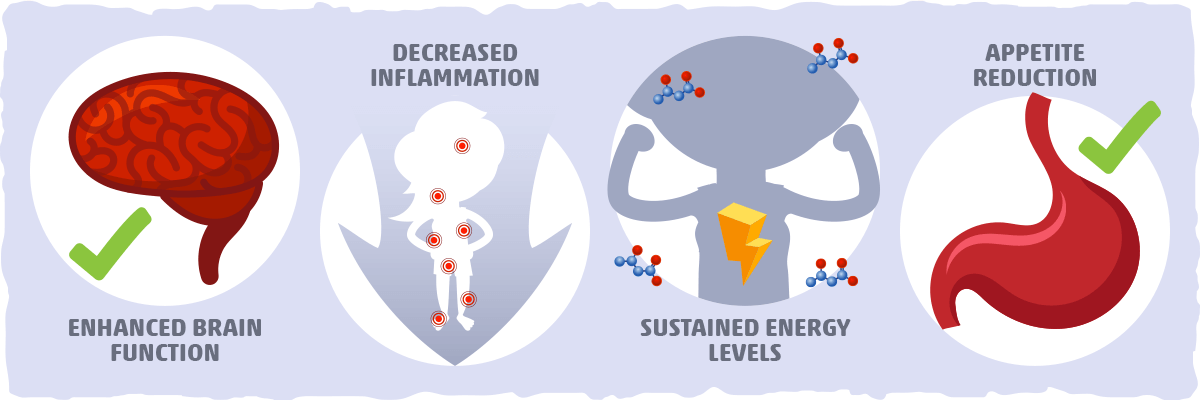
Those who are in this metabolic state tend to experience the following benefits:
- Enhanced brain function. For an extensive overview of the brain-based benefits of ketosis, check out our article on ketones and the brain.
- Decreased inflammation. Ketones are burned more efficiently than sugar, resulting in the production of less inflammatory compounds.
- Sustained energy levels. When we are in ketosis, we rely on more efficient energy sources (i.e., fat and ketones). This helps us maintain consistent energy levels throughout the day without having to struggle through sugar-driven energy crashes.
- Appetite reduction. Ketones can have an appetite-suppressing effect. This is why many keto dieters are able to lose significant amounts of fat without feeling starved or restricted.
In most cases, restricting carbs below 35 grams per day is all that is needed to enter ketosis and experience these benefits. However, this doesn’t always guarantee that your diet is ketogenic.
The most definitive way to determine if you are truly on a ketogenic diet — rather than a non-keto low-carb diet that doesn’t promote ketosis — is by measuring your ketone levels. The most abundant of those ketones is beta-hydroxybutyrate (BHB), and our guide to BHB covers what it is, how your liver produces it, and why it matters for keto.
Measuring Ketones In Urine With Ketone Strips
Urine sticks will always be the cheapest and easiest way to measure ketosis. For beginners, this should cover everything you need – there is no point in getting more complex blood strips so early on when you are still trying to understand the nuances of a ketogenic diet.
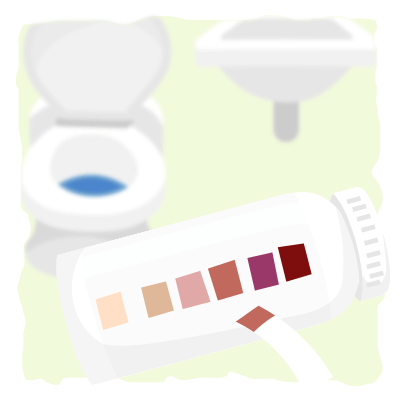
Ultimately, keto sticks are very easy to use – you hold the sticks in your urine stream for a few seconds, and within 10-15 seconds you should notice a color change in the strip (if you are in ketosis). The color of the stick typically is measured in red: light pink being low in ketone production and dark purple being high in ketone production.
While keto sticks can be ideal for a general answer to the question “Am I in ketosis?”, they aren’t precise with their accuracy.
They measure the acetoacetate in your urine, which is an unused ketone by the body. As you get deeper into ketosis and your body adapts, your body will also become more optimized in ketone production.
You should notice a dark purple color when you’re newer to the ketogenic diet. If you’ve been on keto for many months, you’ll probably see a much lighter color. Many people assume this is a bad thing, but it’s usually not. Your body has just become more efficient at creating the ketones that fuel your body. If you’ve been following a ketogenic diet for a long time, it can be common for the sticks to give a false negative result.
The biggest advantage to measuring ketosis with urine sticks is that they are incredibly cheap and typically very easy to find. The best way to purchase them is to order them online (you can use coupon RULEDME to get 15% off).
The biggest disadvantage to these is their accuracy. Besides being inaccurate if you’ve been in ketosis for a long time, the sticks can also give varying results based on your hydration. If you’re properly hydrated, many times the sticks will read a much lighter color than if you were dehydrated.
When is the Best Time to Measure Ketones in Urine?
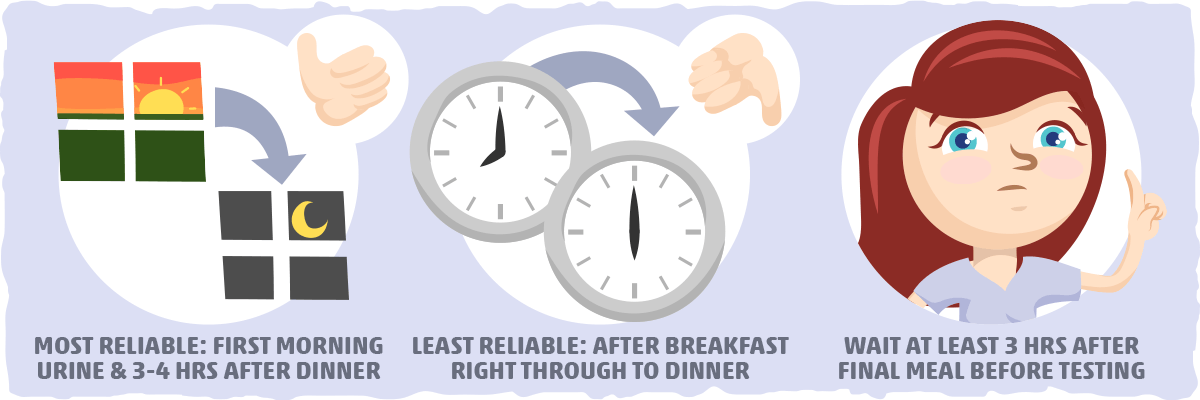
A quick search for the ideal ketone testing times will yield you dozens of hypotheses and plenty of confusion. Given the natural oscillations of ketone levels, hormones, and food intake throughout the day, when exactly should you test your urine to see if you’re in ketosis?
The best available data on this topic is from a 2016 study that was designed specifically to find the optimal time for urinary ketosis testing.
This study’s subjects were already in stable ketosis (confirmed via blood ketone testing after completing five weeks of the keto diet). They tested their urine for ketones 8x in one day and had their blood tested 18x for ketone levels throughout that same 24-hour period.
After analyzing the blood and urine ketone results, they found the most reliable urine tests were from the first morning urine and 3-4 hours after dinner.
In contrast, the least reliable timeframe was from shortly after breakfast through dinner. This is likely because their diet was formulated to maintain their weight and consisted of a keto meal or snack every 3 hours (starting with breakfast at 8 am).
Even if your diet looks significantly different from the subjects in this study, these results demonstrate a ketone testing principle that can be applied to any variation of keto eating: Wait at least 3 hours from your last morsel of food before testing.
Measuring Ketones with Breath Meters
Breath ketone meters are becoming more and more popular because of their simplicity. You connect it to your computer via USB and blow into it. From there, it measures the acetate in your breath – giving a good indication of your ketone levels.
They range from $150-200, so they are a pretty expensive upfront cost. We recommend that if you’re new to ketosis, you wait to buy one until you’re at a more advanced level. While breath meters are expensive upfront, it is much cheaper than the regular purchases of blood ketone strips. In the long-run, the most economical value for the results would be a breath analyzer – since you can reuse it as many times as you want.

Research shows that there is a pretty good correlation between acetate in the breath and the level of blood ketone meters, but can vary as you get deeper into ketosis. While they are much more accurate than the urine sticks, they can vary widely against the results of a blood ketone meter. This can sometimes lead to incorrect results, which may be misleading at times.
We recommend that if you’re on a budget, but you still want to have mostly accurate ketone readings, try Ketonix. If you can afford to purchase the blood strips and are adamant about the accuracy of each result, try a blood meter.
Note: Ketonix on Amazon is from a third-party seller that is currently gouging prices. Try to order directly from their website if you want to use a breath ketone meter.
Measuring Blood Ketone Levels
Blood ketone meters are the more accurate way to measure your level of ketosis. They show an exact and real-time measurement of the ketones in your blood, which is considered the “gold standard.” The biggest drawbacks of the blood strips are that they can get expensive quickly. They cost about $1 per strip, and most insurance providers don’t cover them.
Some slight drawbacks of blood ketone meters are their accuracy per device and their failed readings. Blood ketone readings will vary (though not greatly) between device and strips, even if they’re from the same brand. They can also occasionally fail readings, which means a wasted strip.
Remember as well that you do have to prick your fingers to draw a sample of blood for each reading. If you’re squeamish or don’t like to take blood, this may not be the best option.
You can frequently find deals online for a free meter since they are cheap. The meter companies usually use a proprietary strip that only works on their machine – so they are more interested in you purchasing strips. If you’re not a deal hunter and want the most accurate way to measure ketone production, consider ordering the Precision Xtra (you will need extra strips).
How to Find the Best Blood Ketone Meter for Reliable Ketosis Testing
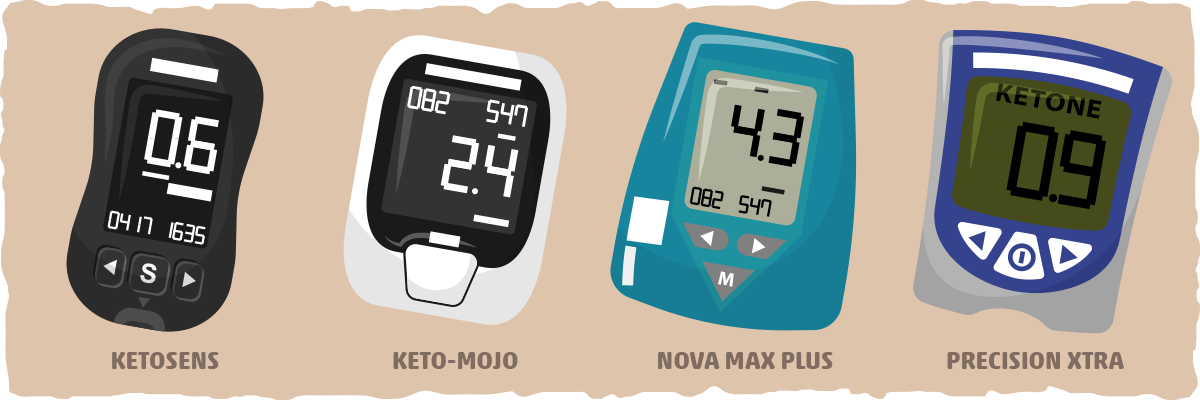
The four most recommended blood ketone monitors on the market are Keto-Mojo, Nova Max Plus, Precision Xtra, and KetoSens. Each one has been found to reliably determine when you are in deep ketosis, mild to moderate ketosis, or if you haven’t reached ketosis yet.
Ultimately, the blood ketone meter you end up choosing will most likely come down to the price of the test strips. As of February 2021, here are the prices for the four most popular blood ketone monitors (prices are from the US Amazon store):
| Meter price | Price/strip | 100 strips | Total cost | |
| KetoSens | $33.88 | $0.80 | $80 | $113.88 |
| Keto-Mojo | $44.99 | $ 0.99 | $99 | $143.99 |
| Nova Max Plus | $ 6.21 | $2.10 | $210 | $216.21 |
| Precision Xtra | $ 34.50 | $ 1.10 | $110 | $144.50 |
KetoSens is the most budget-friendly option, especially if you’re looking to test blood ketones regularly.
However, if you’re looking to track both blood sugar and ketone levels, KetoSens will not be the device for you. In this case, Keto-Mojo is the way to go.
Though Nova Max Plus and Precision Xtra can also track blood sugar, Keto-Mojo is the most cost-effective, and it comes with an app that helps track your results over time.
When is the Best Time to Test Blood Ketones?
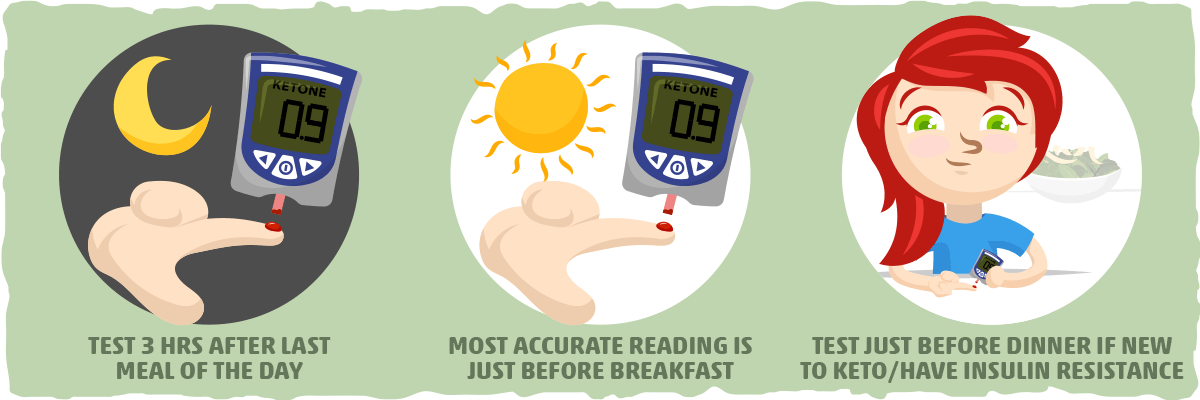
Following the same logic as urine ketosis testing, the best time to test ketones in the blood will be at least 3 hours after eating your last meal or snack.
Simply put, this means that we will get the most accurate reading before drinking coffee/tea or eating breakfast.
That said, if you recently started keto or you have insulin resistance, you will likely get the most reliable results after waiting 2-3 hours. This is due to what is known as the “dawning effect.” — when our blood sugar levels rise due to morning cortisol release.
Though this cortisol release is a natural phenomenon, it can have an initial negative impact on ketone production in first-time keto dieters and those with insulin resistance.
If waiting in the morning isn’t feasible for you, try measuring immediately before dinner (as long as you haven’t eaten lunch or a snack within the previous 3 hours).
Blood Ketone Level Chart: How to Know When You’re In Ketosis
Most people will be in light ketosis within two or three days after starting the ketogenic diet. It typically takes two to three weeks to start dipping into deep ketosis.
Here’s an overview of the numbers to help you figure out where you are on the ketosis spectrum:
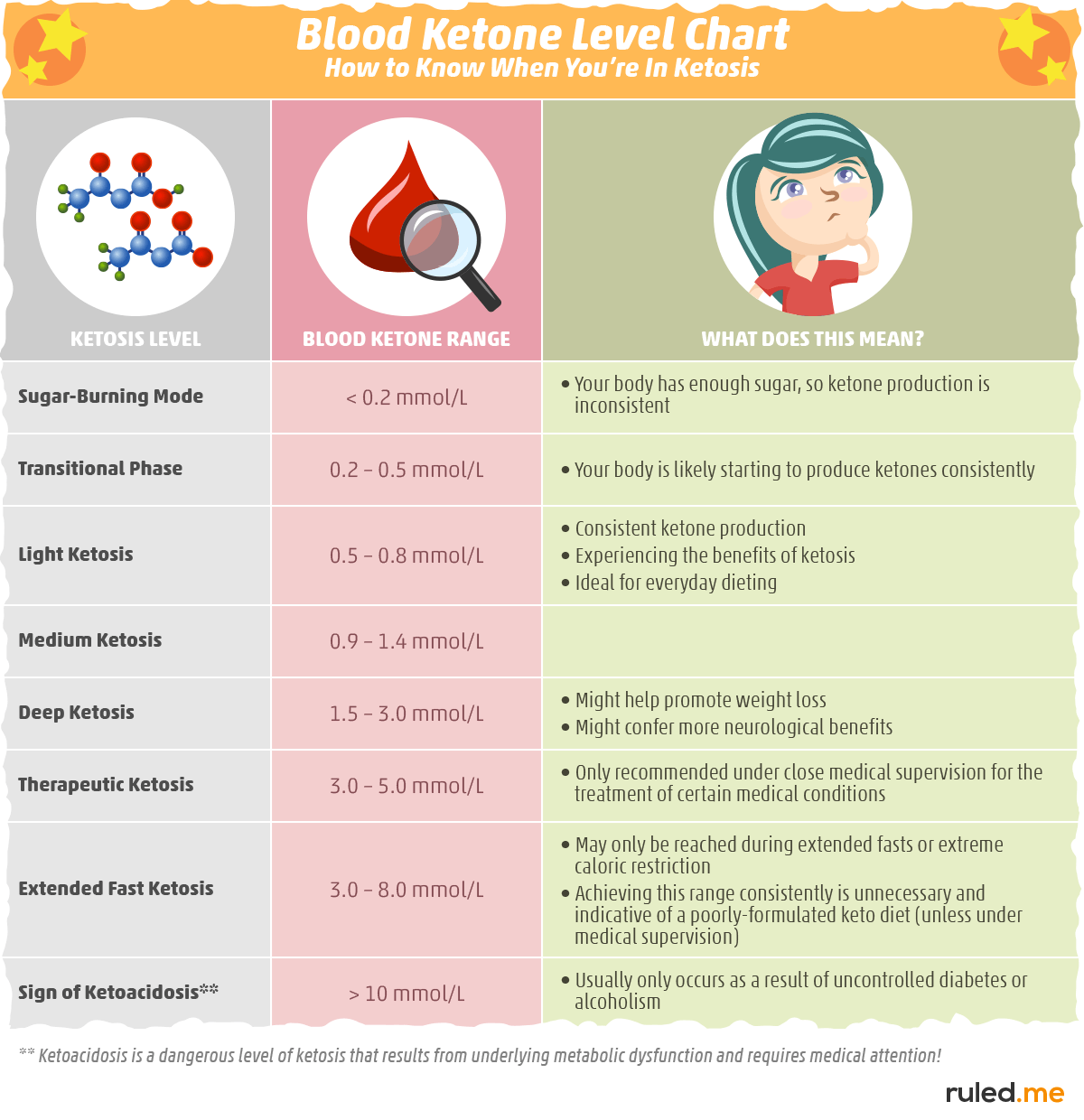
** Ketoacidosis is a dangerous level of ketosis that results from underlying metabolic dysfunction and requires medical attention. To learn more, read through our guide to ketoacidosis.
What is the Ideal Ketosis Level for Optimal Weight Loss?
Nutritional ketosis won’t promote weight loss directly, but it can decrease hunger, increase energy levels, and enhance mental clarity.
Altogether these unique benefits of ketosis can help us feel more satisfied and energized from fewer calories, resulting in more weight loss.
Though you can experience this from light ketosis, the current research suggests that the deep ketosis range will bring out these benefits to a greater degree. (Exactly how much greater is not yet known.)
The Bigger Picture: The Keto Diet, Ketone Levels, and Long-term Weight Loss Results
The hallmark of keto that sets it apart from any other diet is ketosis. However, this doesn’t mean that ketosis should be your primary focus.
What matters most is achieving your weight loss goals in a sustainable way for you, your health, and your lifestyle. Though ketosis can help you along the way, aiming to keep ketone levels as high as possible is unnecessary.
A more effective approach is to prioritize eating healthy keto-friendly foods in the right amounts for your goals. After a few days, ketosis will likely come along for the ride and provide you with an extra energy and satiety boost.

If you’d like to learn how to formulate a keto diet for your macro needs, weight loss goals, and food preferences, we’ve included several resources below:
- Keto Calculator — Calculate your daily macro goals for ketosis and weight loss.
- How to Start a Keto Diet — A three-step process for formulating your own keto diet.
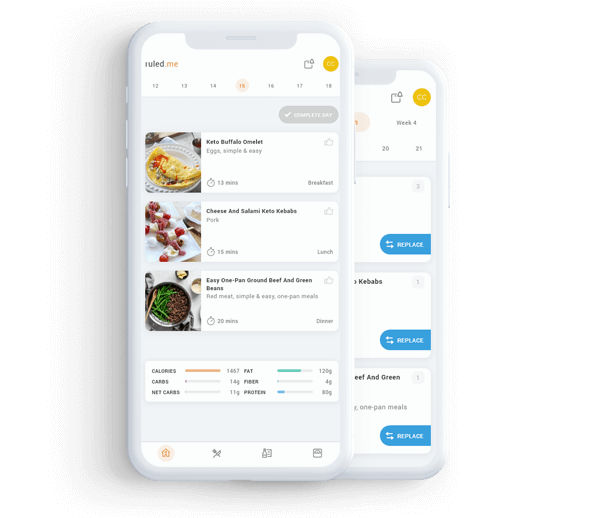
- me Keto Meal Plan App — Skip the tedious task of planning and get a keto meal plan made for you.
Takeaways for Measuring Ketone Levels
Blood ketone readings will always be the most accurate way to track and monitor your level of ketosis. Here’s a quick guide on the ranges; optimal weight loss will be in the higher end of the “nutritional ketosis” and “deep ketosis” range:
- Light Ketosis: 0.2 mmol/L – 0.9 mmol/L
- Nutritional Ketosis: 0.9 mmol/L – 3.0 mmol/L
- Deep Ketosis: 3.1 mmol/L – 6.0 mmol/L
If you’re within deep ketosis ranges, you don’t have to strive for even higher readings. If you’re falling over the 3.0 mark, you won’t have any better or worse results than if you had a reading in the 2.5 range. Frequent high readings can sometimes show a lack of calories in your diet (ketosis also happens during starvation when the body needs to break down stored energy). Make sure to use our keto calculator to find your macros.
As a side note, it is important to talk about higher levels of ketones. Values over 10.0 mmol/L paired with blood sugar levels over 200 mg/dL can usually show the beginning of a dangerous state known as ketoacidosis. While it’s impossible to get to these ranges if your body is producing and recognizing insulin, diabetics can sometimes notice this when their insulin levels are low. Very high levels of ketones and blood sugar require medical attention and should be treated immediately. If you’re a diabetic, I recommend reading more about what ketoacidosis is.
Sources:
what does it cost to be a member of the ruled me diet?
We don’t have a membership site at this time. You can download our 30 day meal plan here. It’s a $5 donation (to help us run the website), but you can also grab it for free if you need to: https://www.ruled.me/30-day…
There are some more extensive meal plans as part of the “Keto Academy.” It’s like a package of meal plans:
https://www.ruled.me/30-day…
We also have some e-book cookbooks. 🙂
Started the Keto last monday, octrober 30th and have the strips but not quiet understanding where I should be or what they mean. I am between 1.5 and 4.0. I thought the higher the ketone in urine the better but just red that the darker and my ketones is serious and not good. HELP!
Those strips are designed for diabetics, who would be having a real medical emergency if they were eating a high carbohydrate diet and urinating ketones. You’re not.
You might find this article helpful: https://www.ruled.me/measur…
Has anyone ever used a regular cheap breathalyzer for testing? I was reading about it and just curious what your thoughts were…I realize it would not be exact, but tracking the results daily may be beneficial as a cheap way to watch your readings?
Has any body had trouble getting into ketosis— I have been on Atkins and other low carb prior and had no trouble getting into ketosis within 4 days— been 6 on the fat adapted version mod protein and having difficulty- getting into ketosis- 58 y.o 15 -18 lbs over weight? Any insight would be helpful— I am follwoing the macro ‘s no cheating
Hey Paula,
Are you eating more protein or carbs than you did on the other diets? Both macronutrients can keep you from getting into ketosis consistently.
Also, how are you measuring ketosis? If you are using the urine sticks, they may be giving you false negatives because they only detect the ketones that you are excreting from your body, not the ketones you are actually using.
I have been on Keto for 30 days. My ketone blood levels were previously between .9 and 1.3. Over the past few days, they are between 3.3 and 4 as of this morning. Is that dangerous? I haven’t really done anything different, except for adding magnesium and potassium supplements. I can’t seem to find much info about this, as I am NOT a diabetic.
Hey Erin,
These ketone levels are not dangerous. Many health professionals say that 1.5 to 3 is ideal, but between 3.3 and 4 is fine as well. Being at this level of ketosis may actually confer more therapeutic benefits than having lower ketone levels.
On Keto Academy are there vegetarian options?
Sorry Stacie, but the meal plans are not really suitable for vegetarians. Hopefully we will have a vegetarian option available in the future! We’ve been trying to post a lot more vegetarian recipes lately, so hopefully you will be able to enjoy those. 🙂
When is the right time to test for ketosis in the blood?
There isn’t really a “right time”, and your ketone levels will vary based on when you measure them. For example, after fasted exercise, your ketones will be much higher than they would be after a high protein meal. It is also possible to drop out of ketosis completely after eating a high protein meal.
To see if you are consistently in ketosis throughout the day, a good time to test would be about 1-2 hours after you eat your biggest meal of the day. This will tell you what your ketone levels are during the time when they are most likely the lowest. Then, if you want to know what your ketone levels are when they are likely to be at their highest, measure them before your first meal (or right after fasted exercise, if you exercise).
These measurements will give you a good idea of what range your ketone levels fall between throughout the day.
What about alcohol on the ketozone diet? For example, I was happy to invest my 20 grams of carbs/day in a Ninkasi Vanilla Oatis Stout (beer) and was shocked (pleasantly) to find that it has 0 grams sugar according to several website. http://www.myfitnesspal.com… Is there some other reason alcohol is not allowed on the diet? Thanks for your help!
Most beers will have carbs in it. Unfortunately My Fitness Pal is extremely unreliable for nutritional content on alcoholic beverages, because these manufacturers are not required to create nutrition labels for their drinks.
You might be interested in this article that Craig wrote about different types of alcohol and keto:
https://www.ruled.me/ketogenic-diet-and-alcohol/
Can anyone tell me why my weight gain would stall even though I’m fairly new and my ketones usually register between 1.4 and 2.1 mmol/L? I’m following a 65% fat / 30% protein / 5% carb diet. I am hitting my macros most days and never going over. I never cheat and get most of my carbs from veggies. I just don’t understand. Over 3 weeks and the scale has not moved!! I’m getting so frustrated that I’m seriously ready to put sugar in my coffee. If I’m not losing weight… I’m not drinking crappy coffee anymore!!! lol
Any insight would be greatly appreciated!
Hey MJ,
I’m sorry that you are not getting the results that you expect. There are a couple of strategies you can use to help you get the scale moving. You can find them in this article:
https://www.ruled.me/ketoge…
If you have any other questions, please let me know.
The Ketone test strips I’m using matching a ‘moderate 4.0’ on the bottle. What does that mean? I can’t compare that to the numbers you posted above. Is this good then, according to the bottle? Thanks for such and awesome site. I appreciate it.
It just means that you’re in ketosis. The urine strips can be dark based on dehydration and light based on normal hydration – so the urine strips don’t really give an accurate count as mentioned in the article. It’s more to just answer the question “am I in ketosis?”
If you want an accurate measurement of ketones, you’d have to use a different method like blood ketone testing.
The Ketone Strips I am suing matches a Small 15 on the bottle. Does it mean I am not in Ketosis? Does higher the number mean you are in Ketosis? I am a bit confused. This is my first week (6th day) doing this diet. Please help.
Any registration on the sticks means you are in ketosis usually. The urine strips just aren’t accurate – they normally read lower if you are well hydrated and higher if you are dehydrated. It’s a runaround to try to optimize your diet based on the results of the urine strips.
Hey Shelly,
The small 1.5 means that you are probably in ketosis. Since it is your 6th day, you are probably excreting fewer ketones than in the beginning and may notice fewer ketones being excreted in your urine as you continue on the keto diet (which means you may get false negative readings).
As long as you are sticking to the keto diet, getting the results you want, and feeling good, there is no need to worry about your ketone levels.
Does everything make sense now? If you have any other questions, let me know.
Hello, this is my 13th day on keto.
I have three questions:
– 1 Will drinking Cyrstal Light Lemonade and eating Low carb bars called Elevation by Millville
Coconut Almond Advance Bars that have only 2 net carbs, 7 fiber, and 11 sugar alchohols affect my blood sugar or slower my progress? Link to bars
https://www.aldi.us/en/groc…
– 2 I measured my ketones using the ketone strips and I got a result of small to moderate. I have been watching and counting my macros on my fitbit along with IF 8/16. Is this normal? When should I be expecting to be in deep ketosis?
– 3 After fasting for 16 hours, I do not feel hungry and somedays I eat 600 calories. Will this cause my body to store fat or slow the process of losing weight?
Thank you for you time!
Aseel Salem
Hey Aseel Salem,
1. To figure out if you can eat those bars and drink crystal light, calculate the net carbs in each and see if that fits into your daily carb limit. To help you find out how to do this, we have a quick guide you can find here:
https://www.ruled.me/faq/how-do-i-calculate-net-carbs/
After a quick look at these products, I think crystal light is a good keto-friendly drink, but the bars that I could find nutrition facts for seem to have enough net carbs in them that you need to be much more mindful of how many you eat and the other net carbs you are eating throughout the day.
2. Yes, this is normal and your ketone levels may increase as the days progress. Continue doing what you are doing as long as you are getting the results you want.
If you want to deepen your ketosis levels, you can also limit your net carbs more strictly and increase your activity levels.
3. Fasting and eating the small amount that you eat on the days when you aren’t hungry is actually going to make you lose weight more quickly. The only problem with eating such a small amount of calories is that you will lose some muscle mass (unless you eat enough protein) and you may run the risk of mineral and vitamin deficiencies if that’s how you eat on most days.
Does all of this make sense? If you have any other questions, please let me know.
When I use the strip, it comes out a darkish mauve. Where does that fit on the scale?
Hey Gayle,
This means you are likely to be in the higher end of the range (probably somewhere between the highest and second highest values for ketones in the urine).
If you have any further questions, let me know. 🙂