

No, honey is not keto. One tablespoon of raw honey contains roughly 17 grams of net carbs – which is most of your daily budget if you’re keeping carbs in the 20-30g range. That’s not a rounding error. That’s a single drizzle wiping out the better part of a day’s work.
I get why people ask. Honey feels different from table sugar. It’s natural, it’s been used for thousands of years, and there’s always someone who insists that raw or manuka honey is somehow fine because of its nutrients or antimicrobial properties. After testing my ketone levels through plenty of dietary experiments over the years, I can tell you that your body doesn’t grade on a “natural” curve. Sugar is sugar to the metabolic machinery that controls ketosis.
This article breaks down the actual numbers across different honey types, explains why the carb load matters more than the source, and gives you real alternatives that satisfy the same craving without the carb cost. If you’re already reaching for honey in a recipe, I’ll show you what to use instead.
Jump to a section:
- Honey’s Nutritional Breakdown
- Why ‘Natural’ Doesn’t Mean Low-Carb
- Can You Use a Small Amount of Honey on Keto?
- Keto-Friendly Sweetener Alternatives
- Keto Recipes That Replace Honey Without Losing the Flavor
- Key Takeaways
- Frequently Asked Questions
Honey’s Nutritional Breakdown
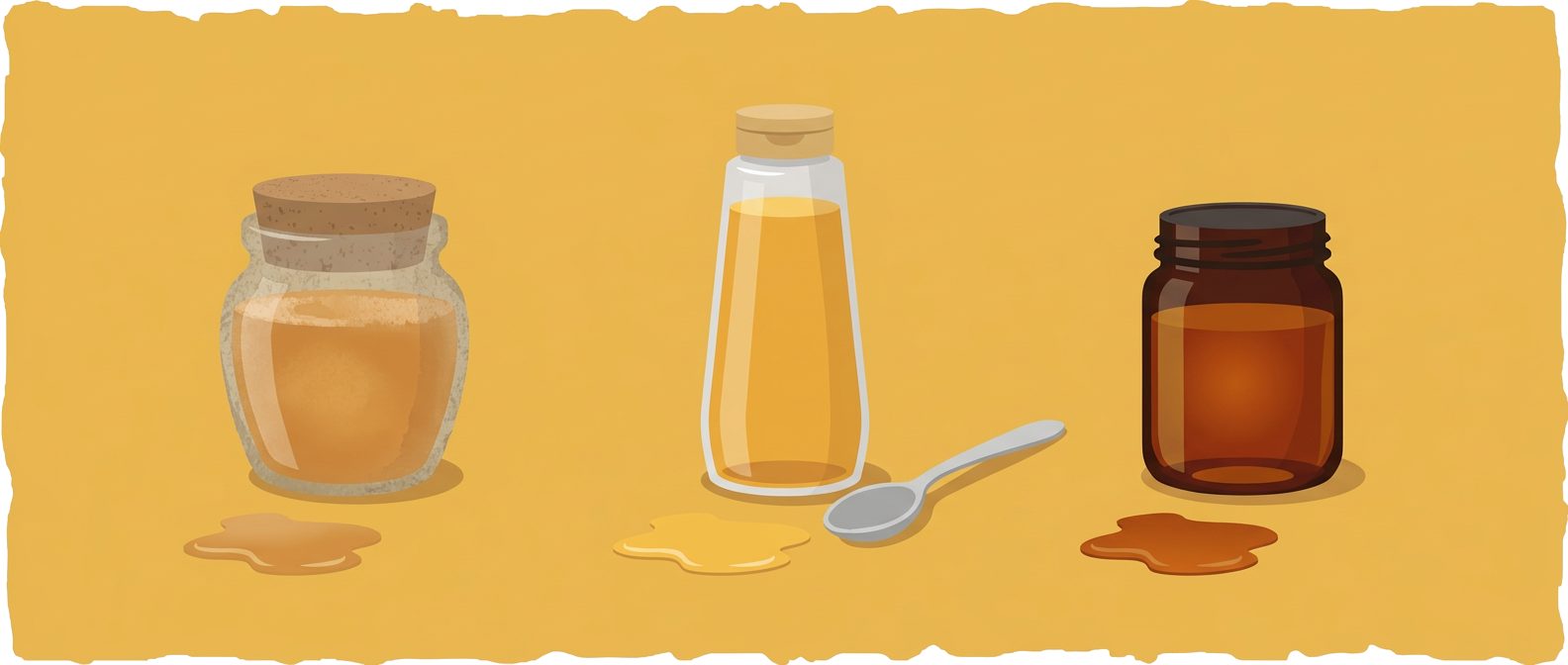
The numbers vary slightly depending on the type of honey, but not enough to matter for keto purposes. Here’s what a standard tablespoon looks like across the three most common varieties:
| Type | Serving | Total Carbs | Net Carbs | Sugars | Fiber |
|---|---|---|---|---|---|
| Raw honey | 1 tbsp (21g) | 17g | 17g | 16g | 0g |
| Processed honey | 1 tbsp (21g) | 17g | 17g | 17g | 0g |
| Manuka honey | 1 tbsp (21g) | 16-17g | 16-17g | 15-16g | 0g |
There’s no fiber to offset the carb count. Zero. That means every gram of carbohydrate in honey hits your bloodstream as sugar.Per the USDA FoodData Central entry for honey, one tablespoon (21g) provides 17.3g total carbohydrates with 0g dietary fiber and 17.2g total sugars.
Raw honey has slightly more trace minerals and enzymes than processed honey. Manuka honey contains methylglyoxal, a compound linked to antimicrobial properties. Neither of these facts changes the carb count in any meaningful way. If you’re eating honey for its minerals, you’d need to consume enough of it to blow your carb budget many times over before the mineral content became nutritionally notable.
Why ‘Natural’ Doesn’t Mean Low-Carb
This is probably the most common misconception I run into. People see “natural,” “raw,” or “unprocessed” and assume it plays by different metabolic rules. It doesn’t.
Honey is roughly 80% sugar by weight – mostly fructose and glucose.Honey composition is approximately 38% fructose, 31% glucose, and 10% other sugars per the Journal of Food Composition and Analysis. Once those sugars enter your digestive system, your body processes them the same way it processes any other simple sugar. Glucose raises blood glucose directly. Fructose heads to the liver for processing. Either way, insulin goes up. When insulin is elevated, fat burning slows down and ketone production follows.
Ketosis isn’t a state you maintain by eating “better” sugar. It’s a state you maintain by keeping total carbohydrate intake low enough that your body runs out of glucose to burn and turns to fat instead. Honey’s origin story (flowers, bees, centuries of human use) is interesting, but it has no bearing on how your pancreas responds to 17 grams of sugar.
The same logic applies to other “natural” sweeteners that people sometimes try to sneak into keto: agave (higher fructose than table sugar), maple syrup (~13g carbs per tablespoon), coconut sugar (~12g per tablespoon), and date syrup (~15g per tablespoon). The package design changes. The metabolic effect doesn’t.
Can You Use a Small Amount of Honey on Keto?
Technically, yes. A small enough amount of anything fits into any carb budget. Half a teaspoon of honey is around 3 grams of net carbs, which is workable if you’re careful about every other carb that day.
In practice, this almost never makes sense. Here’s why: that half teaspoon of honey gives you a barely perceptible sweetness, uses up a significant chunk of your daily budget, and provides nothing that a zero-carb sweetener can’t replicate more effectively. You’re spending carbs you could put toward actual vegetables (spinach, broccoli, zucchini) foods that come with fiber, micronutrients, and real satiety value.
I’ve tried this approach when I was first figuring out how to make keto baking work. Tiny amounts of honey in recipes felt like a reasonable compromise. The problem is that honey flavor is distinctive – it doesn’t just add sweetness, it adds a specific taste – and the moment you use enough to actually taste it, you’ve used enough to matter for your carb count. It also sets a mental precedent that “a little” of high-carb foods is fine, which tends to erode portion discipline over time.
The honest answer: save those carbs for something with nutritional value. Use a keto sweetener for the sweetness. You’ll get the same effect without the trade-off.
Keto-Friendly Sweetener Alternatives
Having tested every sweetener on this list in my own kitchen across six cookbooks, this is where the conversation gets practical. If you need sweetness in a recipe – or in your coffee, or in a dressing – these are the options that won’t push you out of ketosis. For the complete rundown, see the comprehensive guide to keto sweetener substitutions and the best and worst keto sweeteners guide.

Erythritol
Erythritol is a sugar alcohol that your body absorbs but doesn’t metabolize for energy, so it doesn’t raise blood glucose or insulin.A 1996 clinical study in the European Journal of Clinical Nutrition found that erythritol is almost entirely absorbed in the small intestine and excreted unchanged in urine, resulting in no significant change in blood glucose or insulin levels. It has about 70% of the sweetness of sugar and a clean, neutral taste. It works well in baked goods, though it can crystallize when cooled – which is why many keto bakers blend it with a small amount of monk fruit for a more stable texture.
Stevia
Stevia is extracted from the leaves of the Stevia rebaudiana plant and has zero calories, zero carbs, and no effect on blood glucose.A 2010 RCT by Anton et al. in Appetite (PMID 20303371) found that stevia preloads significantly reduced postprandial glucose and insulin levels compared to sucrose, with no compensatory increase in food intake. It’s significantly sweeter than sugar – up to 200-300 times – so you use very small amounts. The main limitation is a mild bitter or licorice aftertaste that some people notice, especially at higher concentrations. Liquid stevia tends to have less aftertaste than powdered versions.
Monk Fruit
Monk fruit sweetener comes from mogrosides extracted from the monk fruit (luo han guo). It’s 150-200 times sweeter than sugar, has zero calories and zero net carbs, and doesn’t raise blood glucose. Many people find the taste profile cleaner than stevia. It’s often blended with erythritol in commercial keto sweeteners because the two work well together – monk fruit adds intensity, erythritol adds bulk and texture.
Allulose
Allulose is a rare sugar that occurs naturally in small amounts in figs and raisins. It tastes nearly identical to regular sugar, behaves like sugar in cooking (it browns and caramelizes), and has a glycemic index of in effect zero.A 2012 study in Food Chemistry confirmed that allulose is absorbed but not metabolized by the body and does not significantly raise blood glucose or insulin levels. For keto baking that needs to caramelize or brown – think keto brownies or sauces – allulose is often the best option. It’s more expensive than the others, but the functional properties are worth it for the right applications.
| Sweetener | Net Carbs (per tsp) | Sweetness vs Sugar | Best Use |
|---|---|---|---|
| Erythritol | 0g | ~70% | Baked goods, bulk sweetening |
| Stevia (liquid) | 0g | 200-300x | Coffee, smoothies, dressings |
| Monk fruit | 0g | 150-200x | Baked goods, coffee |
| Allulose | 0g | ~70% | Caramelizing, sauces, candy |
| Honey (for reference) | ~6g | 100% | Not keto-compatible |
Keto Recipes That Replace Honey Without Losing the Flavor
Most recipes that call for honey are using it for two things: sweetness and a slightly floral, complex flavor note. The sweetness is easy to replace. The flavor takes a little more thought.
For dressings and marinades, a combination of allulose (for body) and a small amount of vanilla extract (for warmth and complexity) gets you surprisingly close to a honey profile. Our keto honey vinaigrette uses exactly this approach and works on salads and grilled proteins without a single gram of honey.

For baked goods, the substitution is simpler. Erythritol or a monk fruit-erythritol blend handles sweetness, and you can add a drop of honey extract (which is flavoring, not actual honey, and contains negligible carbs) if you want the specific honey taste. This works well in things like keto chocolate chunk cookies or muffins where honey was originally added for moisture and sweetness.
For keto desserts more broadly, the sweetener swap is usually seamless. The keto dessert recipes on this site are built from the ground up with these alternatives, so you’re not reverse-engineering a standard recipe – they’re designed to work as-is.
A few specific recipes to try if you’re making the switch:
- Chocolate keto brownies – uses allulose for proper fudgy texture
- Keto chocolate chip ice cream sandwiches – sweetened with erythritol blend
- Low carb chocolate brownies – another brownie option with a different texture profile
- No-bake keto lemon cheesecake – uses a monk fruit blend
Key Takeaways
- Honey is not keto-compatible – 1 tablespoon contains ~17g net carbs, which is most of a day’s carb budget on a 20-30g limit.
- Raw, manuka, and processed honey all have essentially the same carb count. The type of honey doesn’t change the metabolic impact.
- Your body processes honey’s sugars the same way it processes table sugar – the natural origin makes no difference to insulin response or ketosis.
- Erythritol, stevia, monk fruit, and allulose are all zero-net-carb alternatives that work in cooking, baking, and drinks.
- If you need a honey flavor specifically, honey extract (a flavoring, not actual honey) can replicate the taste with negligible carbs.
For similar quick answers, see our guides on is rice keto, is oatmeal keto, and is peanut butter keto.
Frequently Asked Questions
How many carbs are in a teaspoon of honey?
One teaspoon of honey (about 7 grams) contains roughly 6 grams of net carbs. That’s about 6 tablespoons worth of honey-equivalent sweetness if you use liquid stevia instead, with zero carbs. If you’re keeping carbs between 20-30g per day, a teaspoon of honey isn’t catastrophic in isolation – but it’s also not a freebie, and the carbs are better spent on vegetables or nuts that come with fiber and micronutrients. Check the keto calculator to see exactly how tight your daily budget is.
Is raw honey better than regular honey for keto?
No. Raw honey has slightly more trace enzymes and pollen compared to processed honey, but the carbohydrate count is essentially identical – around 17g net carbs per tablespoon for both. The difference between raw and processed honey is a nutrition story, not a carb story. From a keto standpoint, they’re the same food. If you’re looking for a sweetener that won’t affect ketosis, the keto honey vinaigrette uses zero-carb alternatives that replicate honey’s role in dressings.
Is manuka honey keto-friendly?
Manuka honey is not keto-friendly. It contains 16-17g net carbs per tablespoon – nearly identical to any other honey variety. Manuka honey does have meaningful antimicrobial properties due to its methylglyoxal content, but those properties don’t change its carbohydrate load. If you’re using manuka honey therapeutically (for wound care or gut issues), that’s a different conversation – but consuming it as a food sweetener on keto is not compatible with staying in ketosis. For general keto guidance, the keto calculator can show you how each food choice affects your daily limits.
What can I use instead of honey in keto baking?
The best honey substitutes for keto baking depend on what you’re making. For moisture and sweetness in muffins or cakes, use allulose at a 1:1 ratio – it behaves most like sugar in terms of browning and texture. For recipes where you just need sweetness without bulk, a monk fruit blend or liquid stevia works well. For a honey-flavored dressing or glaze, allulose plus a small amount of honey extract (pure flavoring, negligible carbs) gets close to the real thing. The keto brownie recipes on this site are good examples of how these sweeteners perform in practice.
Will a small amount of honey kick me out of ketosis?
It depends on how much, how close you are to your carb limit, and your individual metabolic response. Half a teaspoon (about 3g net carbs) is unlikely to knock most people out of ketosis if everything else that day is well within their limit. A full tablespoon (17g net carbs) puts most people right at or over their daily threshold, which will interrupt ketosis. The real question isn’t whether you can get away with it – it’s whether it’s worth it. For what it costs in carbs, a zero-carb sweetener does the same job without the risk. For more on managing carb limits, see the keto calculator.
Sources
- Honey, Nutritional Profile – FoodData Central
- Characterization of honey by headspace solid-phase microextraction and GC-MS
- Metabolic fate of erythritol in humans
- Effects of stevia, aspartame, and sucrose on food intake, satiety, and postprandial glucose and insulin levels (Anton et al., Appetite, 2010, PMID 20303371)
- d-Allulose: a rare sugar with functional properties