
No, rice is not keto. One cup of cooked white rice packs around 45 grams of net carbs – that’s more than a full day’s worth on a standard ketogenic diet, where the goal is staying under 20-30g of net carbs per day.
After more than a decade eating keto full-time and writing six cookbooks around it, I get asked about rice a lot – and I understand why. Rice is a staple in so many cuisines (Asian, Latin American, Middle Eastern) and giving it up feels like a bigger sacrifice than ditching bread. But the carb numbers are what they are, and they don’t leave much wiggle room.
The good news is that cauliflower rice has gotten good enough over the past several years that it works as a solid substitute in most dishes. I was skeptical when I first started using it, but it absorbs sauces, fries up well, and fills the textural role that rice plays in a bowl or a stir-fry. We’ll cover the full comparison (white rice, brown rice, cauliflower rice, and a few other alternatives) plus recipes to put them to use.
Jump to a section:
- Rice Nutrition: The Numbers That Disqualify It
- Why Brown Rice Doesn’t Work Either
- Cauliflower Rice: The Swap That Actually Works
- Other Keto Rice Alternatives
- Cauliflower Rice Recipes Worth Making
- Key Takeaways
- Frequently Asked Questions
Rice Nutrition: The Numbers That Disqualify It
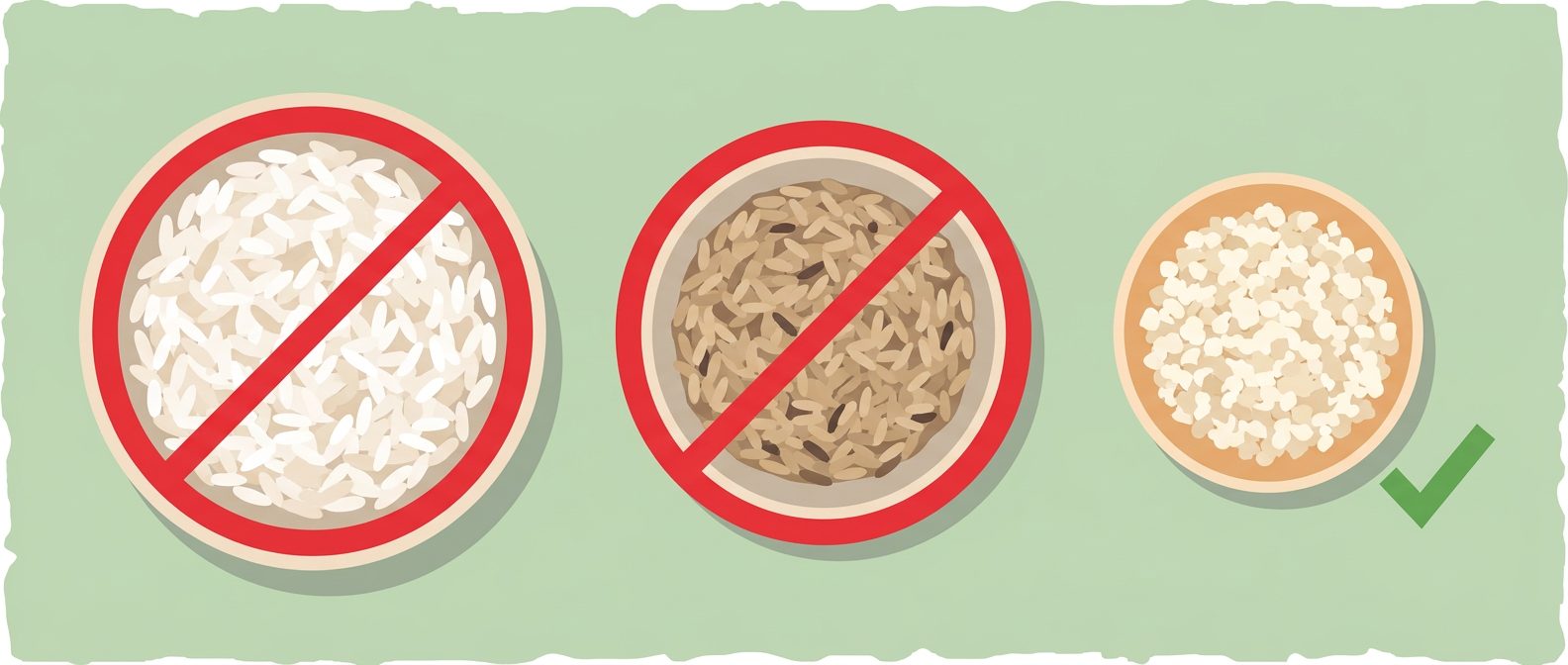
The core problem with rice on keto isn’t that it’s nutritionally empty – it’s that it’s almost entirely carbohydrate. White rice is about 80% starch by dry weight, and that starch converts to glucose quickly during digestion.Per the USDA FoodData Central entry for cooked white rice, one cup (186g) contains approximately 44.5g of total carbohydrate with minimal fiber, yielding about 44g of net carbs.
Here’s how white rice, brown rice, and cauliflower rice compare side by side:
| Food (1 cup cooked) | Total Carbs | Fiber | Net Carbs | Calories |
|---|---|---|---|---|
| White rice | 45g | 0.6g | ~44g | 206 |
| Brown rice | 46g | 3.5g | ~42g | 216 |
| Cauliflower rice (raw, riced) | 5g | 2g | ~3-4g | 25 |
That gap between brown rice and cauliflower rice isn’t a small difference – it’s a 10x difference in net carbs. One cup of white rice alone exceeds the daily carb budget on keto. Two servings of rice at dinner puts you well into territory where ketosis is almost certainly broken for the rest of the night.
Why Brown Rice Doesn’t Work Either
Brown rice has a reputation as a healthier grain, and for people not on keto, that reputation is mostly deserved – it has more fiber, more magnesium, and a lower glycemic index than white rice. But “lower glycemic index” is not the same as “low enough for keto.”
The fiber difference between white and brown rice is real but modest: about 3 additional grams per cup. That drops net carbs from about 44g down to about 42g – still more than a full day’s allowance on a 20-30g daily budget. The glucose response is slightly slower with brown rice, but your body still gets flooded with glucose. Insulin still rises. Ketone production still stops.A systematic review of rice GI values found that white rice typically ranges from GI 64-93 and brown rice from GI 68-72 depending on variety and processing – both in the high-GI range that triggers insulin response sufficient to interrupt ketosis. See Glycemic Index of Rice and Rice Products: A Review -PubMed (2014) – PubMed / NCBI When carbohydrate intake exceeds what the body can store as glycogen, excess acetyl-CoA from glucose metabolism suppresses ketogenesis. Restricting carbohydrates forces the liver to produce ketone bodies from fatty acid oxidation instead. See Biochemistry, Ketogenesis -StatPearls – NCBI / StatPearls
The mechanism matters here. When you eat brown rice, the starches still break down into glucose during digestion – the fiber just slows that process slightly. Blood glucose rises, insulin follows, and your body switches fuel sources. That switch is what ends ketosis, and brown rice triggers it just as reliably as white rice does.
So if you’re wondering whether a small portion of brown rice fits into keto: the math almost never works. A half-cup serving of brown rice still delivers about 21g of net carbs, which is your entire daily budget in a single side dish.
Cauliflower Rice: The Swap That Actually Works
Cauliflower rice delivers around 3-4g of net carbs per cup – roughly a tenth of what white rice contains. That’s not a marginal improvement; it’s an entirely different category of food from a carb standpoint.Per USDA FoodData Central data for raw cauliflower, one cup of riced cauliflower (approximately 107g) contains about 5g total carbs and 2g fiber, yielding 3g net carbs.
I was honestly skeptical the first time I used cauliflower rice in a stir-fry. I expected it to taste like a sad vegetable substitution. What I got was a solid base that absorbed the sauce, had a bit of texture, and filled the bowl the way rice is supposed to. It’s not identical to rice – the texture is slightly softer, and it has a mild vegetable flavor – but in a well-seasoned dish, the difference shrinks considerably.
The key is cooking it correctly. Cauliflower rice releases a lot of moisture as it cooks, which can make it soggy if you’re not careful. A hot dry pan, high heat, and not overcrowding the pan are what separate good cauliflower rice from the watery versions people complain about. Give it space, let it sear rather than steam, and it behaves much more like actual rice.

You can make it yourself by pulsing raw cauliflower florets in a food processor until they’re roughly rice-grain sized – usually just 3-4 pulses. Or buy the pre-riced bags from most grocery stores, which work fine and save 10 minutes of prep time.
Other Keto Rice Alternatives
Cauliflower rice is the most useful all-purpose substitute, but it’s not the only option. For a deeper dive into every swap, see the full guide to low-carb rice substitutes. Here are the highlights:
- Shirataki rice (konjac rice) – Made from konjac flour, shirataki rice is almost entirely water and glucomannan fiber. Net carbs are essentially zero per serving. The texture is chewier than rice – not quite the same mouthfeel – but it works well in Asian dishes and soups where the sauce carries the flavor.Konjac products derive their structure from glucomannan, a soluble fiber that is not digested by the human body. Carb content approaches zero per serving. See USDA data for shirataki rice for full nutritional breakdown.
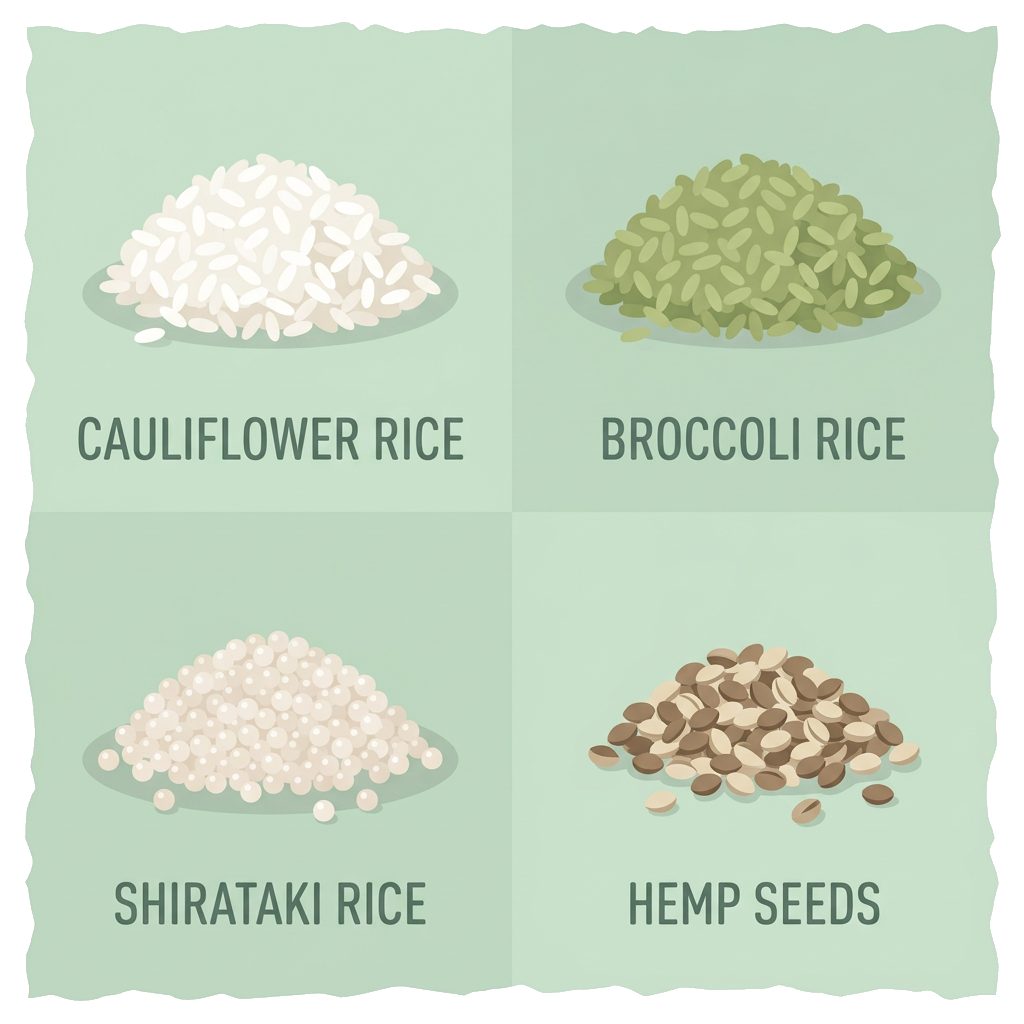
- Riced broccoli – Similar approach to cauliflower rice but with a slightly stronger flavor and a bit more nutritional density. Around 4-5g net carbs per cup. Works particularly well in dishes with bold sauces (like a spicy beef bowl) where the broccoli flavor doesn’t clash.
- Hemp seeds – An unconventional substitute, but hemp seeds (hulled) have a slightly nutty, grain-like texture and work as a rice base in some applications, particularly grain bowls. About 1g net carbs per 3-tablespoon serving, plus significant protein and healthy fats.
Of these, shirataki and cauliflower rice are the most practical for everyday use. Riced broccoli is a good rotation option when you want something slightly different.
Cauliflower Rice Recipes Worth Making
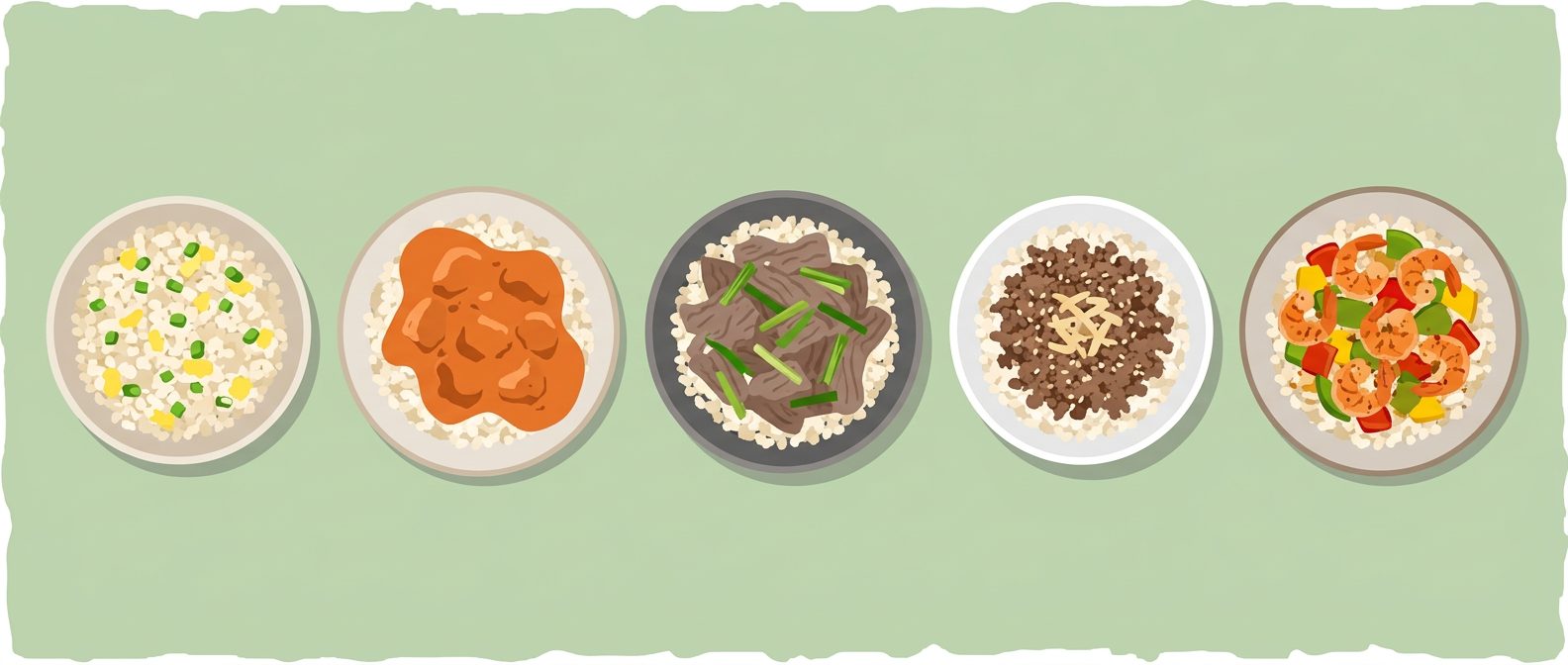
Once you’re comfortable with cauliflower rice as a base, it opens up a lot of recipes that would otherwise be off the table on keto. Here are some that use it well:
- Cauliflower Fried Rice – The classic preparation. High heat, soy sauce, sesame oil, eggs. Hits every note the original does.
- Butter Chicken with Parmesan Cauliflower Rice – Rich tomato-cream sauce over cauliflower rice with parmesan folded in. The parmesan adds a richness that pulls the dish together.
- Mongolian Beef with Cauliflower Rice – Sweet-savory sauce, thinly sliced beef, green onions. One of the better cauliflower rice pairings because the sauce is bold enough to lead.
- Low-Carb Cauliflower Fried Rice – A slightly different take with different mix-ins, good for batch cooking and reheating.
- Korean Beef with Cauliflower Rice – Ground beef with gochujang-style seasoning over cauliflower rice. Fast weeknight dinner, under 30 minutes.
- Cajun Shrimp and Cauliflower Rice – Spiced shrimp, peppers, and cauliflower rice. The cajun seasoning is assertive enough that you won’t miss regular rice at all.
- Chorizo Spinach Cauliflower Rice Bowl – The fat from the chorizo seasons the entire bowl. Good example of how cauliflower rice benefits from being cooked with a fatty protein.
Key Takeaways
- Rice is not keto: one cup of cooked white rice contains approximately 44g of net carbs, which exceeds the full daily budget of 20-30g.
- Brown rice is not a viable keto alternative – at ~42g net carbs per cup, it’s almost identical to white rice from a ketosis standpoint.
- Cauliflower rice contains 3-4g of net carbs per cup – roughly one-tenth of white rice – and works well as a substitute in stir-fries, grain bowls, and sauced dishes.
- Shirataki (konjac) rice has near-zero net carbs and is another solid option, though the texture is chewier and takes some adjustment.
- Cook cauliflower rice on high heat in a dry, uncrowded pan so it sears rather than steams – this removes the sogginess that puts people off.
For similar quick answers, see our guides on is honey keto, is oatmeal keto, and is peanut butter keto.
Frequently Asked Questions
Can I eat a small amount of rice on keto?
Technically yes, but the portion size becomes impractical. A quarter cup of cooked white rice is about 11g of net carbs. On a 20-30g daily budget, that leaves very little room for anything else that day. Most people find it’s easier to just swap to cauliflower rice rather than try to fit a tiny, unsatisfying portion of real rice into the math.
Is cauliflower rice a good substitute for real rice?
It depends on the dish. In stir-fries, grain bowls, and dishes with bold sauces – yes, cauliflower rice works very well. The sauce carries the flavor and the cauliflower rice fills the textural role. In dishes where rice is the star (like plain steamed rice with a simple protein), the difference is more noticeable. The trick is cooking it right: high heat, dry pan, no overcrowding so it sears rather than steams. Try the Mongolian Beef with Cauliflower Rice as a starting point – it’s hard to miss regular rice in that dish.
Is brown rice better than white rice for keto?
Not meaningfully. Brown rice has about 42g of net carbs per cup compared to white rice’s 44g – a difference of 2 grams. Neither fits within a 20-30g daily carb budget. Brown rice has more fiber and a slightly lower glycemic index, which matters for non-keto diets, but the net carb count is too high for keto regardless of the variety. If you’re looking to track your carbs precisely, the keto calculator can help you dial in your personal targets.
What does rice do to ketosis?
One cup of rice contains enough glucose to push most people well out of ketosis within a few hours. The starches in rice break down into sugars during digestion, which raises blood glucose and triggers an insulin response. Insulin signals the body to use glucose for fuel and stops ketone production. Getting back into ketosis after a significant carb load typically takes 1-3 days depending on your glycogen stores and activity level. You can read more about the recovery process in this article on how to get back into ketosis.
Is shirataki rice keto-friendly?
Yes. Shirataki rice (also called konjac rice) is made from glucomannan fiber, which isn’t digested by the body – so net carbs are essentially zero per serving. It has a chewier texture than both regular rice and cauliflower rice, which takes some getting used to. Rinse it well and dry-toast it in a hot pan before adding to your dish. It works particularly well in Asian-style dishes like the keto chicken saag style preparations where a neutral base absorbs the sauce.
Sources
- FoodData Central: Rice, White, Short-Grain, Cooked, Unenriched
- FoodData Central: Raw Cauliflower
- FoodData Central: Shirataki Rice (Konjac)
- The Glycemic Index of Rice and Rice Products: A Review – PubMed (2014) – PubMed / NCBI
- Biochemistry, Ketogenesis – StatPearls – NCBI / StatPearls
The information in this article is not medical advice and is not a substitute for professional medical guidance. Always consult a qualified healthcare provider before making changes to your diet or health regimen.