


The dreaded keto weight loss plateau. No matter what diet you are on, your weight loss will eventually stop. The goal is for the progress to stop as soon as we hit our ideal weight, but this often does not happen as planned.
Most of us will experience a weight loss plateau at one point or another during our diet. When this happens it is not because you failed or because your body is broken — it is most likely because you need to switch up your dietary approach just a bit.
By switching up your dietary approach, I don’t mean going from low carb to high carb or 100% vegan to 100% carnivorous or vice versa. In actuality, the key to busting through weight loss plateaus is making small adjustments to your current diet that will get you back on track.
Before we discover the many dietary strategies that you can use to break through your plateau, let’s gain a deeper understanding of what happens when we lose weight and why many of us will not progress at the rate that we expect.
Why Am I Not Losing Weight? The Science Behind Weight Loss Plateaus

There are many nuances when it comes to weight loss, but for the sake of this article, let’s keep it simple.
In general, you will lose weight if you eat fewer calories than your body needs to maintain its current weight. On a ketogenic diet, your body will lose a lot of water weight in the first couple of days due to carbohydrate restriction, but fat loss depends primarily on calorie intake.
Whenever we lose weight, we tend to lose both fat and muscle mass. The proportion of fat and muscle mass that you lose depends on many factors like how much you exercise, the type of exercise that you do, your stress levels, your daily protein intake, and the severity of your calorie deficit.
For example, if you are lifting weights, getting plenty of sleep, aren’t chronically stressed, eating between 1 and 1.2 grams of protein per pound of fat free mass, and aiming for a weight loss rate of 0.5% – 1% per week, then almost all of your weight loss is likely to come from fat (and you may even gain some muscle mass as well).
In contrast, when we don’t eat enough protein, aren’t getting enough sleep, not lifting weights, and are in a large calorie deficit (25% or more below maintenance calories), then we will tend to lose a lot more muscle mass along with the fat.
Since most of you are looking to lose primarily fat and very little muscle mass, it is crucial that you consider these factors when dieting. To get the best results, it is essential that you set a reasonable calorie deficit and eat an appropriate amount of protein. We recommend using our keto calculator to find out what these values are for you.
For those of you who are leaner, it is best to stay with a smaller calorie deficit (10-15% below maintenance calories), while those who are overweight or obese will be able to handle a much steeper calorie deficit (25% or more below maintenance calories).
In both cases, two things may happen while you are losing weight that can cause you to plateau unexpectedly: (1) your body decreases its total daily energy expenditure, and (2) your calorie deficit decreases (because you require fewer calories to maintain your new weight).
The decrease in total daily energy expenditure is the result of the many bodyweight-regulating systems we inherit to prevent excess weight loss. This happens because, from an evolutionary perspective, if you lost weight in direct relationship with your calorie consumption at all times, then you would burn excessive amounts of energy when food is scarce.
Thus, to increase our resilience and longevity during times of famine, our brains will trigger a variety of mechanisms to keep us from losing more weight.
As an example, your body may decrease its thyroid hormone production and reduce its non-resting energy expenditure (e.g., fidgeting and other spontaneous movements) as a direct response to rapid weight loss. Intense cravings may also be experienced in an attempt to motivate the person to eat more and stop losing weight. (this is one reason why people tend to regain weight after following a diet).
Because of the decrease in thyroid hormone production, non-resting expenditure, and weight, the body will have a new maintenance calorie setpoint. What was once a 20% calorie deficit may now be a 10% calorie deficit.
Put in another way: As you lose weight, your calorie deficit percentage decreases, which leads to a slowing of your weight loss rate. This process will continue until your previous calorie deficit becomes precisely the amount of calories you need to eat to maintain weight, and you stop losing weight.
Although there are many other factors that can contribute to your weight loss plateau, the two factors that influence it the most are decreased daily energy expenditure and reduced calorie deficit. They are also relatively easy to address.
All you need are the right strategies to tackle the many potential causes of your weight loss plateau. Let’s start with the approaches that are the most effective. Then, we will finish with the subtle hacks you can try to give you a weight loss boost.
Note: These strategies are strictly for people that are hitting weight loss plateaus and need some help. If you are losing 1 to 2 pounds per week, there is no need to implement the suggestions found in this article.
1. Track Your Calories
Most people I talk to have a misconception about ketogenic diets. They get the idea that all they have to do is count carbs to lose weight, and that’s simply not true.
As I mentioned earlier, your weight loss depends on your calorie consumption. Think of it as a mathematical formula.
If you are putting more calories into your body than you are burning, that gives you excess calories. Those excess calories must go somewhere, so they are stored as glycogen and fat.
This happens regardless if they are calories from fat, protein, or carbs.
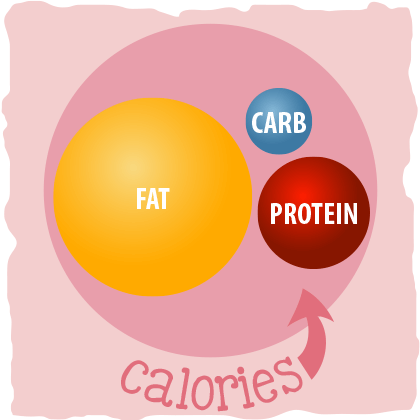
The main reason why people on low carb diets tend to lose so much weight without tracking their calories is because it is much harder to overeat on protein and fat than on protein, carbs, and fat. High fat and protein foods tend to be much more satiating than carb and sugar-laden foods, so when you cut the carbs, you unknowingly end up decreasing your hunger and calories as well.
However, if you find that your weight loss has plateaued and you want to lose more weight, then it’s best that you start being more diligent with your calorie intake.
The key to any diet, ketogenic diet or not, is making sure that you are maintaining some sort of calorie deficit. The simplest way to figure out how much you need to eat is by plugging your information into the keto calculator. It will tell you exactly how many calories and grams of fat, protein, and carbs you need to eat on a daily basis to lose weight.
To help you track your calories, I recommend using a calorie tracking app like MyFitnessPal or Cronometer. If you’d like to get started with tracking your calories to break through your plateau, then click here. This link will send you to a guide on how to set up MyFitnessPal and Cronometer for your specific macronutrient needs. By using this guide and the keto calculator, you will be better prepared to follow the ketogenic diet more successfully than you did before. Get ready to watch those pounds fall off again.
2. Recalculate Your Macros Every Month
As we stated earlier, when you lose weight, your calorie deficit will get smaller. As the calorie deficit gets smaller, you will start losing weight more slowly until you plateau.
Eventually, what was once a calorie deficit will become precisely the amount of calories you need to eat to maintain weight. To bust through this plateau (and prevent another plateau from happening), try calculating your macros with your new body weight every month or so. The simplest way to do so is by plugging your info into our keto calculator.
Depending on how much fat you want to lose, you may need to adjust your calorie deficit as well. If you still have 50 to 100 pounds that you want to burn off, then you may be able to handle a 20-30% calorie deficit without losing much muscle mass (especially if you eat the right amount of protein).
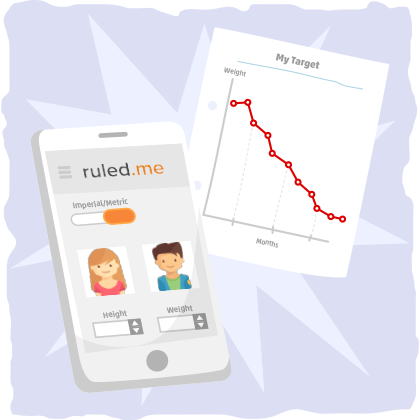
With this method, you are likely to drop fat rapidly. After another month or so of dieting this way, it is best to recalculate your macros with your new weight again.
Each time you recalculate, try reducing your calorie deficit a bit so the diet is easier to stick with and your metabolic rate doesn’t slow down too much. However, if the calorie deficit isn’t manageable for you in any way, then try taking intermittent diet breaks (which is the next strategy in this article).
For those of you who are leaner and don’t have much more weight to lose, it is best to aim for a calorie deficit of 10-15%. This should allow you to lose weight at a healthy and steady pace of 0.5–1.0% of body weight per week.
Problems may arise when using this method of maintaining a constant calorie deficit, however. Earlier we briefly went over how your brain is continuously monitoring your weight and eliciting processes to keep you from losing weight rapidly so you can survive times of famine.
By continually exposing your body to a calorie deficit, you may cause these bodyweight defending processes to kick in at full force, which can slow your progress. If this happens to you and you find that you aren’t losing weight even though you are in a calorie deficit, you may need to take a diet break.
3. Take Intermittent Breaks From Calorie Restriction
Sometimes maintaining a constant calorie deficit is not enough to consistently lose weight. Many of us will eventually experience a decrease in total energy expenditure that isn’t entirely explained by the fact that you lost weight. Your metabolism may slow down, you may have less motivation to be active throughout the day, and you may even experience increased hunger and cravings.
If this sounds like you, then you may benefit from taking a diet break. A recent research study that was published in the International Journal of Obesity contains some fascinating data which suggests that diet breaks may be more effective for weight loss than maintaining a consistent calorie deficit.

What do I mean by a “diet break”? Let’s look deeper into this potentially paradigm-shifting study to find out.
In this study, the researchers randomized 51 men with obesity into two groups. One group was in a continuous calorie deficit for 16 weeks, while the other group underwent what the researchers called “intermittent energy restriction” for 30 weeks.
The intermittent energy restriction group completed eight 2-week blocks of energy restriction alternated with seven 2-week blocks of energy balance. With this design, both groups experienced 16 weeks of energy restriction in total.
Each subject was prescribed a 33% calorie deficit, which is pretty severe, but manageable for obese individuals. Both groups lost weight, as expected, but the intermittent energy restriction group lost significantly more weight. Arguably, the most fascinating finding was that the intermittent energy restriction group lost more fat than the continuous energy restriction group while the loss of fat-free mass remained similar between groups.
The researchers suspect that the substantially better weight loss results experienced by the intermittent energy restriction group were caused by a reduction in compensatory metabolic responses. In other words, by taking intermittent diet breaks, you may be able to keep your body from decreasing its resting energy expenditure and experience more sustainable and consistent weight loss.
Keep in mind, however, that these results only apply to a select group of obese men. Whether or not this approach will work for women and other groups of men has still yet to be discovered.
With that being said, this approach to dieting and breaking through weight loss plateaus is safe, so it is worth a try — even if you aren’t an obese man. In fact, this approach to dieting may even be safer and healthier for us than maintaining a continuous energy deficit.
However, this doesn’t mean that everyone should try taking diet breaks. If you are in a smaller calorie deficit (10-15% or less), then maintaining that continuous calorie deficit might be your best option because metabolic adaptations only tend to occur at larger calorie deficits. On the other hand, if you are looking to maintain a more substantial calorie deficit (25% or more), then taking intermittent diet breaks may be a good strategy to use to help you bust through a plateau and ensure consistent weight loss.
How to implement this strategy properly:
According to this study, it may be best to stick with the two weeks on, 2 weeks off energy restriction protocol. This time range may be arbitrary, but the only evidence we have suggests that this is an effective approach.
Here’s what you do:
- Weigh yourself and recalculate your macros for around a 25% calorie deficit. Eat that way for two weeks.
- After the first two weeks, weigh yourself and recalculate your macros to figure out what you need to eat to MAINTAIN your NEW weight. Eat these macros for two weeks.
- Repeat these steps until you’ve reached your ideal weight.
4. Decrease Your Calorie Deficit
Another strategy you can use to break through plateaus is adjusting your calorie deficit.
The more severe your calorie deficit is, the more likely your metabolic rate will decrease. For example, one study found that a 25% caloric deficit can cause a 6% drop in metabolic rate. This is an insignificant drop for someone who is obese, but might be an issue for someone who is just about to reach their goal.
Other studies suggest that maintenance of a ⩾10% reduction in body weight in lean or obese individuals is accompanied by a ∼20–25% decline in 24-h energy expenditure. In other words, this may decrease your calorie needs by around 300-400 calories, slowing your weight loss progress more than expected.
One way to counteract this decrease in metabolic rate is by using a smaller calorie deficit.
How small should it be? It depends.
Studies show that as long as you’re eating at enough of a deficit that your fat stores can cover, your metabolic rate doesn’t change too much. If you do go over that deficit, though, your metabolic rate will drop in order to protect vital organs (this is a real “starvation mode” response from your body).
So, how much can your fat stores actually cover? You can get about 31.4 calories per pound of fat per day, from your fat stores.
Let’s say you’re 240 lbs (162 lbs lean mass, 78 lbs fat, 31.2% body fat) and want to get down to 180 lbs (162 lb lean mass, 18 lbs fat, 10% body fat):
- At 240 lbs (162 lean mass, 78 lbs fat) you can get about 2449 calories from fat stores.
- At 220 lbs (162 lean mass , 58 lbs fat) you can get about 1821 calories from fat stores.
- At 200 lbs (162 lean mass, 38 lbs fat) you can get about 1193 calories from fat stores.
- At 180 lbs (162 lean mass, 18 lbs fat) you can get about 565 calories from fat stores.
What these calculations show you is how your body can handle greater calorie deficits when it has more fat stores. As your fat stores decrease, so should you calorie deficit.
If you are experiencing a weight loss plateau and it doesn’t seem to make sense, then you may be maintaining too severe of a calorie deficit. Try decreasing your calorie deficit for a couple of weeks and see if that helps you bust through your plateau.
5. Eat The Right Amount Of Protein
Regardless of what kind of diet you are on, eating the right amount of protein is essential. If you don’t eat enough protein, then you will lose more muscle mass, experience more hunger, and your daily energy expenditure will decrease. As a result, you will lose less weight than expected, struggle with cravings, plateau sooner, and won’t look as good as you’d like.
Overeating protein, however, is also not helpful for keto dieting. This is because the excess protein will cause a decrease in ketone production and increase your reliance on sugar burning.
When you eat the right amount of protein, you will be able to maintain lean muscle mass as you lose fat while simultaneously increasing your fat burning capacity and ketone levels. You may also be able to break through your plateau and keep future weight loss plateaus at bay.

With that being said, what exactly is the “right” amount of protein that you should eat every day?
Well, it depends, but here are some general recommendations:
- If you exercise, protein levels should be hovering around 0.8g – 1.0g protein per pound of lean body mass a day. This helps with muscle mass retention and growth.
- If you lift weights and want to gain muscle mass, then increase your protein intake to around 1.0g – 1.2g of protein per pound of lean body mass per day.
- If you are not exercising, your protein intake should not be as high. Eating around 0.6g – 0.8g of protein per pound of lean body mass is going to be fine.
To see the complete picture of what this means for you and your ketogenic diet, simply plug your information into our keto calculator. It will calculate your protein needs, as well as your fat, calorie, and carb needs, for you.
6. Stay Consistent With Your Keto Diet
Being consistent with the ketogenic diet is extremely important. Being as it can take a few days to a week for your body to enter ketosis, a cheat day can take a long time to recover from.
By the time your body is back in ketosis, a week may have passed – and that’s a week of no fat burning. This is also where the dreaded water weight will come back on.
If you are weighing yourself on a weekly basis, you may see a 4-6 pound gain of water weight if you did a cheat day a couple of days ago.
What may seem like a weight loss plateau is really just a water weight delay as your body tries to adapt to carb restriction again.
Tracking your daily macros is a great way to keep consistent. It adds a layer of strictness into your diet, making it easier over time to realize where the mistakes are. We prefer to use apps like MyFitnessPal and Cronometer, and wrote an article to help you get it set up.
If you’re not tracking your carbs, it can be very easy to let those hidden carbs and calories creep up on you. This can eventually knock you out of ketosis and impair your weight loss results.
7. Exercise, But Not Too Much
By exercising too little or too much, you can slow your metabolism down. Studies show that if you do aerobic exercise for more than 1 hour a day, your metabolic rate can drop by as much as 15%. On the other hand, by exercising too little, you can increase muscle atrophy and decrease in metabolic rate, which both will both increase your likelihood of having a weight loss plateau.
If you exercise a lot, try cutting it back some and give yourself some extra rest days.
My personal advice is four days maximum of hard training during the week. Conversely, if you are sedentary for most of the day, consider going for a 30 min daily walk or doing some form of activity that you love every day.
For the best results, consider doing weight training 2-4 times a week and low to moderate intensity 30-min aerobic exercise workouts throughout the week. For more information on exercising on keto, click here >
8. Try Intermittent Fasting
Snacking when you’re hungry is so satisfying, but it can also become a sneaky way to slow weight loss. Instead of snacking, try restricting yourself to eat on a regular schedule, with no meals in between (regardless of how small the meal is).
If you want to take it one step further, try restricting yourself to a specific eating window by skipping breakfast or dinner. This is one way of intermittent fasting that works very well for many people.
Intermittent fasting will allow your body to go into its fasting state and burn more fat and ketones for fuel. Once your body adapts to intermittent fasting, you will find that you have less hunger and cravings. As a result, you will eat less often and be more satiated after meals.
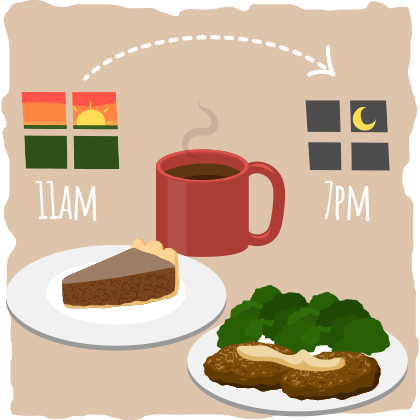
The most common intermittent fasting strategy is to eat only two or three meals in an 8-hour window instead of eating five meals a day spaced out over 10 hours. For example, my typical intermittent fasting schedule consists of eating all of my calories between 11am and 7pm. After that, I don’t allow myself to eat until the next day at 11am.
Stick to this (or some variation of it), even if you feel super hungry in the beginning. The hunger will dissipate if you drink plenty of water and start moving about your day.
I do some variation of intermittent fasting every day and find that, once I start working, my hunger goes away, and I am much more focused and productive than I am after I eat. (In case you’re wondering, this focus and productivity is not the result of caffeine consumption. The only thing I drink in the morning is water.)
9. Implement A Fat Fast
Another great way to bust through a plateau is by applying a technique called the fat fast. You can do this by eating mostly fat and restricting calories significantly for 2-4 days.
This is one of the easiest ways to put yourself into an extreme calorie deficit for rapid weight loss without experiencing lasting negative effects of severe calorie restriction. As an added bonus, it will help you increase your ketone levels as well.
If you’re interested in learning more about this strategy, you can view our post on how to fat fast.
Here’s a quick example of a fat fast:
- 1000 – 1200 calories a day for 3 days.
- 80-90% calories from fat.
- Eating 4-5 times a day.
After the fat fast, recalculate your macros for your new weight and get back to your normal keto diet.
10. Check For Hidden Carbohydrates
It’s easy to eat more carbohydrates than you think while you are on keto. Carbs are in almost every food you’ll be eating — from vegetables to nuts and even certain meat products. Yes, that peanut butter you’re chomping on could also be causing a problem as well! Especially if it’s store bought – that stuff is loaded with extra sugar.
Some vegetables like brussels sprouts, broccoli, and squash are common culprits that find their way into our lives on a frequent basis.
You might think that they’re low carb, but when consumed in larger amounts, those carbs really do add up. You can look at the list of the best low carb vegetables we’ve put together, so that you can be more aware of the carbs in the vegetables you eat.
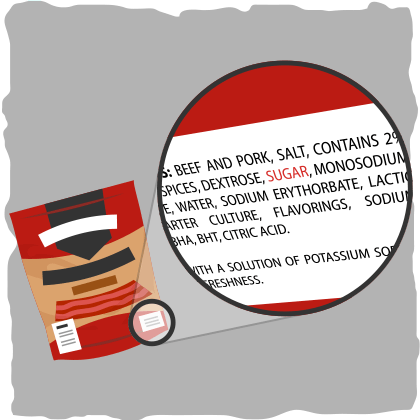
Meat is the center of most of our lives, and there’s sugar everywhere you look. Some bacon is honey smoked, adding unnecessary carbs to an already delicious product. To avoid this madness, simply look for bacon with no sugar added.
When you start to look into Italian sausages, chorizo, and canned meats, you find some unexpected carbs as well. Some brands have up to 5g carbs per serving when it comes to sausage – so make sure you are being diligent.
You should also check your medicine as well — seriously! Next time you think you are coming down with a cold or flu, take a look at the nutritional information on the back of that Dayquil. 2 tablespoons of the stuff has a whopping 19g of carbs. You should opt for the low-sugar or sugar-free varieties they now offer for diabetics.
To put this plateau busting strategy more succinctly, just make sure you check the nutrition labels on everything before you buy it. You have to be leery of all the extra carbs that are hidden in the products you buy. We put together a ketogenic diet food list that you can read through before you plan your next shopping trip so you can avoid most of the carb-ridden culprits.
Tip: Cut Out The Foods That You May Be Sensitive To
Some people find themselves following their daily macros correctly, but still seem to hit a stall. That might mean they have a sensitivity to certain types of food.
From what I’ve come across, many people seem to have a sensitivity to dairy. This includes cheese – one of the staples of most keto meals. Dairy also includes cream, butter, and yogurt.
If you’re having trouble losing weight and suspect that you struggle with digesting dairy, try following the recommendations in our dairy-free ketogenic diet article.
Gluten is also something that many people have food sensitivities to as well. For some, low carb pasta, bread, and protein bars with gluten in them can be another sneaky way to slow their weight loss progress.
Low carb processed foods can also have gluten in them. Yes, that means the lovely low-carb tortillas you’ve been eating might actually be stalling your weight loss. If this sounds like you, cutting out gluten intake from processed foods might help out. It might also have a huge impact on your health over time.
What If Keto Isn’t Right for You?
Although the primary focus of this article is to help you bust through that plateau and lose weight again, let’s take a few minutes to look at the bigger picture. Weight loss plateaus provide us with the perfect opportunity to pause and reflect on our diet and health as a whole.
- How are you feeling mentally and physically with your current dietary approach?
- What does your blood work look like?
- Are you struggling to sustain this way of eating?
If all you’ve achieved is weight loss at the expense of your health and well-being, then you may need to focus on adjusting your overall diet and lifestyle instead of looking for another quick fat loss fix. Formulating a diet that is optimized for your needs is the best way to ensure that you will lose that fat and keep it off for good without losing your mind and impairing your health at the same time.
An ideal diet is one that will help you improve your body composition, feel better than before, and optimize your health while also being a sustainable dietary approach for the long-term. Diets that don’t fulfill these criteria are not worth our time and energy because we will only be able to stay on them for a short period of time.
The first step to creating a diet that is ideal for you is to realize that no diet is perfect for everyone. Every dietary approach has its advantages and disadvantages and must be adapted to each individual to help them meet their health needs and body composition goals as efficiently as possible.
Regarding the keto diet specifically, I recommend creating a personalized approach for yourself – before using a plateau-busting strategy – by implementing these principles:
- Eat the right amount of calories and protein to meet your goals. You can use our keto calculator and calorie tracking guide to help you with this.
- Get most of your calories from micronutrient-dense foods. For more detailed information on what to eat, check out our guide to micronutrients and our keto food list.
- Make sure your diet is improving your overall health and wellbeing subjectively and objectively.
- Implement lifestyle adjustments to make your diet into a long-term lifestyle that you can follow indefinitely.
- If you hit a weight loss plateau, try using one or more of the strategies you find throughout this post.
In some cases, however, even a well-formulated keto diet may not be healthy or sustainable. People with certain health conditions, such as familial hypercholesterolemia or hypothyroidism, may experience a worsening of symptoms when following a high-fat, low-carb diet, regardless of how “flawless” their keto diet is.
Even those who experience all of the health benefits of the keto diet may not find it to be sustainable in the long run. In this case, it may be best for them to adjust their dietary approach in a way that fits their lifestyle. This may mean following a strict keto diet every few months or implementing a different diet altogether.
In general, you will know that you are following a well-formulated and healthy diet for you if it has these four qualities:
- It boosts your mood, energy levels, and sense of well-being.
- It improves your body composition.
- It optimizes relevant biomarkers (e.g., blood pressure, cholesterol, triglyceride, and blood sugar levels).
- You can sustain your new lifestyle and results for the long-term.
By using these four criteria as a compass for your dietary decisions, you will be able to develop a diet and lifestyle that works best for you, regardless of your current circumstances.
If you’d like to see more in-depth information on how to formulate a healthy keto diet and what you can do if keto isn’t right for you, feel free to check out our recent post that covers this topic.
Putting It All Together — Creating Your Own Weight Loss Plateau Busting Plan
Hitting a plateau is frustrating and discouraging. What could you possibly be doing wrong? You are restricting carbs, eating less, exercising, and yet — you’re not getting the results you want.
What can you do? Here are some of the strategies that work best for most people:
- Calculate your macros with an appropriate calorie deficit (aim for a higher deficit if you have more body fat) and track your food intake.
- Recalculate your macronutrient needs every month with your new weight.
- Take breaks from being in a calorie deficit every two weeks.
- Stay consistent with your ketogenic diet by diligently tracking the foods you eat and never cheating.
- Decrease your calorie deficit a bit.
- Try intermittent fasting. Click here to find out how.
- Implement a fat fast. Find out how by clicking here.
- Eat the ideal amount of protein based on your goals and activity levels.**
- Make sure you are exercising, but not exercising too much.**
**These strategies are essential for better health and body composition, so make sure you implement them regardless if they help with weight loss or not.
If these strategies aren’t helpful, then you may have a food allergy or sensitivity that is holding you back, or you may be consuming too many hidden sources of carbs and calories (in this case, you should start reading food labels more carefully and track your food consumption with a calorie tracking app).
When it comes to busting through your personal weight loss plateau, stick with one or two of the strategies that apply to your specific situation. After a month, reassess your progress.
Are you losing weight again? How do you look? How do you feel?
If you are still at a plateau, then try another strategy from this article. If you are losing weight — good job! — keep at it.
Once you are back on track, let us know what you did to break through your weight loss plateau. Your stories will help others with their struggles and provide us with new insights into how to lose weight more efficiently.
Sources:
- International society of sports nutrition position stand: diets and body composition — Journal of the International Society of Sports Nutrition
- Setting the Deficit – Small, Moderate or Large — Body Recomposition
- What is the Required Energy Deficit per unit Weight Loss? — NCBI
- The Association Between Rate of Initial Weight Loss and Long-Term Success in Obesity Treatment: Does Slow and Steady Win the Race? — Springer Link
- Relationship between temperament, nonresting energy expenditure, body composition, and physical activity in girls — International Journal of Obesity
- Intermittent energy restriction improves weight loss efficiency in obese men: the MATADOR study — International Journal of Obesity
- Impact of energy intake and exercise on resting metabolic rate. — NCBI
- Exercise and Energy intake in Overweight, Sedentary Individuals — NCBI
- Effect of 6-month calorie restriction on biomarkers of longevity, metabolic adaptation, and oxidative stress in overweight individuals: a randomized controlled trial. — NCBI
- Adaptive reduction in basal metabolic rate in response to food deprivation in humans: a role for feedback signals from fat stores. — NCBI
- A limit on the energy transfer rate from the human fat store in hypophagia. — NCBI
- Effects of aerobic exercise on energy expenditure and nitrogen balance during very low calorie dieting. — NCBI
- Dietary Guidelines should reflect new understandings about adult protein needs — NCBI
- Effect of Protein Intake on Strength, Body Composition and Endocrine Changes in Strength/Power Athletes — NCBI
- Adaptive thermogenesis in humans — International Journal of Obesity
- The effects of high protein diets on thermogenesis, satiety and weight loss: a critical review. — NCBI
I started keto almost 3 years ago. I was well over 700 lbs. In October of 2017 I had to go to the ER and got weighed, it said 359 lbs. Yesterday I was able to get a scale of my own. I got on it excited to see my progress….352 lbs…..An entire year and I only lost 7 lbs. I don’t know how. I’m on a 800 cal deficit, I eat the proper amounts of fat,carbs and protein, I don’t snack. Weight train 3 times a week with some bike riding. This has just completely destroyed my mood and motivation. I don’t know what’s wrong or how to fix it.
Hey Joshua,
Congrats on losing so much weight over the past 3 years. Your results are incredible!
To help you lose weight at a faster rate than 7 lbs a year, you may need to decrease your calorie consumption a bit more.
Although the calorie calculators provide a good starting point, they are not 100% accurate. This means your calorie deficit was probably not as big as you thought.
A simple strategy you can use is tracking your progress every month. If you aren’t losing weight at an average rate of 1 to 2 pounds per week, then you’ll need to make some adjustments.
Losing weight too slowly? Increase the deficit by around 5-10% (use the larger deficit if you are barely losing weight).
Losing weight too quickly? Increase fat intake so that calorie consumption is around 5% higher.
Each month try checking in with your weight and adjusting from there.
Does this strategy make sense? If you have any questions, please let me know.
100% accurate or not, I’m eating 2k cal a day, there is no way that at 350 lbs my TDEE is anywhere near my intake for me to only lose 7 lbs in a year.
Unfortunately, it is still possible. After digging through the research again, there is evidence to suggest that metabolic rate can decrease more than expected after significant weight loss, leading to less overall weight loss than expected.
The studies I am referencing are:
https://www.ncbi.nlm.nih.gov/m/pubmed/22825659/
https://www.ncbi.nlm.nih.gov/pmc/articles/PMC5097076/
When you consider these findings with the margin of error for calculators and tracking calories, I believe it is possible to explain the 7 lb weight loss over the course of the year.
That said, I think there are two approaches that may work for you:
1. Try the suggestions from the previous comment, and see if it is manageable and works for you. If your results still aren’t on the right track after 3 months, then you may need to try the option below.
2. Try reverse dieting before you go back into a calorie deficit to lose weight. This method can help you increase the number of calories you can eat per day while maintaining your weight. After you reach that point, you’ll be able to follow a calorie deficit that allows you to lose weight at a more reliable rate.
A simple way to reverse diet on keto is to increase your fat consumption by 50-100 calories per week (keeping carb and protein intake the same). Monitor your weight every couple of weeks to make sure you are staying close to the same weight without it steadily increasing. If your weight is steadily increasing, then dial back your calories to the level that you could maintain your weight at before the increase. Keep your weight still for a few weeks before increasing your fat consumption again. This process may take you 1-3 months. Once you are settled on a higher calorie intake that you can stay weight stable at, try decreasing your calorie consumption so that you are in a 20-30% calorie deficit.
After looking at the research and reading your previous comments, these seem to me like two of the better options you can use to lose more weight. If you have any questions, please let me know.
Gluconeogenesis is not supply driven. This has been proved time and time again.
Hey Ryan,
What are you referring to here? We don’t mention gluconeogenesis in this article, so I want to make sure I know what you are trying to communicate with this comment.
You talk about eating the right amounts of protein. Gluconeogenesis is demand driven, not supply driven so eating too much protein is a myth. Also, monitoring ketone levels is not very accurate either no matter which method you use. High blood ketones is a positive indicator but low blood ketone levels is not necessarily a false indicator.
I’m assuming this is the sentence that made you think we are referring to gluconeogenesis: “This is because the excess protein will cause a decrease in ketone production and increase your reliance on sugar burning.”
Here we are actually referring to a high intake of amino acids that increase insulin levels, which would subsequently decrease the release of stored fat and reduce ketone production.
With regards to ketone level monitoring, blood ketone meters are the most accurate way of measuring ketosis as they accurately measure BHB levels in the blood. As far as I know, this is the most reliable indicator for ketone levels we have.
Yes, do you have any citations around that sentence? My understanding from all the research is gluconeogenesis is demand driven and therefore there is not “excess protein” and the amount should not affect ketone production. In short, amino acids have little to no effect on endogenous glucose production. My point here is that I’m not sure people need to really watch their protein intake at all, just their carbohydrate intake. This has been noted elsewhere also. Protein is very satiating and has positive thermal effects.
It’s interesting because your blood ketones are ketones your body hasn’t used yet. The acetone byproduct (breath test) is from ketones your body has already used and the urine strips just test for excess ketones secreted (not used). So you have “produced but not yet used”, “produced and used” and “produced and not used/needed”. So again, I think blood ketone levels are a positive indicator, I was just noting that people shouldn’t chase the meter/readings because low blood ketones tell you absolutely nothing (doesn’t mean you aren’t in ketosis, doesn’t mean you are).
Last year I actually wrote an article on the impact of protein on ketosis. At the end of the article, you will find a link to the studies that informed my understanding of the topic:
https://www.ruled.me/too-mu…
I completely agree with you regarding gluconeogenesis. The point I am trying to make is that insulin reduces ketone production, and certain amino acids trigger an insulin response. Neither one of these instances depends on gluconeogenesis.
I also agree with you regarding ketosis tracking. Blood ketone meters are the best available measuring tool, which is the point I was making. Unfortunately, we have to make the assumption that having high BHB levels in the blood correlates more strongly with ketone production and not with a lack of ketone utilization.
That being said, this doesn’t mean that the reading tells you absolutely nothing. I think it is reasonable to assume that one is using ketones to meet some of their energy needs when their blood ketones levels are increasing and they aren’t struggling with mental or physical fatigue.
I assume you mean insulinogenic proteins like Whey? Fair enough, but I think it’s important to note the difference for people as eggs, for example, are not insulinogenic.
Yes, I said low ketone blood readings tell us absolutely nothing.
Yes, exactly. One important nuance I must point out, however, is that specific amino acids found in whey are what make it insulinogenic (leucine, for example, is one of the most well-studied amino acids in this regard). Since eggs contain a high amount of amino acids that are also found in whey and animal muscle, it is likely that egg protein will stimulate insulin release to some degree as well. If you know of research that suggests otherwise, please let me know.
That being said, net carbs are still significantly more insulinogenic than even the most insulinogenic amino acids. This is why we advocate for a moderate-to-high protein intake.
Even with your clarification on the low blood ketone readings, I still have to disagree. The only context in which I would agree is if someone goes from high BHB levels to low BHB levels without any significant change is stress, sleep, carb intake, or protein intake. At this point, I think the evidence leans toward blood ketone measurements (including low blood ketone readings) as being a reliable indicator for ketone production AND utilization as long as it correlates with (1) dietary and lifestyle habits that promote ketogenesis and (2) improvements in subjective wellbeing.
The only circumstance in which the reading would mean absolutely nothing (in the context that we are speaking of) is when the measurement doesn’t have a positive correlation with wellbeing, diet, and lifestyle habits. If this does happen, however, it may be a sign that the person is not well-suited for ketone production and/or utilization.
Thanks again for the comments, Ryan. This has been a great discussion!
If you find any evidence that conflicts with what I said, please let me know.
We can agree to disagree about low ketone readings.
I found this interesting https://www.ncbi.nlm.nih.go… it does show that the effect of amino acids from eggs on insulin but I thought the point of the paper, that dietary protein has little effect on blood glucose levels and a lot of it depends on the amount of gluconeogenic AAs, was interesting.
So is it more important to keep blood glucose levels down or insulin levels down, or both? That’s my take away question. Bran cereal has a lower insulin response than beef, eggs or cheese but a slightly (a little less than double) high glucose response. So is it the lack of glucose or insulin that drives ketosis or both? Beef’s glucose response is 18 +/- 6 (mol * min/L) where it’s insulin response is 7910 +/- 2193 (pmol * min/L).
It seems that you could get similar results to the keto diet by simply eating a low insulin diet (in this case, eating bran cereal instead of beef may be a better choice?). Obviously the keto diet emphasizes high fat intake to reduce insulin and spurn fat oxidation but I’m not seeing the benefit of cutting low insulin response carbs out when opting for proteins that have a higher insulin response. What I’m saying is if you’re eating 80% fat, 15% protein and 5% carbs, maybe it would be better (less insulin) to eat 80% fat, <15% protein and >5% carbs if those carbs have a lower insulin response than the protein?
And there is clearly a large difference between insulinogenic protein and gluconeogenic protein (not always the same thing).
What’s your take on casein?
Also, if you have to count calories anyways, maybe it doesn’t matter, fiber is very satiating and it’s high in things like bran cereal, so if you are in a caloric deficit maybe lower insulin foods like bran cereal are a better choice? Idk.
There’s a lot to unpack here, so I’ll list each question you asked and answer it below:
Q: “Is it more important to keep blood glucose levels down or insulin levels down, or both?” and “So is it the lack of glucose or insulin that drives ketosis or both?”
A: To sustain ketosis, you’ll need both. From what I understand, both glucose and insulin reduce ketone production independently through different mechanisms.
If glucose levels increase, the demand for other energy sources (i.e., fatty acids and ketones) will decrease significantly until the excess glucose is used or stored. This is because glucose is easily burned throughout the body, particularly in the brain.
Insulin helps to promote sugar burning while also reducing fat use and ketone production. Insulin does this by downregulating enzymes that help release fat into the blood (which are found in the fat cells) and others that drive ketogenesis (in the liver). This has a dual effect of reducing the substrates and enzymes needed to create ketones.
From a fat loss and health perspective, however, it is better to focus on developing dietary habits that keep you satisfied and healthy while maintaining a calorie deficit. Since protein is the most satiating macronutrient and it helps maintain/build muscle, it’s not worth stressing over the insulinogenic potential of certain proteins.
Q: “In this case, eating bran cereal instead of beef may be a better choice?” and “What I’m saying is if you’re eating 80% fat, 15% protein and 5% carbs, maybe it would be better (less insulin) to eat 80% fat, <15% protein and >5% carbs if those carbs have a lower insulin response than the protein?”
A: Did you actually find a study where beef created a higher insulin response than bran cereal? If so, I’d love to check it out.
Regardless, we must also consider the net carbs in the bran cereal. As I said mentioned earlier, these net carbs will reduce ketogenesis regardless of how much insulin is released after digestion.
Q: “What’s your take on casein?”
A: Since it is a slow-digesting protein, I bet it would have a negligible effect on insulin. According to this study, it looks like my hypothesis may be correct:
https://www.ncbi.nlm.nih.go…
Q: “Also, if you have to count calories anyways, maybe it doesn’t matter, fiber is very satiating and it’s high in things like bran cereal, so if you are in a caloric deficit maybe lower insulin foods like bran cereal are a better choice?”
A: As I said in the first answer: “From a fat loss and health perspective, however, it is better to focus on developing dietary habits that keep you satisfied and healthy while maintaining a calorie deficit.”
There are many ways to do this, including eating more fiber, consuming enough protein, and cutting out heavily processed foods. Ketosis can help reduce appetite and improve health as well.
If you’d like to dive deeper into the topic of weight loss on keto, check out this article:
https://www.ruled.me/how-to…
If you have any other questions, let me know.
Hey,
I’ve started keto with IF 5 weeks ago. I was at 128 kg (282 pounds). I lost 6kg (13 punds) in the first 3 weeks but now I am staying at the same exact weight for almost 2 weeks (122,8 kg every time I step on the scale).
I’m eating 2-3 times a day in 4-8h periods. Eating eggs, meat, vegetables, avocados etc. My recommended calorie deficit intake I got to lose weight was around 1900, Im eating around 1500 which shouldnt be that problematic I’ve read? Im feeling full and good all the time so there was no need I felt. I even had a 48h fast which I also read could help.
I drink 2-3l of water every day, sleep 7-8 hours, still eat 2 or 3 meals at 1400-1700 calories, never go over 20g of carbs, doing either 16/8 or 20/4 IF daily and it still doesnt go down.
Is it normal, have I hit plateau this early or am I doing something wrong?
Thanks in advance!
Hey Dave,
It is possible that you haven’t plateaued. In the first few months of keto, many people will experience a 1-3 week stall before the weight starts dropping again.
If I was in your position, I’d stick to what I’m doing for another 2 weeks, then check my progress. If my weight is still the same, I’d recalibrate my macros and track what I eat and drink for another 3-4 weeks.
However, one caveat to keep in mind is that if you’re implementing resistance training as well, the scale may stay the same as your body fat decreases. In this case, I’d also recommend tracking waist circumference, which is a decent measure for fat loss progress.
Hi…a quick question on protein intake since eating too much protein can interfere with ketosis. Normal recommended protein intake for normal population (non body builders) is 0.8g protein per KILOGRAM of body weight-or 0.36 g protein per pound of body weight. So if we eat 0.6-0.8g of protein per POUND of body weight, would it not be too much protein without a weight lifting regiment in place while on keto diet ( since 0.6 g protein is more than what non weight lifters should be eating)?
Also a couple of days ago while browsing the articles here, I ran into an article saying something about after the first couple of weeks, people will be in something called transitional stage-I thought it was sluggish considering being on keto for 14 days and only get in 0.5-1 mmol/L of blood ketones which is about 15-20 on ketone strips ( we buy both blood ketone meter and urine strip and do both tests at the same time). So I want to read that article again but cannot seem to locate it-should have copied the link back then. It is not the long article you wrote about the 3 phases of food fasting or fat fasting. Can you send me a link to that article again?
Hello there!
Usually, it will take a much higher protein intake than that to impair ketosis. In general, staying within the 0.6 – 0.8g of protein per pound of lean body mass range we suggest in the article shouldn’t be an issue.
Regarding the other article, I am not exactly sure what you are referring to. The closest one I can think of is our “What is Ketosis?” article:
https://www.ruled.me/what-i…
Is this the article you’re looking for?
If you have any further questions, let me know 🙂
“The main reason why people on low carb diets tend to lose so much weight without tracking their calories is because it is much harder to overeat on protein and fat than on protein, carbs, and fat. High fat and protein foods tend to be much more satiating than carb and sugar-laden foods, so when you cut the carbs, you unknowingly end up decreasing your hunger and calories as well.”
This goes against everything I’ve learned about ketogenic diets, insulin resistance, and the role of hormones when it comes to fat storage vs fat burning.
Are you referring to the Carbohydrate-Insulin Model of Obesity? This is the model I believed at first as well. However, several studies have been published since that shifted my perspective significantly.
To avoid Plateau during your Keto diet you need to trick your internal clock. Your body is reaching a Plateau due to reaching a stable point and low metabolism in your current stage of losing weight. I can’t continually diet for months and months without ruining your metabolism. When I reach a stoppage in weight loss I start to change my eating times each day. I don’t want my body to know when it is going to have food. I may go for 36, or 48 hrs between meals. Or 2 day meals then two days fasting. Or you can do 3,4,5, or 7 day fasting. I normally find it is best to eat enough calories for 2 or 4 weeks to maintain your weight then go back on a starvation diet. You should also exercise.