


Yes, dark chocolate can be keto – but the cocoa percentage matters a lot. An ounce of 85%+ cocoa dark chocolate has roughly 5-6 grams of net carbs, which fits within a 20-30g daily budget if you plan for it. Drop down to 70% cocoa and you’re looking at about 10g net carbs per ounce – still possible, but much tighter.
As someone who lives this every day, I can tell you that dark chocolate is one of those foods I always keep in the pantry. A single square of 85% or 90% cocoa after dinner scratches the sweet tooth without doing any real damage to my carb numbers. The trick is knowing which bars to reach for and how much is reasonable – and that’s what this article covers.
Jump to a section:
- Carb Breakdown by Cocoa Percentage
- What to Look for in Keto Dark Chocolate
- Sugar Alcohols and “Keto” Chocolate Bars
- How Much Can You Eat and Stay in Ketosis
- The Health Upside of Dark Chocolate
- Key Takeaways
- Frequently Asked Questions
Carb Breakdown by Cocoa Percentage
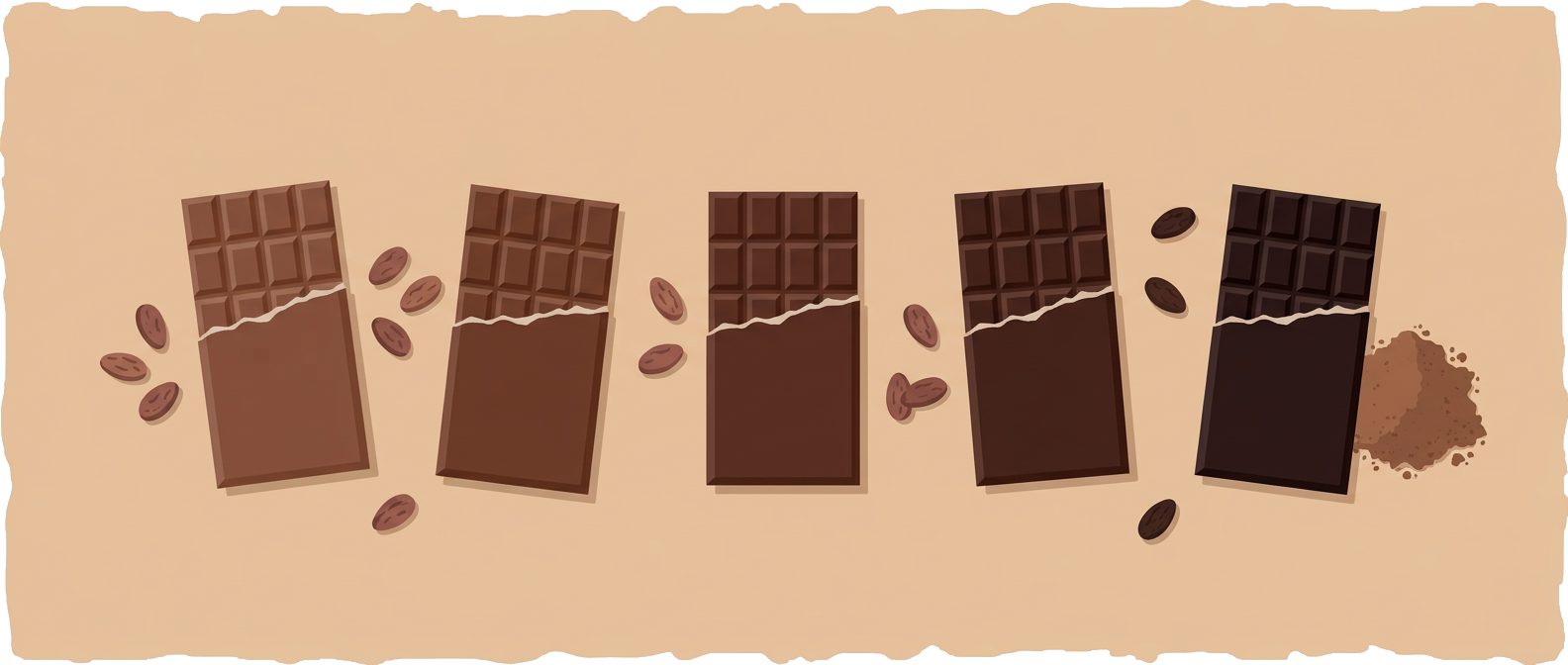
The relationship between cocoa percentage and carbs is simple: higher cocoa means less sugar, which means fewer net carbs. But the differences are bigger than most people expect.
Here’s how dark chocolate stacks up per 1-ounce (28g) serving based on USDA data:Nutrition data sourced from USDA FoodData Central entries for dark chocolate at various cocoa solid percentages (categories: 45-59%, 60-69%, and 70-85% cacao solids). Values for 85%+ and 90%+ are derived from manufacturer data consistent with USDA methodology.
| Cocoa % | Total Carbs | Fiber | Net Carbs | Sugar | Calories |
|---|---|---|---|---|---|
| 45-59% | 18g | 2g | ~16g | 14g | 155 |
| 60-69% | 15g | 2.5g | ~13g | 11g | 164 |
| 70-85% | 13g | 3.1g | ~10g | 6.8g | 170 |
| 85%+ | 9g | 4g | ~5g | 4g | 175 |
| 90%+ | 7g | 4g | ~3g | 2g | 180 |
The pattern is clear. Going from 60% to 85% cocoa cuts net carbs by more than half – from about 13g down to 5g per ounce. That’s the difference between a food that’s borderline on keto and one that fits comfortably.
The sugar column tells the story. A 60% bar still packs 11 grams of sugar per ounce because nearly 40% of the bar is sugar, milk solids, and fillers. At 85%, sugar drops to around 4 grams, and at 90%+, it’s just 2 grams. The chocolate tastes more bitter and less sweet at those levels, which is actually a feature on keto – your taste buds adjust, and the deeper cocoa flavor becomes the point.
What to Look for in Keto Dark Chocolate
Not all dark chocolate is created equal, even within the same cocoa percentage. Two bars might both say “85% cacao” on the front, but the ingredient lists can tell very different stories. Here’s what to check:
The first ingredient should be cocoa mass (or cocoa liquor). This is the ground-up cocoa bean – the actual chocolate. If sugar is listed first, the bar has more sugar than cocoa by weight, regardless of what the front label says.
Shorter ingredient lists are better. A solid keto-friendly dark chocolate bar needs four things: cocoa mass, cocoa butter, sugar, and maybe vanilla. That’s it. When you start seeing soy lecithin, milk fat, artificial flavors, and vegetable oils, the bar is being engineered for shelf appeal rather than quality.
Watch for sneaky carb sources. Some bars add caramel, cookie pieces, dried fruit, or “chocolate liqueur” fillings that spike the carb count well above what the base chocolate would contribute. Plain dark chocolate bars give you the most control over your carb intake.
If you’re already comfortable reading food labels for keto, this will feel familiar. Same principles – check the back, not the front.
Sugar Alcohols and “Keto” Chocolate Bars

Walk through any grocery store aisle and you’ll find bars labeled “keto-friendly” or “sugar-free” that use sugar alcohols instead of regular sugar. These can be a good option, but the type of sugar alcohol matters more than most people realize.
Here’s a quick comparison of the most common ones used in chocolate:Glycemic index and insulinemic index data from Grembecka M. “Sugar alcohols – their role in the modern world of sweeteners: a review.” Eur Food Res Technol. 2015. Available at PMC.
| Sweetener | Glycemic Index | Keto-Friendly? | Notes |
|---|---|---|---|
| Erythritol | 0 | Yes | No blood sugar impact; well tolerated |
| Stevia | 0 | Yes | Often blended with erythritol in bars |
| Allulose | 0 | Yes | Tastes closest to sugar; newer option |
| Xylitol | 13 | Moderate | Small glycemic response; toxic to dogs |
| Maltitol | 35 | No | Significant blood sugar spike; GI issues |
Erythritol, stevia, and allulose are the clear winners for keto. They don’t raise blood sugar, and you can subtract them from total carbs when calculating net carbs. Bars sweetened with these can have as few as 2-3g net carbs per serving.
Maltitol is the one to avoid. Despite being marketed as “sugar-free,” maltitol has a glycemic index of 35 – roughly half of table sugar. It still causes a meaningful insulin response and can knock you out of ketosis if you eat enough of it. It’s also notorious for causing digestive issues (bloating, gas, and worse) at moderate doses. If a “keto” or “sugar-free” bar lists maltitol as a sweetener, put it back on the shelf.
For a deeper breakdown of which sweeteners work and which don’t, the comprehensive sweetener guide covers everything in detail.
How Much Can You Eat and Stay in Ketosis
This depends on the cocoa percentage and your daily carb budget, but here’s the practical math:
85%+ dark chocolate: One ounce (roughly one large square from most bars) is about 5g net carbs. On a 20-30g daily budget, that’s 17-25% of your allotment – manageable as a daily treat if the rest of your meals are dialed in.
90%+ dark chocolate: One ounce comes in at roughly 3g net carbs. This gives you the most room to work with. Two squares would still be under 6-7g net carbs, which is very workable.
70% dark chocolate: One ounce is about 10g net carbs – a third to half of your entire daily budget. Possible, but it doesn’t leave much room for the vegetables, nuts, and other foods that round out a keto day. If you go this route, keep it to half an ounce (about 5g net carbs).
Here’s a useful way to think about it: one ounce of 85% dark chocolate has roughly the same carb impact as a cup of raw broccoli or a handful of almonds. It’s not free, but it’s not expensive either – as long as you’re measuring.
The real danger with chocolate on keto isn’t the first square. It’s the second and third. Chocolate is easy to overeat, especially at night. I keep mine in the freezer so it takes longer to eat and I’m forced to be more intentional about each piece. If you want to channel that chocolate craving into something more creative, we have a whole collection of keto chocolate fudge, chocolate keto brownies, and chocolate chunk cookies that use keto-friendly sweeteners. A cold, hard square of 90% dark chocolate that you let slowly melt on your tongue is really satisfying – and it takes long enough that one square usually does the job.
If you want to understand exactly where your carb ceiling is, the keto calculator can help you figure out your personal targets based on your activity level and goals.
The Health Upside of Dark Chocolate
Beyond just fitting into keto macros, dark chocolate (the high-cocoa kind) has some really interesting research behind it – mostly centered on compounds called flavanols.
Cardiovascular benefits: A meta-analysis of clinical trials found that cocoa flavanol consumption was associated with blood pressure reductions of about 4.5 mmHg systolic and 2.5 mmHg diastolic. These effects are attributed to increased nitric oxide production, which improves blood vessel function and promotes vasodilation.Hooper L, et al. “Effects of chocolate, cocoa, and flavan-3-ols on cardiovascular health.” Am J Clin Nutr. 2012. See also the meta-analysis at PMC.

Antioxidant density: Cocoa has one of the highest concentrations of polyphenols of any food, with up to 50mg of polyphenols per gram of cocoa powder. These compounds help neutralize free radicals and reduce oxidative stress.Katz DL, Doughty K, Ali A. “Cocoa and Chocolate in Human Health and Disease.” Antioxid Redox Signal. 2011. Available at PMC.
Mineral content: One ounce of 70-85% dark chocolate delivers 19% of your daily iron, 15% of your magnesium, and 56% of your copper.Mineral percentages based on the Daily Value for a 1-ounce serving of 70-85% cacao dark chocolate per USDA FoodData Central (FDC ID 170273). Magnesium is especially relevant on keto because it’s one of the electrolytes that can run low during the first few weeks.
These benefits apply specifically to high-cocoa dark chocolate, not to milk chocolate or candy bars with a thin layer of dark coating. The higher the cocoa percentage, the more flavanols you’re getting per serving.
Key Takeaways
- Dark chocolate is keto-friendly at 85%+ cocoa, with roughly 5g net carbs per ounce. At 90%+, it drops to about 3g net carbs.
- The cocoa percentage directly determines the carb count – going from 60% to 85% cuts net carbs by more than half.
- Look for bars where cocoa mass is the first ingredient and the ingredient list is short. Avoid bars with maltitol, which has a glycemic index of 35 and can disrupt ketosis.
- Bars sweetened with erythritol, stevia, or allulose (GI of 0) are the best sugar-free options and can bring net carbs down to 2-3g per serving. You can also use dark chocolate in recipes like keto hot chocolate or chocolate chia seed pudding.
- One ounce of 85% dark chocolate per day fits comfortably into most keto budgets. Store it in the freezer to slow yourself down and make one square feel like enough.
For similar quick answers, see our guides on is honey keto, is peanut butter keto, and is rice keto.
FAQ
How much dark chocolate can I eat on keto?
For 85%+ cocoa dark chocolate, one ounce (about one square from most bars) is a reasonable serving at roughly 5-6g net carbs. That’s a real portion of a 20-30g daily budget, so you’ll want to account for it alongside everything else you’re eating that day. Two ounces of 85% dark chocolate would put you at 10-12g net carbs just from chocolate – doable if the rest of your meals are very low carb, but tight. Use the keto calculator to see how much room you have in your daily targets.
Is 70% dark chocolate OK for keto?
It’s borderline. One ounce of 70% dark chocolate has about 10g net carbs, which is a third to half of most people’s daily carb budget on keto. It’s technically possible to fit a small piece into your macros, but it doesn’t leave much room for the vegetables, nuts, and other foods that round out a balanced keto day. If you can find 85% or higher, you get the chocolate fix for roughly half the carb cost.
What is the best dark chocolate for keto?
Look for bars that are 85% cocoa or higher, with cocoa mass or cocoa liquor listed as the first ingredient and sugar as far down the ingredient list as possible. The shorter the ingredient list, the better – cocoa mass, cocoa butter, sugar, and maybe vanilla is all you need. For an even lower carb option, some brands make bars sweetened with erythritol or stevia instead of sugar, which can bring net carbs down to 2-3g per serving. Avoid bars with maltitol, which still causes a moderate glycemic response despite being marketed as sugar-free. For more details on which sweeteners work, check out the best and worst keto sweeteners guide.
Sources
- USDA FoodData Central: Dark Chocolate Nutrition Data by Cocoa Percentage
- Katz DL, et al. “Cocoa and Chocolate in Human Health and Disease.” Antioxid Redox Signal. 2011.
- Effect of Cocoa Beverage and Dark Chocolate on Blood Pressure: A Systematic Review and Meta-Analysis. Nutrients. 2022.
- Grembecka M. “Suitability of sugar alcohols as antidiabetic supplements: A review.” Eur Food Res Technol. 2022.
- “Sugar-Free Dark Chocolate Consumption Results in Lower Blood Glucose in Adults With Diabetes.” J Am Coll Nutr. 2022.
- Lin X, et al. “Cocoa Flavanol Intake and Biomarkers for Cardiometabolic Health.” J Nutr. 2016.