

Yes, cottage cheese is keto-friendly – and it’s actually one of the better dairy options for the diet. A half-cup serving of full-fat cottage cheese has roughly 3g of net carbs, which barely dents a 20-30g daily carb budget. You also get about 14g of protein and 5g of fat in that same serving, so the macro profile is solid.
The catch is that not all cottage cheese is the same. Full-fat, 2%, and nonfat versions have different carb and fat counts, and flavored varieties can be loaded with sugar. I hear from readers every week asking about dairy on keto, and cottage cheese comes up constantly – probably because it’s cheap, high in protein, and sitting right there in most people’s fridges. Here’s the full breakdown so you know exactly what to buy, what to skip, and how to fit it into your macros.
Jump to a section:
- Cottage Cheese Nutrition by Type
- Why Cottage Cheese Works on Keto
- Best Types for Keto
- What to Avoid
- How to Fit It Into Your Macros
- Ways to Use Cottage Cheese on Keto
- Key Takeaways
- FAQ
Cottage Cheese Nutrition by Type
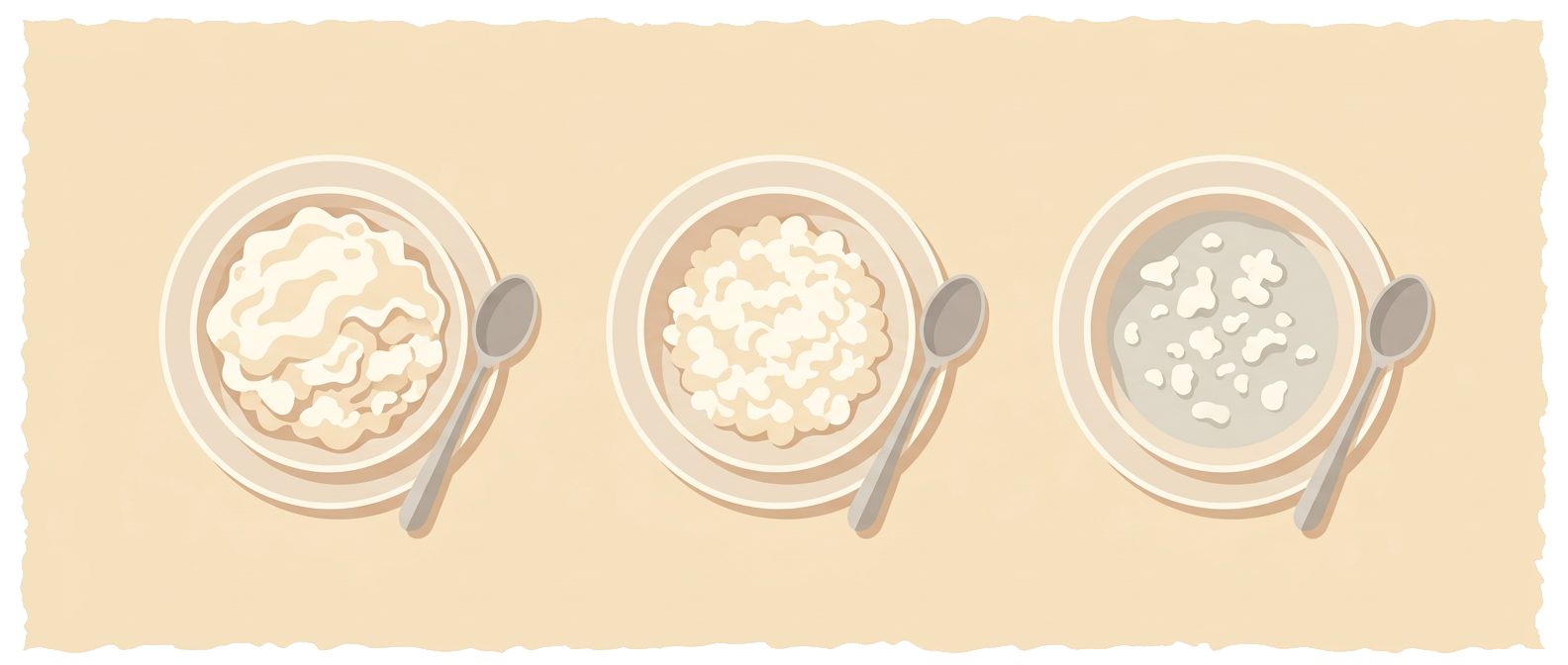
The fat percentage on the label changes the macros more than you’d expect. Here’s what a standard half-cup (113g) serving looks like across the three main types:Nutritional data from the USDA FoodData Central database. Values for plain cottage cheese (creamed/4%, lowfat 2%, and nonfat) based on standard 113g serving sizes.
| Type (½ cup / 113g) | Calories | Fat | Net Carbs | Protein |
|---|---|---|---|---|
| Full-fat (4% milkfat) | ~116 | 5.1g | 3g | 14.1g |
| Low-fat (2% milkfat) | ~102 | 2.2g | 4.1g | 15.5g |
| Nonfat | ~62 | 0.3g | 1.3g | 12.5g |
A few things jump out. Full-fat cottage cheese has the most fat (obviously), but the carb count stays low across all three – you’re looking at 1-4g of net carbs no matter which type you pick. The protein is consistently high, which is one of the reasons cottage cheese works so well on keto. And because there’s zero fiber in cottage cheese, total carbs and net carbs are the same number.
Compare that to a cup of milk at about 12g of net carbs, and it’s clear why cottage cheese earns a spot on the keto-approved list while a glass of milk generally doesn’t. For the full picture on which dairy products work on keto and which ones to skip, the dairy and keto guide covers everything from cheese to cream to butter.
Why Cottage Cheese Works on Keto
Cottage cheese has a few things going for it beyond just the low carb count.
The protein is mostly casein. About 80% of the protein in cottage cheese is casein, which digests slowly compared to whey protein. A landmark study in the Proceedings of the National Academy of Sciences found that casein produces a prolonged, steady release of amino acids into the bloodstream – it inhibited protein breakdown by 34% while still stimulating protein synthesis.Boirie Y, et al. Slow and fast dietary proteins differently modulate postprandial protein accretion. Proc Natl Acad Sci USA. 1997;94(26):14930-5. In practical terms, that means cottage cheese keeps you fuller longer than a lot of other protein sources at the same calorie level.
It’s a fermented dairy product. Like yogurt, cottage cheese goes through a fermentation process where bacteria consume some of the lactose (milk sugar). Research shows that fermentation can reduce lactose content by 20-50% depending on the product and storage time.Alm L. Effect of fermentation on lactose, glucose, and galactose content in milk and suitability of fermented milk products for lactose intolerant individuals. J Dairy Sci. 1982;65(3):346-52. That’s part of why cottage cheese has fewer carbs than you’d expect from a dairy food – some of the sugar has already been eaten by the bacteria before it reaches your gut.
It holds its own on satiety. A controlled trial comparing cottage cheese and eggs – two common high-protein foods – found that both produced similar satiety effects, with comparable time to next meal and equivalent food intake afterward.Marsset-Baglieri A, et al. The satiating effects of eggs or cottage cheese are similar in healthy subjects despite differences in postprandial kinetics. Appetite. 2015;90:59-65. That’s worth knowing, because eggs are usually the go-to protein on keto. Cottage cheese can fill that same role when you want some variety.
Best Types for Keto
Here’s what to reach for when you’re standing in the dairy aisle:
- Full-fat (4% milkfat) cottage cheese – This is the default keto pick. About 3g of net carbs and 5g of fat per half cup, with 14g of protein. The higher fat content helps with satiety, and the carb count is low enough that you could have two servings in a day without much concern. Brands like Daisy, Good Culture, and Breakstone’s all make solid full-fat options.
- Low-fat (2% milkfat) cottage cheese – A reasonable alternative if you’re trying to hit a higher protein target or keep calories in check. The carbs are slightly higher at about 4g per half cup, but you get an extra gram or two of protein. It’s not the ideal macro fit for keto, but it works if it fits your numbers.
- Small curd vs. large curd – This is a texture preference, not a nutrition difference. Small curd and large curd cottage cheese have the same macros. Pick whichever you like eating.
The quick test: flip the container over and check the ingredients list. You want to see milk, cream, salt, and cultures – not much else. Some brands add stabilizers like guar gum or locust bean gum, which are fine. What you’re avoiding is added sugar, modified food starch, or anything with “syrup” in the name.
For a broader view of what fits keto and what doesn’t, the ketogenic diet food list is a good reference to keep handy.
What to Avoid
The dairy aisle has plenty of cottage cheese options that look fine on the front label but don’t hold up when you flip them around.
- Flavored cottage cheese – Pineapple, peach, strawberry, garden vegetable – these all come with added sugar or starchy mix-ins that push the carbs up to 10-15g per serving. That’s a big chunk of a 20-30g daily budget spent on one snack.
- Cottage cheese with fruit on top – The fruit layer is basically jam. You’re looking at 12-18g of carbs per container, most of it from added sugar. If you want fruit with your cottage cheese, add a few fresh berries yourself and control the carb cost.
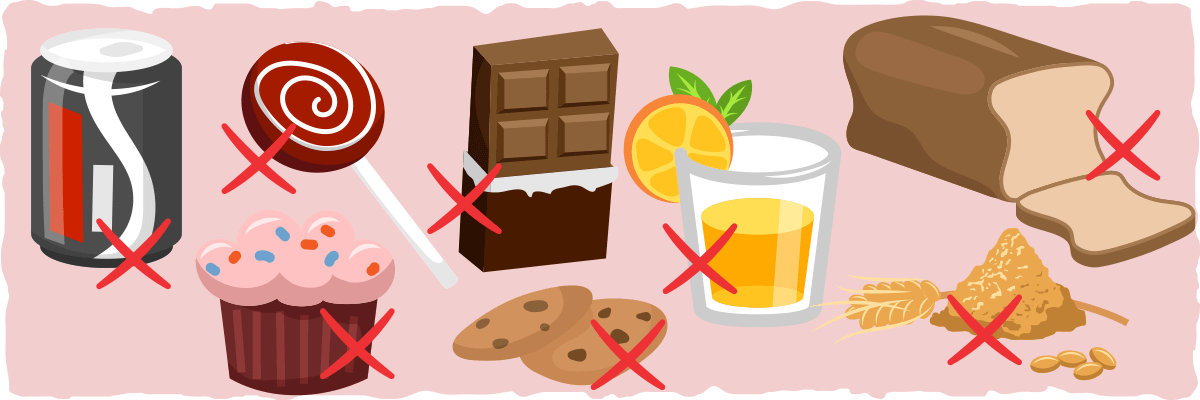
- “Whipped” or “blended” cottage cheese – Some brands blend their cottage cheese into a smooth, yogurt-like texture and add sweeteners or thickeners in the process. These products often have more carbs per serving than traditional cottage cheese. Check the label specifically – don’t assume it’s the same as regular.
- Cottage cheese doubles/cups with toppings – The single-serve cups that come with granola, honey, or chocolate chips on top are convenience products, not keto foods. The toppings alone can add 10-20g of carbs.
The pattern is the same one you see across most grocery store dairy: anything that tastes sweet on the shelf probably has too many carbs for keto. Plain is your friend.
How to Fit It Into Your Macros
Cottage cheese is high in protein relative to its carb and calorie count, which makes it easy to slot into a keto day without throwing your ratios off. Here’s how to think about it:
As a protein boost: If you’re falling short on protein for the day, a half cup of full-fat cottage cheese adds 14g of protein for only 3g of net carbs. That’s a better protein-to-carb ratio than most dairy foods. Most people on keto need somewhere around 0.7-1.0 grams of protein per pound of lean body mass, and cottage cheese is an efficient way to close the gap.
As a fat source: Full-fat cottage cheese isn’t as high in fat as, say, cream cheese or cheddar. At 5g of fat per half cup, it’s moderate. If you need more fat in a meal, pair it with something – a drizzle of olive oil, a handful of nuts, or some sliced avocado. You can also stir in a tablespoon of MCT oil for a quick fat boost.
Portion control: A half cup is the standard serving, and it’s a reasonable amount for one sitting. If you’re eating cottage cheese straight from the container, measure it out. It’s easy to eat more than you planned, and the carbs add up – two cups of full-fat cottage cheese would run you about 12g of net carbs, which is still manageable but takes up a bigger share of your daily budget than you might realize.
If you’re not sure how cottage cheese fits your specific targets, the keto calculator can help you figure out your daily protein and fat needs.
Ways to Use Cottage Cheese on Keto
Cottage cheese is more versatile than you’d think. It works as a snack, a meal component, and a cooking ingredient.
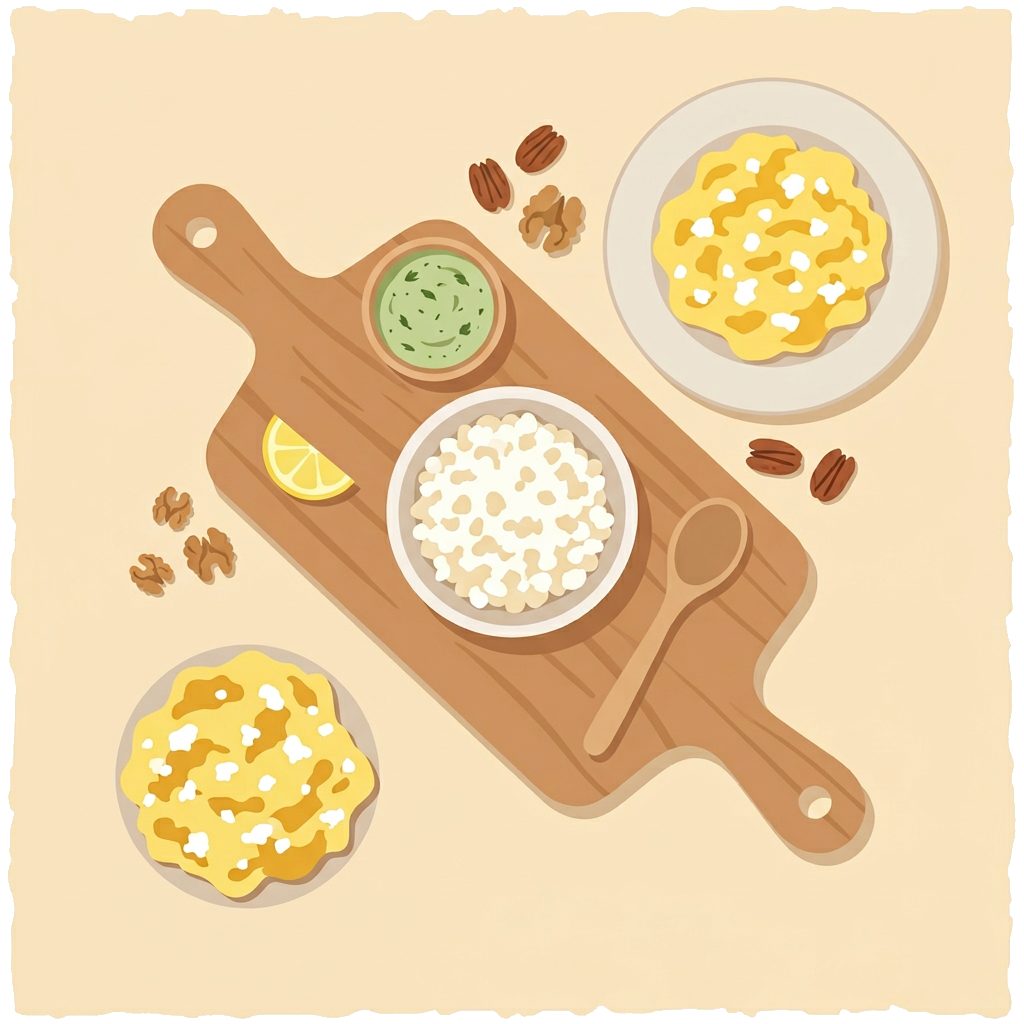
As a snack: A half cup of full-fat cottage cheese with a few walnuts or pecans and a sprinkle of everything bagel seasoning is a filling keto snack that takes about 30 seconds to put together. For more ideas like this, the keto snack list has plenty of options.
In place of ricotta: Cottage cheese can sub in for ricotta in lasagna, stuffed shells, or any baked Italian dish. Blend it smooth first if you don’t want the curds, or leave it chunky for texture. It works well in keto Italian recipes where ricotta is called for.
In scrambled eggs or pancakes: Stir a couple tablespoons of cottage cheese into your eggs before cooking. It makes them creamier and adds protein without changing the flavor much. You can also try keto cottage cheese pancakes for a high-protein breakfast that’s surprisingly fluffy. This is actually one of the simplest ways to use it on a regular basis.
As a base for dips: Blend cottage cheese with herbs, garlic, and a squeeze of lemon for a high-protein dip. It works as a sour cream substitute on tacos or burrito bowls too. Pair it with vegetables from the best low-carb vegetables list for a solid appetizer.
Before bed: Because cottage cheese is high in casein – a slow-digesting protein – some people eat it as an evening snack. A whipped cottage cheese bowl or a maple pecan cottage cheese bowl works just as well in the evening as it does in the morning. Research on pre-sleep casein intake suggests it can support overnight muscle protein synthesis, though the metabolic effects are modest in healthy adults.Leyh SM, et al. Pre-sleep protein in casein supplement or whole-food form has no impact on resting energy expenditure or hunger in women. Br J Nutr. 2018;120(9):988-994. Either way, it’s a low-carb snack that keeps you satisfied through the night.
A recent review in Critical Reviews in Food Science and Nutrition called cottage cheese “a relatively underexplored cultured dairy product with potential health benefits,” noting its promise for appetite regulation and metabolic health – though the authors pointed out that more high-quality trials are still needed.Farsi DN, et al. Cottage cheese, a relatively underexplored cultured dairy product with potential health benefits? Crit Rev Food Sci Nutr. 2025.
Key Takeaways
- Plain cottage cheese is keto-friendly, with roughly 3g of net carbs per half-cup serving for the full-fat version.
- Full-fat (4% milkfat) cottage cheese is the best pick for keto – more fat for satiety, low carbs, and about 14g of protein per serving.
- The protein in cottage cheese is mostly casein, which digests slowly and helps keep you full longer than faster-digesting proteins.
- Flavored, sweetened, and fruit-topped cottage cheese can hit 10-18g of carbs per serving – avoid these and buy plain instead.
- Cottage cheese works as a snack, a ricotta substitute, a dip base, a scrambled egg add-in, and an evening protein source.
- All three types (full-fat, 2%, nonfat) can fit keto, but full-fat gives you the best macro balance for a high-fat diet.
For similar quick answers on keto-compatible foods, see our guides on is peanut butter keto, is honey keto, and is Greek yogurt keto. You might also find the is rice keto and is oatmeal keto guides useful if you’re checking common foods.
FAQ
How much cottage cheese can I eat per day on keto?
Most people can fit one to two half-cup servings per day without any issue. Full-fat cottage cheese runs about 3g of net carbs per half cup, so even two servings only costs you 6g out of a 20-30g daily budget. That leaves plenty of room for vegetables, nuts, and other foods. If you want to dial in your exact targets, the keto calculator can help you figure out how much room you have left.
Is full-fat or low-fat cottage cheese better for keto?
Full-fat (4% milkfat) cottage cheese is the better choice for most people on keto. It has more fat for satiety and roughly the same carb count as low-fat versions. The 2% variety is a reasonable middle ground if you’re watching total calories, but nonfat cottage cheese is worth avoiding – it’s lower in fat, higher in carbs per calorie, and less filling. On a diet where fat is your primary fuel source, the full-fat version fits the macro profile more naturally.
Does cottage cheese kick you out of ketosis?
Plain cottage cheese won’t kick you out of ketosis as long as you’re tracking the carbs. A half-cup serving of full-fat cottage cheese has about 3g of net carbs – that’s a small fraction of a 20-30g daily budget. Where people run into trouble is with flavored varieties that add sugar, fruit, or honey, which can push a single serving to 15g or more. Stick with plain, measure your portions, and it fits comfortably.
Sources
- USDA FoodData Central: Cottage Cheese Nutrition Data (Creamed, Lowfat, Nonfat)
- Slow and Fast Dietary Proteins Differently Modulate Postprandial Protein Accretion – PNAS (1997)
- Effect of Fermentation on Lactose, Glucose, and Galactose Content in Milk – Journal of Dairy Science (1982)
- The Satiating Effects of Eggs or Cottage Cheese Are Similar in Healthy Subjects – Appetite (2015)
- Pre-Sleep Protein in Casein Supplement or Whole-Food Form – British Journal of Nutrition (2018)
- Cottage Cheese, a Relatively Underexplored Cultured Dairy Product with Potential Health Benefits? – Critical Reviews in Food Science and Nutrition (2025)