

No, corn is not keto friendly. One medium ear of boiled sweet corn has about 17 grams of net carbs – that’s close to an entire day’s worth on a strict keto budget of 20-30 grams. A single cup of corn kernels is even higher at around 27g net carbs, which would blow through your limit in one side dish.
This comes up constantly, and I get why. Corn feels like a vegetable. It sits next to the broccoli and green beans at every summer cookout. But botanically, corn is a cereal grain – it belongs to the grass family alongside wheat, rice, and oats. And nutritionally, it acts like one too. It’s packed with starch, and that starch converts to glucose fast once you eat it.
Jump to a section:
- Corn Product Carb Breakdown
- Why Corn Is a Grain, Not a Vegetable
- What Corn Does to Blood Sugar
- Hidden Corn in Everyday Foods
- Low-Carb Alternatives to Corn
- Key Takeaways
- Frequently Asked Questions
Corn Product Carb Breakdown
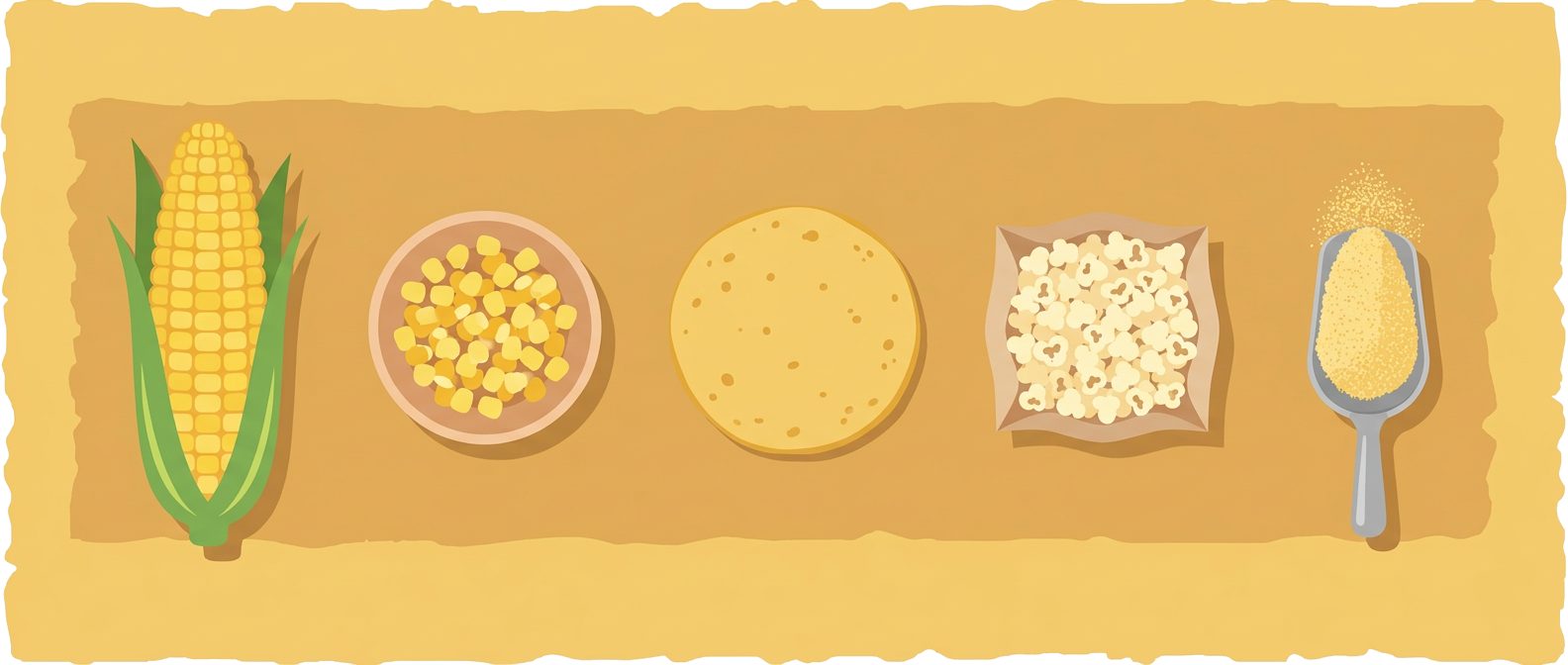
Not all corn products are equal in carb content, but none of them are what you’d call low carb. Here’s how the most common forms stack up based on USDA data:Nutrition data sourced from USDA FoodData Central entries for sweet corn (boiled), popcorn (air-popped), corn tortillas, and cornmeal.
| Corn Product | Serving Size | Total Carbs | Fiber | Net Carbs | Calories |
|---|---|---|---|---|---|
| Sweet corn (boiled) | 1 medium ear | 19g | 2.4g | ~17g | 88 |
| Corn kernels (boiled) | 1 cup | 31g | 3.6g | ~27g | 143 |
| Popcorn (air-popped) | 1 cup | 6g | 1.2g | ~5g | 31 |
| Corn tortilla (6″) | 1 tortilla | 11g | 1.3g | ~10g | 52 |
| Cornmeal (dry) | 1/4 cup | 22g | 2g | ~20g | 110 |
| Canned corn (drained) | 1/2 cup | 15g | 1.8g | ~13g | 66 |
The numbers tell the story pretty clearly. Even a single ear of corn at 17g net carbs takes up most of a 20g daily budget and well over half of a 30g one. A cup of kernels at 27g net carbs would use up nearly the entire day’s allotment by itself.
Popcorn is the only form that’s even remotely workable, and even that requires restraint. One cup at 5g net carbs is fine in isolation, but most people don’t eat just one cup of popcorn. Three cups puts you at 15g net carbs – and that’s before you’ve eaten anything else that day.
If you’re tracking macros and want to understand how these numbers fit into your personal targets, the keto calculator can help you figure out your daily carb ceiling.
Why Corn Is a Grain, Not a Vegetable
This is one of those food classification facts that surprises a lot of people. Corn (Zea mays) is a cereal grain – it belongs to the grass family Poaceae, right alongside wheat, rice, barley, and oats. Each kernel is technically a caryopsis, which is the dry, single-seeded fruit of a grass plant.University of Arizona Cooperative Extension. “Corn: A Fruit, Vegetable, Grain, or All Three?” 2021. Available at extension.arizona.edu.
The USDA muddies the water a bit by classifying fresh sweet corn as a “starchy vegetable” – putting it in the same category as potatoes and peas. That’s because fresh corn on the cob is harvested while the kernels are still soft and immature. Once corn fully matures and dries, it’s harvested as a grain and processed into cornmeal, corn flour, grits, and corn syrup.
Why does this matter for keto? Because grains are consistently high in starch, and corn is no exception. When you see corn on your plate and think “vegetable,” your brain might file it alongside the green beans and spinach. But nutritionally, it has far more in common with a slice of bread than a serving of broccoli. A cup of corn kernels has roughly the same net carbs as a slice and a half of white bread.
On keto, the vegetables that work are the low-carb, non-starchy ones – leafy greens, zucchini, cauliflower, bell peppers, and broccoli. Those typically come in at 2-5g net carbs per cup. Corn just isn’t in that category.
What Corn Does to Blood Sugar
Beyond the raw carb numbers, corn’s glycemic profile makes it a poor fit for keto. Boiled sweet corn has a glycemic index around 48-60 depending on variety – moderate by general nutrition standards, but that’s still high enough to cause a real blood sugar spike when you’re trying to stay in ketosis.Atkinson FS, Brand-Miller JC, Foster-Powell K, et al. “International tables of glycemic index and glycemic load values 2021: a systematic review.” Am J Clin Nutr. 2021;114(5):1625-1632. PMID: 34258626.
Processing makes it worse. Cornflakes land at a GI of 81, and corn chips are in the 70-80 range. The more you grind, cook, and refine corn, the faster your body converts it to glucose. That’s the basic pattern with most grains – processing breaks down the starch structure and speeds up digestion.“White Vegetables: Glycemia and Satiety.” Adv Nutr. 2013. Available at PMC.
Corn starch specifically has been studied for its effect on insulin response. Research shows that the amylopectin fraction in corn starch (which makes up about 75% of most corn varieties) produces a significantly higher blood glucose and insulin spike compared to amylose-rich starches. That’s the kind of rapid glucose response that works directly against maintaining ketosis.“Effect of starch structure on glucose and insulin responses in adults.” Am J Clin Nutr. 1988. PMID: 3279746.
For context, the low-carb approach works in part by keeping blood sugar stable and insulin low. Corn-based foods do the opposite.
Hidden Corn in Everyday Foods
Even if you’d never sit down and eat an ear of corn on keto, corn-derived ingredients show up in places you might not expect. This is worth knowing because these hidden sources can add carbs without you realizing it.
High fructose corn syrup (HFCS). This is the big one. It’s in soft drinks, condiments (especially ketchup and BBQ sauce), salad dressings, bread, and even some protein bars. On a label, it might appear as “corn syrup,” “corn syrup solids,” “glucose-fructose syrup,” or just “fructose.” Any of these are pure sugar and a hard no on keto.
Corn starch. Used as a thickener in sauces, gravies, soups, and packaged foods. A single tablespoon of corn starch has about 7g net carbs, and it can hide in everything from canned soup to frozen meals. On keto, use xanthan gum or a cream-based reduction instead.

Maltodextrin. This is a highly processed corn derivative with a glycemic index as high as 110 – higher than table sugar. It’s used as a filler in spice blends, artificial sweeteners (some stevia and sucralose packets use it as a bulking agent), and processed snacks.
Modified food starch. Often corn-based, this appears in deli meats, canned foods, and frozen dinners. The amounts are usually small, but they can add up if you’re eating multiple processed foods in a day.
The simplest way to avoid these is to read ingredient labels carefully and cook from whole ingredients when possible. If corn starch, corn syrup, or maltodextrin appears on the label, it’s worth checking the carb count more closely.
Low-Carb Alternatives to Corn
The good news is that whatever role corn plays in your cooking, there’s usually a keto-friendly swap that works well enough.
Instead of corn on the cob: Try roasted or grilled zucchini slices. They pick up char and seasoning the same way corn does on a grill, and a whole medium zucchini has only about 4g net carbs. Not the same flavor, obviously, but they fill the same role at a cookout.
Instead of corn kernels in recipes: Diced cauliflower works surprisingly well in salads, salsas, and stir-fries where you’d normally toss in corn. It adds the same bulk and crunch (when kept slightly undercooked) at about 3g net carbs per cup. Diced jicama is another option if you want something with a similar sweetness and snap.
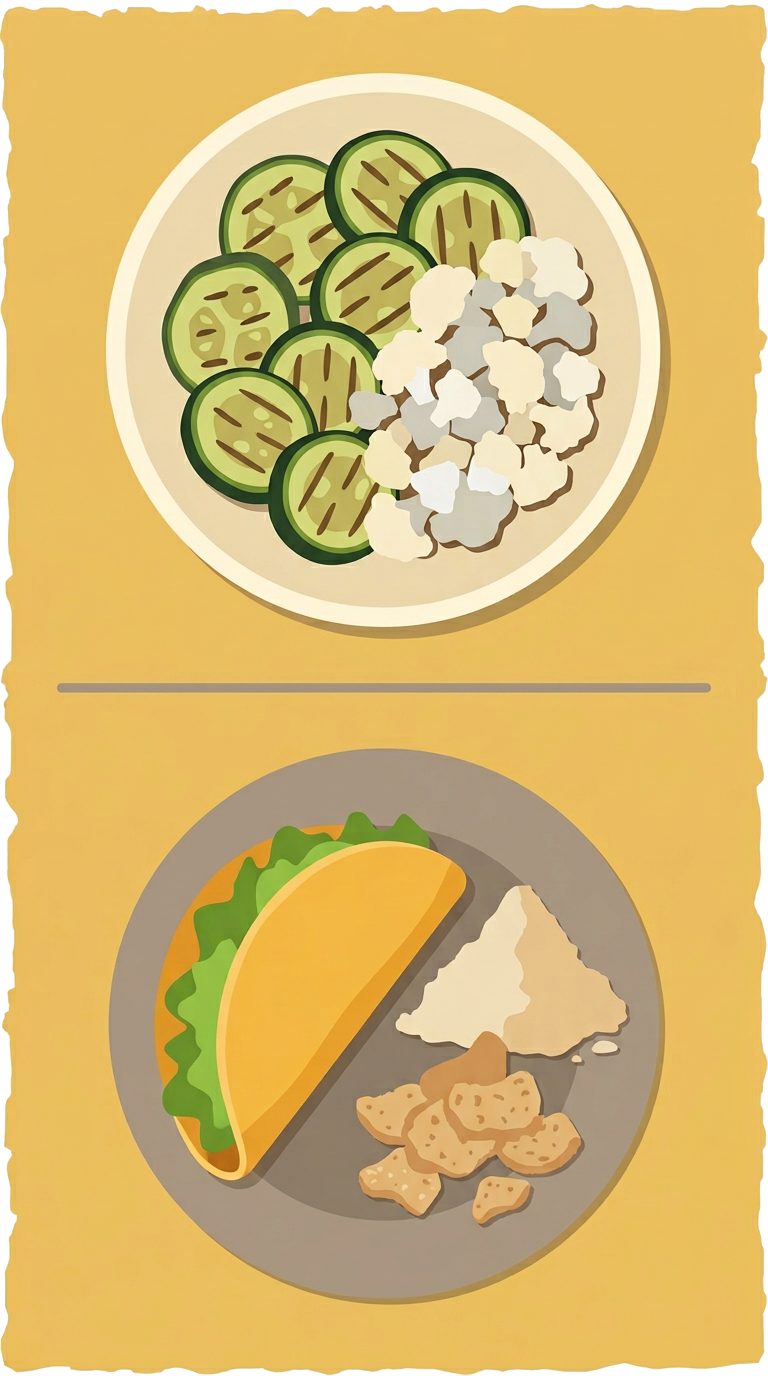
Instead of corn tortillas: Cheese shells, lettuce wraps, or store-bought low-carb tortillas made with almond or coconut flour are your best options. Cheese shells (just baked shredded cheese) are essentially zero carb and hold up well for tacos. Most low-carb tortillas run 3-5g net carbs each.
Instead of cornmeal or corn flour: Almond flour and coconut flour handle most of the same jobs in keto baking and breading. For breading specifically, crushed pork rinds or a mix of almond flour and parmesan cheese gives you a crispy coating without the carbs. Check out our keto food list for a full breakdown of what works.
Instead of popcorn: If you want a crunchy, snackable replacement, try cheese crisps, roasted nuts (in measured portions), or pork rind chips. These all come in well under the carb cost of popcorn and tend to be more filling per serving.
Key Takeaways
- Corn is not keto friendly. One medium ear has about 17g net carbs, and a cup of kernels has roughly 27g – too high for a 20-30g daily budget.
- Corn is botanically a cereal grain, not a vegetable. It has far more in common nutritionally with wheat and rice than with broccoli or spinach.
- Popcorn is the only corn product that might fit in small amounts (about 5g net carbs per cup), but portion control is critical.
- Watch for hidden corn in processed foods – HFCS, corn starch, maltodextrin, and modified food starch add carbs without you noticing.
- Cauliflower, zucchini, cheese shells, and almond flour can replace corn in most recipes at a fraction of the carb cost.
For similar quick answers, see our guides on is rice keto, is peanut butter keto, and is honey keto.
Frequently Asked Questions
Can I eat any corn on keto?
The only corn product that can realistically fit into keto is plain air-popped popcorn in small amounts. One cup has about 5g net carbs, so a cup or two could work if you budget for it. But standard sweet corn, corn tortillas, cornbread, and anything made with cornmeal or corn flour are all too carb-heavy to be practical on a 20-30g daily budget. If you’re craving corn flavor, a small portion of popcorn is your best bet – just skip the movie-theater bucket.
Is popcorn OK on a keto diet?
In small amounts, yes. One cup of air-popped popcorn has roughly 5g net carbs, which is manageable. Two cups puts you at about 10g net carbs – that’s a third to half of most people’s daily budget, so you’d need to keep the rest of your meals very low carb. The problem is portion control. Most people don’t stop at one or two cups, and the carbs add up fast. If you do eat popcorn on keto, measure it out, skip the butter-flavored microwave bags (which often add sugar and starch), and stick to plain air-popped.
What can I use instead of corn tortillas on keto?
Cheese shells, lettuce wraps, and low-carb tortillas made from almond flour or coconut flour are all solid replacements. Cheese shells (just baked or pan-fried shredded cheese) have essentially zero carbs and hold up surprisingly well for tacos. Butter lettuce cups work for lighter fillings. And there are several store-bought low-carb tortillas in the 3-5g net carb range that can stand in for corn tortillas in most recipes. Check out our keto food list for more swap ideas.
Sources
- USDA FoodData Central: Sweet Corn, Popcorn, Corn Tortilla, and Cornmeal Nutrition Data
- Atkinson FS, et al. “International tables of glycemic index and glycemic load values 2021: a systematic review.” Am J Clin Nutr. 2021.
- “White Vegetables: Glycemia and Satiety.” Adv Nutr. 2013.
- “Effect of starch structure on glucose and insulin responses in adults.” Am J Clin Nutr. 1988.
- “Effects of Blanching, Freezing and Canning on the Carbohydrates in Sweet Corn.” Foods. 2023.
- University of Arizona Extension. “Corn: A Fruit, Vegetable, Grain, or All Three?” 2021.