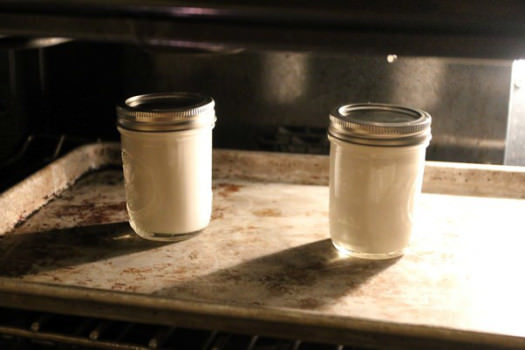
Making your own yogurt might seem like a weird idea at first, but it’s pretty simple and it’s almost all hands off. We’re going to culture the coconut milk in the oven using the light of the oven and the contents of probiotic capsules. You want your coconut milk to culture in the 110F – 115F range. We’ll achieve this by leaving just the light of the oven on and keeping the door completely closed. Don’t open it during the culture period! You may also want to invest in an oven thermometer so you can get a proper idea of what temperature your oven is running at.
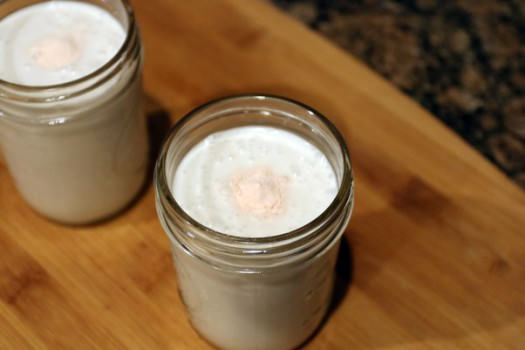
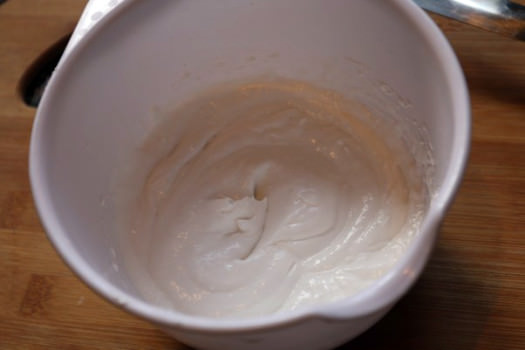
I did this recipe with 2 different methods. The first (pictured in the jar) was using only xanthan gum to thicken the yogurt, and the other (pictured in the cup) was using a mixture of xanthan and whipped heavy cream to thicken the yogurt. The second method seemed to work much better (and give that creamy texture and taste that I like in yogurt). The first method using only xanthan gum ended up being too much in my opinion. I used 1/2 tsp. xanthan to 200ml of yogurt, which ended up giving that gummy, slimy texture that some of you may know about if you’ve used too much xanthan before.
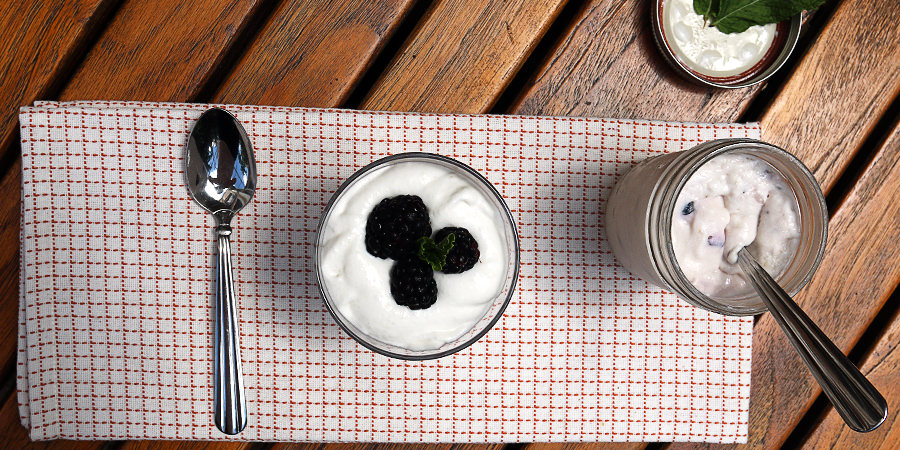
So I definitely recommend using the heavy cream, although it will give you a sublte heavy cream taste. The tanginess of the bacteria that’s been cultured it still there, as you would expect with yogurt, and the coconut milk flavor still shows up in the aftertaste. You can easily add any fillings you want to this – chia seeds for crunch, crushed almonds for flavor and texture, lemon juice for acidity, small amounts of berries for sweetness, or even Torani syrups for a more decadent overall taste (this will also mask a lot of the flavors). My favorite? Crushed toasted pecans, 1 tbsp. Chia Seeds, and Salted Caramel Torani Syrup!
If you use the whole can of coconut milk to make the yogurt, you will end up with a thinner yogurt than you would if you were to make it with only the coconut cream, obviously. But there’s a lot of carbs in the coconut cream alone, so I think it’s worth it to mix everything together and then thickening it so you get more bang for your buck in terms of carbs.
Yields 550mL (2.3 cups) of Coconut Cream Yogurt
The Preparation
- 13 1/2 ounces canned coconut milk
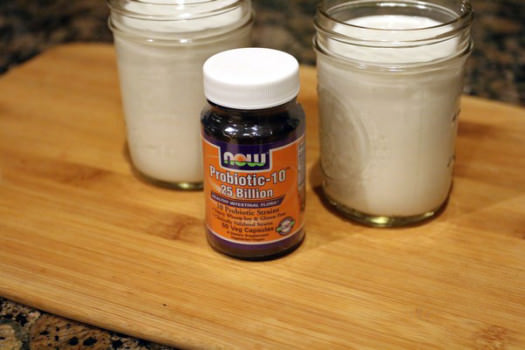
- 2 whole probiotic tablet, such as NOW Probiotic-10
- 1/2 teaspoon xanthan gum
- 2/3 cup heavy whipping cream
The Execution
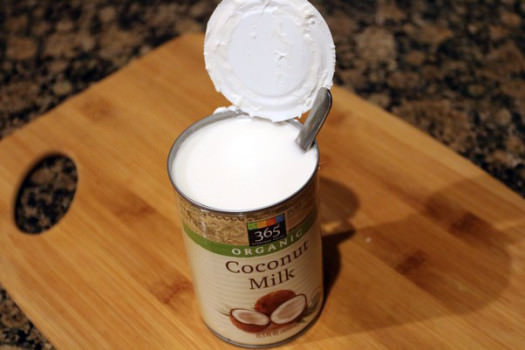
1. Open a can of coconut milk and stir it well. You want to make sure the cream and water in the can is thoroughly mixed.
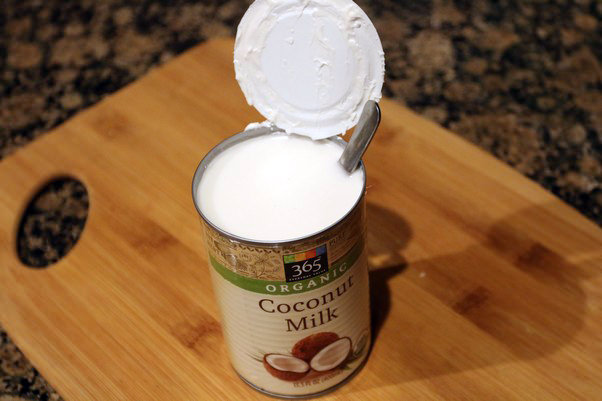
2. Put the coconut milk into whatever container you’d like. I seperated mine into 2 200mL mason jars. Have your NOW Probiotic-10 handy.
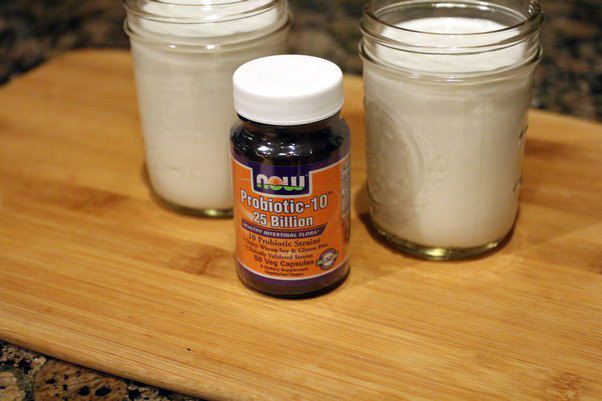
3. Break the capsules into the coconut milk. If you are using 2 jars, use 1 capsule per jar. If you are using 1 jar, use 2 capsules. Stir the mixture together well and place the lids on the jar.
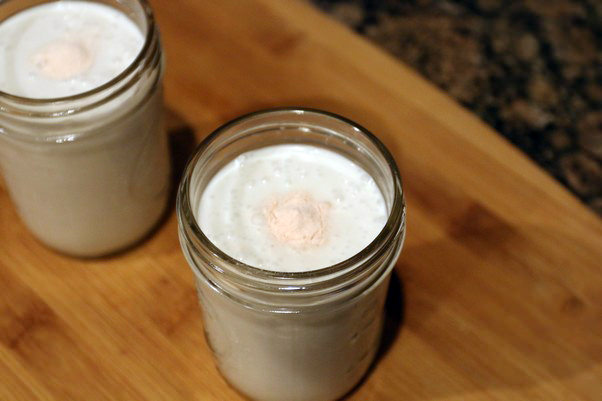
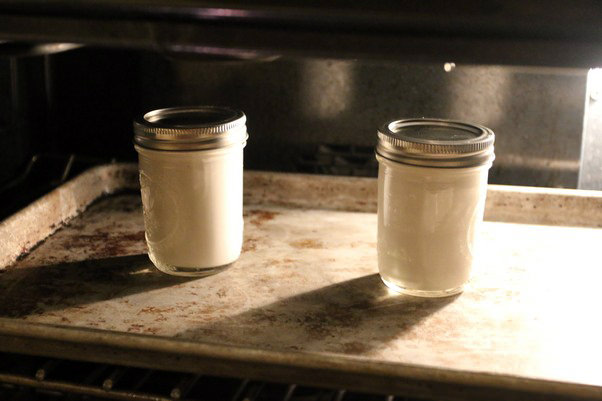
4. Turn your oven light on and place the jars in the oven. Close the oven door, keeping the light on, and let it sit for 12-24 hours overnight. The longer the bacteria can culture, the thicker the mixture will get, but it doesn’t make too big of a difference.
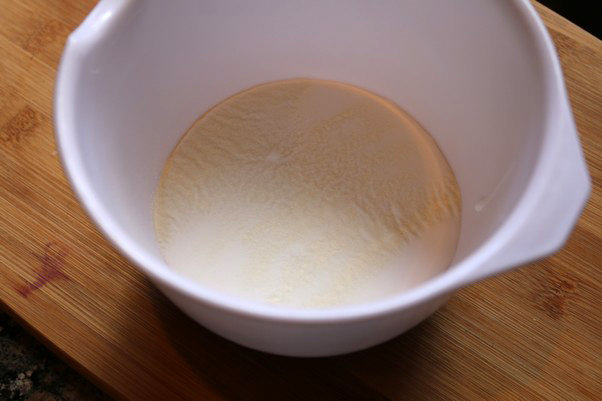
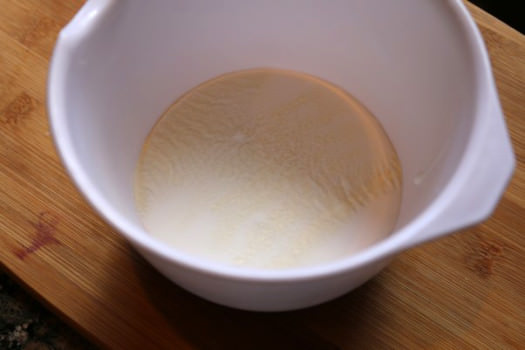
5. Empty all of your yogurt into a mixing bowl and sprinkle 1/2 tsp. Xanthan gum over it. Using a hand mixer, mix this well.
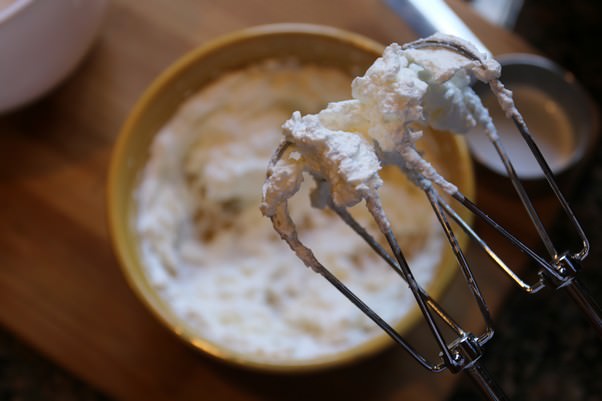
6. In a separate bowl, whip up 2/3 cup heavy cream until stiff peaks form. You want this to be solid cream almost.
7. Dump the solid cream into the yogurt and mix on a low speed until the consistency you want is achieved.
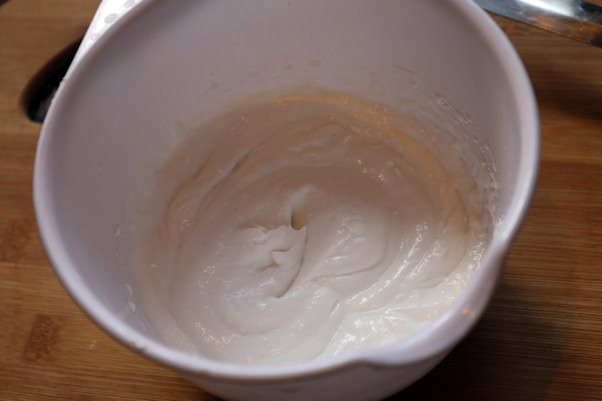
8. Add toppings, flavorings, or fillings of your choice and enjoy!
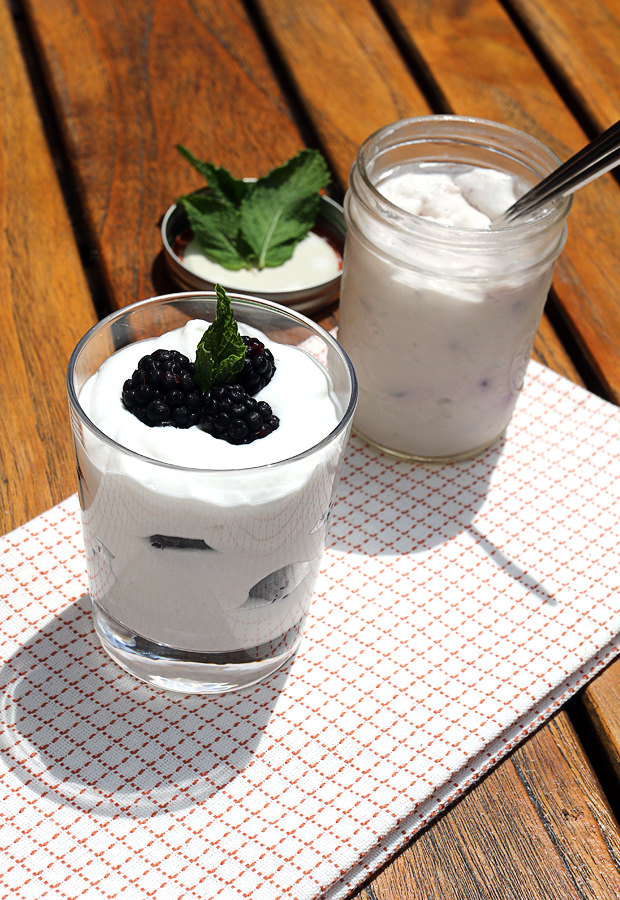
This makes a total of 4 servings of Coconut Cream Yogurt. Each serving comes out to be 326 calories, 34.8g fats, 3.8g net carbs, and 3.1g protein.
| NUTRITION | CALORIES | FAT | CARBS | FIBER | NET CARBS | PROTEIN |
| 13 1/2 ounce canned coconut milk | 754 | 81.6 | 10.8 | 0 | 10.8 | 7.7 |
| 2 whole probiotic tablet | 0 | 0 | 0 | 0 | 0 | 0 |
| 1/2 teaspoon xanthan gum | 8 | 0 | 1.8 | 1.8 | 0 | 0 |
| 2/3 cup heavy whipping cream | 542 | 57.5 | 4.4 | 0 | 4.4 | 4.5 |
| Totals | 1304 | 139.2 | 17 | 1.8 | 15.1 | 12.3 |
| Per Serving (/4) | 326 | 34.8 | 4.2 | 0.5 | 3.8 | 3.1 |
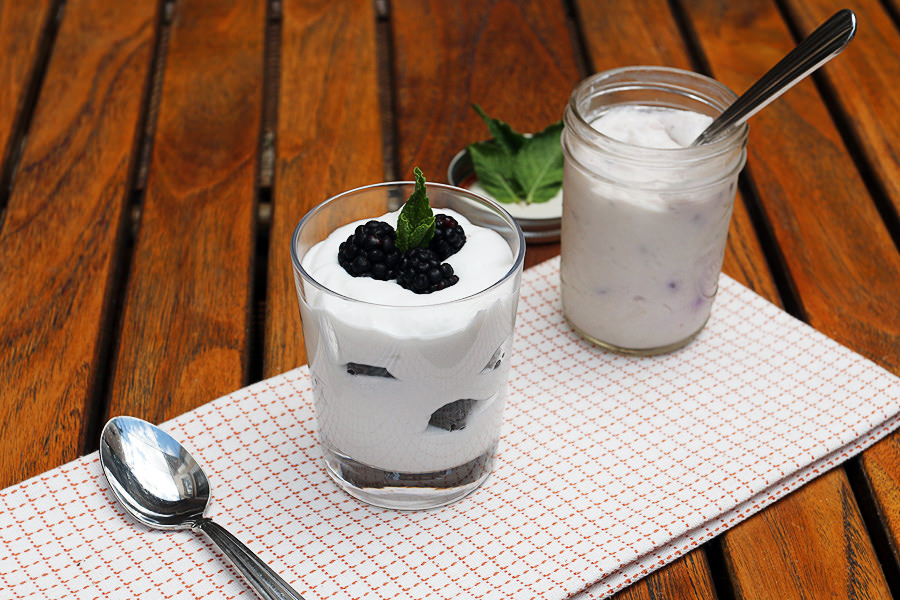
Coconut Cream Yogurt
Ingredients
- 13 ½ ounce canned coconut milk
- 2 whole probiotic tablet such as NOW Probiotic-10
- ½ teaspoon xanthan gum
- ⅔ cup heavy whipping cream
Instructions
- Open a can of coconut milk and stir it well to thoroughly mix the coconut water and cream.

- Pour the coconut milk into a container or jar.
- Break the probiotic capsules into the coconut milk, distributing the amounts evenly if using more than one jar. Stir the mixture together well and place the lid(s) on the jar(s).
- Turn on the oven light and place the jars in the oven. Close the oven door, keeping the light on, and let sit for 12–24 hours. The longer the bacteria can culture, the thicker the mixture will get, but the exact timing doesn't make too much of a difference here.
- Empty all of the yogurt into a mixing bowl and sprinkle in the xanthan gum (use a little at a time, so as not to go overboard). Use a hand mixer to mix well.
- In a separate bowl, whip the heavy cream until stiff peaks form and it is almost solid.
- Fold the cream into the yogurt and mix on a low speed until the desired consistency is reached.
- Enjoy!




Does the probiotic have an advantage over adding whey from making yogurt or yogurt to the coconut milk?
I don’t actually have experience with using whey so I can’t really compare the two for yogurt making.
Hooray–no need for a yogurt maker or a heating pad for this stuff to sit on overnight!
Hope you enjoy!
OMG – I miss yogurt and now I dont have too anymore! You are brilliant
PS I made the coffee cake! Holy smokes Batman – LOVED IT!!!
G
Hehe thanks Gina! I hope you enjoy this, too!
Craig, I want to make this, but I’m not sure what I’ll do with all those probiotic capsules. What do you use them for, besides making yogurt? 🙂
You can use them to promote proper gut health and to stay regular 😉
I have a different pro-biotic that has 10 billion active cultures in it vs yours which has 25 billion, will mine work?
Deann,
I am not well versed in culturing things into yogurt. I just used what I had and it seemed to work. I would say you could use the same mentality with yours and check if it works 🙂
Can this be made in a yogurt maker? I ask because I have one hanging around here collecting dust…. and my oven has no light…. apartment living gotta love it! Thanks for these recipes and this site….. new to keto and learning so much!!! Was on Atkins but was not happy with it…..limited foods *sigh*
You should be able to make this in a yogurt maker…in fact, it may be even better. You have more control over temperature in a yogurt maker, while some ovens will run hotter or colder than others. Hope it works out – let me know!
Does this store/refridgerate well? I’d like to make a large batch to have a couple servings for each family member a week, but I don’t want it to end up in the bin because it has to be eaten when it is made.
Danielle,
In theory it should last a while refrigerated because it’s been fermented, but I suggest not making weeks and weeks in advanced – a week would be fine (mine lasted longer than that), but I’m not sure about too much longer.
Genius! Can you freeze this?
You should be able to, but I’ve never tried it myself. I’d imagine you can 🙂
Is the yogurt going to set if I use whey instead of the capsules?
It will thicken up, but I don’t believe that it will set like a fermented product.
Do you have a carb content on your yogurt recipe?
Sure – just scroll to the end of the recipe and there is a breakdown of the entire recipe along with a sentence of what each serving comes out to be.
Thank you!
Hi Craig,
I wanted to try this recipe and make homemade coconut yogurt. One question for you, I use Trader joes Acidophilus and Probiotic Complex tablet everyday….so wondering if I can use that for a starter culture? If so, would I need to crush the tabs? Thanks in advance 🙂
As long as there’s more than 8 strains and 25 billion organisms in the probiotics you take, you should be fine to use them 🙂
Hi Craig,
I didnt have any luck with the tablets, but I tried grassfed yogurt as a culture and have been successfully making whole milk yogurt at home! Loving it 🙂
Awesome – glad to hear you’re having some success with it!
Does it have to be canned coconut milk, or can I use the ones in cartons? I really like So Delicious because it has 0g of sugar, but I wasn’t sure if canned coconut milk is of a different consistency than that carton ones. Thanks 🙂
For this specific recipe, yes. You won’t be able to get the thickness of yogurt from the So Delicious carton kind of coconut milk.
Don’t use Xanthum Gum under any circumstances.
Also don’t use Coconut Cream which contains Guar Gum. The coconut cream yogurt made with Guar Gum is very inferior. Guar Gum is made from the Guar bean and has a ‘beany’ flavor.
For people with autoimmune conditions, these gums will irritate the gut and make the autoimmune condition significantly worse. This is from medical doctors and practical experience.
Use gelatin as the thickening agent – it is beneficial, will assist in healing of the gut and also it is needed all around the body.
Use 2-4 teaspoons of gelatin per 1000ml of yogurt. Dissolve the gelatin in the least boiling water possible then add to the coconut cream yogurt using a stick blender (or else it will set in little gelatin globules). Use 2 teaspoons of gelatin for a soft yogurt and 4 teaspoons for a set yogurt. The more gelatin you take, the better it is for your body.
To every can of coconut cream add 1 spoonful of white sugar. This will be consumed by the probiotics as the yogurt ferments. There will be no sugar at the end of the fermentation. Without the sugar, the probiotics wont reproduce as much.
Thanks for the feedback, Nick. Though it is true that people with certain conditions will not tolerate guar or xanthan gum, this doesn’t mean that everyone should avoid it.
For those who can’t tolerate xanthan gum, gelatin is arguably the best alternative so thanks for pointing this out!
If you (or anyone reading this) would like to learn more about the uses and nuances of xanthan gum for keto, here’s a link to our guide on the topic:
https://www.ruled.me/what-i…