



Most people that start a keto diet plan find that they have some intense cravings for sugar in the beginning. Even the seasoned low carb dieter will tell you that they nearly give in to a sweet temptation every once in a while.
This is when keto-friendly sweeteners really show their value, providing you with a way to satisfy your sweet tooth without kicking you out of ketosis or stalling fat loss.
As with most “low carb” products, you will have to be cautious of the ingredients in the sweeteners you use. Even if it says “carb free” or “sugar free,” it may still contain enough net carbs and calories to slow your keto diet progress. (This is why we must take all net carbs into consideration when tracking our macros on keto.)
With that being said, there are several keto-friendly sweeteners e.g sucralose that will give you all of the sweet without any of the calories or carbs.
Types of Sweeteners
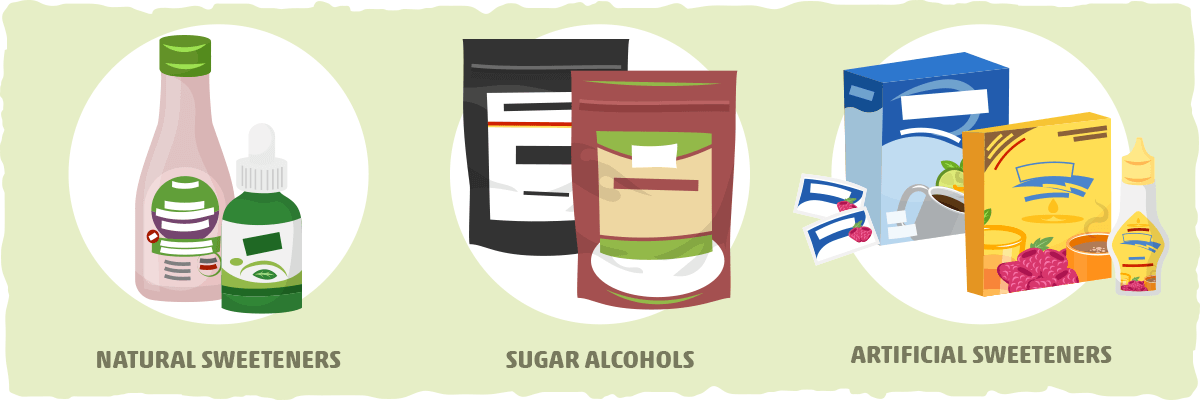
There are a few classifications of sweeteners. The three main categories are natural sweeteners, sugar alcohols, and synthetic sweeteners (or artificial sweeteners). There are a few others that aren’t explicitly classified in these categories (like glycerin-based sweeteners), but they are quite uncommon and rarely used, so we’ll skip going over them.
For those of you who want a quick recommendation for keto diet sweeteners, I personally suggest sticking with erythritol and stevia (or a blend) because they both have plenty of evidence to back up their safety, they don’t cause blood sugar or insulin spikes, and they sweeten just perfectly. When used in combination, they seem to cancel out any negative aftertaste.
When you purchase these (or any other) sweeteners, make sure to investigate the ingredients on the packaging. Look for the pure sweeteners, and avoid any product with fillers that increase blood sugar levels (e.g., maltodextrin, dextrose, and polydextrose).
Below we’ll look at the most common of all the different types of sweeteners we encounter, and which are the best to choose. For your convenience, here is a clickable list to navigate to each sweetener type covered in this article:
- Natural Sweeteners
- Sugar Alcohols
- Artificial (Synthetic) Sweeteners
- Sweetener Blends
- Sweeteners to Avoid Completely
However, before we learn about them, we must address an unfortunate aspect of incorporating any low-carb sweetener into your diet.
Are Keto Sweeteners Too Good to Be True? The Dark Side of All Sweeteners
Even keto-friendly sweeteners that are healthy, safe, zero-calorie, and zero-carb can make losing weight and optimizing your health more of a challenge. Studies on many different types of low-calorie and no-calorie sweeteners have shown that they stimulate an increased desire to eat sweets, leading to more calorie consumption and weight gain.
In other words, all sweeteners maintain cravings for sweet foods, and some may make these cravings irresistible. As a result, you may not feel satisfied unless you eat more calories. This makes losing weight and improving your health much harder than it has to be.
As a general rule of thumb, it’s always best to limit sweetener consumption throughout your keto diet, especially in the beginning. Avoiding sweets may be difficult at first, but over time those cravings will dissipate.
If you want to make keto-friendly sweets a part of your keto diet, we suggest eating it them only occasionally (or make sure they fit within your calories and net carbs for the day). To help you figure out what sweeteners to use and what you should avoid, continue reading below.
The Qualities of an Ideal Sweetener for the Keto Diet
How can we decipher the difference between keto-friendly sweeteners and a sugar-substitute we should avoid? In general, the best options will have these characteristics:
- Has either no effect or a positive effect on insulin levels, blood sugar levels, and other biomarkers (e.g., cholesterol, triglycerides, blood pressure).
- Causes no side effects for you when consumed at reasonable doses.
- Has been found to be safe for use at reasonable doses.
- Can be exposed to high temperatures without becoming bitter, turning toxic, or degrading into simple sugars.
- Contains virtually no calories and net carbs.
- Contains no hidden sources of net carbs.
- All marketing claims are backed up by high-quality research.
Here’s a quick graphic to reference to double check the qualities of your sweeteners:
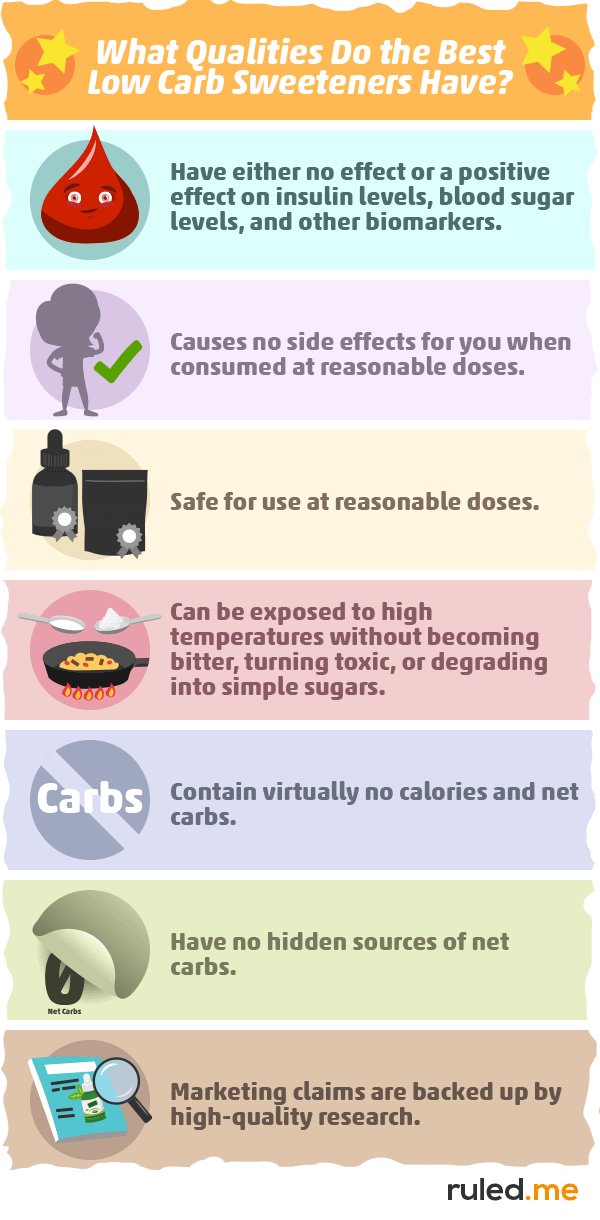
These qualities provide us with a helpful framework to judge the legitimacy of any potential keto sweetener. Keep these in mind when you are trying to figure out if a new product is keto-friendly and healthy for you.
Overall, it is best to use keto-friendly sweeteners that have been well-researched and widely-used for years. Always be skeptical of any new product with dubious ingredients and no research to back up its marketing claims.
To help you sift through this complicated world of keto sweeteners, let’s take a look at some of the most popular options in each sweetener category.
What is GI?
Beside each sweetener’s name, you will see “GI” and then a number. This refers to the Glycemic Index, which measures how much a certain food raises your blood sugar. Many sweeteners are 0 GI, meaning they don’t raise blood sugar.
The baseline is glucose, which measures up at 100 on the GI scale. Typically you want to use the sweeteners that are lowest in GI, and may find it more beneficial (taste wise) to use a mixture of two or more low GI sweeteners.
Below you’ll find an overview of our list and their respective glycemic index, carbs, and calorie counts. If you scroll to the bottom of the page, you’ll find more information about sweeteners you must avoid on a low carb ketogenic diet.
| Sweetener | GI | Type | Net Carbs (Per 100g) | Calories (Per 100g) |
| Stevia | 0 | Natural | 5 | 20 |
| Allulose | 0 | Natural | 0 – 5 | 20 – 40 |
| Inulin | 0 | Natural | 1 | 150 |
| Monk Fruit | 0 | Natural | 0 – 25 | 0 – 100 |
| Tagatose | 3 | Natural | 35 | 150 |
| Erythritol | 0 | Sugar Alcohol | 5 | 20 |
| Xylitol | 13 | Sugar Alcohol | 60 | 240 |
| Maltitol | 36 | Sugar Alcohol | 67 | 270 |
| Sucralose | 0-80 | Artificial | 0 | 0 |
| Aspartame | 0 | Artificial | 85 | 352 |
| Saccharin | Variable | Artificial | 94 | 364 |
| Table Sugar | 63 | Processed | 100 | 387 |
Natural Sweeteners
Simply put, natural sweeteners are sweeteners made from concentrated components of edible plants. Stevia extract, for example, consists of plant compounds that are extracted from the naturally sweet leaf of the stevia plant. The leaf itself isn’t too sweet, but when you remove and concentrate its steviol glycosides (the plant compounds responsible for stevia’s sweetness), you end up with a keto-friendly sweetener that is around 200-350 times sweeter than sugar without the calories or carbs.
One important caveat with natural sweeteners, however, is that “natural” does not also mean “healthy” or “keto-friendly.” Many natural sweeteners come with enough net carbs to kick you out of ketosis and induce a roller coaster of sugar cravings.
When investigating whether or not a sweetener can be a part of your diet, you must examine it on its own and learn how it affects the body. Let’s start this process by taking a closer look at some of the most popular natural sweeteners.
For your convenience, here is a clickable list of the natural sweeteners we will learn about in this article:
Stevia – GI: 0
Stevia is an herb commonly known as the sugar leaf. This completely nutrient-free extract has grown tremendously in popularity over the last few years and is used regularly by many keto dieters.
It is considered a food supplement, free of calories, with sweetening power about 300 times higher than sucrose (table sugar). It is not metabolized by the body and remains stable at both low and high temperatures.
Stevia extract has been found to promote health as well. Studies have shown that stevia can reduce blood pressure slightly, lower blood glucose and insulin levels in diabetics and healthy subjects, and fight inflammation.
This triple effect (i.e., stevia’s impact on inflammation, blood sugar regulation, and blood pressure) makes stevia particularly useful in the treatment of patients with obesity, metabolic syndrome, heart disease, and/or diabetes. Among all of the sweeteners that have been extensively studied, stevia seems to be the most promising from a health improvement perspective.
When purchasing, look for the liquid-based stevia. Typically this is raw powdered stevia mixed with a solution that keeps it pure. Powdered stevia is also a great option as long as the only ingredient is stevia extract.
With any stevia product, make sure you read the ingredients label. Many sweeteners, especially the products in powdered form, will come with carb-heavy fillers (e.g., dextrose and maltodextrin) that increase blood sugar levels.
Advantages of using stevia on the keto diet:
- A little goes a long way (around 300 times sweeter than sugar).
- Can help improve blood pressure, optimize blood sugar regulation, and decrease inflammation.
- Easy to find it in liquid and powdered form without any fillers.
- Contains no carbs, calories, or sugars.
Disadvantages of using stevia on the keto diet:
- Doesn’t taste much like sugar and has a somewhat bitter aftertaste.
- May cause digestive issues for some.
- Needs to be combined with other keto-friendly sweeteners to better emulate the properties and flavor of sugar.
Recommendation: Use it! It’s a great sweetener for any diet and can even have a positive health impact. Your best option is liquid stevia (or any other stevia extract that has no added fillers). If using liquid stevia in baking, pair with solid keto-friendly sweeteners (like xylitol or erythritol) for better flavor and to provide the “bulk” needed.
Maximum Daily Dosage Recommendations: The FDA defines the acceptable daily dose at half this amount (4 mg/kg per day of a stevia product with 95% pure glycosides). That being said, some human studies using prolonged intake of up to 1.5g daily show no adverse effects. (For reference, 360 mg of pure stevia extract powder is all you need to replace the sweetness one cup of sugar. Rarely will you find yourself consuming this much stevia in one day.)
Buying Tips: Liquid stevia or 100% pure powdered or granulated stevia are your best options. Note that stevia packets, such as Stevia in the Raw, typically contain the carb-ridden fillers like dextrose.
Allulose – GI: 0
Allulose is one of the most sugar-like low-calorie sweeteners on the market. It is made up of a monosaccharide (a simple sugar) that is found in small quantities in wheat, certain fruits (like jackfruit, figs, raisins), and some sugary sweeteners (like maple syrup and brown sugar).
The reason why allulose has no glycemic index or net carb content is that 100% of it is excreted from the body without being metabolized at all. In other words, our bodies don’t have the capacity to use it for fuel.
However, this doesn’t mean that allulose is just some inert sweet substance. Several clinical and animal studies have demonstrated that the natural sweetener can help reduce insulin and blood sugar levels after meals.
Some studies have even found that it has antioxidant and blood lipid lowering properties as well. These results make allulose look like the ideal sugar alternative for preventing common diseases like diabetes and heart disease while enhancing the results of the ketogenic diet.
The only thing to be cautious about with this sweetener is that the long-term effects it has on the microbiome are not yet known. In general, however, allulose has only been found to cause positive effects. Because of this, the FDA states that it is “generally recognized as safe.”
Advantages of using allulose on the keto diet:
- Only has about 1/10 the calories of table sugar.
- Provides us with antioxidant, blood sugar lowering, and blood lipid lowering properties.
- Closely emulates many properties of sugar.
- Relatively stable with baking and cooking.
Disadvantages of using allulose on the keto diet:
- Expensive.
- Only 70% as sweet as table sugar.
Long-term effects of increased allulose consumption are not yet known.
Recommendation: Use it sparingly with other sweeteners. Although allulose is shaping up to be an ideal keto-friendly sweetener, it may be best to wait until more high-quality research is conducted and the sweetener is less expensive. Try using erythritol instead. It has the same sweetness level as allulose, has been proven to be safe at high doses, and is 2-3x cheaper.
Usage Tips: You can use allulose as a replacement for table sugar to make carb-laden recipes into keto-friendly treats. To match the sweetness of table sugar, add around 1.4 to 1.5 times more allulose. You can also use it in combination with other concentrated sweeteners like sucralose or stevia to achieve a more natural sweetness level without adding calories or messing with the consistency of your food
Inulin – GI: 0
Not to be confused with insulin, inulin is a natural chain of indigestible carbohydrates that is commonly extracted from chicory root.
Although it has only 35% of the sweetness of sugar, inulin can be a helpful option in your keto kitchen. It helps improve the flavor when mixed with other sweeteners, can caramelize like sugar, and typically doesn’t have any aftertaste as you may find with the others. Some studies have even shown it to help improve digestive health and optimize cholesterol levels. (If you regularly experience digestive issues, however, inulin may aggravate your symptoms.)
Unfortunately, inulin has been found to degrade into smaller fructose chains when exposed to temperatures above 275 degrees Fahrenheit. One study discovered that between 20-100% of the inulin was found to be degraded after heat exposure with the trend of more degradation as temperatures rose and baking time increased.
Once these degradation products (i.e., smaller fructose chains) enter your stomach, your stomach acid will break them down into fructose: a simple sugar that won’t spike blood sugar levels but will indirectly impair ketone production.
Simply put, if the inulin you consume is exposed to temperatures above 275 degrees Fahrenheit, then some of it will be digested as fructose, which contributes hidden calories that indirectly decrease ketone production. This finding applies to any “low-carb” or “keto-friendly” products that contain inulin as well since they are typically exposed to high temperatures before packaging.
These degraded inulin molecules will not be reflected on food labels, so be careful with how much inulin you consume, especially when it is used in baking or cooking.
Advantages of using inulin for the keto diet:
- Emulates many properties of sugar better than other common sweeteners.
- May improve digestive health and cholesterol levels.
- Can easily be mixed with other sweeteners.
Disadvantages of using inulin for the keto diet:
- Only 35% as sweet as sugar.
- Rarely used in keto recipes.
- Can cause digestive issues at higher doses.
- Degrades when exposed to temperatures above 275 degrees Fahrenheit, contributing hidden calories and fructose to the diet.
Recommendation: Use sparingly to mix into other sweeteners (like erythritol or stevia) If you want to reduce aftertaste. Best (for health and ketosis) if used in its raw form without being exposed to high temperatures.
Maximum Daily Dosage Recommendations: 20 grams per day of inulin has been found to cause no adverse effects. At higher doses, it can have a laxative effect.
Monk Fruit – GI: 0
Also known as Luo Han Guo, monk fruit is native to China, where it has been used in Traditional Chinese Medicine for decades. Over the past several years, however, monk fruit has been transformed from a medicinal fruit into a healthy keto-friendly sweetener that is 100 to 250 times sweeter than sugar.
The only downside to using monk fruit extract is that it tends to have an unusual taste and bitter aftertaste. To counteract these unpleasant flavors and emulate sugar more effectively, try blending this sweetener with other keto-friendly sweeteners or use a monk fruit sweetener blend instead.
Although it hasn’t been as well-researched as other popular keto sweeteners like stevia and erythritol, we have enough evidence to suggest that it monk fruit extract is safe, causes no harmful side effects, and may provide us with health benefits.
Advantages of using monk fruit extract for keto:
- A little goes a long way (100 to 250 times sweeter than sugar).
- May act as an antioxidant and fight inflammation.
- May improve blood sugar regulation.
- Has zero carbs, calories, and sugars.
Disadvantages of using monk fruit extract for keto:
- May be more expensive than other keto sweeteners.
Tastes different from regular table sugar, and some find the taste unusual or unpleasant.
Recommendation: Use it! Monk fruit is a safe and healthy keto sweetener that you may find more palatable than other sweeteners. It can be found in liquid form, powdered form, or as a sweetener blend. As with all sweeteners, read the ingredients carefully.
Maximum Daily Dosage Recommendations: There is no known maximal healthy dose. Studies indicate that it is safe to consume at levels well above the amounts typically consumed.
Buying Tips: Liquid monk fruit extract, monk fruit extract powder, and monk fruit sweetener blends (with stevia, xylitol, and/or erythritol) are your best options, and they all can found online. Avoid any products with fillers that raise blood sugar levels.
Tagatose – GI: 3
Tagatose naturally occurs in dairy, fruits, and cacao. Although it is a simple sugar like glucose, tagatose is metabolized differently. This allows it to be 92% as sweet as table sugar with a fraction of the calories (only 38%) and a minimal effect on blood glucose and insulin levels.
Tagatose has a mild cooling effect (similar to erythritol) but caramelizes similarly to sugar (while erythritol does not). It has a smaller glycemic index than Xylitol and is not toxic to dogs, but it is a bit harder to find.

Because of its relatively low glycemic index, tagatose only has a small effect on blood sugar levels and can be used with other sweeteners in a low carb diet. It also has some health benefits attached to it like increased HDL cholesterol (read more about cholesterol) and improved gut health.
Advantages of using tagatose on keto:
- Almost as sweet as sugar.
- Caramelizes like sugar.
- Can help improve cholesterol levels, blood sugar regulation, and gut health.
- Can be used cup for cup to replace sugar.
Disadvantages of using tagatose on keto:
- More expensive than other common keto sweeteners.
- Rarely used in keto recipes.
- Contains more calories and carbs than other keto-friendly sweeteners.
Recommendation: Use it sparingly with other sweeteners. It can pair well with lower glycemic index sweeteners in moderation, but it does contain about 35g carbs per 100g so be careful with the amount that you use. Opt for stevia extract, monk fruit extract, and/or erythritol instead.
Sugar Alcohols
Sugar alcohols are a category of sweet carbohydrates that are partially resistant digestion. Some of them are produced using natural processes (like fermentation) while others are produced using artificial processes (like hydrogenation).
As the name implies, they are like hybrids of sugar molecules and alcohol molecules. However, these alcohol molecules will not get you drunk. The name “sugar alcohol” refers to a category of chemical compounds, not ethanol (which is the alcohol molecule that intoxicates us).
Because sugar alcohols have a similar chemical structure as sugar, they activate the sweet taste receptors on your tongue. Unlike most artificial and natural sweeteners, sugar alcohols contain calories and net carbs, just fewer than plain table sugar.
If you have irritable bowel syndrome (IBS) or an intolerance to FODMAPs, you may want to limit your sugar alcohol intake or consider avoiding them altogether.
For your convenience, here is a clickable list of the sugar alcohols we will learn about in this article:
We also include a brief look at other sugar alcohols.
Erythritol – GI: 0
Erythritol is found naturally in some fruits and vegetables and is commonly extracted from corn. Of all the sugar alcohol sweeteners, erythritol contributes the least calories and net carbs to the diet.
According to some recent studies, erythritol does not change blood sugar or insulin in healthy individuals. It also cannot be metabolized by harmful mouth bacteria, making it a great sugar alternative for cavity prevention.
Erythritol has also been found to act as an antioxidant and may improve blood vessel function in people with type 2 diabetes. These benefits may help reduce the risk of heart disease, but more studies are needed.
We can consume a substantial amount of it without experiencing any side effects, at about 0.45 grams of the sweetener per pound of body-weight. This makes it the most well tolerated sugar alcohol.
Usually, sugar alcohols will proceed undigested into the large intestine, where they will be fermented by bacteria or pull excess water into the digestive tract. This can lead to gas, bloating and diarrhea.
With erythritol, most of it is absorbed in the small intestine and excreted in the urine. That said, some studies have shown there to be slight stomach discomfort when consumed in large quantities.
Altogether, this sugar alcohol is safe, may improve some aspects of health, and has virtually no impact on ketosis and weight loss. Because of this, erythritol is one of my primary sweeteners, especially since it can help balance out the unpleasant taste of supersweet sweeteners like stevia extract, monk fruit extract, and sucralose.
Advantages of using erythritol on keto:
- Doesn’t raise blood sugar or insulin levels.
- Has very few side effects at higher dosages.
- Provides almost zero calories and is virtually carb free.
- May be helpful in preventing dental plaque and cavities, compared to other sweeteners.
- Helps to provide bulk to recipes.
Disadvantages of using erythritol on keto:
- Only has 70% of the sweetness of sugar.
- Has a noticeable cooling sensation on the tongue, particularly when used in large amounts.
Some people may not tolerate it as well as others.
Recommendation: Use it! It’s almost completely excreted through urine and causes very little gastric distress. Although it can have a slight cooling aftertaste, when combined with other sweeteners it is not very noticeable.
Maximum Recommended Daily Dose: Use less than 0.45 grams of the sweetener per pound of body-weight daily to prevent digestive issues. If you experience gastrointestinal symptoms after consuming a smaller amount, experiment with a lower dose until you find a tolerable limit.
Buying Tips: Look for organic granulated erythritol, erythritol and stevia blends, or erythritol and monk fruit blends. Stick to products that only have these ingredients (the only exception to this rule is Swerve, which is a great keto sweetener option as well).
Xylitol – GI: 13
Xylitol is a naturally occurring sugar alcohol that is usually found in fruits and vegetables. It is as sweet as sugar, but 40% less caloric. Many people enjoy this sweetener because it is very close to the sweetness of sugar and can easily be substituted.
Among the sugar alcohols, xylitol has the most significant impact on our dental health. Studies have found that xylitol starves the bad bacteria in the mouth and increases calcium absorption by the teeth, both of which help prevent cavities. In light of this research, xylitol is now commonly found in many different chewing gums.
Other studies on the sweetener indicate that it may help increase collagen production and promote the proliferation of good gut bacteria.
The only known downside to using xylitol as a sweetener is that it is more likely to cause stomach discomfort than erythritol.
Note/Warning: Xylitol is toxic to many different types of animals and can be lethal to cats and dogs in small doses. If you have animals and you are using this sweetener, make sure you keep it (and anything you make with it) out of reach.
Advantages of using xylitol for keto:
- Same sweetness level as sugar with 40% fewer calories.
- Great for improving dental health.
- Can be used as a cup for cup sugar replacement.
Disadvantages of using xylitol on keto:
- May cause digestive issues like gassiness and bloating.
- Is toxic and potentially lethal to pets, like cats and dogs.
May cause a slight decrease in ketone production.
Recommendation: Use sparingly with other sweeteners. Although this is a great sweetener and can be used as an almost exact replacement of sugar, it can cause gastric distress when over-eaten and may impair ketone production. It is also extremely harmful to dogs and cats, so if you’re an animal lover, it may not be best to have around.
Maximum Recommended Daily Dose: Safe dosages range widely, generally from 20 g to 70 g per day. It is also possible to increase your tolerable xylitol dosage overtime without experiencing side effects.
Buying Tips: Look for organic granulated xylitol without any other added ingredients.
Maltitol – GI: 36
Maltitol is commonly used in sugar-free products as it is very similar to sugar. If the packaging says that a product is sugar-free, you will most likely find maltitol on the ingredient list.
It bakes and tastes very much like the real thing, and is only half the calories of actual sugar.
The major downfall of this sweetener is that it has quite a large glycemic index – meaning it spikes blood sugars.

However, due to the current laws we have, many products are allowed to calculate these out of the net carb counts. As a result, many people are consuming more sugars than they think with their “low-carb” products.
While you are on a low carb diet, it’s best to avoid maltitol and be skeptical of products that use it. Many times we see people over-consume these products, which can lead to a slowing of weight loss and a decrease in ketone production.
Many also complain of the laxative effects maltitol has. It’s commonly associated with stomach issues including bloating, diarrhea, and abdominal pain, more so than xylitol and erythritol.
Recommendation: Skip it. Although it’s one of the most commonly consumed sugar alcohols, it has a relatively high glycemic index and can cause a lot of gastric distress. Not to mention many people complain about it kicking them out of a ketosis. If you are looking for a better sugar replacement from the sugar alcohol category, try erythritol or xylitol instead.
Other Sugar Alcohols
There are many other sugar alcohols out there, but most of them should be avoided. This includes sorbitol, lactitol, glycerol, and isomalt due to their effect on our blood sugar levels.
You should always be aware of products that say they are zero carb or sugar free as they usually contain one of the higher GI sugar alcohols and will spike both insulin and blood sugars.
Recommendation: Be very cautious of products claiming they are keto-friendly, sugar-free, or zero carbs. They typically contain a sugar alcohol that should be avoided. The only sweeteners worth trusting are the ones we recommend throughout this article.
Artificial (Synthetic) Sweeteners
Artificial sweeteners are sugar substitutes that are produced using synthetic methods. This is the most scrutinized category of sweeteners with nothing but fear mongering articles purporting how terrible they are.
The truth behind the health effects of these sweeteners, however, is much more complex. Each one is broken down in the body in varying regions of the gut and has been found to affect each gender and ethnic population differently.
Most of the news headlines you’ll see about these sweeteners are based on mice studies, which don’t accurately reflect many aspects of dosage and metabolism for humans. However, some interesting patterns have emerged recently when comparing human data for artificial vs. natural sweeteners.
At worst, artificial sweeteners may (1) stimulate appetite and cause you to eat more; (2) negatively impact your gut biome in a way that may contribute to obesity and diabetes; and (3) cause inflammation in various regions of the brain that have been shown to occur in obese individuals.
At best, the use of artificial sweeteners may cause little to no adverse effect, allowing you to satisfy your sweet tooth without any issues (other than potentially increasing your sugar cravings).
However, when you contrast these findings with the research on natural sweeteners and keto-friendly sugar alcohols, artificial sweeteners aren’t worth the risk. The sweeteners we recommend (i.e., stevia extract, monk fruit extract, erythritol, and xylitol) all have been found to have positive health effects. At worst, some of these sweeteners, stevia extract and xylitol specifically, can cause short-term digestive discomfort at higher than normal doses, and all sweeteners may increase food consumption.
Overall, the current evidence indicates that artificial sweeteners should only be consumed sparingly or avoided altogether. For best health, you may want to swap out any artificial sweeteners you use with stevia extract, monk fruit extract, xylitol, and/or erythritol.
However, not all artificial sweetener affect us in the same way. There are some that may be safer than others. To help you figure out which may be best, we will take a look at the most widely available options:
Sucralose – GI: Variable
Before we talk explicitly about sucralose, there is a slight controversy about the glycemic index. There are many sources claiming different numbers, but on average, we see that it’s about 80 GI in powdered bulked form (Splenda). The bad part about this is that it’s higher than sugar and can cause big spikes in blood sugar – so you should try to avoid the powdered form for the keto diet.
The good part about it is that sucralose can typically be found in pure form (liquid and powdered) too. This goes an extremely long way when it comes to sweetening things: it’s 600 times sweeter than sugar.
The glycemic index for pure sucralose is 0, so you can use this as you would stevia extract. In pure form, it has little to no effect on blood sugar levels. It has no nutritional value, since it is practically not absorbed by the body, mostly excreted unchanged in the feces, and the little that is absorbed is excreted intact in the urine.
Recent studies have demonstrated that sucralose becomes chemically unstable when heated, releasing chlorinated aromatic polycyclic hydrocarbons (compounds that increase cancer risk) and other potentially toxic compounds. In other words, if you use sucralose, don’t cook or bake with it.
Recommendation: Skip it! Use monk fruit extract, stevia extract, and/or erythritol instead. They are safer, healthier, and can easily be used to replace sucralose. If you still want to use sucralose as a sweetener, make sure you only consume it raw (not baked or cooked with) and in its purest form (liquid sucralose with no other added ingredients).
Aspartame – GI: 0
Aspartame is probably the most controversial sweetener of them all. It’s been behind many stories of multiple sclerosis, systemic lupus, methanol toxicity, and blindness, among many other things. It’s a very common sweetener that is used in many low carb products and diet drinks out there.
Even though the negative claims haven’t been replicated in studies over the last 40 years (it’s one of the most thoroughly studied sweeteners), it may be best to stay away from this one as there are better alternatives. It’s always better to be safe than sorry.

It can be used in many different cold dishes, but at higher temperatures, aspartame can break down during baking and cause bitter and strange aftertastes.
Recommendation: Avoid it. Although there is much controversy around this (and nothing has definitely been proven), there are much better sources of sweet out there, and it’s always best to be safe than sorry.
Saccharin – GI: Variable
First showcasing over 150 years ago, this synthetic sweetener is one of the oldest around.
Saccharin is a derivative of naphthalene with a sweetening effect that is 400 times higher than sugar.
This sweetener is not very commonly found or used anymore, as the popularity for saccharin has gone down significantly. It is still in the top 3 synthetic sweeteners, which is why we included it, but it is dwindling in usage.

In the 1970’s, all saccharin products had to place a warning label that it may induce cancer in man or animals. This was then removed during 2000 when the animal-based testing couldn’t ethically be done on humans. There have been reports of many short-term side effects, but none that have been replicated in studies.
Some studies in animal models suggest that saccharin, even at reasonable doses, may alter glucose tolerance in the gut after only five weeks of use.
Other than the controversy surrounding saccharin, another reason to avoid it is that during the cooking process, it can cause an extremely bitter aftertaste. Since many of us use low-calorie sweeteners for keto baking, this sweetener just isn’t practical on any level.
Recommendation: Avoid it. Since its dwindling in popularity and may cause harmful health effects, invest in healthier and safer sweeteners like stevia extract, monk fruit extract, erythritol, and xylitol.
Overall, it’s always best to go with pure sucralose and stevia as your sugar alternatives – not only for the taste and versatility but also the calorie counts and carb counts. Here’s a look at the nutrition info on the above sweeteners.
What About Sweetener Blends for the Keto Diet?
Many “low sugar,” “low carb,” and “keto-friendly” sweetener blends have become increasingly popular in recent years. Although they are marketed as being just like sugar without the carbs or calories, make sure you investigate the ingredients before you buy them.
Some sweeteners will combine popular keto-friendly sweeteners with other ingredients like maltodextrin, dextrose, or some form of oligosaccharides. These additives are used to help provide bulk, cut down sweetness levels, and/or emulate some of the properties of sugar. However, some of them have been found to increase blood sugar and insulin levels, which is exactly what you don’t want from a “keto-friendly” sweetener.
The current research indicates that maltodextrin, dextrose, and isomaltooligosaccharides (IMO) all are readily digested and contribute extra net carbs to the diet that will not be reflected on the nutrition facts label. It is best to avoid any products containing these ingredients.
On the other hand, you will also find “oligosaccharides” as a popular sweetener blend ingredient (e.g., you will this on Swerve’s ingredient labels). Although it seems to like a specific compound, oligosaccharides actually represent a category of partially and fully indigestible carbohydrates that can function like dietary fiber.
It was previously thought that all oligosaccharides acted like dietary fiber, but recent research indicates that some are almost fully digestible (i.e., isomaltooligosaccharides), partially digestible, or completely indigestible. The fully and partially digestible oligosaccharides will contribute more net carbs to the diet than reflected on the label, while completely indigestible varieties act like fiber and won’t increase blood sugar or insulin levels.
The simplest way to sort through the confusion of oligosaccharides (and any other dubious ingredients) found in any given sweetener is to see if any research backs up their marketing claims. For example, let’s take a look at one of the most popular keto-friendly sweetener blends, Swerve.
At first, I was skeptical of Swerve’s products because they contain two potentially hidden sources of net carbs, oligosaccharides and natural flavors. On their website, Swerve doesn’t indicate specifically what kind of oligosaccharides it uses and where they are derived from.
The good news, however, is that Swerve’s sweetener was tested in a double-blind, randomized controlled trial to compare its effects on blog sugar and insulin levels with table sugar and Splenda. As marketed, Swerve proved itself superior to the two other sweeteners by causing virtually no changes in blood sugar or insulin levels in healthy subjects.
From these findings, we can infer that Swerve’s sweeteners contain oligosaccharides that are almost fully indigestible, acting more like dietary fiber than net carbs.
The same cannot be said, however, for other lesser known sweetener blends. If you find a sweetener blend with ingredients that you are not sure about, it is best to be cautious. Dig a little deeper into the company to see if you can find out more about the ingredients or if research has been done to support their marketing claims.
If there’s no evidence and no clarity provided for any dubious ingredients, then it is best to use the recommended sweeteners and sweetener blends found throughout this article instead.
Overview of Sweeteners
Below, you’ll find a graphical representation on what to eat when choosing a sweetener for your recipes. It’s best to stick to low or no glycemic index sweeteners with fewer calories. As you can see, erythritol, stevia, and monk fruit extract are our top recommendation for sweeteners. You can always choose different sweeteners to get a different texture and taste when making recipes.
Try to be conscious about which sweeteners you use and the effect that they will have on your blood sugar levels. Always be very careful about low-carb products that are pre-made as they usually have some form of high GI sweetener or filler used in them.
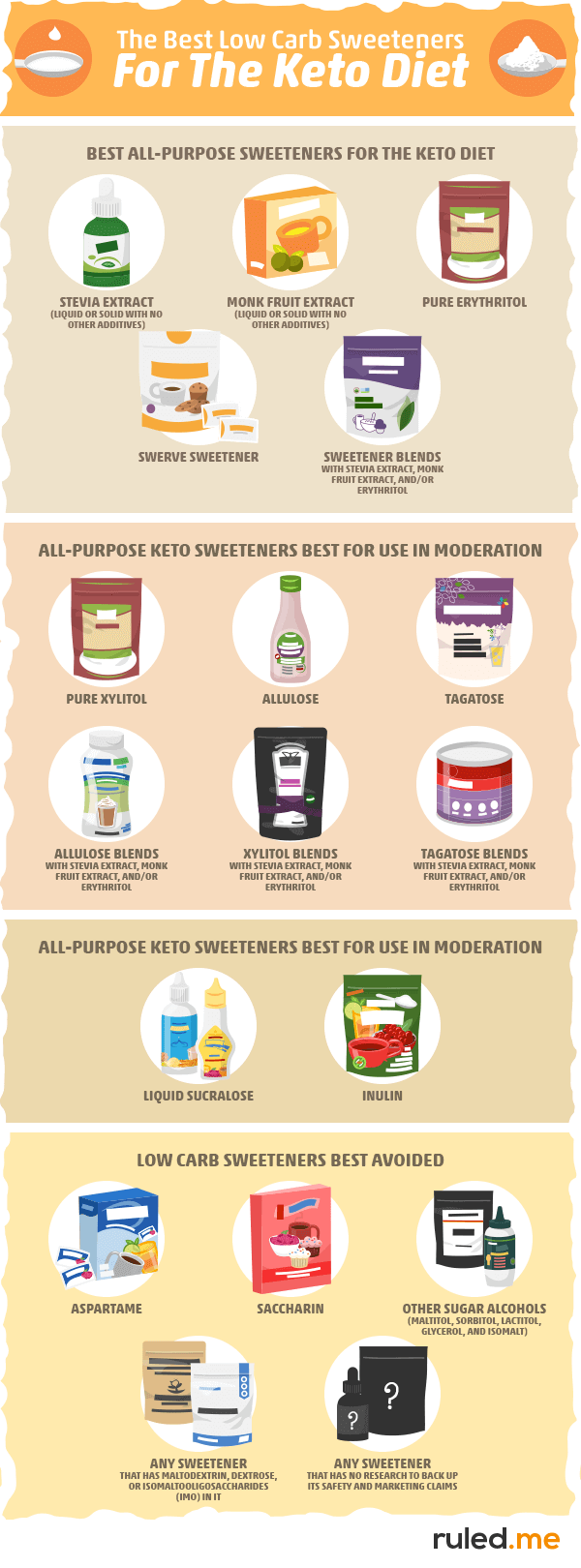
What are the Best Low-Carb Sweeteners for the Keto Diet?
To sum up what we learned so far, let’s put each sweetener and sweetener blend in easy-to-understand categories.
All-purpose low-carb sweeteners that are best for the keto diet and overall health:
- Stevia extract (liquid or solid with no other additives)
- Monk fruit extract (liquid or solid with no other additives)
- Pure erythritol
- Swerve sweetener
- Sweetener blends that only consists of stevia extract, monk fruit extract, and/or erythritol
All-purpose low-carb sweeteners that should be used sparingly on the keto diet:
- Pure xylitol
- Allulose
- Tagatose
- Allulose blends with stevia extract, monk fruit extract, and/or erythritol
- Xylitol blends with stevia extract, monk fruit extract, and/or erythritol
- Tagatose blends with stevia extract, monk fruit extract, and/or erythritol
Sweeteners that can be used sparingly in their raw, pure form (no baking or cooking):
- Liquid Sucralose
- Inulin
Sweeteners best avoided:
- Aspartame
- Saccharin
- Other sugar alcohols (maltitol, sorbitol, lactitol, glycerol, and isomalt)
- Any sweetener that has maltodextrin, dextrose, or isomaltooligosaccharides (IMO) in it
- Any sweetener that has no research to back up its safety and marketing claims
Remember, however, that over-consumption of any sweetener (even the healthiest keto sweeteners) can stimulate more sugar cravings and make keto dieting more difficult. Try to consume sweeteners in moderation to help control your sweet tooth and get weight loss better results.
Below, you will find a more detailed list of sweeteners to always avoid on a ketogenic diet.
Sweeteners to Avoid on a Ketogenic Diet
Avoid High Fructose Corn Syrup
High fructose corn syrup is a sweetener that’s highly processed and derived from corn. It became popular in the 70’s when corn prices were low because of government subsidies. It contains simple sugar and fructose, which have been shown to have many negative health benefits.
Many studies have been done to compare HFCS and sugar, many of which show similar results. They’re practically the same thing – both very bad for us and should be avoided completely. It’s been linked to obesity, type 2 diabetes, and heart disease.

Avoid Sugar
Sugar, as most of us know, should be avoided at all costs. It is linked to obesity, type 2 diabetes, bad cholesterol, sugar addiction, and metabolic syndrome. It has no real nutrients and consumption typically leads to fat storage. It is labeled as many different things on nutrition packaging but a good rule of thumb is if it ends in “ose”, it’s sugar and should be avoided.
Regular table sugar is broken down into fructose and glucose when it enters the bloodstream. Glucose is naturally occurring in our bodies, but fructose is not. Excess fructose from over consumption gets turned into glycogen but can also be stored as fat once overloaded. This can cause fatty liver disease (among other things).

Avoid Coconut Sugar
Coconut sugar is made from the flower of the coconut palm, where the sap is heated until the water is evaporated. The finished product is brownish in color. It retains some nutrients from the heating process and does contain some inulin, but is still not a good option for people on a low carb diet at 11g carbs per tablespoon.
It is made up of mostly sucrose (not to be confused with sucralose), which is half fructose and half glucose. Again, over-consumption of fructose leads to fatty liver disease and the storage of visceral fat surrounding the stomach. It has a GI of about 35, which is lower than expected mainly due to the insoluble fiber in it; but, it will definitely spike your blood sugar and insulin levels when consumed.

Avoid Fruit Juice
Raspberries and blackberries are the 2 best types of berries to consume on a low carb diet due to the lower amount of sugars in them. While they can be consumed in moderation, it’s usually best to avoid fruit juices that are processed and used as a sweetener. Typically they contain fructose which has a very high glycemic index, resulting in both blood sugar and insulin spikes.
Most fruit juices will contain at least 20g carbs per serving, so they have no place in a low carb diet. If you want to learn more about fruits to eat and what to avoid, you can read a full keto food list here >

Avoid Honey
Honey is one of the most nutritionally dense sweeteners but is packed full of fructose and, like the other sweeteners to avoid in this list, lead to negative health effects. Most processed honey also has added sugars and is usually pasteurized, losing most of the nutritional benefits it has.
While honey is acceptable by some low carb dieters, it’s normally far too carbohydrate filled to be considered keto. One tablespoon of honey typically contains 17g carbs which is well over half of our daily allotted amount. There are many other ways to sweeten your foods with a much less glycemic index.

Avoid Maple Syrup
While maple syrup and honey are widely accepted on lesser low-carb, paleo diets they are not allowed on ketogenic diets. Keto is a very carb-restricted diet so you have to be very strict with your consumption. Maple syrup typically has 13g carbs per tablespoon which means it’s half of the usual daily consumption of carbs for a small amount.
Maple syrup is a pretty nutritionally dense sweetener, it contains a high amount of magnesium, zinc, and calcium. It’s also rich in some vitamins and antioxidants but these can be found in many different forms of healthier food.
If you’re looking for a replacement for maple syrup on a ketogenic diet you can make your own or you can use a low sugar alternative like Walden Farm’s brand.
Avoid Agave Syrup
Typically a very highly processed sweetener even though it’s marketed as a natural alternative. It can contain up to 80% fructose which has a very high impact on our blood sugar levels and is typically seen as one of the most damaging sources of sugar. It is made by pressing the agave plant until the sugars and fluid come out and then processed under heat (destroying fructans, a healthy compound) similarly to high fructose corn syrup.
Agave syrup is generally seen as a low GI sweetener due to their marketing efforts, but don’t be fooled. While Agave Syrup is about a 9.6 GI due to low glucose content, it is mostly fructose and damaging to our liver.
Long-term use has also been linked with insulin resistance and chronically elevated blood sugar levels. It should be avoided, even in its natural state.
Putting It All Together — The Best and Worst Sweeteners for the Keto Diet
Just because you are on the keto diet doesn’t mean you have to give up sweets completely. There are many low-carb sweeteners you can incorporate into your diet whenever you want a sweet treat.
The four sweeteners that we have found to be best for keto are stevia extract, monk fruit extract, and erythritol. Each one is safe, may help optimize different aspects of health in normal doses, and can be blended together for better flavor.
You can also find products that blend stevia, monk fruit extract, and/or erythritol together, so you don’t have to figure out the ratios yourself. Just make sure you avoid any products that contain dextrose, maltodextrin, or isomaltooligosaccharides (IMO).
If there are any other ingredients you are not sure about, then look for some research on the product or the filler in question to confirm that it won’t increase blood sugar or insulin levels. Swerve’s sweeteners, for example, have dubious ingredients (like oligosaccharides and natural flavors), but the research that has been done on its products confirms that Swerve creates legitimately keto-friendly sweeteners (that don’t raise blood sugar or insulin levels).
Other low-carb sweetener options worth mentioning are xylitol, allulose, and tagatose. Each one can be used on keto, but it may be best to use them sparingly. All other sweeteners, from aspartame to honey, are best avoided unless they are proven to be safe, healthy, and keto-friendly under the contexts that you will be using it (baking, cooking, sweetening your beverage, etc.).
If you need help figuring out how to replace or use the sweeteners found throughout this article, check out our guide to keto sweetener substitutions.
Sources:
- Comparison of digestibility and breath hydrogen gas excretion of fructo-oligosaccharide, galactosyl-sucrose, and isomalto-oligosaccharide in healthy human subjects — Nature
- Artificial sweeteners as a sugar substitute: Are they really safe? — NCBI
- Artificial Sweeteners as a Cause of Obesity: Weight Gain Mechanisms and Current Evidence — Scientific Research
- Evaluation of long‐term effects of artificial sweeteners on rat brain: a biochemical, behavioral, and histological study — Wiley Online Library
- Effects of non-nutritive (artificial vs natural) sweeteners on 24-h glucose profiles. — NCBI
- Antioxidant effect of mogrosides against oxidative stress induced by palmitic acid in mouse insulinoma NIT-1 cells — NCBI
- Antiglycation and antioxidant activities of mogroside extract from Siraitia grosvenorii (Swingle) fruits. — NCBI
- Effects of aspartame-, monk fruit-, stevia- and sucrose-sweetened beverages on postprandial glucose, insulin and energy intake. — NCBI
- Effects of erythritol on endothelial function in patients with type 2 diabetes mellitus: a pilot study. — NCBI
- Stevia — Examine
- Nonnutritive Sweeteners in Weight Management and Chronic Disease: A Review — Wiley Online Library
- Antihyperglycemic effects of stevioside in type 2 diabetic subjects. — NCBI
- Additional Information about High-Intensity Sweeteners Permitted for Use in Food in the United States — FDA
- Effect of Butyrate and Inulin Supplementation on Glycemic Status, Lipid Profile and Glucagon-Like Peptide 1 Level in Patients with Type 2 Diabetes: A Randomized Double-Blind, Placebo-Controlled Trial. — NCBI
- Fiber and Prebiotics: Mechanisms and Health Benefits — NCBI
- D-Tagatose Is a Promising Sweetener to Control Glycaemia: A New Functional Food — Hindawi
- Effects of a long-term dietary xylitol supplementation on collagen content and fluorescence of the skin in aged rats. — NCBI
- Gastrointestinal Disturbances Associated with the Consumption of Sugar Alcohols with Special Consideration of Xylitol: Scientific Review and Instructions for Dentists and Other Health-Care Professionals — NCBI
- Gut microflora interactions with xylitol in the mouse, rat and man. — NCBI
- Foods to Avoid on a Ketogenic Diet: What is Keto-friendly? — Ruled.me
Serum glucose and insulin levels and erythritol balance after oral administration of erythritol in healthy subjects. — NCBI - Glycemic and insulinemic response to four different sweeteners in healthy individuals: A double blind, randomized controlled trial. — The FASEB Journal
- Dietary supplementation with d-tagatose in subjects with type 2 diabetes leads to weight loss and raises high-density lipoprotein cholesterol. — NCBI
- Inulin and oligofructose: what are they? — NCBI
- Effect of inulin-type fructans on blood lipid profile and glucose level: a systematic review and meta-analysis of randomized controlled trials — Nature
- Is Allulose a Healthy Sweetener? — Healthline
- Heat-induced degradation of inulin — Springer Link
- Decrease in the d-Psicose Content of Processed Foods Fortified with a Rare Sugar — J-Stage
- Alkaline degradation of monosaccharides V: Kinetics of the alkaline isomerization and degradation of monosaccharides — ResearchGate
I want to make a simple syrup to make non-alcohol cocktails with. I’m not looking just for sweetness. I want to get that mouth feel of simple syrup. I tried Erythriol and with just a tiny bit of xanthum gum it worked. unfortunately, my stomach doesn’t tolerate it. Any ideas of another sugar substitute that would work?
Hey Lynn,
I haven’t done this myself, but it seems that allulose would be the best option in this case.
Give it a try and let us know how it comes out. 🙂
I ordered some. I’ll keep you posted on how it works. I am trying to cut my wine consumption, but don’t want to add carbs. This could be the ticket, if it gives you the mouth feel of simple syrup. It is expensive, but not as expensive as wine. 🙂
Sounds good! I’m curious to see how it turns out. I might give it a try myself soon.
Polydextrose only got a passing mention here but was the search that brought me here.
The data i found says it’s good but you have a warning here and I’d like to know why.
Unfortunately the product i bought in question also has maltitol so it’s use sparingly and not re purchasing on my part.
Hey Anthony,
Polydextrose can contribute a trace amount of net carbs to the diet. Because of this, it is best to avoid it or at least limit its use while on keto.
However, I doubt the product you bought has enough of this stuff in it to be a cause for concern. I just wouldn’t recommend relying on it as a dietary staple.
Wow this article is gold , thank you so much to take your time , to explain eveything , do amazing graphic and also give us all your souce ! This is the best of the best article i ever read . So thank you again
How do I find tagatose? I found a Company called sukrin USA that has offered it in the past but they’re currently out of stock is there another place I can find it? preferably in bulk.
I recommend buying in bulk online, either directly from sukrin USA or Amazon. Since tagatose is relatively rare compared to the more popular monk fruit-, stevia-, and erythritol-based sweeteners, it’ll be difficult to find it in bulk in stores.
Great article though I do find this comment about Aspartame ironic
“Even though the negative claims haven’t been replicated in studies over the last 40 years (it’s one of the most thoroughly studied sweeteners), it may be best to stay away from this one as there are better alternatives. It’s always better to be safe than sorry.”
Except it being tested for over 40 years and proven to not replicate most of the claims (just some understood side effects like everything has, especially if you consume too much like anything) and then suggest trying the lesser tested alternatives as the “better to be safe than sorry” option? Aren’t the less tested newer sweeteners the risky option and the well tested Aspartame the safe option?
My biggest issue with it is the taste, it tastes the least sugar like IMHO, which if your use to in a diet or “zero” soda is fine, but in applications where you expect to have a sugar like taste I find the other good options to taste much more like what you expect. Personally have enjoyed a mix of Stevia and Erythritol.
Thanks for the feedback, Matthew! I know exactly what you mean. I definitely could have worded this section more clearly.
By “better safe than sorry,” we are referring to its instability to baking/cooking temperatures, the anecdotal reports of people that have negative reactions to it, and the carb-rich additives that aspartame powders commonly come with. Since there are better sources of sweet that are also stable to heat, it is best to stick with those options.
I just want to say thank you for the information on allulose. I’ve noticed that a lot of keto bloggers really like it, but I have been wary of it, and now I understand why that is a good thing. I haven’t quite finished reading this post yet, but what I’ve read is the best information I’ve come across on sweeteners.
Thanks so much for your feedback, Susan! We always make sure to add the “why” into our articles, so the reader can make an informed decision that is best for them.
If you have any questions after finishing the article, let me know 🙂
ty!
Why do you not list allulose as an acceptable sweetener?