

Most keto content ignores gut health entirely. You get plenty of articles about fat adaptation, ketone levels, and weight loss – but the question of what keto does to the trillion bacteria living in your gut rarely comes up. That’s a gap that needs closing.
Here’s the honest answer: keto changes your gut microbiome in ways that are actually complicated. Some of those changes look concerning on paper – reduced populations of beneficial bacteria, lower levels of key compounds your gut lining needs. Other changes look protective – reduced gut inflammation, relief from IBS and acid reflux symptoms, fewer pro-inflammatory immune cells in the intestinal lining.
Both things are true. The research doesn’t let you pick a side.
What it does tell you is that how you do keto matters more than whether you do keto. The biggest variable affecting keto and gut health isn’t the fat or the ketones – it’s the fiber. Get that right and most of the risks shrink considerably. Get it wrong and the concerns are real.
I’ll walk through what the science shows, what it means in practice, and what I’ve learned from years of paying attention to this on myself.
Jump to a section:
- The Gut Health Question Keto People Don’t Ask Enough
- How Keto Changes Your Gut Bacteria
- Why Keto Is Not the Same as a Generic High-Fat Diet
- The Real-World Gut Benefits: IBS and GERD
- Fiber – Not Fat Ratio – Is What Drives Microbiome Health on Keto
- Keto Foods That Support Your Gut
- What to Watch For: Constipation and Dysbiosis Risk
- How to Build a Keto Diet That’s Good for Your Gut
- The Bottom Line
The Gut Health Question Keto People Don’t Ask Enough
When I first went deep on keto, gut health wasn’t on my radar at all. My focus was on getting into ketosis, keeping carbs under 30g, and figuring out whether the whole thing was going to stick long-term. The gut was just… there. Doing its thing.
It took a while (and some uncomfortable stretches of constipation and bloating, mostly in the first couple of years) before I started taking the microbiome question seriously. Not because I was having a crisis, but because I kept seeing it come up in the research I was reading for other reasons. And the picture that emerged was messier than I expected.
Keto’s popular reputation on gut health runs in two directions. Critics point to reduced bacterial diversity and lower levels of protective compounds. Advocates point to anti-inflammatory effects and symptom relief in conditions like IBS. The frustrating part is that both camps are citing real studies. Neither side is making things up.
The honest thing to do is look at what’s happening mechanically – what keto does to gut bacteria, why it happens, and what you can do about it. That’s what this article is for.
How Keto Changes Your Gut Bacteria
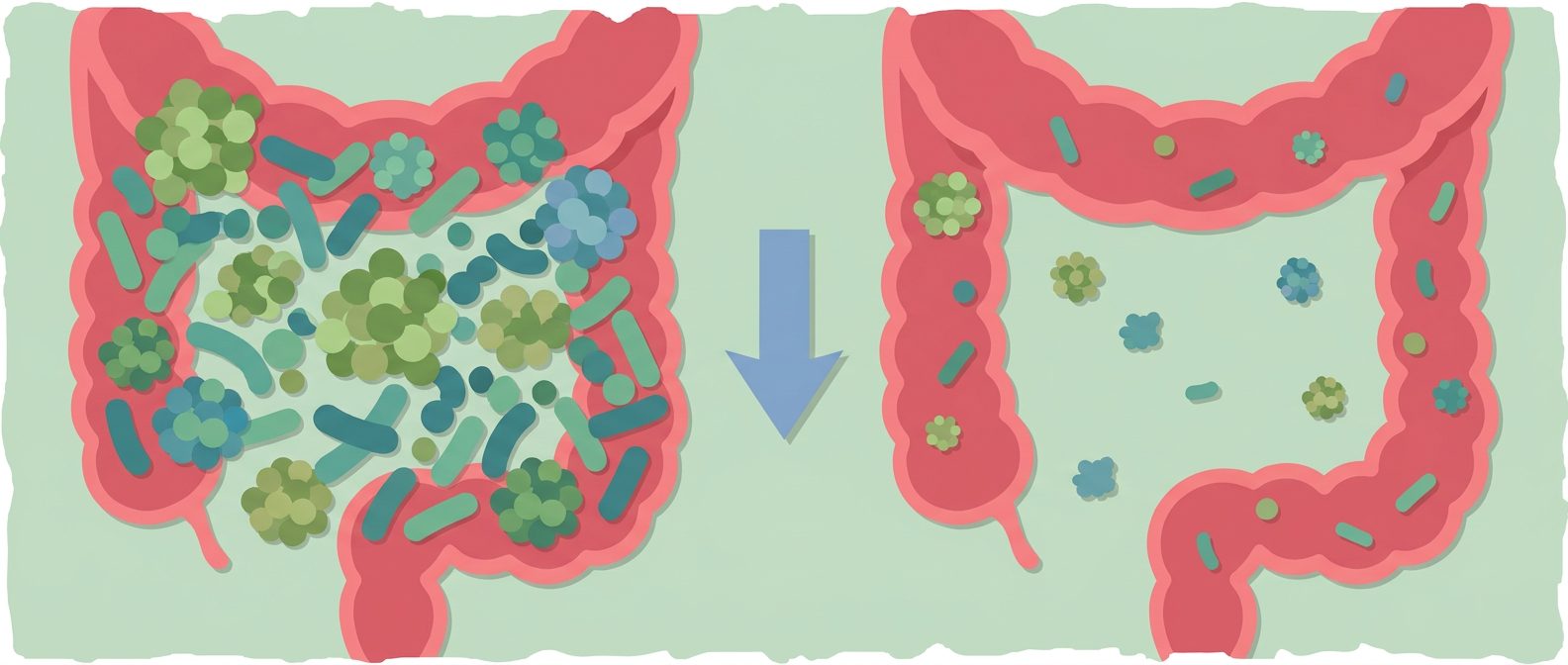
The most consistent finding across the research is that keto reduces two things: populations of Bifidobacterium and levels of short-chain fatty acids (SCFAs), particularly butyrate.
Bifidobacterium are among the most studied beneficial bacteria in the human gut. They ferment dietary fiber, produce B vitamins, and help maintain the intestinal barrier. One 2022 systematic review flagged the persistent reduction in Bifidobacterium abundance on ketogenic diets was notable enough that the authors flagged potential links to obesity, type 2 diabetes, and depression.This systematic literature review on ketogenic diets and human gut microbiota found consistent, persistent reductions in Bifidobacterium across studies, along with declines in butyrate-producing bacteria and total fecal SCFAs. That’s a real concern (not a certainty, but worth paying attention to).
The butyrate story is even more striking. Butyrate is the primary fuel for colonocytes – the cells lining your colon. It keeps the gut lining intact, reduces intestinal inflammation, and helps regulate immune function. When your colon cells can’t access enough butyrate, the intestinal barrier can weaken over time.
One early study tracked what happened to fecal butyrate when carbohydrate intake dropped from 399g per day all the way down to 24g. Butyrate levels fell from 18mM to 4mM – a drop of more than 75%.Tracking from 399g/day to 24g/day of carbs, this 2007 study found fecal butyrate dropped from 18mM to 4mM, with proportional declines in Roseburia and E. rectale – the key butyrate-producing bacteria. The bacteria responsible (mostly Roseburia spp. and E. rectale) dropped right alongside the butyrate, because they need fermentable carbohydrates to do their job.
Data from women on a six-week ketogenic diet confirmed the pattern: fecal butyrate, propionate, acetate, and total SCFA levels all decreased noticeably.After 6 weeks on KD, this study of women with overweight/obesity found significant decreases across all measured SCFA markers – butyrate, propionate, acetate, and total SCFAs (p < 0.05).[/footnote]
A broader 2024 systematic review of multiple dietary restriction patterns reached the same conclusion: low-carbohydrate diets consistently tended to decrease health-promoting bacteria, including Bifidobacterium.[footnote]This 2024 systematic review comparing carbohydrate, fat, and protein restriction found low-carb diets most consistently reduced beneficial bacteria including Bifidobacterium and lowered fecal SCFA levels.
The mechanism is simple: most gut bacteria eat fiber. Cut fiber dramatically and you’re cutting off the food supply for the bacteria that ferment it into butyrate. The bacteria decline. The butyrate declines with them.
None of this means keto is destroying your gut. But it does mean the bacterial changes are real and they have a direct cause – one that you can do something about.
Why Keto Is Not the Same as a Generic High-Fat Diet
Here’s where the story gets interesting. Keto doesn’t behave like other high-fat diets in the gut. The mechanisms are different, and so are some of the outcomes.
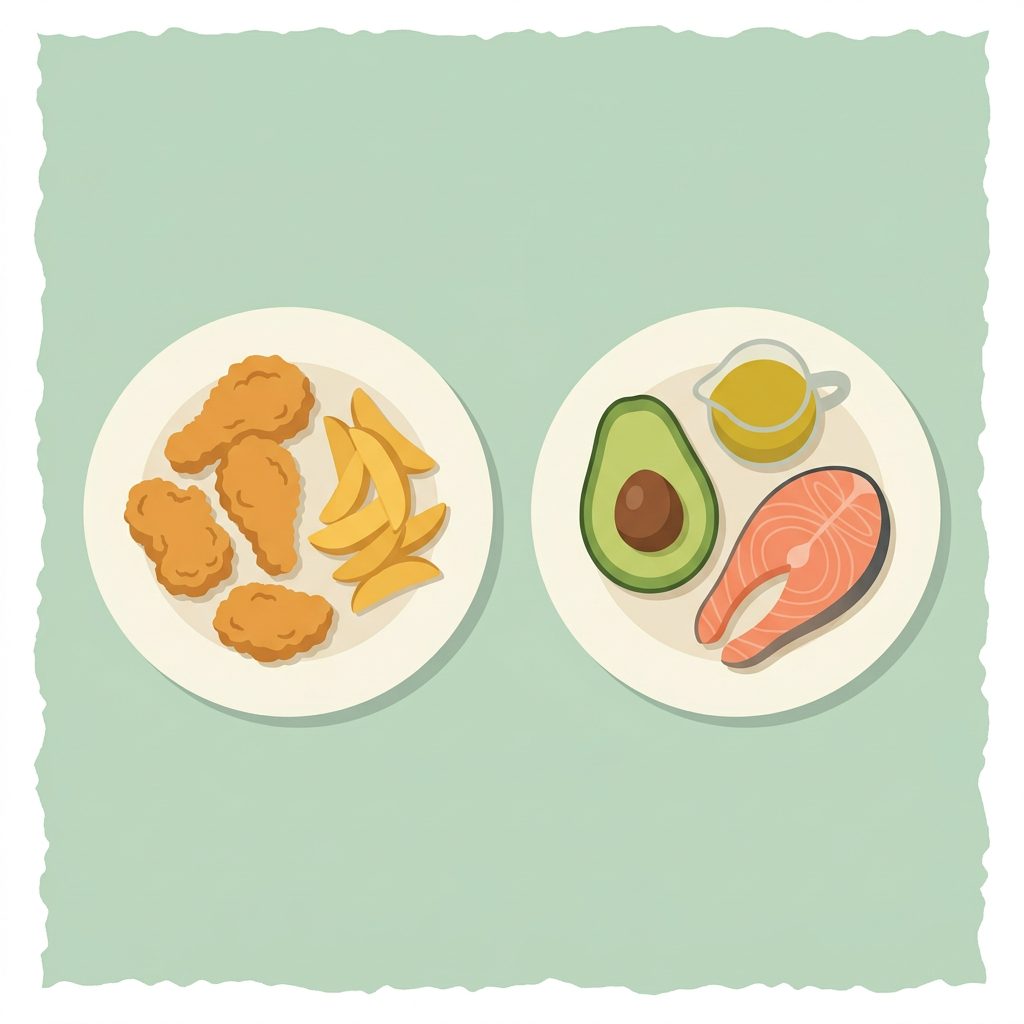
A landmark 2020 trial published in Cell demonstrated that ketogenic diets alter the gut microbiome in a way that’s distinct from standard high-fat diets – and the driver isn’t the fat, it’s the ketone bodies themselves.This RCT found ketone bodies (rather than fat content) directly drove Bifidobacterium reduction on KD, which then cascaded to reduce pro-inflammatory intestinal Th17 immune cells – an effect not seen on standard high-fat diets. Elevated circulating ketones actively suppress Bifidobacterium in the gut. That’s the same bacteria we just talked about declining on keto – but the cause here is the metabolic state of ketosis itself, not just the lack of fiber.
That sounds bad at first. But the same study found something else: this ketone-driven microbiome shift depletes a specific population of pro-inflammatory immune cells in the intestinal lining called Th17 cells.Th17 cells drive gut inflammation in several autoimmune and inflammatory conditions. Fewer of them means a quieter inflammatory environment in the gut.
The anti-inflammatory effect extends beyond immune cells. A 2024 meta-analysis confirmed that the inflammatory markers most relevant to gut conditions – TNF-alpha and IL-6 – both decrease on ketogenic diets, with the strongest effects in interventions of eight weeks or less.Across RCTs, this 2024 meta-analysis found KD significantly reduced TNF-alpha and IL-6 – both of which are elevated in IBD and IBS flares. Both of these cytokines drive intestinal inflammation directly. For the systemic inflammation picture beyond the gut, see keto and inflammation.
In animal research, keto’s anti-inflammatory effects extend to actual colitis. In a mouse colitis model, a ketogenic diet reduced the severity of gut inflammation by decreasing ILC3 cells and lowering inflammatory cytokine levels – effects that were distinct from a standard low-carbohydrate diet.In animal studies, this 2021 mouse colitis study found KD reduced gut inflammation severity through microbiota-dependent mechanisms – lowering ILC3 cells and inflammatory cytokines in a way distinct from standard LCD. Animal data can’t be applied to humans, but the mechanism – ketone bodies reshaping the immune environment in the gut – is consistent across multiple research groups.
The clearest takeaway from this body of work: keto isn’t just a high-fat diet with reduced carbs. The ketones themselves are biologically active in the gut. That cuts both ways – they suppress some beneficial bacteria, but they also appear to dial down certain inflammatory pathways that cause real problems for a lot of people.
Whether that tradeoff is net positive depends on who you are and what your gut is already doing.
The Real-World Gut Benefits: IBS and GERD
The anti-inflammatory effects aren’t just theoretical. Two conditions with direct gut involvement, IBS and GERD, have some of the clearest clinical evidence for improvement on very low-carbohydrate diets.
On IBS-D (diarrhea-predominant IBS), a small study enrolled patients who hadn’t responded well to standard treatment and put them on a very low-carbohydrate diet of 20g carbs per day for four weeks. All 13 people who completed the study reported adequate symptom relief, with significant improvements in stool frequency, stool consistency, and quality of life.This 2009 study on VLC diet and IBS-D found 100% of completers (13/13) reported adequate relief, with significant improvements in stool habits and quality of life scores. That’s a small sample, and the study design has limitations – but a 100% response rate in a population that had already failed other treatments is hard to dismiss.
The mechanism likely involves reduced fermentation in the gut. IBS-D symptoms are often triggered or worsened by rapidly fermentable carbohydrates. Cut those carbohydrates and the gut has less to ferment, less gas production, and less cramping. The lower-fiber keto diet, in this context, is part of why it works.
GERD tells a similar story. A study of obese patients with GERD put participants on a very low-carbohydrate diet (under 20g/day) and measured esophageal acid exposure. Within six days, distal esophageal acid exposure dropped noticeably.In obese patients with GERD, this 2006 study found significant reductions in distal esophageal acid exposure within just 6 days on a VLC diet – faster than most pharmaceutical interventions produce measurable change. Six days is surprisingly fast – faster than most pharmaceutical interventions show measurable change. The likely mechanism is reduced gastric pressure and improved lower esophageal sphincter tone when carbohydrates are removed.
These are real clinical benefits for real gut conditions. They don’t cancel out the microbiome concerns, but they do mean the picture isn’t one-sided. For people with IBS or chronic reflux, keto may improve gut function even as it changes bacterial populations.
Fiber – Not Fat Ratio – Is What Drives Microbiome Health on Keto
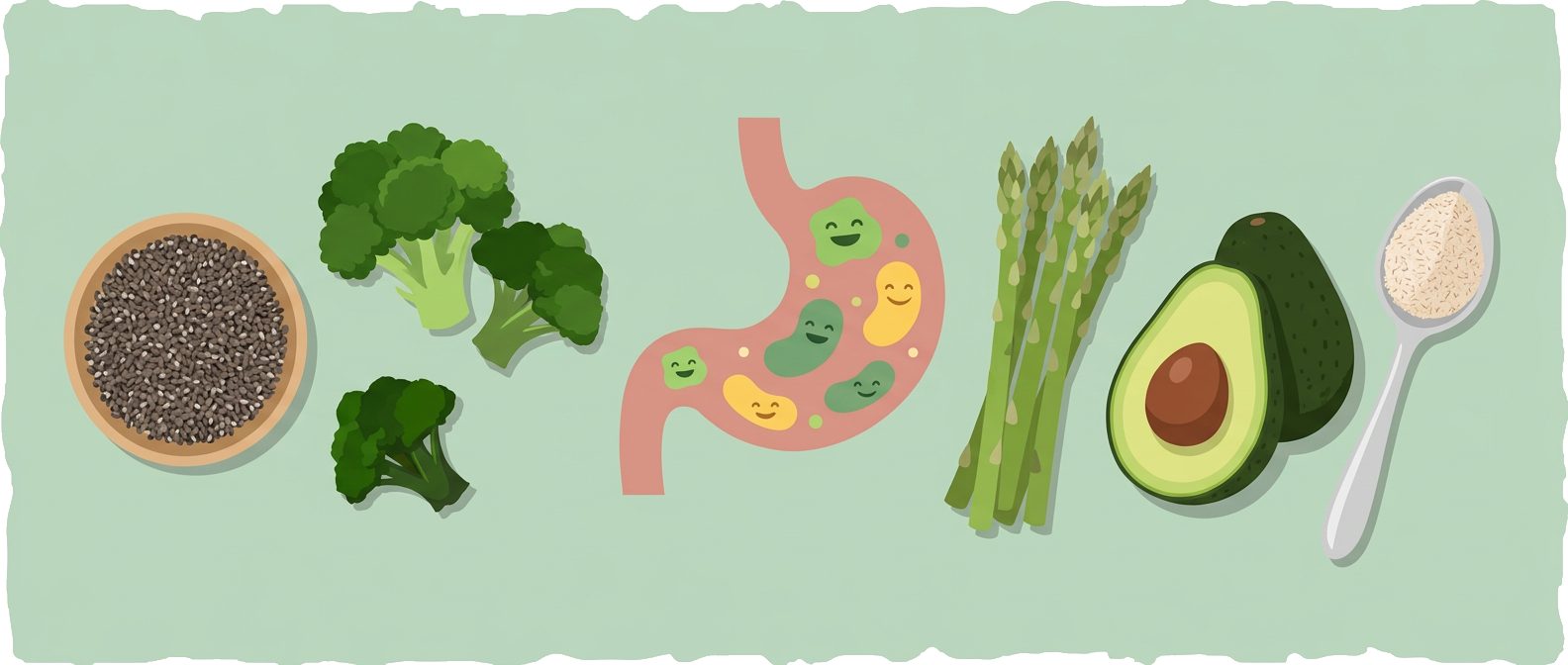
Here’s what I think is the most important finding in the recent research: the problem isn’t keto itself. The problem is low-fiber keto.
A 2025 mouse study specifically tested whether the fat-to-carb ratio or the fiber content of a ketogenic diet drove the microbiome changes. The answer was clear: dietary fiber, not the fat ratio or source, was the primary driver of beneficial microbiome shifts.Comparing different ketogenic diet formulations, this 2025 animal study found dietary fiber content (not fat ratio or source) drove the most substantial metagenomic shifts in the gut. Adding fiber back to a KD restored protective microbiome effects. When fiber was added back to a ketogenic diet, the protective effects on the microbiome were restored – even while the diet remained ketogenic.
That’s an important distinction. Keto by definition restricts carbohydrates. But fiber is a carbohydrate that doesn’t raise blood glucose or insulin in any tangible way (most of it passes through undigested). You can eat meaningful amounts of fiber on keto without disrupting ketosis. The fact that so few keto dieters do is a habit problem, not a keto-is-fundamentally-incompatible-with-gut-health problem.
Harvard’s nutrition researchers put it plainly: fiber feeds beneficial gut bacteria – it’s the prebiotic substrate they need to survive and produce SCFAs.Per Harvard Health, dietary fiber functions as a prebiotic, feeding the beneficial bacteria in the gut that are linked to increased microbial diversity. When fiber drops, those bacteria lose their food source. The butyrate drop tracks with the fiber drop – and you can buffer that effect by keeping fiber intake up.
The typical keto setup (bacon, eggs, cheese, meat) is low in fiber. That version of keto is going to produce the bacterial changes the research describes. A keto diet built around low-carb vegetables, chia seeds, psyllium husk, and asparagus can stay within the 20-30g net carb limit while still feeding the gut bacteria that depend on fermentable fiber.
The version of keto that damages the microbiome is real. It’s also avoidable.
Keto Foods That Support Your Gut
If you’re going to keep your gut healthy on keto, you need to be deliberate about three categories of foods: prebiotic fiber sources, fermented foods, and gut-lining support.
Prebiotic fiber sources are the foundation. These feed the bacteria that produce butyrate and SCFAs. On a keto budget of 20-30g net carbs, the best options are:
- Broccoli and cauliflower – the broccoli cauliflower salad is something I keep in rotation specifically because it delivers a solid dose of fiber with almost no glucose impact
- Asparagus – high in inulin, a fiber that feeds Bifidobacterium
- Psyllium husk – one of the most fiber-dense supplements available; I’ll use it in baking as a flour substitute or stir it into water on mornings when I know vegetable intake is going to be light. Always take psyllium with a full glass of water – without enough liquid, it can expand in the throat or GI tract. More on psyllium husk and how to use it is here.
- Chia seeds – around 10g of fiber per two tablespoons, nearly all of it soluble. The keto chocolate chia pudding has become a regular in my routine partly because it tastes good and partly because it’s one of the easier ways to hit your fiber target.
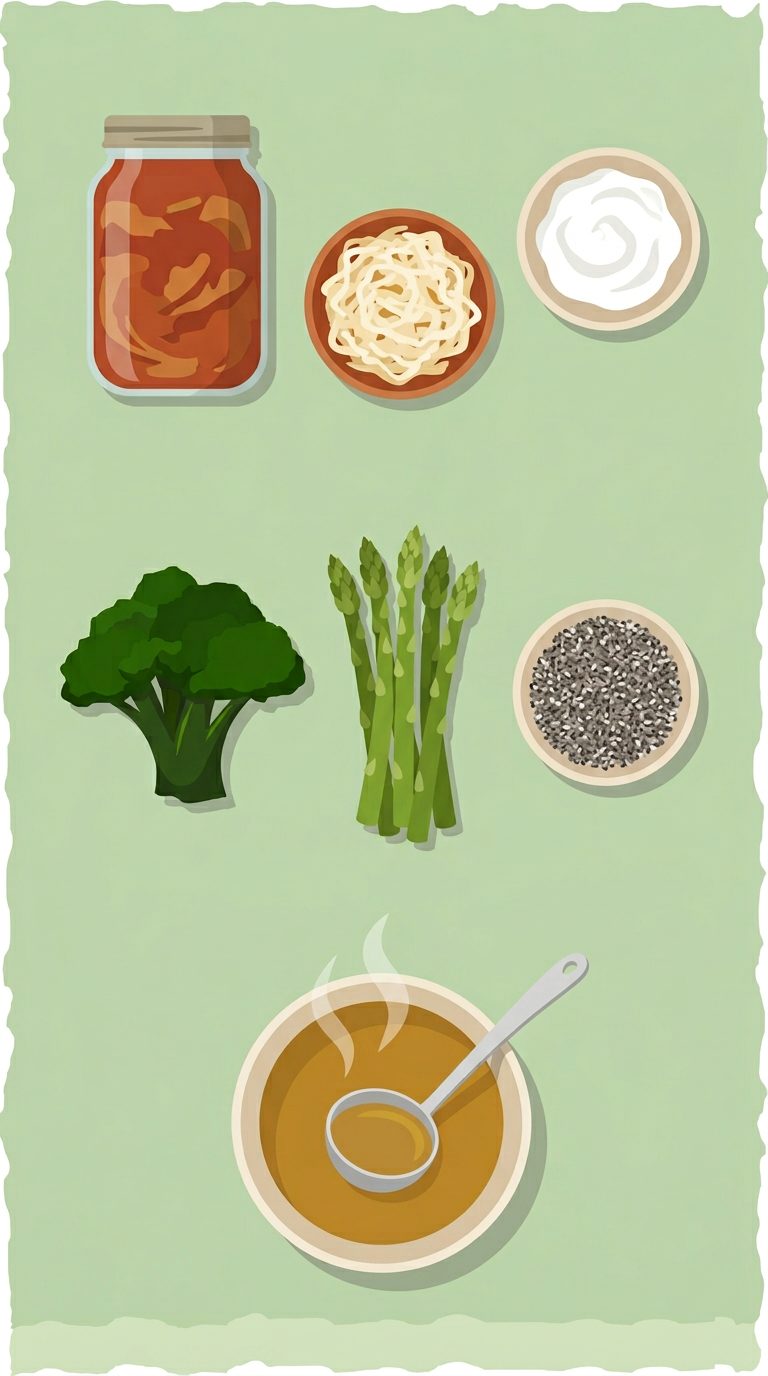
Fermented foods add live bacteria to the gut. The carb counts on most fermented foods are low enough for keto:Per Harvard Health, fermented foods contain live cultures that support microbial diversity and gut health.
- Full-fat Greek yogurt (plain, unsweetened) – around 6-7g net carbs per 100g serving, manageable within a daily 20-30g budget
- Kimchi – typically under 2g net carbs per serving, and the fermentation process produces beneficial lactobacillus strains. The pork and kimchi stir fry is one of my favorite ways to use it
- Sauerkraut – similar carb profile to kimchi, easy to add to meat dishes
I try to get at least one fermented food in most days. It doesn’t need to be large amounts – a few tablespoons of sauerkraut alongside a meal, or kimchi mixed into a stir fry, is enough to consistently reintroduce live cultures.
Gut-lining support is where bone broth earns its place. The gelatin and collagen in a well-made bone broth provide amino acids (glycine and proline) that support the integrity of the intestinal lining. I’ll use bone broth most consistently during the first few weeks of a stricter eating phase, when the gut is adjusting to lower carbohydrates. Whether it’s doing something measurable is hard to say definitively, but it fits naturally into keto cooking and the ingredient cost is low.
What to Watch For: Constipation and Dysbiosis Risk
I’ll be honest about the risks, because there are real ones.
Constipation is the most common gut complaint on keto. The Cleveland Clinic notes it as a side effect of ketogenic eating – and the mechanism is simple: less fiber, less bulk in the stool, slower transit.Cleveland Clinic’s overview of ketosis lists constipation and potential digestive issues among the notable side effects of long-term carbohydrate restriction. For most people it’s not severe, but it’s persistent enough to be a real quality-of-life issue if you don’t address it.
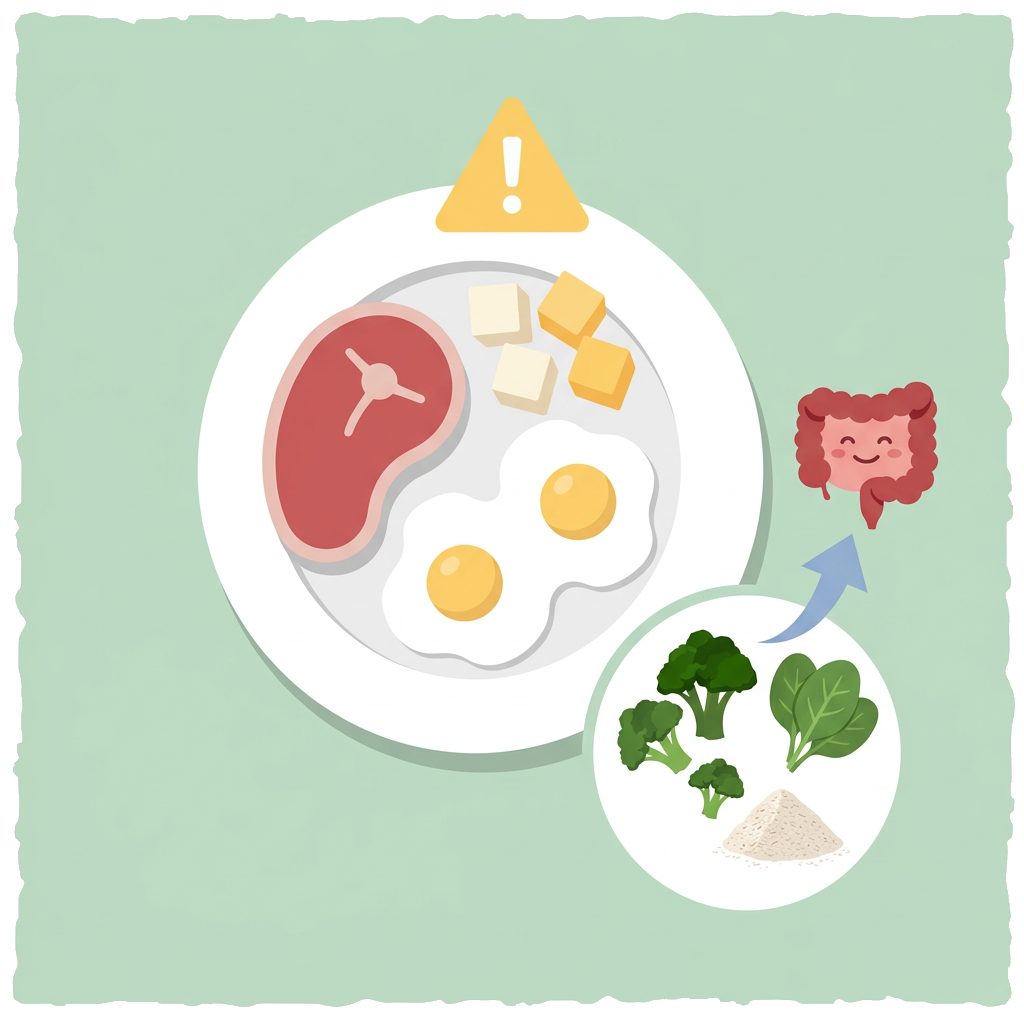
The deeper risk is dysbiosis – a disruption in the balance of gut bacterial communities that goes beyond simple constipation. Extended adherence to a very low-fiber ketogenic diet can reduce microbial diversity to a point that takes time to recover.A 2023 review flagged that extended adherence to KD risks dysbiosis, with altered microbial composition that may have downstream metabolic and neurological consequences. The studies show these changes aren’t immediately harmful for most people, but they’re something to keep an eye on.
I learned this one the hard way early on. My first year of keto, I wasn’t paying attention to vegetables at all. Meat, eggs, cheese – that was the bulk of what I was eating. The constipation started around week three and stuck around for months. I chalked it up to adaptation and didn’t change anything. That was a mistake.
What fixed it: I started eating broccoli, cauliflower, or some kind of leafy green at every dinner. I added a tablespoon of psyllium husk to my morning coffee rotation a few times a week. Within two weeks the constipation was gone and it hasn’t been a consistent problem since – as long as I don’t let vegetables fall off.
If you’re experiencing constipation on keto, that’s the signal you need to add more fiber before anything else. The side effects of a low carb diet page covers this in more detail. Don’t treat constipation as something to push through – treat it as the gut telling you something specific.
How to Build a Keto Diet That’s Good for Your Gut
The research points to a few clear, practical guidelines. These are what I follow, not a theoretical protocol.
Target 25g or more of fiber daily. This is harder than it sounds on keto, but doable if you’re intentional about it. Leafy greens, cruciferous vegetables, psyllium husk, chia seeds, and avocado are your primary tools. A cup of cooked broccoli gives you around 5g of fiber. Two tablespoons of chia seeds give you 10g. If you’re consistently under 15g of fiber daily, the bacterial changes the research describes are going to apply to you.The 2025 animal study in this research found fiber content was the primary determinant of microbiome health on KD, with adding fiber restoring protective effects even within a ketogenic framework.
Eat one fermented food most days. This doesn’t need to be a project. A few tablespoons of sauerkraut on the side of dinner. A small serving of plain Greek yogurt. Some kimchi mixed into a protein bowl. The carb cost is low and the bacterial input is consistent. Consistency matters more than quantity here.Per Harvard Health, dietary fiber acts as a prebiotic and fermented foods contribute live cultures – both support microbial diversity through different mechanisms.
Rotate your vegetables. Different vegetables feed different bacterial populations. Asparagus feeds Bifidobacterium through inulin. Broccoli and cauliflower provide different fiber fractions. Leafy greens add bulk. Rotating through the best low-carb vegetables isn’t just for nutritional variety – it supports a more diverse gut microbiome than eating the same two vegetables every day.
Use bone broth during adaptation. The first two to four weeks of strict keto are when the gut is adjusting most. Adding bone broth during this window costs you nothing in terms of carbs and provides gut-lining support at a time when the microbiome is in flux. After adaptation, it becomes optional.
Treat constipation as a signal, not a phase. If you’re backing up on keto, that’s your gut telling you fiber is too low. The fix is almost always more vegetables and psyllium husk – not time. Don’t wait it out. I’ve talked to hundreds of people who spent weeks uncomfortable on keto before realizing the solution was a bag of broccoli and a jar of psyllium. Check the full keto food list if you’re not sure what’s available to you.
The Bottom Line
Keto and gut health are actually complicated. The research is real on both sides: keto reduces Bifidobacterium and butyrate-producing bacteria, and that’s a concern worth taking seriously.Multiple lines of evidence confirm this – the 2022 systematic review on KD and gut microbiota, the 2020 RCT on ketone bodies and Th17 cells, and the 2025 fiber study all point to fiber as the key modifiable variable. Keto also reduces gut inflammation, depletes pro-inflammatory immune cells, and produces real clinical improvements in IBS and GERD symptoms. Both things are happening at the same time.
The variable that separates the good outcomes from the concerning ones is fiber. A low-fiber ketogenic diet is going to produce the bacterial changes the critics describe. A fiber-conscious ketogenic diet built around low-carb vegetables, chia, psyllium, and fermented foods can stay within the 20-30g carb limit while feeding the bacteria that need feeding.
I’ve been doing this long enough to have gotten it wrong in my earlier years and figured out what works. The gut doesn’t like being ignored. Pay attention to fiber, rotate your vegetables, add a fermented food most days, and treat constipation as a signal rather than a nuisance. Do those things and keto doesn’t have to come at the cost of your gut health. Your gut also produces most of your serotonin, which affects sleep quality – so if you’re dealing with sleep disruption alongside gut changes, keto and sleep covers the other side of that connection.
The information in this article is not medical advice and is not a substitute for professional medical guidance. Always consult a qualified healthcare provider before making changes to your diet or health regimen.
Key Takeaways
- Keto reduces Bifidobacterium and butyrate-producing bacteria – this is real, consistent across studies, and worth addressing proactively.
- Ketone bodies reduce pro-inflammatory Th17 cells and systemic cytokines like TNF-alpha and IL-6, giving keto a distinct anti-inflammatory effect in the gut.
- Fiber, not fat content, is the primary driver of microbiome health on keto. A fiber-rich ketogenic diet can restore most of the bacterial protection that low-fiber keto loses.
- Very low-carb diets show meaningful clinical improvement in IBS-D and GERD, suggesting the anti-inflammatory effects have real-world impact.
- Constipation is the clearest warning signal that fiber is too low. Treating it early with vegetables and psyllium husk prevents the deeper dysbiosis risk.
Frequently Asked Questions
Does keto damage your gut microbiome long-term?
The evidence confirms keto reduces certain beneficial bacteria – especially Bifidobacterium and butyrate-producing species – and the concern is real. Whether this constitutes lasting damage depends heavily on how you do keto. A 2022 systematic review flagged persistent Bifidobacterium reduction as concerning, but a 2025 animal study found that adding adequate fiber to a ketogenic diet restored protective microbiome effects. The most important protective step is keeping fiber intake at 25g or more daily through low-carb vegetables, chia seeds, and psyllium husk.
How much fiber should I eat on keto for gut health?
Aim for at least 25g of fiber per day. This is achievable on keto but requires being deliberate: a cup of cooked broccoli contributes around 5g, two tablespoons of chia seeds add 10g, and a tablespoon of psyllium husk adds another 5g. The key is that fiber is a carbohydrate that doesn’t raise blood glucose or meaningfully impact ketosis, so you’re not spending your 20-30g net carb budget on it – soluble fiber in particular passes through largely undigested.
Can keto help with IBS symptoms?
There’s small but real clinical evidence that it can, particularly for IBS-D (diarrhea-predominant IBS). A 2009 study found all 13 completers on a very low-carbohydrate diet (20g/day) reported adequate symptom relief, with improvements in stool frequency and quality of life. The likely mechanism is reduced fermentation of rapidly fermentable carbohydrates, which are common IBS triggers. If you have IBS and are considering keto, reviewing the full side effects of a low carb diet first will help you know what else to expect during adaptation.
What fermented foods are low enough in carbs for keto?
Several fermented foods fit comfortably within a 20-30g net carb keto budget. Kimchi and sauerkraut are both typically under 2g net carbs per serving. Plain, full-fat Greek yogurt runs around 6-7g net carbs per 100g, which is workable in moderate amounts. Plain kefir is higher in carbs and needs more careful portioning. The pork and kimchi stir fry is a good example of how to work fermented foods into a regular keto meal without treating them as a separate supplement.
Does keto cause constipation and how do I fix it?
Constipation is the most common gut side effect of keto and it’s almost always caused by low fiber intake, not ketosis itself. The fix is more vegetables and a fiber supplement. Adding broccoli, cauliflower, or leafy greens to every dinner, plus a tablespoon of psyllium husk a few times a week, resolves it for most people within one to two weeks. Don’t treat constipation as something to wait out – it’s a signal that your fiber intake is too low. The side effects of low carb eating page has additional guidance on this and other digestive adjustments.
Sources
- The ketogenic diet: its impact on human gut microbiota and potential consequent health outcomes: a systematic literature review
- Ketogenic Diets Alter the Gut Microbiome Resulting in Decreased Intestinal Th17 Cells
- Impact of dietary carbohydrate, fat or protein restriction on the human gut microbiome: a systematic review
- Effects of the Ketogenic Diet on Microbiota Composition and Short-Chain Fatty Acids in Women with Overweight/Obesity
- The effect of a ketogenic diet on inflammation-related markers: a systematic review and meta-analysis of RCTs
- Reduced dietary intake of carbohydrates by obese subjects results in decreased concentrations of butyrate and butyrate-producing bacteria in feces
- Dietary fiber content in clinical ketogenic diets modifies the gut microbiome and seizure resistance in mice
- Ketogenic diet alleviates colitis by reduction of colonic group 3 innate lymphoid cells through altering gut microbiome
- The Influence of Ketogenic Diet on Gut Microbiota: Potential Benefits, Risks and Indications
- A very low-carbohydrate diet improves symptoms and quality of life in diarrhea-predominant IBS
- A very low-carbohydrate diet improves GERD and its symptoms
- Ketosis: Definition, Benefits & Side Effects
- 5 Simple Ways to Improve Gut Health