
In small amounts, yes – hummus can work on keto. A standard 2-tablespoon serving of classic hummus has roughly 2-4 grams of net carbs, which is a manageable dip-sized portion on a 20-30g daily budget. The problem is that hummus is made from chickpeas, and chickpeas are one of those foods where the carbs sneak up on you fast once you go beyond a couple of spoonfuls.
After developing 1,000+ keto recipes, I’ve learned that the “is it keto?” question almost always comes down to portion size. And hummus is a textbook example. A couple of tablespoons with some celery sticks? Totally fine. Half a container with pita chips at a party? That’s a different story entirely.
Jump to a section:
- Hummus Nutrition Breakdown
- Why Chickpeas Are Borderline for Keto
- The Portion Control Reality
- Store-Bought vs. Homemade Hummus
- Keto-Friendly Hummus Alternatives
- Key Takeaways
- Frequently Asked Questions
Hummus Nutrition Breakdown
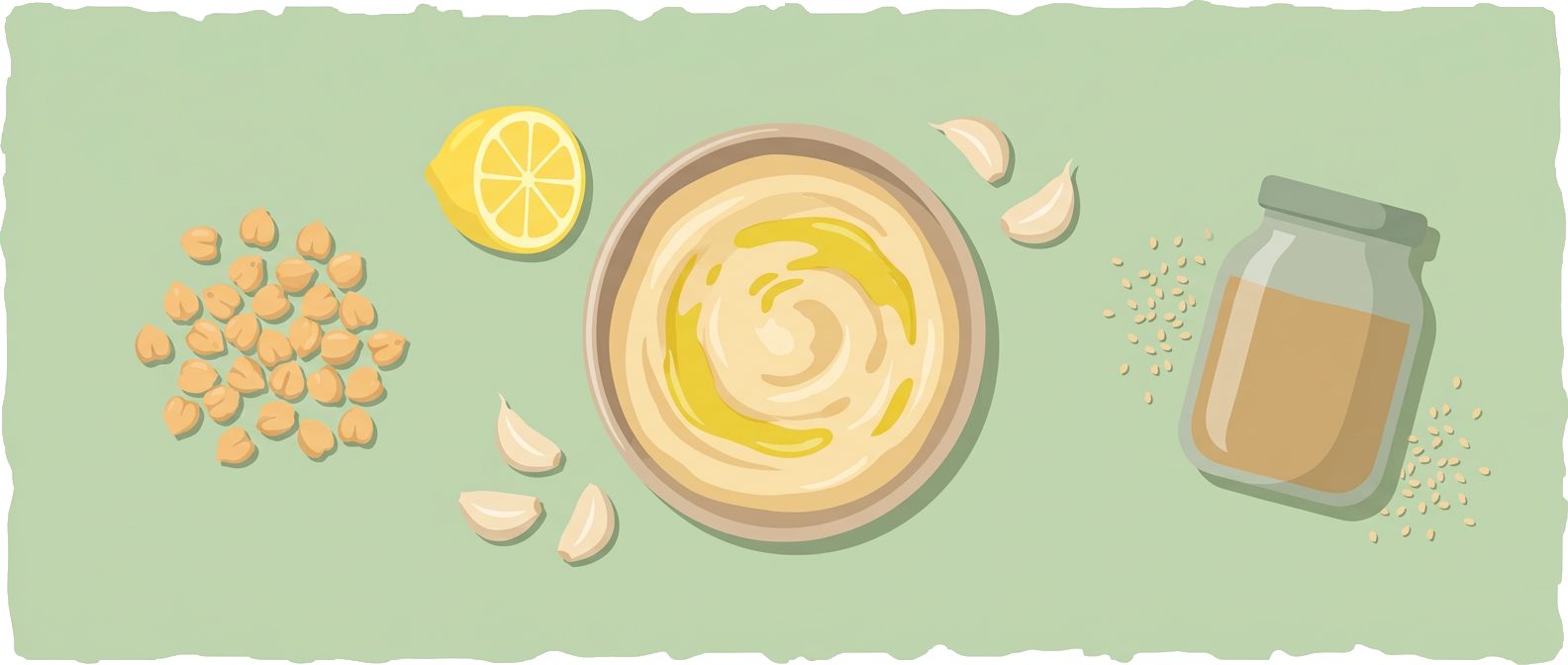
Let’s start with what’s actually in hummus. Traditional hummus is a blend of cooked chickpeas, tahini (sesame paste), olive oil, lemon juice, and garlic. Here’s how the macros look at different serving sizes based on USDA nutrition data:Nutritional data sourced from USDA FoodData Central and Wallace TC, Murray R, Zelman KM. “The Nutritional Value and Health Benefits of Chickpeas and Hummus.” Nutrients. 2016;8(12):766. PMID: 27916819.
| Serving Size | Calories | Total Carbs | Fiber | Net Carbs | Protein | Fat |
|---|---|---|---|---|---|---|
| 2 tbsp (~30g) | 50 | 4.3g | 1.8g | ~2.5g | 2.4g | 2.9g |
| 1/4 cup (~60g) | 100 | 8.6g | 3.6g | ~5g | 4.7g | 5.8g |
| 1/2 cup (~120g) | 200 | 17.1g | 7.2g | ~10g | 9.5g | 11.5g |
| 100g | 166 | 14.3g | 6.0g | ~8.3g | 7.9g | 9.6g |
At 2 tablespoons, you’re looking at roughly 2-3g net carbs. That’s about the same as a handful of cherry tomatoes or a couple of tablespoons of salsa. Not a dealbreaker by any stretch. But notice how quickly the numbers climb once you move to a quarter cup or beyond. Half a cup of hummus – which is easy to eat if you’re snacking mindlessly – puts you at around 10g net carbs. That’s a third to half of your entire daily budget gone on a dip.
The fat and protein content is actually decent for a plant-based food, which helps with satiety. Tahini and olive oil contribute most of the fat, and the chickpeas provide a moderate amount of protein and fiber. But on keto, the carb math is what matters most, and the carbs here come almost entirely from the chickpeas.
Why Chickpeas Are Borderline for Keto
Chickpeas (also called garbanzo beans) are legumes, and legumes in general are one of those gray-area food groups on keto. They’re not pure sugar like candy, but they’re not low-carb like leafy greens either. A cup of cooked chickpeas has about 27g total carbs and roughly 20g net carbs – that’s essentially your entire daily keto allotment in one serving.Wallace TC, Murray R, Zelman KM. “The Nutritional Value and Health Benefits of Chickpeas and Hummus.” Nutrients. 2016;8(12):766. PMID: 27916819.
The one thing chickpeas have going for them compared to, say, rice or bread is their glycemic index. Studies have found that hummus has a GI of just 15, which is remarkably low – about four times lower than white bread.Augustin LSA, Chiavaroli L, Campbell J, et al. “Post-prandial glucose and insulin responses of hummus alone or combined with a carbohydrate food: a dose-response study.” Nutr J. 2016;15:13. PMID: 26818604. That means the carbs in hummus are absorbed slowly, which produces a more gradual blood sugar response compared to most starchy foods.
A 2023 meta-analysis of randomized controlled trials confirmed that chickpeas significantly reduce blood glucose response compared to wheat and potatoes, largely due to their fiber content, resistant starch, and slower digestibility.Nam T, Kim A, Oh Y. “Effectiveness of Chickpeas on Blood Sugar: A Systematic Review and Meta-Analysis of Randomized Controlled Trials.” Nutrients. 2023;15(22):4752. PMID: 37960209.
That’s good news if you’re eating a small amount. But a low glycemic index doesn’t cancel out a high carb count. If you eat enough chickpeas – or enough hummus – you’ll still knock yourself out of ketosis regardless of how slowly those carbs are absorbed. On a keto diet, total net carbs are what matter, and legumes like chickpeas sit on the wrong side of that line when eaten in normal-sized portions. For more on why beans generally don’t work on keto, we have a full breakdown.
The Portion Control Reality
Here’s the honest truth about hummus and keto: whether it works for you depends entirely on whether you can stick to a small portion. And that’s where most people run into trouble.
A 2-tablespoon serving of hummus is about the size of a golf ball. If you’ve ever actually measured out 2 tablespoons and put it on a plate, you know it looks… small. Most people who sit down with hummus and some veggie sticks or crackers end up eating 4-8 tablespoons without even thinking about it. At that point, you’re looking at 5-10+ grams of net carbs just from the dip.
If you want to include hummus in your keto rotation, here’s what actually works:
Pre-portion it. Scoop out your 2 tablespoons and put the container back in the fridge. Eating straight from the tub is a guaranteed way to overdo it.
Pair it with the right dippers. Celery sticks, cucumber slices, bell pepper strips, and radish chips are all essentially zero carb. Pita chips, pretzels, and crackers are not keto – they’ll add 15-20+ grams of carbs on top of the hummus itself.
If you’re tracking your macros closely, a keto calculator can help you see exactly how much room you have for foods like hummus after accounting for the rest of your day.
Budget for it. If you’re having hummus as a snack, keep the rest of your carbs that day lower to compensate. It’s not a free food, but it doesn’t have to be off-limits either.
Store-Bought vs. Homemade Hummus
Not all hummus is created equal on the carb front. The numbers above are for classic, plain hummus. But walk down the deli aisle and you’ll find dozens of flavored varieties, and some of them are noticeably higher in carbs.
Flavors to watch out for:
- Roasted red pepper or sun-dried tomato: Usually fine – these add flavor without many extra carbs. Check the label, but most are within 1g of plain hummus per serving.
- Dessert hummus (chocolate, snickerdoodle, brownie batter): These are a completely different product. They often contain added sugar, cocoa, and sweeteners that push net carbs to 5-8g per 2-tablespoon serving. Avoid these on keto.
- Hummus with added grains or lentils: Some brands blend in extra legumes or grains to boost protein. This typically increases the carb count. Read the nutrition panel.
Making your own gives you the most control. You can adjust the chickpea-to-tahini ratio (more tahini means more fat and fewer carbs per serving), add extra olive oil, and skip any ingredients that bump up the carb count. Homemade hummus also tends to be thicker and more flavorful, so you may find that a smaller portion satisfies you.
That said, if you really want to keep the carbs as low as possible, the better move is to swap out the chickpeas entirely. Which brings us to the alternatives.
Keto-Friendly Hummus Alternatives
If you love the texture and flavor of hummus but want to skip the chickpea carbs altogether, there are some really good swaps.
Cauliflower hummus. This is the closest you’ll get to traditional hummus without the carbs. You roast cauliflower, then blend it with tahini, olive oil, garlic, and lemon juice – the same base as regular hummus, just with cauliflower standing in for the chickpeas. We have a keto hummus recipe that comes in at about 3g net carbs per serving with all the creamy, dippable texture you’d expect.
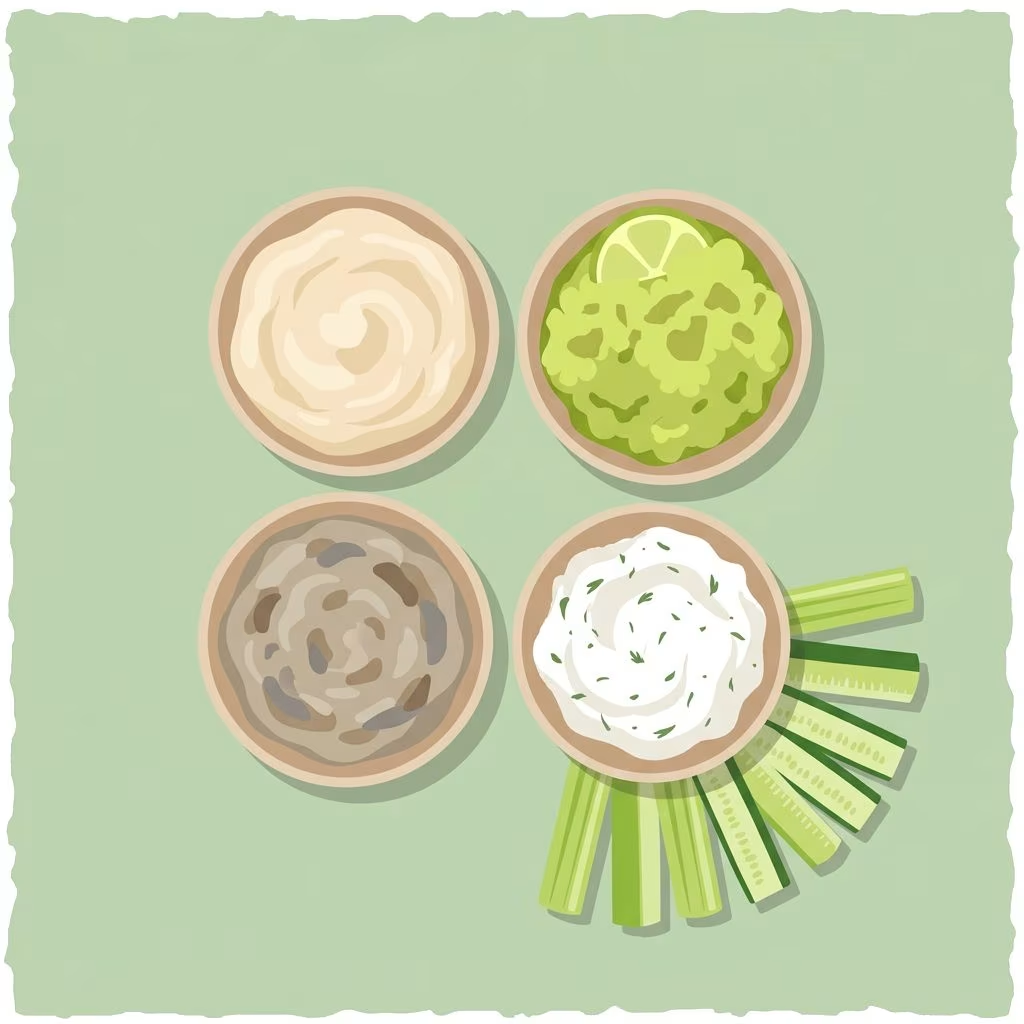
Avocado-based dips. Guacamole is the obvious one – it’s high in healthy fats, low in carbs (about 2g net carbs per 2 tablespoons), and pairs perfectly with the same veggie sticks you’d dip in hummus. You can also make a smoother avocado dip by blending avocado with tahini and lemon to get something closer to hummus consistency.
Baba ganoush. This Middle Eastern dip is made from roasted eggplant instead of chickpeas. It has a similar smoky, creamy profile and typically comes in around 2-3g net carbs per serving. Most recipes use tahini and olive oil, just like hummus.
Cream cheese-based dips. A simple cream cheese dip with herbs, garlic, and a splash of lemon juice gives you the creamy factor with almost zero carbs. It’s not hummus, but it fills the same role at a party or for afternoon snacking.
For more ideas on what to pair these dips with, check out the keto food list for a full rundown of keto-friendly snack options.
Key Takeaways
- Hummus can fit on keto in small amounts. A 2-tablespoon serving has about 2-4g net carbs, which is manageable on a 20-30g daily budget.
- Chickpeas are the main carb source. They’re legumes with roughly 20g net carbs per cup – not keto friendly in larger portions.
- Portion control is everything. Pre-measure your serving and pair hummus with zero-carb dippers like celery, cucumber, and bell peppers – not pita chips.
- Store-bought flavored hummus (especially dessert varieties) can be significantly higher in carbs. Read labels carefully.
- For a lower-carb swap, try cauliflower hummus, guacamole, or baba ganoush – all deliver a similar dipping experience at a fraction of the carbs.
For similar quick answers, see our guides on is rice keto, is peanut butter keto, and is honey keto.
Frequently Asked Questions
How much hummus can you eat on keto?
Most people can fit 2-4 tablespoons of hummus into a keto day without issues. Two tablespoons has roughly 2-4g net carbs depending on the brand, which is manageable on a 20-30g daily budget. The trouble starts when you sit down with a container and some veggies and eat half the tub – that’s where the carbs pile up. Measure your portion, log it, and plan the rest of your meals around it.
Is store-bought hummus OK for keto?
It can be, but you need to read labels. Plain, classic hummus is your safest bet at around 2-4g net carbs per 2 tablespoons. Flavored varieties – roasted red pepper, garlic herb, chocolate hummus, dessert hummus – often have added sugars, starches, or high-carb ingredients that push the net carbs higher. Check the nutrition panel and ingredient list every time, because formulas vary widely between brands.
What can I use instead of hummus on keto?
Cauliflower hummus is the closest swap – it uses roasted cauliflower instead of chickpeas and keeps the tahini, garlic, and lemon flavors intact at a fraction of the carbs. We have a keto hummus recipe that comes in around 3g net carbs per serving. Guacamole, cream cheese-based dips, and baba ganoush (eggplant-based) are also solid options that pair well with veggie sticks or low-carb crackers.
Sources
- USDA FoodData Central: Hummus Nutrition Data
- Wallace TC, Murray R, Zelman KM. “The Nutritional Value and Health Benefits of Chickpeas and Hummus.” Nutrients. 2016.
- Augustin LSA, et al. “Post-prandial glucose and insulin responses of hummus alone or combined with a carbohydrate food: a dose-response study.” Nutr J. 2016.
- Nam T, Kim A, Oh Y. “Effectiveness of Chickpeas on Blood Sugar: A Systematic Review and Meta-Analysis of Randomized Controlled Trials.” Nutrients. 2023.
- Dreher ML, Davenport AJ. “The Benefits of Including Hummus and Hummus Ingredients into the American Diet.” Nutrients. 2020.
- Ruled Me. “Keto Friendly Hummus Recipe [Secret Ingredient: Cauliflower].”
Fortunately (for carbs’ sake) , I actually don’t like traditional hummus all that much, but I have had excellent green hummus made using edamame in place of the chick peas. The flavor (umami!) and texture are so much better, IMO! I assume this would be lower in carbs than traditional hummus, though not as low as the cauliflower sub. I have never tried making it but if I did, I’d go with a bit extra tahini to keep it creamy. Any thoughts about edamame as an additional alternative here?
I’ve never made edamame hummus but I have eaten it – it’s very tasty! Nutritionally, it’s much better in carbs than chickpeas so I think it’s a solid choice. Great call on the tahini, too. I’ll look at including it in the article under the alternatives section. I appreciate the input!