
You had a pizza night. Or a birthday cake. Or a weekend that turned into three days of eating whatever was on the table. Now you’re staring at the scale, feeling the bloat, and wondering how bad the damage really is.
Here’s the short answer: it’s probably not as bad as you think. Your body didn’t forget how to burn fat. You temporarily refilled your glycogen stores, spiked insulin, and paused ketone production. That’s a metabolic speed bump, not a reset to zero. For most people who’ve been fat-adapted for a while, getting back into ketosis takes 24-72 hours – not a week, not a month.
I’ve been eating keto full-time for well over a decade, and I’ve had my share of situations where a “planned” cheat turned into something messier than intended. I’ve also watched hundreds of readers spiral into guilt-driven overcorrection that made things worse than getting back on plan would have. This guide is what I wish someone had handed me the first time I needed it.
We’ll cover the actual timeline, a step-by-step recovery protocol, whether fasting helps, how exercise plays in, what not to do, and how to think about prevention so this doesn’t keep catching you off guard.
Jump to a section:
- How Long Does It Actually Take?
- The Recovery Protocol: Step by Step
- Should You Fast to Speed It Up?
- Using Exercise to Deplete Glycogen Faster
- What NOT to Do
- Preventing Future Derailments
- Key Takeaways
- FAQ
- Sources
How Long Does It Actually Take?
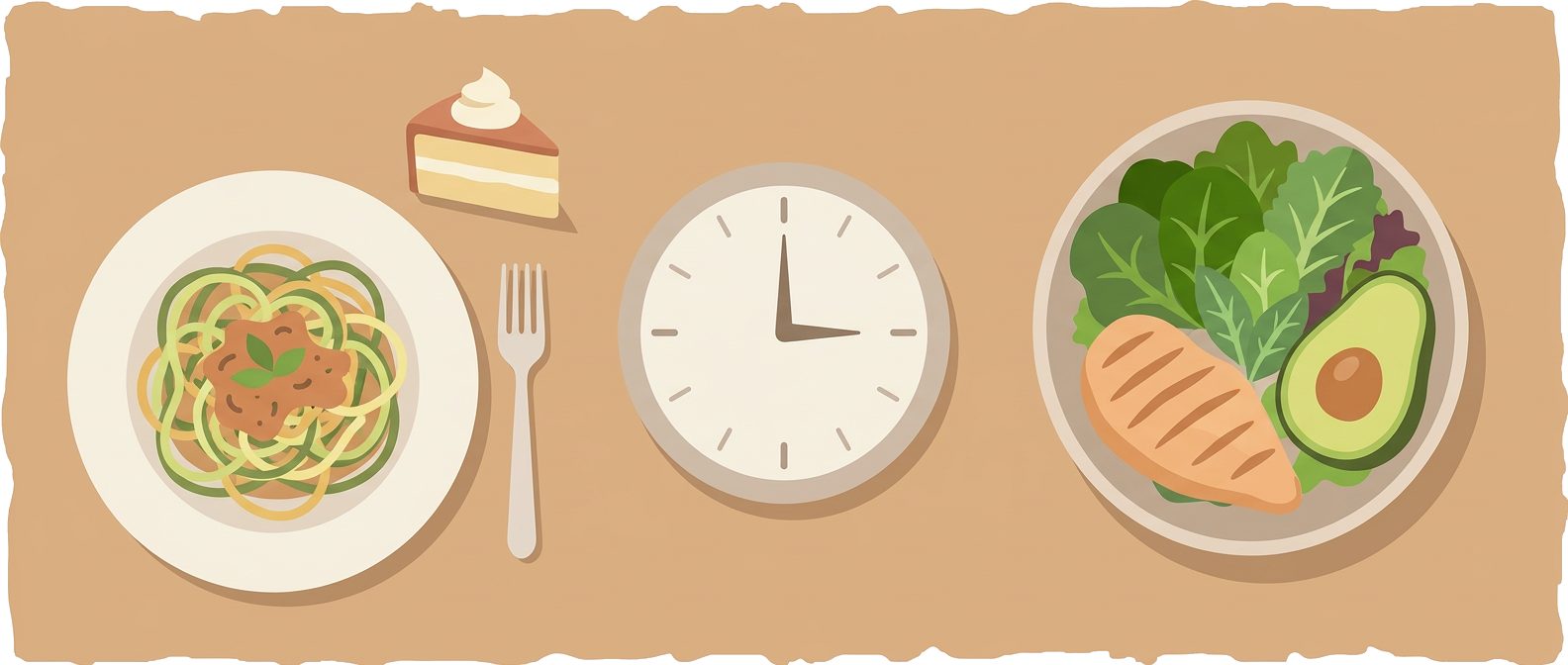
It’s somewhere between 24 and 72 hours for most people who’ve been on keto for more than a month. Some people who are highly fat-adapted and exercised immediately after the cheat can be back in measurable ketosis in 12-16 hours. People who ate a truly massive amount of carbs, or who are newer to keto, might take closer to three to four days.Dos Santos et al. (2025) in Progress in Brain Research found that intermittent fasting accelerates ketone body production by maintaining low insulin, which is the prerequisite for hepatic ketogenesis to resume after a carbohydrate load.
The timeline depends on two things: how much you ate and how metabolically flexible you are.
What happens in your body when you eat carbs
When carbohydrates hit your digestive system, blood glucose rises and your pancreas releases insulin. Insulin stops hepatic ketogenesis – the liver basically gets the signal to stop making ketones and start processing glucose instead. The incoming carbohydrates get stored as glycogen in your liver (about 100g capacity) and skeletal muscles (300-700g depending on your size and training history).Fundamentals of glycogen metabolism for coaches and athletes – PMC – PMC / NCBI
Each gram of glycogen binds about 3-4 grams of water, which is why you feel instantly bloated and heavier after a carb load. That water weight isn’t fat. It’s physically attached to the glycogen you just stored. When the glycogen burns off, the water goes with it.Glycogen storage: illusions of easy weight loss, excessive weight regain – PubMed – PubMed / NCBI
To get back into ketosis, your body needs to work through that glycogen. Once liver glycogen drops low enough, the liver resumes ketone production. How fast that happens depends on what you do next.
Factors that affect your timeline
| Factor | Faster recovery | Slower recovery |
|---|---|---|
| Time on keto before the cheat | 4+ weeks fat-adapted | Less than 3 weeks in |
| Amount of carbs consumed | One meal, 50-100g carbs | Full day or weekend, 300g+ carbs |
| Exercise after | Cardio or HIIT within 12 hours | Sedentary recovery |
| Fasting window | 16-24 hour fast | Returned to regular eating immediately |
| Insulin sensitivity | High – clears glucose quickly | Lower – glucose lingers longer |
One important note: fructose – the sugar in fruit juice, honey, and high-fructose corn syrup – goes straight to the liver and is particularly effective at refilling liver glycogen. A sugar-heavy binge often takes longer to recover from than a starchy one, even at the same total carb count. If your cheat involved a lot of soda or sweets, factor in an extra half day or so.Murray & Rosenbloom (2018) in Nutrition Reviews detail how fructose is preferentially metabolized by the liver and stored as hepatic glycogen, which must be depleted before ketone production resumes.
If you want to understand exactly what ketosis is and how your liver makes ketones, that article covers the biochemistry in full detail.
The Recovery Protocol: Step by Step
There’s no magic involved here. The recovery protocol is simple, which is exactly why people overthink it. Here’s what to do starting the morning after.
Don’t ease back in. Drop straight to 20-30g net carbs per day – the same threshold you used when you first started keto.How Many Carbs Should You Eat to Get Into Ketosis? – Ruled.me – Ruled.me No “I’ll go low-carb today” compromises. Your liver glycogen needs to deplete, and any carbs you eat above threshold will slow that process down.
Stick to your usual keto foods: meat, eggs, non-starchy vegetables, healthy fats, full-fat dairy if you tolerate it. Don’t add any “recovery foods” that don’t belong in your normal eating pattern.
Step 2: Hydrate aggressively – but add electrolytes
Water weight is coming off fast as glycogen clears. That’s going to feel good on the scale but it means you’re flushing sodium, potassium, and magnesium out with it. The symptoms people attribute to “keto flu” during their initial transition – headaches, fatigue, muscle cramps – can reappear here for the same reason.What is the Keto Flu and How to Remedy It – Ruled.me – Ruled.me
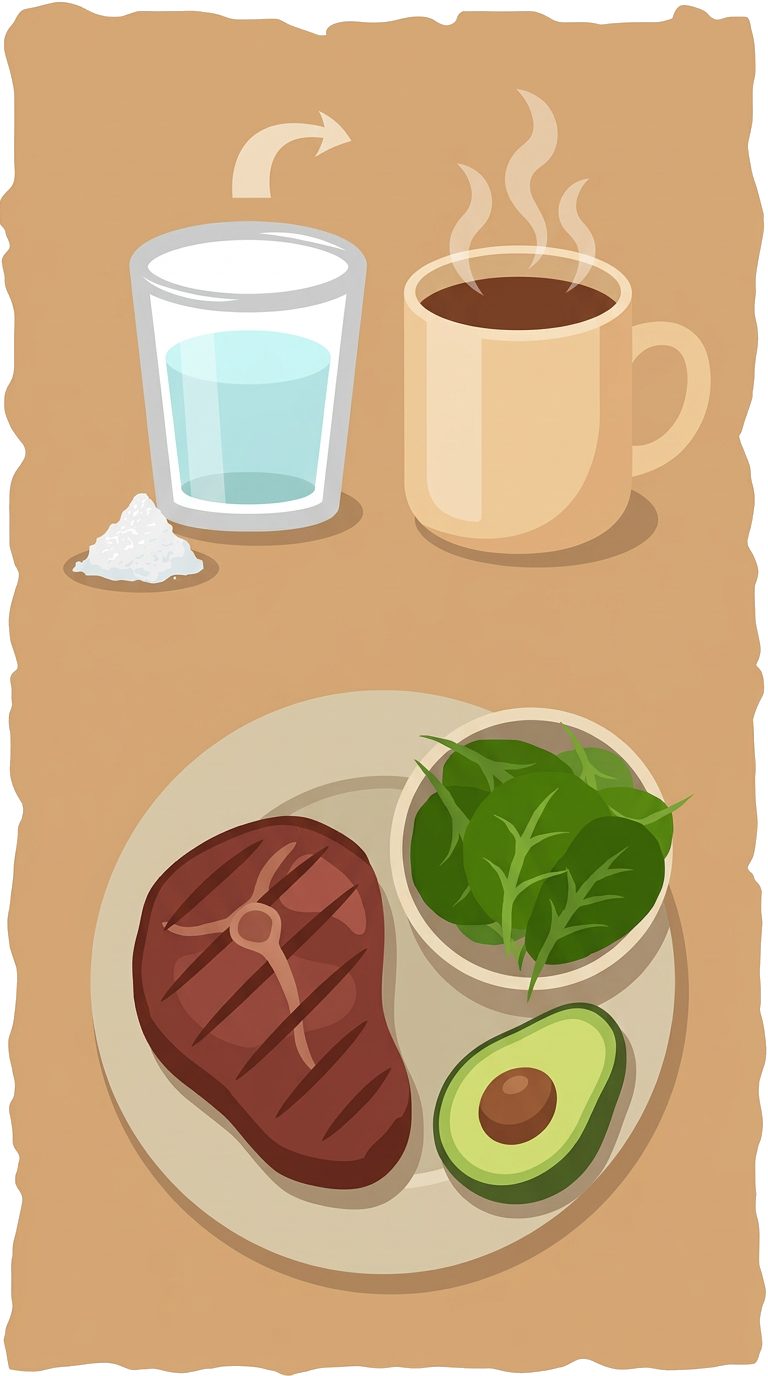
Target 3,000-5,000mg of sodium per day. Bone broth is the most real-world tool – a cup has 500-1,000mg of sodium plus natural electrolytes. Supplement potassium through avocado, leafy greens, or salmon. If you feel muscle cramps coming on, magnesium glycinate is the form that absorbs best without causing digestive issues.
The one thing to avoid: drinking large quantities of plain water without minerals. It dilutes your serum sodium and can make fatigue and headaches worse rather than better. Mineral water, salted broth, or electrolyte powders without added sugar are the right approach here.
The full electrolyte guide has specific food sources and supplement recommendations if you need more detail.
Step 3: Keep protein moderate, fat sufficient
Some people undereat fat after a cheat because they feel guilty and want to “compensate.” Don’t. You need dietary fat to give your body something to burn while glycogen clears and ketosis ramps back up. If you undereat fat and also undereat carbs, you’re simply undereating – which stresses your body and makes the recovery less efficient.
Use the keto calculator to confirm your actual macro targets if you’re not sure. Protein should stay in the moderate range – going very high protein can trigger gluconeogenesis, which slightly extends the time before ketone production resumes.Is Too Much Protein Bad for Ketosis? – Ruled.me – Ruled.me
Step 4: Light to moderate movement
You don’t need to punish yourself with a brutal workout. A 30-45 minute walk, a steady bike ride, or a moderate resistance session is enough to noticeably speed up glycogen clearing without wrecking your recovery. More on the exercise piece in a dedicated section below.
Step 5: Verify with a ketone test if you have one
If you have a blood ketone meter or ketone strips, testing at the 24-48 hour mark gives you actual data rather than guesswork. A blood reading of 0.5 mmol/L or higher means you’re back in nutritional ketosis.Measuring Ketosis: What Are Ketone Strips and Sticks – Ruled.me – Ruled.me Don’t get too caught up in the number – anything above 0.5 is the zone. The goal isn’t to maximize ketones, it’s to confirm the metabolic shift has happened.
For a full rundown on what the signs of ketosis feel like – including the ones you can observe without testing – see the signs you’re in ketosis article.
Should You Fast to Speed It Up?
Short answer: it can help, but it’s optional – not required. A 16-24 hour fast after a cheat day accelerates glycogen depletion by keeping insulin low and forcing your body to burn through stored glucose faster. Clinical data supports this: intermittent fasting and a low-carb diet in combination shift the body from glucose metabolism to fat oxidation faster than either approach alone.Dos Santos et al. (2025) in Progress in Brain Research reviewed evidence showing that intermittent fasting promotes ketone body production by extending the low-insulin window, accelerating the transition from glucose to fat oxidation.
How fasting helps the recovery
When you fast, blood glucose drops and insulin stays low. Low insulin is the prerequisite for ketone production – your liver can’t make ketones while insulin is elevated. By skipping a meal or extending your overnight fast, you’re giving your body extended time in a low-insulin state, which lets glycogen clear faster and ketone production restart sooner.
A 16:8 intermittent fasting window – eating between noon and 8pm, fasting from 8pm through noon the next day – is enough to meaningfully move the needle. Some people prefer a full 24-hour fast after a notable cheat, but that level of restriction isn’t necessary and can backfire if you’re not experienced with extended fasting.Campbell et al. (2020) in J Funct Morphol Kinesiol found that intermittent energy restriction protocols can preserve fat-free mass, but noted that overly aggressive restriction strategies may compromise recovery and adherence.
Who should skip the fast
Fasting after a cheat doesn’t work well for everyone. If you tend toward restriction-binge cycles, intentional fasting right after eating a lot can reinforce a punishing mental relationship with food that ends up making things worse long-term. If that pattern sounds familiar, just return to your normal keto eating immediately rather than layering a fast on top.
Also skip the extended fast if you exercised hard the same day you cheated and are running on empty – your muscles need nutrition to recover, and a 24-hour fast in that context is counterproductive.
For more on how intermittent fasting and keto work together, the intermittent fasting on keto guide covers the different fasting protocols and their tradeoffs in detail.
A day-to-day fasting approach
If you want to use fasting as a recovery tool, here’s what I’d recommend: skip breakfast the morning after the cheat. Let your overnight fast extend to about 16 hours. Drink water, black coffee, or plain tea during the fast. Break the fast at lunch with a standard keto meal – fatty protein, leafy greens, some avocado. Don’t compensate for the skipped meal by eating more at lunch. Just eat normally from that point forward.
That’s it. The 16-hour window is enough to accelerate glycogen clearance without being aggressive enough to backfire.
Using Exercise to Deplete Glycogen Faster
Exercise is one of the most reliable ways to speed up your return to ketosis, because it directly burns through the glycogen stores that are keeping your liver from making ketones. This is separate from the calorie burn – it’s specifically about the fuel substrate being used during the workout.Evans et al. (2017) in the Journal of Physiology reviewed the metabolism of ketone bodies during exercise, showing that glycogen depletion through physical activity is a primary driver of the shift to ketone production.
How exercise accelerates the process
During moderate to high-intensity exercise, your muscles pull heavily from glycogen as their primary fuel. Research on glycogen depletion rates shows that high-intensity interval training depletes glycogen at around 4-5 mmol/kg/min during work intervals – fast enough that a 20-30 minute HIIT session can deplete 40-50% of muscle glycogen stores despite the short duration.Hargreaves et al. (2018) in Sports Medicine reviewed muscle glycogen metabolism during exercise, showing that high-intensity exercise depletes glycogen stores at substantially higher rates than moderate-intensity work. Moderate steady-state cardio depletes at a slower rate but covers more total glycogen over a longer session.
Beyond the immediate depletion, there’s a post-exercise effect. After you burn through glycogen during a hard workout, the muscles remain glycogen-sensitive for several hours – meaning any carbohydrate you eat is preferentially stored in muscle rather than inhibiting ketone production. This is one of the reasons athletes who exercise regularly can tolerate more carbs without being kicked out of ketosis.
Research also supports the idea that combining exercise with a fasting window accelerates the return to ketosis compared to fasting alone, because exercise directly depletes the glycogen stores that suppress ketone production.Evans et al. (2017) in the Journal of Physiology described how exercise depletes muscle and liver glycogen, creating the metabolic conditions (low glycogen, low insulin) that promote hepatic ketogenesis.
What type of exercise and how much
You don’t need to destroy yourself in the gym. Here’s a hands-on breakdown by type:
- 30-60 minutes of moderate cardio – jogging, cycling, swimming at 60-70% max heart rate. Good for glycogen depletion without excessive stress on the body. This is the most sustainable option for most people.
- 20-30 minute HIIT session – sprint intervals, circuit training. Higher glycogen burn rate per minute, but more taxing. Effective if you’re feeling okay physically.
- Resistance training – weight lifting depletes muscle glycogen in the muscles being worked. A full-body session is more effective than an isolated workout for this purpose.
- A long walk – lower intensity, but a 60-90 minute brisk walk still clears a real amount of liver glycogen through the baseline glucose demand of movement.
My actual approach: the morning after a significant cheat, I go for a 45-minute run at a comfortable pace rather than trying to sprint myself back into ketosis. It’s not punishing, it gets the job done, and it puts me in a better mental state for the day. High-intensity work when I’m bloated and dealing with the aftermath of a carb load tends to feel terrible and not produce better results.
For a deeper look at how training and keto interact – including how fat-adaptation changes your exercise metabolism over time – the complete guide to exercise on keto covers it thoroughly.
What NOT to Do
The recovery protocol above is simple. What tends to cause problems is the set of overcorrections people attempt when they’re frustrated with themselves. These make things worse, not better.
Don’t starve yourself
Drastically cutting calories on top of cutting carbs isn’t a faster recovery – it’s adding metabolic stress on top of a depleted system. Your body needs energy to run the recovery process. Going to near-zero calories for a day isn’t intermittent fasting, it’s undereating, and it raises cortisol, which actually slows the shift back to fat burning.A 2025 scoping review in Frontiers in Nutrition documented how excessive caloric restriction during keto initiation can worsen symptoms like fatigue and headaches, emphasizing the importance of adequate energy intake during metabolic transitions.
Eat your normal keto macros. Keep fat adequate. Keep protein moderate. The only thing you’re cutting is carbs.
Don’t over-exercise as punishment
Two-a-day workouts, two-hour cardio sessions, going to the gym while running on no food and limited sleep – these don’t get you back into ketosis faster in any real way, and they do risk injury, burnout, and making the next few days feel miserable.
Exercise is a tool for glycogen depletion, not a moral correction. One solid 45-minute session is more than sufficient. Anything beyond that is about guilt management, not physiology.
Don’t try exogenous ketones as a shortcut
Exogenous ketone supplements will raise your blood ketone reading. They won’t make your body actually shift to burning fat – that only happens when liver glycogen is depleted. Taking ketone salts after a cheat day is like putting a check engine light cover over the dashboard. The number looks right; the underlying situation hasn’t changed.Are Exogenous Ketone Supplements Worth It? – Ruled.me – Ruled.me
Use exogenous ketones for performance or adaptation support if you want – but don’t confuse them with actually being in nutritional ketosis.
Don’t spiral into the all-or-nothing trap
This one is more damaging than all the physical missteps combined. Research on eating behaviors consistently shows that dietary restraint predicts binge eating – the stricter the rules you impose, the more the mental pressure builds, and the more likely you are to blow past those rules entirely when stress or opportunity arises.Cheat Days Don’t Work: The Hidden Cost of This Diet Trend – Psychology Today – Psychology Today
One slip is a data point, not a character flaw. The people who stay on keto long-term aren’t the ones who never eat a carb – they’re the ones who recover quickly and don’t use a slip as permission to stay off plan for a week. Get back on plan the next morning. Move on.
Preventing Future Derailments
Once you’ve recovered, it’s worth spending a few minutes thinking about what happened and whether there’s anything structural you can change. Not to beat yourself up – to make the next few months easier.
Planned refeeds vs. unplanned cheats
There’s a real difference between an intentional refeed and an unplanned cheat, and it’s not a purely mental distinction. A planned refeed – where you deliberately increase carbs to a set amount on a specific day, then return to strict keto – is a different physiological and psychological event than eating without a plan and losing track of quantities.Campbell et al. (2020) in J Funct Morphol Kinesiol found that structured intermittent energy restriction preserved fat-free mass compared to continuous restriction, supporting the value of planned, deliberate dietary variation over unplanned deviations.
With a planned refeed, you know the size of the deviation. You can plan your exercise accordingly. You know exactly when you’re getting back on plan. The mental experience is completely different – it’s a deliberate choice with a defined endpoint rather than something that happened to you. People who structure their higher-carb days as intentional refeeds tend to recover faster and feel less psychological damage from the event.
If you find yourself going off plan regularly, consider whether a cyclical ketogenic diet structure might suit you better. It builds the higher-carb days in intentionally, so you’re not constantly fighting the urge to cheat – you have a structured outlet for it.
Identify your trigger situations
Most derailments aren’t random. There’s usually a pattern: travel, social events, stress at work, a particular emotional state. When I look back at the times I’ve slipped significantly, they almost always involved a combination of being away from home, tired, and in a social situation where declining food felt awkward.
Knowing your pattern doesn’t prevent every slip, but it does let you go in with more preparation. If work travel is your trigger, building a travel food strategy before the trip matters. If social eating is the issue, the keto fast food and restaurant guide is worth reviewing before you go out rather than after you’ve already eaten the bread.
Lower the activation energy for getting back on track
One of the most concrete things I’ve done to prevent single slips from turning into week-long detours is keeping my kitchen stocked so that getting back on plan requires zero decision-making. Eggs in the fridge, avocados on the counter, some kind of protein that can be cooked in 15 minutes. When the fridge is empty and you’re hungry and low on willpower, you’re going to make bad decisions. When the fridge has a cooked chicken breast and some greens, the easy choice and the right choice are the same thing.
If you want a more structured approach to planning your meals, the keto meal plan is a practical starting point for building the kind of food environment that supports consistency.
If you’re back in ketosis but weight isn’t moving, the not losing weight on keto troubleshooter covers 8 common causes and a full diagnostic checklist.
Key Takeaways
- Most fat-adapted people return to measurable ketosis within 24-72 hours after a cheat. Return to strict keto immediately – don’t ease back in.
- Cut carbs to 20-30g net, hydrate with electrolytes (bone broth, salted water), keep fat adequate, add moderate exercise.
- A 16-hour fasting window the morning after can speed recovery. A full 24-hour fast is optional and may not be suitable for everyone.
- 30-60 minutes of moderate cardio or a 20-30 minute HIIT session depletes glycogen effectively. One solid workout is enough – don’t over-exercise as punishment.
- Don’t starve yourself, don’t use exogenous ketones as a fake fix, and don’t let one slip justify staying off plan for longer.
- Planned refeeds are more sustainable than unplanned cheats – they keep you in control and make recovery predictable.
FAQ
How long will it take to get back into ketosis after one cheat meal?
One cheat meal – say a plate of pasta or a few slices of pizza – typically pushes most fat-adapted people out of ketosis for 12-24 hours. The smaller the cheat and the more fat-adapted you are, the faster the recovery. If you return to strict keto immediately and do some light exercise, you can often be back at measurable ketone levels (0.5+ mmol/L) within a day. A full day of high-carb eating pushes this to 2-3 days. A weekend binge can take 3-5 days depending on volume and how quickly you correct course.
Will I lose all my progress from cheating?
No. One cheat meal – or even a full cheat day – doesn’t undo weeks of fat adaptation. Fat adaptation involves actual enzymatic and mitochondrial changes in how your cells process fuel, and those don’t reverse overnight.Evans et al. (2017) in the Journal of Physiology described how fat adaptation involves upregulation of mitochondrial fat oxidation enzymes, a process that develops over weeks and is not reversed by a single carbohydrate load. What you lose temporarily is the ketone production itself and the water weight you shed during initial adaptation. Both return quickly. The weight gain you see on the scale the morning after is mostly water bound to glycogen – roughly 3-4 grams of water per gram of stored glycogen – not fat. For a full breakdown of this mechanism, the keto water weight article explains exactly what’s happening.
Should I do a 24-hour fast to get back into ketosis faster?
It can help, but it’s not necessary. A 16:8 intermittent fasting window is usually enough to meaningfully accelerate glycogen clearance without the difficulty of a full 24-hour fast. If you’re experienced with extended fasting and don’t have a history of restriction-binge patterns, a 24-hour fast after a significant cheat can shave 12-24 hours off your recovery time. If you’re not comfortable with extended fasting, return to your normal keto eating – the 24-72 hour recovery timeline still applies. The intermittent fasting guide is a good resource if you want to build a fasting practice as part of your regular routine rather than reaching for it reactively after cheats.
What if I feel terrible – headaches, cramps, fatigue – during recovery?
Those symptoms are almost always electrolyte-related, not a sign that something is wrong with your recovery. When glycogen clears quickly, water and minerals follow. The fix is the same as addressing keto flu: increase sodium immediately (bone broth is the most practical source), make sure you’re getting potassium from avocados or leafy greens, and consider magnesium glycinate if cramps are the main symptom. The keto flu article has a detailed breakdown of symptom-by-symptom management.A 2025 scoping review in Frontiers in Nutrition (PMID 40206956) documented electrolyte imbalances as a primary mechanism behind keto-related symptoms like headaches, cramps, and fatigue, with sodium, potassium, and magnesium supplementation as the recommended relief strategy.
Does it get easier to get back into ketosis over time?
Yes, significantly. The longer you’ve been fat-adapted, the more metabolic flexibility you develop – your body gets better at switching between glucose and fat as fuel sources. People who have been on keto for several months or years often find they can return to measurable ketosis within 24 hours of a cheat, sometimes faster. The first few times you recover from a slip are the hardest. After that, the process becomes familiar and the timeline shortens.Evans et al. (2017) in the Journal of Physiology noted that chronic fat adaptation enhances the body’s capacity to rapidly shift between fuel substrates, a form of metabolic flexibility that improves with sustained ketogenic eating. This is one reason long-term keto tends to get more stable and sustainable over time rather than harder.
The information in this article is not medical advice and is not a substitute for professional medical guidance. Always consult a qualified healthcare provider before making changes to your diet or health regimen.
Sources
- Murray B, Rosenbloom C. Fundamentals of glycogen metabolism for coaches and athletes. Nutrition Reviews. 2018. – PMC / NCBI
- Olsson KE, Saltin B. Variation in total body water with muscle glycogen changes in man. Acta Physiologica Scandinavica. 1970. – PubMed / NCBI
- Intermittent fasting and ketone bodies. Dos Santos et al. Progress in Brain Research. 2025. PMID 40769644. – PubMed
- Regulation of Muscle Glycogen Metabolism during Exercise: Implications for Endurance Performance and Training Adaptations. Hargreaves et al. Sports Medicine. 2018. PMID 29498691. – PMC
- Metabolism of ketone bodies during exercise and training: physiological basis for exogenous supplementation. Evans et al. Journal of Physiology. 2017. PMID 27861911. – PMC
- Cheat Days Don’t Work: The Hidden Cost of This Diet Trend. Psychology Today. – Psychology Today
- Intermittent Energy Restriction Attenuates the Loss of Fat Free Mass in Resistance Trained Individuals. A Randomized Controlled Trial. Campbell et al. J Funct Morphol Kinesiol. 2020. PMID 33467235. – PubMed
- Symptoms during initiation of a ketogenic diet: a scoping review of occurrence rates, mechanisms and relief strategies. Frontiers in Nutrition. 2025. PMID 40206956. – PubMed