

Ketosis and fat adaptation are not the same thing. You can be in ketosis after two days of carb restriction. Fat adaptation takes weeks – sometimes months – and the difference matters more than most keto guides acknowledge.
Ketosis is a metabolic state measured by blood ketone levels. Fat adaptation is the deeper process underneath it: the cellular machinery your body builds to run on fat efficiently. Think of ketosis as the signal that the switch has been flipped. Fat adaptation is the rewiring of the electrical system that makes the switch worth flipping.
I’ve been eating keto full-time since 2013 and writing six keto cookbooks along the way, and the transition into genuine fat adaptation was one of the most notable metabolic shifts I’ve noticed – not just in energy levels, but in how my body responds to exercise, skipped meals, and training demands. The early weeks feel terrible for a reason. What comes after is a different metabolic reality. This article explains the biology of what’s happening, the real timeline (not the optimistic one), how to know when you’ve crossed the line into full adaptation, and what can slow the process down or stall it entirely.
If you want to understand the difference between these two states and how to get to the second one, read on.
What we’ll cover:
- Fat Adaptation vs. Ketosis
- What Happens at the Cellular Level
- The Timeline
- How to Know You’re Fat-Adapted
- What Speeds It Up
- What Prevents It
- Key Takeaways
- FAQ
Fat Adaptation vs. Ketosis
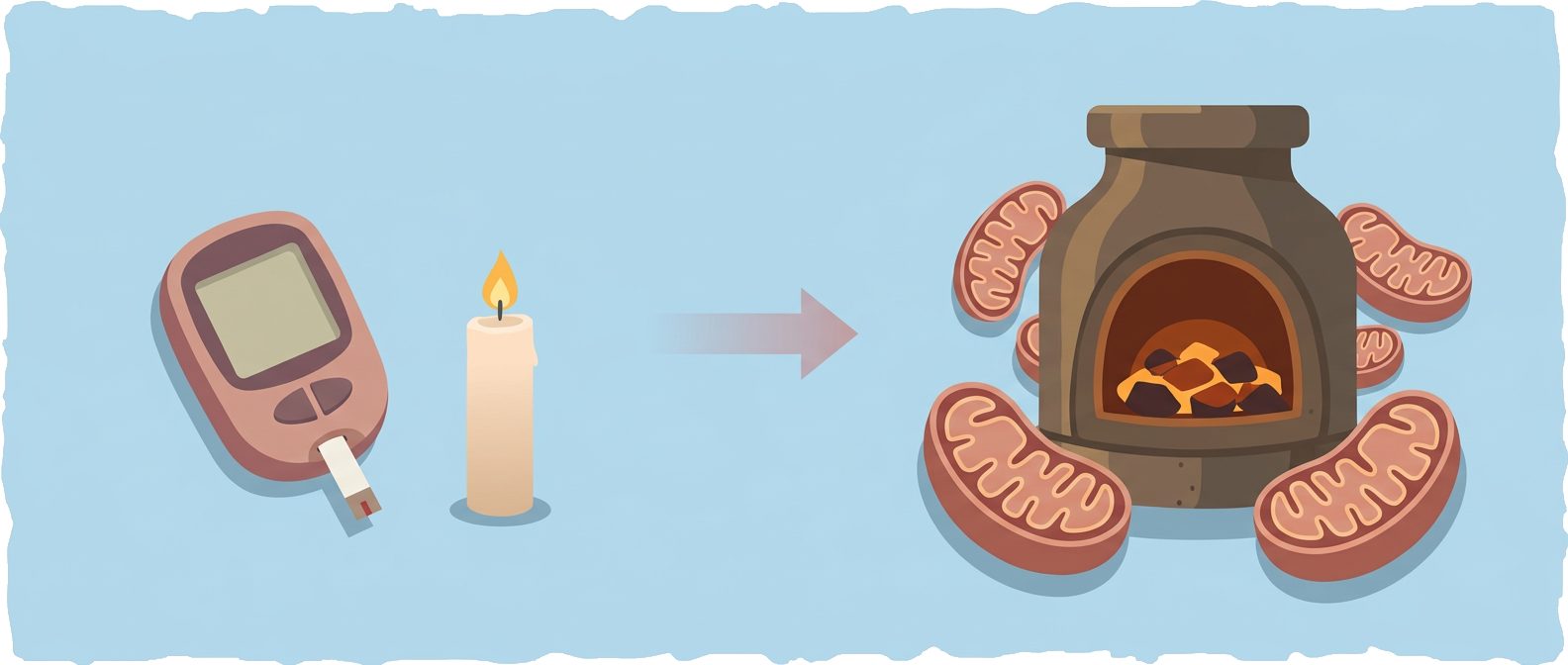
Ketosis is the state of having measurable ketone bodies in your blood, usually defined as blood beta-hydroxybutyrate (BHB) above 0.5 mmol/L. Your liver produces these ketones by breaking down fatty acids when carbohydrate intake drops low enough that glucose can no longer serve as the primary fuel. Most people reach ketosis within two to four days of restricting carbs to 20-30g net per day. It’s a relatively quick metabolic shift.
Fat adaptation describes something more durable. A fat-adapted person has undergone structural changes at the cellular level – more mitochondria, increased activity of the enzymes that break down fatty acids, upregulated transport proteins that move fat into cells for oxidation, and a nervous system that no longer responds to mild hypoglycemia with the same urgency it once did. These changes don’t happen in four days. Most nutrition researchers who study this process agree that 6 to 12 weeks is the minimum for full enzymatic adaptation, with measurable improvements in fat oxidation capacity continuing for months beyond that.The 2024 ISSN position stand on low-carbohydrate diets and exercise performance identifies 6+ weeks as the threshold for full fat adaptation, with peak fat oxidation rates near 1.5g/min in fully adapted individuals.
The real-world difference: someone in ketosis for three days can still feel terrible exercising without carbs, can still experience energy crashes mid-afternoon, and may still crave glucose intensely. A fat-adapted person doing the same workout runs on fat without performance degradation, has stable energy between meals, and has mostly lost the urgent hunger that glucose-dependent people experience when a meal is delayed.
Ketosis is a condition you can enter and exit within days. Fat adaptation is a structural state your body builds over weeks – and once built, it’s far more resilient to temporary disruptions. For a deeper look at what ketosis is and how it differs from simply being in nutritional ketosis, that article covers the biochemistry well.
What Happens at the Cellular Level
The biology of fat adaptation is more interesting than “your body learns to use fat.” There are specific molecular pathways at work, and understanding them in broad terms makes the timeline feel less arbitrary.
The central player is a protein called PGC-1α (peroxisome proliferator-activated receptor gamma coactivator 1-alpha). Think of PGC-1α as the master regulator of mitochondrial biogenesis – it’s the signal that tells your cells to build more mitochondria. When you restrict carbohydrates and the metabolic demand for fat oxidation increases, PGC-1α activity rises. It works in concert with SIRT3 (a mitochondrial protein involved in energy metabolism) and UCP2 (a protein that affects how efficiently mitochondria convert fuel to ATP). The net result is that your cells build new mitochondria and reconfigure existing ones for higher fat-burning capacity.A 2019 study examining the ketogenic diet’s effects on mitochondrial function found that KD upregulates the PGC1α-SIRT3-UCP2 axis, driving mitochondrial biogenesis and improving cellular energy production efficiency.
A second pathway runs through AMPK (adenosine monophosphate-activated protein kinase). AMPK is essentially your cell’s energy sensor – it activates when cellular energy is low. A specific component called AMPKβ1, when phosphorylated (activated), is critical for enabling fat oxidation and triggering mitochondrial renewal. Keto eating activates AMPKβ1 phosphorylation, which is part of why sustained carbohydrate restriction leads to structural changes rather than just a temporary fuel switch.Research published in PNAS (2022) found that AMPKβ1 phosphorylation is critical for enabling fatty acid oxidation and mitochondrial renewal during metabolic adaptation – a key mechanism in fat adaptation that goes beyond simple ketone production.
Beyond mitochondrial changes, fat adaptation also involves upregulation of the enzymes that break down long-chain fatty acids (a process called beta-oxidation), increased expression of transport proteins like CD36 that move fatty acids into cells, and changes in how the liver handles fatty acid flux. These are all structural adaptations that take time to build. You can’t rush them with willpower or stricter carb restriction – the biological rebuilding simply takes the time it takes.
The end result is measurable. Research on elite low-carb athletes found peak fat oxidation rates near 1.54g per minute in fully adapted individuals – about 2.3 times higher than what’s seen in carbohydrate-dependent athletes at the same exercise intensity.Volek and colleagues measured fat oxidation in keto-adapted ultra-runners and found peak rates of 1.54g/min, compared to around 0.67g/min in high-carbohydrate athletes during comparable exercise – a 2.3-fold difference per this 2016 study in Metabolism. That gap doesn’t happen in two weeks. It happens after months of consistent adaptation.
The Timeline
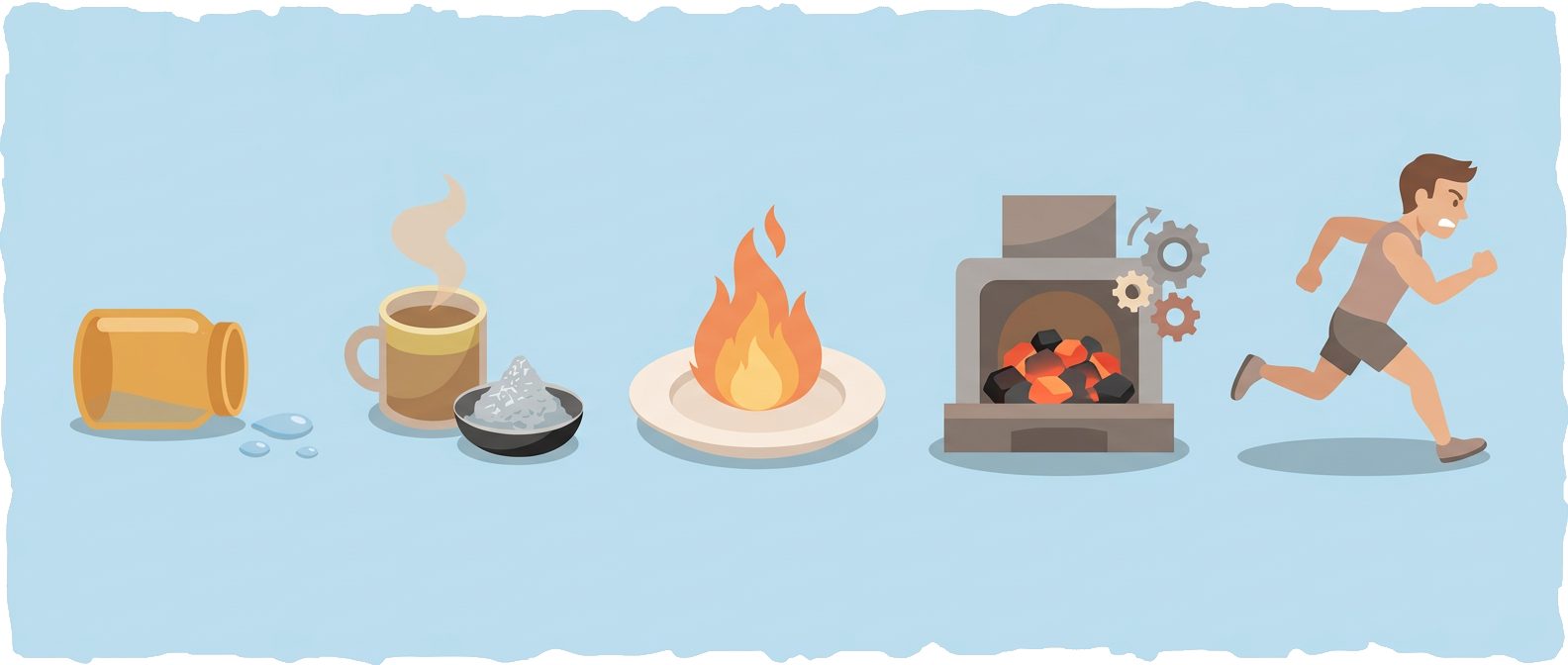
The honest timeline for fat adaptation is longer than most keto blogs suggest. Here’s what’s happening at each stage – and why each phase takes the time it does.
| Phase | Timeframe | What’s Happening | How It Feels |
|---|---|---|---|
| Glycogen depletion | Days 1-3 | Liver and muscle glycogen empties; water weight and electrolytes drop | Fatigue, brain fog, low energy |
| Keto flu window | Days 2-7 (median: day 4-5) | Electrolyte loss peaks; ketone production ramping up | Headaches, muscle cramps, irritability |
| Early fat burning | Weeks 2-4 | Fat oxidation capacity roughly doubles from baseline | Noticeably improving; energy inconsistent |
| Full enzymatic adaptation | Weeks 6-12 | Enzyme upregulation complete; mitochondrial biogenesis active | Stable energy, reduced hunger, exercise improving |
| Elite fat oxidation | Months 6+ | Peak fat oxidation rates; highest fat-burning capacity | Sustained performance on fat alone |
Days 1-5: Glycogen Depletion and the Keto Flu
The first phase isn’t really about fat adaptation at all – it’s about clearing out the glucose infrastructure. Your liver holds about 100g of glycogen; your muscles hold another 300-500g. As those empty, the water bound to glycogen follows (glycogen is stored with about 3-4g of water per gram), which is why early keto causes rapid water weight loss. The problem is that water loss takes electrolytes – primarily sodium, potassium, and magnesium – with it.
This electrolyte depletion is the primary driver of what’s called the keto flu. The symptoms (headaches, muscle cramps, brain fog, irritability) resolve when electrolytes are replaced, not just when time passes. Studies place the median symptom resolution at around day 4-5 of keto.Keto flu symptom onset and resolution were tracked in a prospective cohort; the median time to resolution was approximately 4.5 days, per a study summarized in PMC7082414. But they can linger longer if you’re not actively replacing electrolytes. The keto flu is not a sign that adaptation is failing – it’s a sign that you need sodium. Digestive changes during this window are also common – see keto and gut health for how to protect your microbiome during the transition.
Weeks 2-4: Fat Oxidation Doubles
This is where the real metabolic shift starts. Within the first three to four weeks of consistent keto eating, fat oxidation capacity roughly doubles – moving from a baseline of around 0.7g per minute to around 1.5g per minute.Fat oxidation capacity doubled within 3-4 weeks of initiating a ketogenic diet, reaching approximately 1.5g/min, per a 2021 review in Nutrients examining the timeline of keto adaptation. That’s not a subjective improvement – it’s a measurable physiological change. The machinery for burning fat is ramping up, even if the enzymatic adaptation isn’t yet complete.
Energy during this period is improving but inconsistent. You’ll start noticing that meals don’t produce the same carb-dependent energy crashes. Some days feel surprisingly good. Others still feel rough, especially around exercise. This is normal – the adaptation is in progress, not complete.
Weeks 6-12: Full Enzymatic Adaptation
By weeks six through twelve, the full suite of metabolic changes that define fat adaptation are largely in place. Beta-oxidation enzyme activity is elevated. Mitochondrial biogenesis (the building of new mitochondria) is well underway. Transport proteins that move fatty acids into cells are upregulated. A 12-week study tracking athletes through keto adaptation found that by the end of the trial, body composition had improved, fat oxidation during exercise had increased, and sprint power had risen – none of which were true at week two or three.A 2018 RCT published in PLOS ONE followed athletes through 12 weeks of keto adaptation and found improvements in fat oxidation, sprint power, and body composition that were not present in the early weeks of the protocol.
This is also where the PGC-1α and AMPK pathways described above start producing compounding results. The mitochondrial changes from weeks two through four are feeding into a more efficient energy system by weeks six through twelve. Exercise without carbs becomes sustainable at this stage.
Months 6+: Elite Fat Oxidation Rates
For people who remain consistent, the adaptation continues improving beyond the 12-week mark. The 2023 research showing fat oxidation exceeding 1.5g per minute at over 80% VO2max in low-carb adapted athletes reflects what years – not weeks – of consistent keto eating can produce.In fully adapted low-carbohydrate athletes, the crossover point (where fat becomes the dominant fuel) shifted to greater than 80% VO2max, and FATMAX exceeded 1.5g/min per a 2023 crossover study comparing LCHF and high-carbohydrate athletes. The ultra-runners in Volek’s research weren’t eating keto for three months – they were long-term adapted. That level of fat oxidation capacity is the result of sustained adaptation over a much longer window.
Not everyone needs elite-level fat oxidation. For general health and stable daily energy, the six to twelve week threshold is where most people find that keto delivers what they were expecting. The further improvements past that are meaningful for athletes but less critical for everyone else.
How to Know You’re Fat-Adapted

There’s no single blood test that says “fat-adapted.” It’s a constellation of physiological changes, and the signs show up in predictable ways if you know what to look for.
1. Energy Is Stable Between Meals
The most reliable indicator is that the urgent, crashing hunger between meals largely disappears. On a glucose-dependent diet, blood sugar swings every few hours and the brain responds to declining glucose with strong hunger signals and energy dips. A fat-adapted person has a fuel supply that doesn’t require constant replenishment – fat stores are effectively always available, and the metabolic machinery to access them is now efficient enough to run steady-state energy from fat without relying on the next meal.
If you can routinely go four to six hours between meals without energy drops or urgent hunger, that’s a strong signal. If you still feel a 2pm crash, or if skipping a meal produces noticeable cognitive fog, adaptation is still in progress.
2. Hunger Decreases and Satiety Increases
Hunger drops noticeably once adaptation sets in. Sustained ketosis shifts the hormones that control hunger: ghrelin (hunger hormone) drops and leptin signaling (satiety hormone) improves. The net effect is that appetite regulation changes substantially.A 2022 study on appetite changes during ketogenic diets found that sustained ketosis reduced ghrelin levels and improved leptin sensitivity, producing lower perceived hunger and higher satiety compared to both baseline and comparison diets. You can eat a smaller meal and feel satisfied for longer. The psychological relationship with food often changes too – food becomes fuel rather than a source of comfort or urgency.
3. Exercise Without Carbs Becomes Sustainable
Early keto exercise often feels labored because the enzymatic machinery for fat oxidation isn’t yet efficient enough to fuel sustained effort. Once you’re fat-adapted, moderate-intensity exercise drawing on fat for fuel becomes comfortable and sustainable. You’re no longer “hitting the wall” at moderate effort because the wall (glycogen depletion at the point where fat oxidation can’t keep up) has moved substantially further out.
I started noticing this clearly around week eight. Workouts that previously required careful pre-workout carb timing became workable on an empty stomach. For most people, this is one of the clearest subjective signals that adaptation is complete. For more on how keto changes your exercise metabolism and training approach, that guide covers the day-to-day side in detail.
4. Mental Clarity Stabilizes
The brain fog of early keto (when glucose is dropping and ketone supply isn’t yet sufficient) clears as adaptation progresses. What follows for many people is a noticeable cognitive stability that’s hard to describe until you’ve experienced it. There’s no mid-morning mental slump, no post-lunch cognitive dip, no fog that descends when a meal runs late. For more on how knowing you’re in ketosis relates to these mental signals, that article covers the crossover between ketosis symptoms and adaptation indicators.
5. Urine Ketone Strips Start Showing Less
This one confuses people. In the first few weeks of keto, urine strips often show high ketone readings because the body is producing ketones faster than it can use them, and the excess spills into urine. As fat adaptation progresses, your cells get better at using ketones efficiently. Production and utilization come into balance. The strips start showing lower readings – not because you’ve fallen out of ketosis, but because you’ve become more metabolically efficient at using what you’re producing.
Fading urine strips are a sign of progress, not regression. For a detailed explanation of how keto strips work and what the readings mean at each stage of adaptation, that article explains the nuance well.
What Speeds It Up
The biological process has a floor – you can’t compress 12 weeks into three. But you can prevent the process from stalling, and several approaches have clear evidence behind them.
Physical activity accelerates fat adaptation more than almost anything else. Exercise depletes glycogen faster, which deepens the metabolic signal to build fat-burning infrastructure. Fasted cardio – moderate-intensity movement before eating in the morning – particularly amplifies the AMPK signal that drives mitochondrial biogenesis. You don’t need to push hard. A 30-minute brisk walk before breakfast, consistently, speeds the enzymatic adaptation noticeably.
After years of eating this way, I don’t structure my day around eating every three hours anymore. When a meal gets pushed back by several hours, I don’t feel the urgency or the cognitive decline that I used to. That stability is what fat adaptation actually delivers in daily life – and these are the things that help you get there faster.

Intermittent Fasting
Time-restricted eating pairs well with keto adaptation because fasting amplifies many of the same metabolic signals that carbohydrate restriction produces. When insulin is low and glycogen is empty, the body’s need to mobilize fat increases, which drives upregulation of the fat-burning machinery faster. Combining keto with intermittent fasting is probably the most effective accelerator available, particularly in the first four to six weeks.
Adequate Fat Intake
A lot of people cut carbs but forget to replace those calories with fat – and that’s a problem. You have to eat enough fat. The metabolic signal that drives fat adaptation is fat availability combined with low glucose. If you’re restricting both carbs and calories severely while under-eating fat, the signal is mixed and adaptation is slower. Fat should be the primary calorie source on keto – not protein, and certainly not carbohydrates. The role of dietary fat in keto metabolism goes deeper on why fat intake isn’t optional for this to work.
If you want a quick practical tool for this, a fat-boost smoothie or a batch of fat bombs can help hit fat targets consistently without overcomplicating meals.
Avoiding Cheat Days in the First 12 Weeks
Cheat days during the adaptation window aren’t neutral. When you eat a substantial carbohydrate load during early adaptation, you refill glycogen, suppress the enzymatic signaling that’s building fat-burning infrastructure, and start the clock over on several of the adaptation processes. You don’t necessarily restart from zero, but you do set things back. The first 12 weeks matter most – holding strict carb limits during that window produces better long-term adaptation than cycling in and out.
Consistent Electrolyte Replacement
This doesn’t directly speed adaptation, but it prevents the keto flu symptoms that cause many people to quit before adaptation occurs. Sodium (3,000-5,000mg daily), potassium, and magnesium supplementation in the early weeks removes the main reason people abandon keto during the transition window. The keto electrolytes guide has practical amounts and sources.
What Prevents Fat Adaptation

Inconsistent carb limits, undereating, and chronic stress are the most common reasons people stall out. Knowing what blocks adaptation before you start saves you three months of wondering why the energy hasn’t stabilized.
Carb Cycling Too Early
Some people introduce carb cycling (planned high-carb days) in the first few months because they’ve read that it’s “fine for fat-adapted people.” The critical word is “adapted.” Carb cycling in a fully fat-adapted person (12+ weeks in, with stable enzyme upregulation) is a different situation from carb cycling during the adaptation window. Doing it early repeatedly interrupts the enzymatic and mitochondrial changes that are still building. If you want to experiment with carb cycling, wait until you have at least three to four months of consistent keto under you.
Undereating Calories
Severe caloric restriction during adaptation creates a competing metabolic signal. When calories are very low, cortisol rises to mobilize stored fuel. Chronically elevated cortisol during adaptation can impair the PGC-1α signaling that drives mitochondrial biogenesis. This is one reason some people feel terrible on keto even after the keto flu window passes – they’re not eating enough, and the stress response is working against the adaptation process. Eat to satiety, especially in the first four to six weeks.
Excessive Protein
High protein intake can stimulate insulin and gluconeogenesis enough to blunt the depth of ketosis. If protein is driving enough glucose production to keep insulin moderately elevated, the metabolic signal for fat adaptation is weaker. This doesn’t mean protein is bad – it means the balance matters. The general framework is to keep protein moderate (around 0.7-1.0g per pound of lean body mass) and let fat fill the remaining calorie gap, rather than driving protein very high. The article on whether too much protein is bad for ketosis covers this balance in more detail.
Chronic Stress
This is the factor nearly everyone underestimates. Sustained psychological or physical stress keeps cortisol elevated, which maintains blood glucose at a higher level via gluconeogenesis. Chronically elevated glucose blunts the depth of ketosis and the metabolic signals for fat adaptation. People under significant work stress or sleep deprivation often find they adapt more slowly than expected – not because their diet is wrong, but because the hormonal environment is working against them. Sleep quality has a disproportionate effect on how well the early adaptation period proceeds. I noticed this firsthand early on – periods where I was sleeping poorly or under heavy work stress, my adaptation felt like it stalled, and it only picked back up once I got sleep under control.
Key Takeaways
- Ketosis (elevated blood ketones) and fat adaptation (structural cellular changes for fat burning) are different things. You can be in ketosis within days; fat adaptation takes weeks to months.
- Full enzymatic adaptation – including mitochondrial biogenesis, upregulated beta-oxidation enzymes, and improved fat transport proteins – takes 6-12 weeks minimum.
- Fat oxidation capacity doubles within the first 3-4 weeks, then continues improving through the 6-12 week window and beyond.
- The clearest signs of fat adaptation are: stable energy between meals, reduced hunger, sustainable exercise without carbs, mental clarity, and urine ketone strips fading (which means better ketone utilization, not less ketosis).
- Exercise (especially fasted), intermittent fasting, adequate fat intake, and consistent electrolyte replacement all support faster adaptation. Carb cycling during the adaptation window, undereating, excessive protein, and chronic stress reliably stall it.
FAQ
How long does fat adaptation take?
Meaningful fat adaptation – the point where energy is stable, exercise without carbs is sustainable, and hunger has decreased – occurs somewhere between 6 and 12 weeks of consistent keto eating.The 2024 ISSN position stand identifies 6+ weeks as the minimum threshold for full fat adaptation, with peak fat oxidation rates continuing to improve beyond that window. The initial improvements (doubled fat oxidation, reduced keto flu) happen in weeks 2-4. Full enzymatic and mitochondrial adaptation takes the longer window. If you’re still feeling rough after two weeks, check your electrolytes and make sure you’re holding to 20-30g net carbs. The keto starter guide covers the fundamentals of the first few weeks.
Is fat-adapted the same as being in ketosis?
No – ketosis is a blood marker (elevated ketone levels), and fat adaptation is the underlying cellular state that makes fat burning efficient. You can be in ketosis without being fat-adapted, especially in the first few weeks. A fully fat-adapted person is almost certainly in nutritional ketosis, but someone in early ketosis hasn’t yet built the enzymatic and mitochondrial infrastructure that defines fat adaptation. For more on what’s happening inside ketosis at the metabolic level, this overview of ketosis and how it works covers the biochemistry clearly.
Can I still build muscle once I’m fat-adapted?
Yes, with some nuance. A 12-week study on keto-adapted athletes found improvements in body composition alongside increased fat oxidation and sprint power, suggesting that muscle can be maintained or built after full adaptation.The 2018 PLOS ONE study following athletes through 12 weeks of keto adaptation found improved body composition and sprint power by the end of the protocol, indicating muscle is accessible on a well-managed ketogenic diet after full adaptation. The key is adequate protein (around 0.7-1.0g per pound of lean body mass) and resistance training. Early keto is harder for muscle building because the adaptation stress elevates cortisol and performance is temporarily lower. Once adaptation is complete, the environment is more favorable. The training on keto myth-busting article addresses the common concerns here directly.
Do urine strips measure fat adaptation?
Not directly, and fading strips can actually indicate that adaptation is progressing. In early keto, urine strips often read high because the body is producing more ketones than it uses, and the excess spills into urine. As you become better adapted, your cells use ketones more efficiently and less ends up in urine – so the strips show lower readings even when you’re deeper into ketosis. Blood ketone meters give a more accurate picture of actual ketone levels. The guide to keto strips and meters explains what the various readings mean at each stage of adaptation.
Will one cheat day reset my fat adaptation?
It depends on how far into adaptation you are. During the first 12 weeks, a significant carb load interrupts the enzymatic signaling that’s still building fat-burning infrastructure – not a full reset, but a setback that can add time to the adaptation window. A fully fat-adapted person (6+ months in, with well-established fat-burning machinery) handles an occasional higher-carb day differently; they typically return to efficient fat burning within a day or two. The guide on getting back into ketosis covers what to do after a carb spike and how to minimize the time it takes to return to metabolic efficiency.
What’s the difference between fat adaptation and the keto flu?
The keto flu is an early, temporary symptom cluster (headaches, fatigue, muscle cramps) caused primarily by electrolyte loss during the glycogen-depletion phase. It typically resolves within the first week, long before fat adaptation begins in earnest. Fat adaptation is the months-long process of structural metabolic change that happens after the keto flu passes. If you’re still feeling rough after the first week, electrolytes are the likely fix – see the keto flu remedy guide. If symptoms persist past two weeks despite good electrolyte intake, something else may be off with your approach.
The information in this article is not medical advice and is not a substitute for professional medical guidance. Always consult a qualified healthcare provider before making changes to your diet or health regimen.
Sources
- ISSN position stand: Effects of a low carbohydrate diet on exercise performance (2024)
- Ketogenic diet upregulates the PGC-1α-SIRT3-UCP2 axis for mitochondrial biogenesis (2019)
- AMPKβ1 phosphorylation is critical for fatty acid oxidation and mitochondrial renewal (PNAS 2022)
- Metabolic characteristics of keto-adapted ultra-endurance runners (Volek et al. 2016)
- Effects of a 12-week ketogenic diet on body composition and athletic performance (PLOS ONE 2018)
- Crossover point and FATMAX in LCHF vs high-carbohydrate athletes (2023)
- Appetite changes during ketogenic diets: ghrelin and leptin responses (2022)
- Fat oxidation capacity timeline during keto adaptation (Nutrients 2021 review)
- Keto flu symptom onset and resolution timeline