
You had a birthday dinner, a work party, or just a moment of weakness in front of a plate of pasta. You ate the carbs. Now you’re sitting there wondering if you just destroyed everything you’ve built over the past few weeks.
One cheat meal does not undo weeks of keto progress. But it does trigger a set of real, measurable metabolic events that are important to understand – because knowing what’s actually happening in your body makes it a lot easier to get back on track without the guilt spiral.
I’ve been eating keto full-time for over a decade and have developed more than 1,000 recipes along the way. I’ve had planned refeed days when I was training hard, and I’ve had completely unplanned nights where pizza happened. I know this territory from the inside, and what I’ve learned is that the biology is far less dramatic than the guilt usually feels.
Let me walk you through exactly what happens when you cheat, how long recovery takes, and what to do (and not do) in the aftermath.
Jump to a section:
- What Actually Happens When You Cheat on Keto
- The Metabolic Reality of a Keto Cheat
- How Long Does It Take to Recover?
- Strategic Refeeds vs. Unplanned Cheats
- The Psychological Side: Why the Guilt Hurts More Than the Cheat
- Damage Control: What to Do After a Cheat
- When Cheating Becomes a Pattern
- Key Takeaways
- FAQ: Cheating on Keto
What Actually Happens When You Cheat on Keto
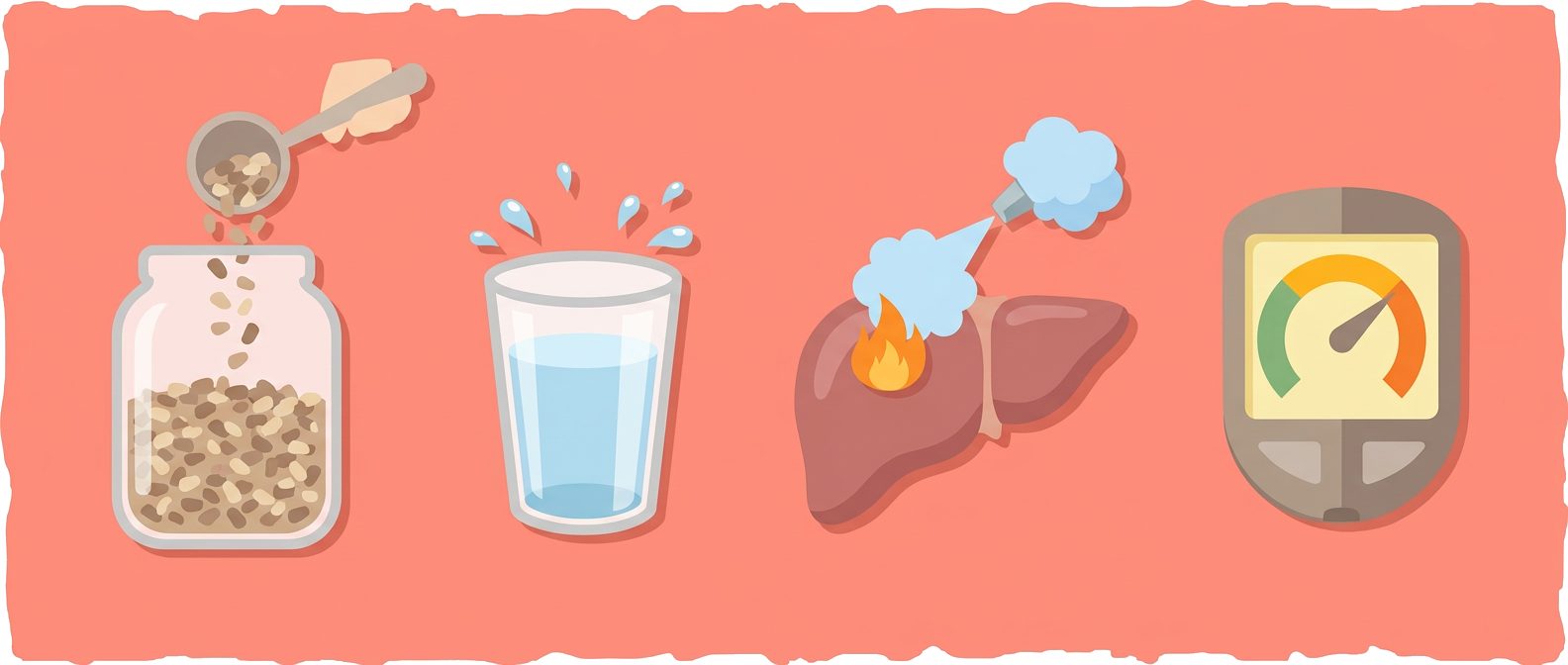
When you eat a significant amount of carbohydrates after being in ketosis, four things happen in sequence – and understanding each one removes a lot of the mystery. If you’re not sure whether your particular slip was enough to actually break ketosis, our guide on what breaks ketosis covers every common trigger in detail.
The Metabolic Reality of a Keto Cheat
1. Glycogen Refills Fast
Your muscles and liver store carbohydrates as glycogen. On a standard ketogenic diet, you keep those stores largely depleted, which is part of what forces your body to run on fat and ketones. The moment you eat enough carbs, your body starts refilling those stores.
Your liver and muscles together store roughly 1,600-2,000 calories’ worth of glycogen.Mattson MP, Moehl K, Ghena N, et al. Intermittent metabolic switching, neuroplasticity and brain health. Nat Rev Neurosci. 2018;19(2):63-80. PMC5913738. The liver portion refills within 10-14 hours, while muscle glycogen takes longer – especially if you haven’t been exercising heavily.
The refill process itself isn’t what breaks progress. What matters is what comes with it.
2. Water Weight Jumps Overnight
This is the part that scares people most – and the part that matters least.
For every gram of glycogen your body stores, it binds approximately 3 grams of water.Fernandez-Elias VE, Ortega JF, Nelson RK, Mora-Rodriguez R. Relationship between muscle water and glycogen recovery after prolonged exercise in the heat in humans. Eur J Appl Physiol. 2015;115(9):1919-1926. PMID 25911631. So if you replenish 300-400 grams of glycogen over 24 hours, you can gain 1-2 kg of water weight almost overnight. Some people see 3-4 lbs on the scale the next morning and assume the worst.
That’s not fat. It’s water. And it disappears just as fast when you return to low-carb eating.
I had one night years ago – Italian restaurant, big family celebration, the works – where I woke up nearly 5 lbs heavier. The first few times that happens it’s alarming. By the time you understand the glycogen-water relationship, you almost stop caring. I now tell people to physically hide the scale for 3-4 days after a cheat rather than torture themselves watching a number that doesn’t reflect real body composition at all.
3. Ketosis Exits Temporarily
The switch out of ketosis happens because carbohydrates raise blood glucose, which triggers insulin release, which halts ketone production. Your liver prioritizes glucose when it’s available.
How fast you exit depends on how much you ate. A small slip – 30-40g of carbs – might only knock you out for a few hours. A full cheat day with 200+ grams of carbs can set you back 2-3 days before your body is reliably producing ketones again.Batch JT, Lamsal SP, Adkins M, Sultan S, Ramirez MN. Advantages and Disadvantages of the Ketogenic Diet: A Review Article. Cureus. 2020;12(8):e9639. PMC7480775.
The keto-flu symptoms – brain fog, fatigue, irritability – may briefly reappear as your body transitions back. If you’ve been keto for a long time and are well fat-adapted, these tend to be much milder than when you first started.
4. Blood Sugar Spikes Higher Than You’d Expect
Here’s something most people don’t know: after weeks of ketosis, your insulin response to carbohydrates can be more pronounced, not less. Your cells have been running on fat and ketones, so when a surge of glucose arrives, the resulting blood sugar spike can be steeper than it would be for someone eating carbs daily.Shilpa J, Mohan V. Ketogenic diets: Boon or bane? Indian J Med Res. 2018;148(3):251-253. PMC6251269.
This isn’t a sign of diabetes or metabolic damage. It’s a temporary physiological adaptation. Within a day or two of returning to keto, blood sugar regulation normalizes again.
How Long Does It Take to Recover?
The short answer: for most people, 24-72 hours to get back into real ketosis after a standard cheat meal.A 2025 scoping review in Frontiers in Nutrition (PMID 40206956) found that keto-induction symptoms and electrolyte shifts peak on days 1-4, with carbohydrate restriction for 3-4 days typically required to fully deplete glucose stores and re-establish ketosis. Per the StatPearls reference on low-carbohydrate diets, nutritional ketosis is generally achieved within 2-4 days of carbohydrate restriction below 50g per day.
The longer answer depends on three factors:
How much you ate. A slice of birthday cake is different from a full pizza night. One piece of cake might add 50-60g of carbs and set you back half a day. A multi-course meal with bread, pasta, and dessert could be 250+ grams of carbs, which means 2-3 full days to recover.
How fat-adapted you are. Someone six months into keto will typically bounce back to ketosis faster than someone who started two weeks ago. Your metabolic machinery gets more efficient at the switch over time.
What you do afterward. If you return to your normal 20-30g net carb limit the next morning, you’ll recover faster than if you spend three days eating “sort of keto.” Clean return equals faster recovery.

Here’s a rough timeline:
| Cheat Severity | Carbs Consumed | Typical Recovery Time |
|---|---|---|
| Minor slip (one dessert, one bread roll) | 30-60g net carbs | 12-24 hours |
| Moderate cheat meal (restaurant dinner) | 80-150g net carbs | 24-48 hours |
| Full cheat day | 150-300g net carbs | 48-72 hours |
| Multi-day cheat (vacation, holiday) | 300g+ per day | 72-96+ hours |
If you want to monitor your recovery, a ketone testing method – breath, blood, or urine strips – will show you exactly when you’re back in range. Blood ketone monitors are the most accurate option. For a deeper look at what specifically pushed you out, see our article on getting kicked out of ketosis, which covers testing methods and symptoms in detail.
Strategic Refeeds vs. Unplanned Cheats
There’s an important distinction here, because these two scenarios get lumped together when they shouldn’t be.
What Is a Strategic Refeed?
A planned carbohydrate refeed is a deliberate, structured choice – usually for people who combine keto with high-intensity training. The cyclical ketogenic diet (CKD) is the formal version: 5-6 days of strict ketosis followed by 1-2 days of higher carb intake to replenish muscle glycogen.
On refeed days in a CKD protocol, someone might eat 60-70% of their calories from carbohydrates – choosing quality sources like rice, sweet potatoes, or oats, timed around training sessions. The goal is to fully deplete and then refill glycogen to support explosive athletic performance.Anton SD, Moehl K, Donahoo WT, et al. Flipping the Metabolic Switch: Understanding and Applying Health Benefits of Fasting. Obesity (Silver Spring). 2018;26(2):254-268. PMC8153354.
This works because intense exercise depletes glycogen completely, which means the refeed carbs go almost entirely into muscle glycogen storage rather than being stored as fat. The person then returns to ketosis within 2-3 days.
CKD isn’t for beginners, and it isn’t for moderate exercisers. If you’re doing 3-4 heavy training sessions per week with high-intensity intervals, it might be something to explore further. If you’re doing light cardio and lifting a few times a week, standard keto will serve you better.
The Unplanned Cheat
An unplanned cheat is a different situation entirely. It’s the Friday night where willpower ran out, or the family dinner where saying no felt impossible. There’s no training depletion, no strategic timing, and often no quality control over what was eaten.
This doesn’t make it catastrophic – it just means the metabolic effects are less predictable and the return to ketosis takes its natural course. The key difference is intent and structure, not the carbs themselves.
Knowing the difference matters because it changes how you respond both practically and emotionally. A strategic refeed is part of your plan. An unplanned cheat is a detour. Both require the same physical response (return to keto, replenish electrolytes, keep going), but the mental framing is different.
The Psychological Side: Why the Guilt Hurts More Than the Cheat
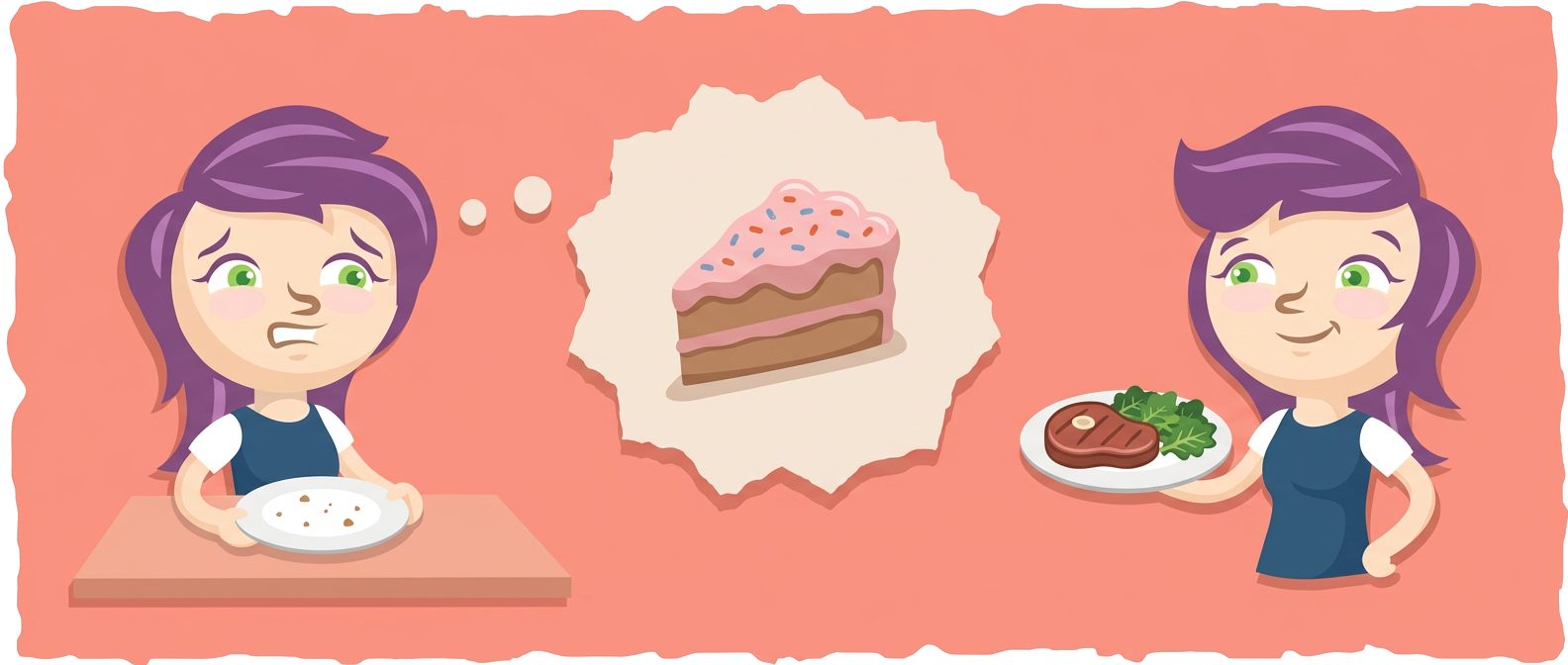
Let me be direct: the guilt that follows a cheat meal is often more damaging than the cheat itself.
The most common pattern I see is what psychologists call all-or-nothing thinking. The moment you “break” keto, your brain can shift into a “well, I’ve already ruined it” mode that leads to eating a second dessert, ordering fries with your next meal, and spending three days off-plan instead of one. This cognitive pattern (sometimes called the “what the hell” effect) is well-documented in dietary adherence research. One transgression expands to justify further transgressions until the original goal feels too distant to return to.
One meal does not undo weeks of keto-driven fat loss. Let me put actual numbers to that. If you’ve been in a 500-calorie daily deficit for 30 days, you’ve created roughly 15,000 calories of deficit. One cheat meal might add back 800-1,200 calories. Even a full cheat day might add 2,000 extra calories. Neither erases the metabolic adaptation, the fat you’ve lost, or the insulin sensitivity you’ve built.
What the cheat actually does is temporarily exit ketosis and add water weight. That’s it. Everything else you’ve built is still there.
Perfectionism Isn’t Sustainable
There’s a certain kind of person who approaches keto with rigid perfectionism. When I first started, I made this exact mistake – treating every meal as pass/fail and catastrophizing any deviation. The anxiety around food choices was exhausting and, if anything, made the lifestyle harder to sustain long-term.
The people who’ve stayed keto for years and made it a genuine lifestyle (rather than a temporary diet) almost universally describe a more relaxed relationship with occasional slips. They get back on track without drama. They don’t punish themselves. They also don’t have weekly cheat days that undermine their progress. There’s a middle ground between perfectionism and permissiveness, and finding it matters more than any single meal choice.
Damage Control: What to Do After a Cheat
You’ve had the cheat. You woke up feeling bloated, you’re up on the scale, and ketosis is gone. Here’s the short version – for the full step-by-step recovery protocol, read our dedicated guide on how to get back into ketosis.
- Return to your normal keto macros at the very next meal. Not tomorrow. Not Monday. The next meal. The faster you get back to your normal eating, the shorter the bounce-back.
- Replenish electrolytes. When glycogen starts depleting again, your kidneys excrete sodium along with the water. This drives the headaches, fatigue, and muscle cramps. Salt your food generously and consider a keto electrolyte supplement.
- Exercise if you can. Even a 30-45 minute moderate workout the day after a cheat accelerates glycogen depletion. Getting back to the keto plus exercise combination is one of the faster ways to flip the metabolic switch back.
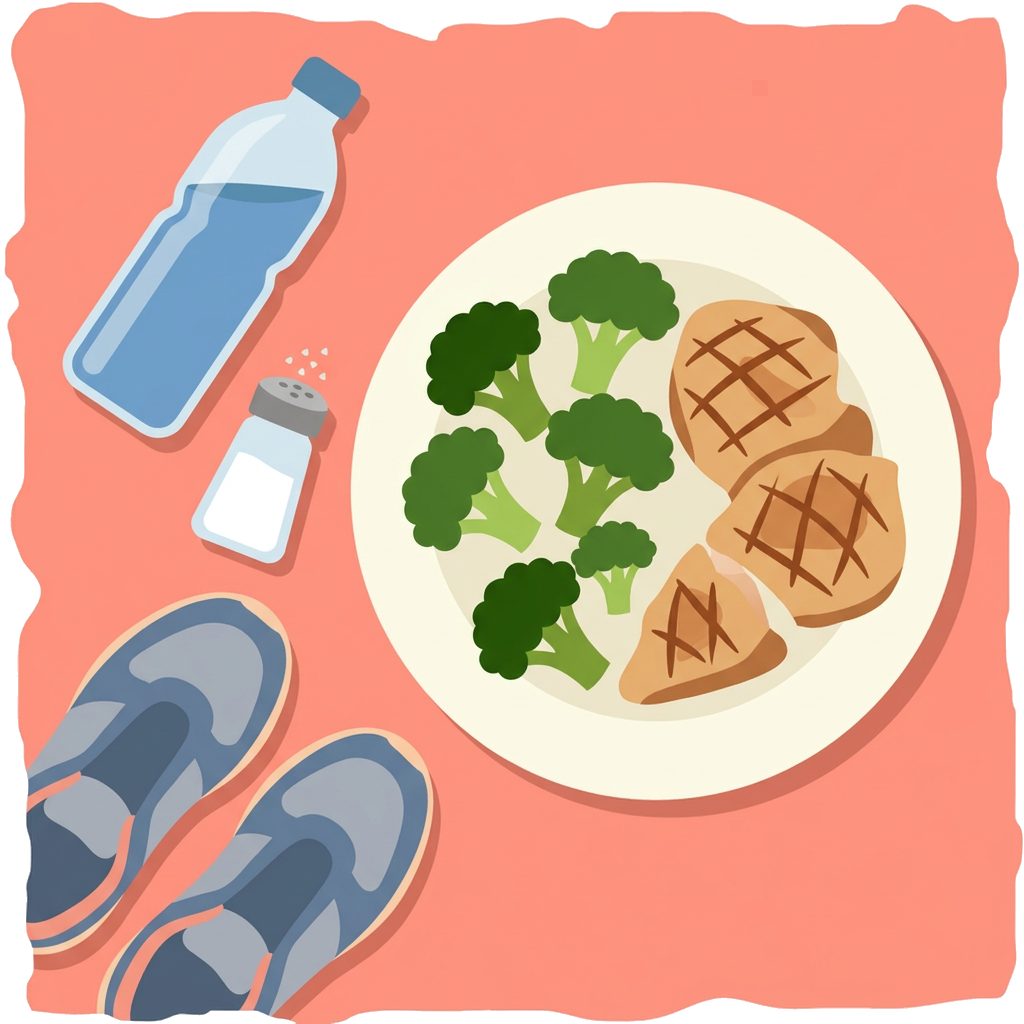
What not to do: Don’t fast punitively (it usually backfires with worse cravings), don’t step on the scale every few hours (the water weight fluctuations are misleading), and don’t accidentally start carb cycling – one cheat doesn’t mean you’ve started a cyclical protocol.
When Cheating Becomes a Pattern
There’s a clear difference between an occasional slip and a recurring cycle that’s truly undermining your progress. If you find yourself cheating every week or two, even with good intentions between episodes, a few honest questions can help.
Signs the Pattern Is a Problem
You’re not losing weight, or you’re regaining it between cheats. If your ketosis windows aren’t long enough for meaningful fat burning, you’re essentially doing unstructured carb cycling without the athletic rationale.
You feel like you’re “failing” keto rather than practicing it. Persistent guilt and shame around food is a signal that something in your approach needs to change – usually the approach, not your character.
The cheats are getting more frequent or larger over time. One contained slip a month is very different from weekly cheats that spill into multi-day derailments.
Troubleshooting the Pattern
Are your keto meals satisfying? One of the most common causes of recurring cheats is eating food that’s nutritionally correct but not truly satisfying. Keto works best when it’s enjoyable. If you’re white-knuckling through every day waiting for the next cheat, the problem isn’t your willpower – it’s your food. Spend some time with the full keto food list and make sure you’re eating enough fat and protein to stay satiated for hours at a time.
Are you restricting calories too hard between cheats? Extreme restriction sets up extreme reaction. If you’re running very low calories trying to compensate for cheats, the resulting hunger and cravings will drive the next episode. Eat to fullness on keto foods and trust the process.
Is there a specific craving driving the cheats? Sometimes what reads as “I need carbs” is really a craving for something specific – bread, pasta, sweets. There are solid keto versions of most of these things. Keto bread, keto pasta alternatives, keto desserts – the recipe options have grown substantially. Meeting the craving in a keto-friendly way is almost always a better option than white-knuckling through and eventually breaking.
Are social situations driving most of your cheats? Social pressure is one of the most underrated drivers of off-plan eating. When the people you eat with regularly know about and respect your approach, the friction drops significantly. It doesn’t have to be a big announcement – just matter-of-fact communication about how you eat.
Reconsider your goal. Sometimes a cheat pattern signals that the original goal has faded. Reconnecting with why you started, or updating the goal to something current and meaningful, can reset your commitment. The keto calculator is a good starting point if you need to recalibrate your targets.
Key Takeaways
- A single cheat meal triggers glycogen refill, water weight gain, temporary ketosis exit, and a blood sugar spike – all temporary and reversible within 24-72 hours.
- The scale jump after a cheat is almost entirely water bound to glycogen, not fat gain. It disappears as soon as you return to keto eating.
- Strategic refeeds (CKD) and unplanned cheats produce similar metabolic effects but differ in intent and structure – know which one you’re dealing with.
- The guilt and all-or-nothing thinking after a cheat are often more damaging than the cheat itself. One meal doesn’t erase weeks of progress.
- Recovery is simple: return to 20-30g net carbs at the next meal, replenish electrolytes, exercise if possible, and give it 48-72 hours.
FAQ: Cheating on Keto
Will one cheat meal kick me out of ketosis?
It depends on the size. A minor slip – one bread roll, a small dessert – might not produce enough of a blood sugar spike to fully exit ketosis, especially if you’re well fat-adapted. A full cheat meal with 100+ grams of carbs will almost certainly knock you out. The defining factor is how much your blood glucose rises and how much insulin is released in response. For more on the specific triggers, see what breaks ketosis.
How do I know when I’m back in ketosis after a cheat?
The most reliable way is ketone testing. Blood ketone monitors measure beta-hydroxybutyrate (BHB) directly and will show values above 0.5 mmol/L when you’re back in nutritional ketosis. Urine strips are less accurate but convenient for general monitoring. Subjective signs (reduced hunger, mental clarity, the return of characteristic keto breath) are useful but imprecise. Our guide on getting kicked out of ketosis covers all the testing methods and symptoms in more detail.
Should I try to speed up the return to ketosis?
Gentle acceleration is reasonable. A 16-20 hour fast combined with moderate exercise is a natural way to burn through remaining glycogen. Some people use MCT oil to help nudge ketone production while transitioning back. However, don’t try to punish the cheat with extreme restriction. Clean keto eating, moderate exercise, and good hydration is the most reliable approach.
Does cheating reset keto adaptation?
No – at least not significantly, for someone who’s been keto for more than a few weeks. Fat adaptation involves mitochondrial changes, enzyme upregulation, and metabolic reprogramming that aren’t erased by a single carb meal. You might lose the acuity of ketosis for 24-72 hours, but the underlying adaptation remains. Someone who has been keto for six months and takes one cheat day is not starting from scratch. They’re taking a brief detour.
Can exogenous ketones help me get back into ketosis faster?
Exogenous ketones will raise blood ketone levels even when blood glucose is elevated. But this doesn’t mean you’re in nutritional ketosis – your body is still running on available glucose while the exogenous ketones circulate. They can blunt some transition symptoms, but they don’t shortcut glycogen depletion. Only time and low-carb eating get you back to metabolic ketosis.
This article is for informational purposes only and should not be taken as medical advice. If you have concerns about how dietary changes affect your health, consult a qualified healthcare professional.
Sources
- Mattson MP, Moehl K, Ghena N, et al. Intermittent metabolic switching, neuroplasticity and brain health. Nat Rev Neurosci. 2018;19(2):63-80.
- Fernandez-Elias VE, Ortega JF, Nelson RK, Mora-Rodriguez R. Relationship between muscle water and glycogen recovery after prolonged exercise in the heat in humans. Eur J Appl Physiol. 2015;115(9):1919-1926.
- Batch JT, Lamsal SP, Adkins M, Sultan S, Ramirez MN. Advantages and Disadvantages of the Ketogenic Diet: A Review Article. Cureus. 2020;12(8):e9639.
- Shilpa J, Mohan V. Ketogenic diets: Boon or bane? Indian J Med Res. 2018;148(3):251-253.
- Anton SD, Moehl K, Donahoo WT, et al. Flipping the Metabolic Switch: Understanding and Applying Health Benefits of Fasting. Obesity (Silver Spring). 2018;26(2):254-268.