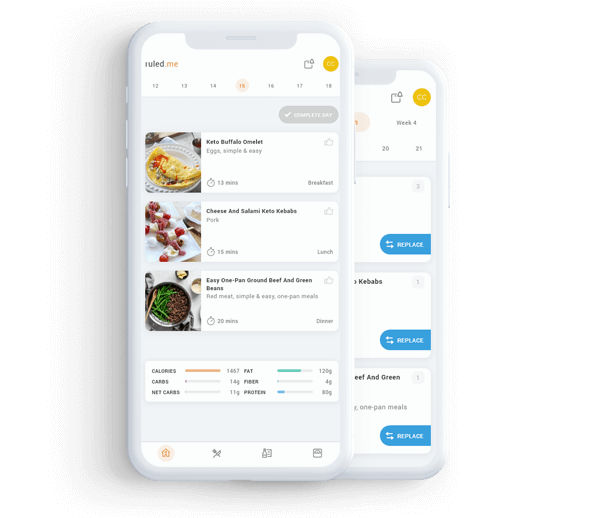


Starting a low-carb diet sounds simple enough – just eat fewer carbs. But if you’ve ever tried it without a plan, you know how quickly that falls apart. You open the fridge on day two, realize you have nothing to eat, and end up ordering pizza.
I’ve seen this pattern hundreds of times over the years, and the fix is almost always the same: the people who succeed are the ones who prepare before they start. They clean out their kitchen, stock it with the right foods, have a rough meal plan for the first week, and know what to expect when the cravings hit on day three.
This guide walks you through the process step by step – from setting your carb target to getting through your first week to knowing when you’re ready to take things further with a full keto approach. It’s the same process I recommend to anyone who asks me where to start, and it works whether your goal is weight loss, better energy, blood sugar control, or all three.
Jump to a section:
- Before You Start: Set Your Carb Target
- Step 1: Clean Out the Kitchen
- Step 2: Stock Your Kitchen
- Step 3: Plan Your First Week
- What to Expect in Week One
- Common Mistakes New Low-Carbers Make
- When You’re Ready for Keto
- Key Takeaways
- Frequently Asked Questions
Before You Start: Set Your Carb Target

The first question everyone asks is “how many carbs should I eat?” and it depends on how far you want to go.
A 2024 expert consensus published in Frontiers in Nutrition laid out clear categories that are helpful for choosing your starting point:Volek et al. (2024) in Frontiers in Nutrition published an expert consensus defining carbohydrate restriction categories: moderate low-carb (50-130g/day or <26% of calories), very-low-carb/ketogenic (<50g/day or <10% of calories), and noting that the average American consumes 225-325g of carbohydrates daily.
| Category | Daily Carbs | % of Calories | What to Expect |
|---|---|---|---|
| Standard American Diet | 225-325g | 45-65% | Where most people start |
| Moderate Low-Carb | 100-130g | 20-26% | Noticeable reduction in cravings and hunger |
| Low-Carb | 50-100g | 10-20% | Weight loss, better energy, improved blood markers |
| Ketogenic | 20-30g | <10% | Fat-adapted, strong appetite control, ketone production |
For most people just getting started, I’d suggest aiming for somewhere in the 50-100g range. That’s low enough to see real results – less hunger, more stable energy, weight loss – without the aggressive adjustment period that comes with jumping straight to keto. You can always tighten things up later.
If you already know you want to go keto, your target is 20-30g of net carbs per day. Net carbs means total carbs minus fiber. But even if keto is the eventual goal, there’s nothing wrong with spending a couple of weeks at 50-75g first and then dropping lower once you’ve got the basics down. The how many carbs per day guide breaks down which range fits different goals and body types.
One thing to figure out early: use the keto calculator to get your protein and fat targets dialed in alongside your carb limit. Cutting carbs without eating enough protein and fat leaves you hungry, tired, and more likely to quit.
Step 1: Clean Out the Kitchen
This step might sound extreme, but it’s the single biggest predictor of whether you’ll actually follow through. If the bread is still on the counter and the pasta is still in the pantry, you’ll eat it. That’s not a willpower failure – it’s basic behavioral science. A 2018 review in Health Psychology Review found that dietary environment modifications (like removing temptation foods) were more effective for sustaining dietary change than education or motivation-based interventions alone.Kwasnicka et al. (2016) in Health Psychology Review reviewed theories of health behavior maintenance and found that environmental restructuring (removing cues for old behaviors and creating cues for new ones) was among the most effective strategies for sustaining long-term dietary change.

What goes:
- Bread, tortillas, rolls, buns, bagels
- Pasta, rice, couscous, quinoa
- Cereal, oatmeal, granola
- Chips, crackers, pretzels
- Sugar, honey, maple syrup, agave
- Soda, juice, sweetened drinks
- Candy, cookies, ice cream
- Potatoes (regular – sweet potatoes are borderline at 100g carbs but out for keto)
- Beer (wine and spirits in moderation are lower carb)
What stays:
- Meat, poultry, fish – all cuts, all types
- Eggs
- Cheese, butter, heavy cream
- Nuts and seeds (watch portions – they add up)
- Olive oil, avocado oil, coconut oil
- Non-starchy vegetables (broccoli, spinach, cauliflower, zucchini, peppers, mushrooms)
- Avocados
- Berries in small amounts (raspberries and blackberries are lowest carb)
- Condiments without sugar (mustard, hot sauce, soy sauce, mayo)
Don’t overthink this. If a food is primarily starch or sugar, it goes. If it’s primarily protein, fat, or fiber, it stays. You’ll fine-tune the details as you go, but getting the obvious stuff out of your house removes 80% of the temptation.
If you live with people who aren’t going low-carb, designate a shelf or cabinet for their stuff and keep yours separate. Out of sight, out of mind actually works.
Step 2: Stock Your Kitchen
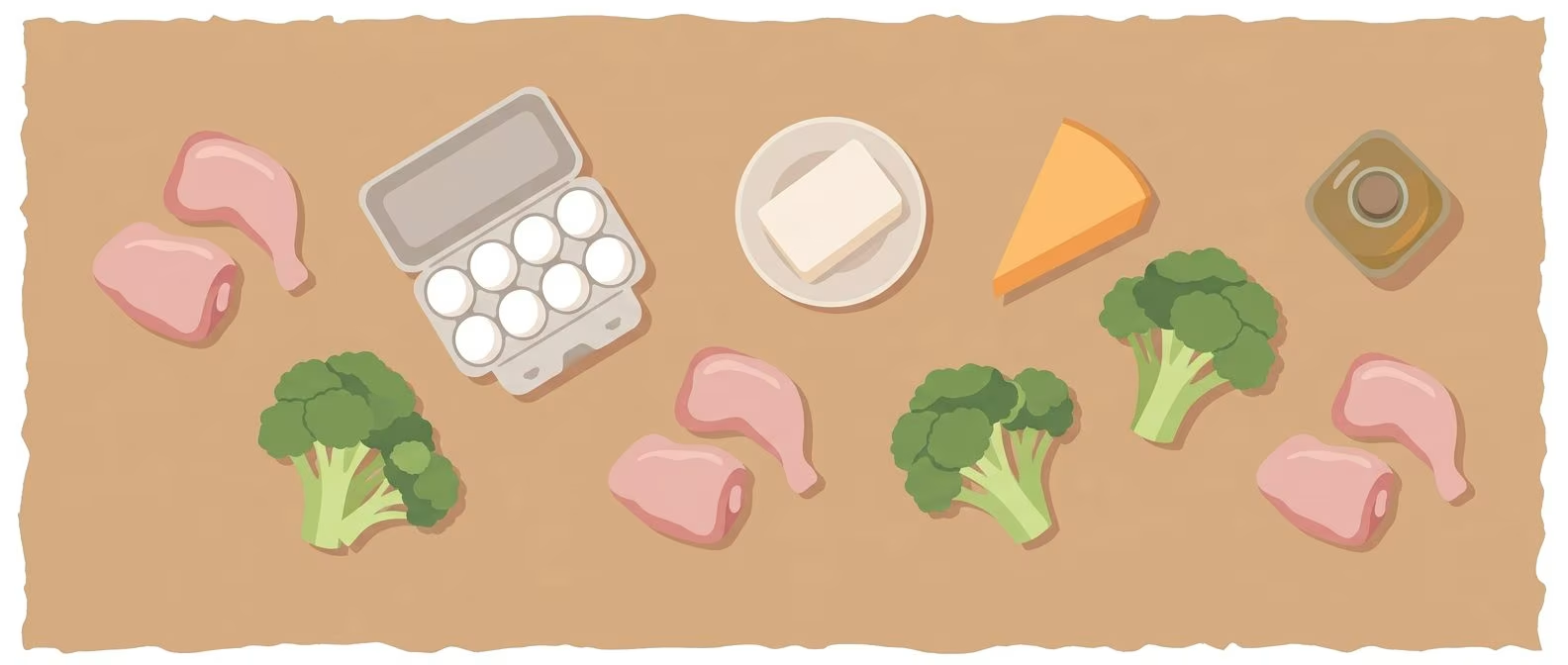
Now that the high-carb stuff is gone, you need to replace it. Here’s a shopping list organized by category that covers everything you need for your first two weeks.
Proteins:
- Ground beef (80/20 – the fat matters for satiety and flavor)
- Chicken thighs (bone-in, skin-on are cheapest and most flavorful)
- Salmon or other fatty fish
- Bacon (check the label – some brands add sugar)
- Eggs (buy more than you think – you’ll go through them)
- Deli meat (turkey, roast beef, salami)
- Sausage (check for added sugar and fillers)
Fats and Dairy:
- Butter (real butter, not margarine)
- Olive oil and avocado oil
- Heavy whipping cream
- Full-fat cheese (cheddar, mozzarella, cream cheese, Parmesan)
- Sour cream
- Avocados (buy some ripe and some firm so they last the week)
Vegetables:
- Spinach and/or mixed greens (salad base)
- Broccoli
- Cauliflower (rice substitute, mash substitute)
- Zucchini (noodle substitute – check out our noodle alternatives for ideas)
- Bell peppers
- Mushrooms
- Onions (use sparingly – they’re higher in carbs than you’d expect)
- Garlic
Pantry Staples:
- Almond flour (for when you want to bread something)
- Coconut flour
- Nuts (almonds, pecans, macadamias, walnuts)
- Nut butter (peanut or almond – no sugar added)
- Sugar-free sweetener (erythritol or monk fruit blend if you need something sweet)
- Bone broth or bouillon cubes (critical for electrolytes in week one)
- Salt (you’ll need more than you think)
You don’t need to buy everything on this list at once. Start with what you’ll actually cook this week. The goal is having enough food in the house that when you get hungry, the easy option is also the low-carb option.
Step 3: Plan Your First Week
Don’t try to make this complicated. Your first week should be about building the habit of eating low-carb, not about cooking elaborate recipes. Here’s a simple framework that works.
Breakfast options (pick one per day):
- Scrambled eggs with cheese and spinach (2-3g net carbs)
- Bacon and eggs (1g net carbs)
- Full-fat Greek yogurt with a handful of berries (8-10g net carbs)
- Skip it – if you’re not hungry, intermittent fasting pairs well with low-carb
Lunch options:
- Big salad with grilled chicken, avocado, cheese, olive oil dressing (5-8g net carbs)
- Deli meat and cheese roll-ups with mustard (2-3g net carbs)
- Leftover dinner from the night before
- Burger patty (no bun) with a side salad (3-5g net carbs)
Dinner options:
- Salmon with roasted broccoli and butter (6-8g net carbs)
- Chicken thighs with cauliflower mash (7-9g net carbs)
- Ground beef stir-fry with peppers and mushrooms over cauliflower rice (8-10g net carbs)
- Steak with a side salad and blue cheese dressing (4-6g net carbs)
Snacks (if needed):
- Handful of almonds or macadamia nuts (2-3g net carbs)
- Cheese slices or string cheese (0-1g net carbs)
- Celery with cream cheese or almond butter (2-3g net carbs)
- Hard-boiled eggs (1g net carbs)
Notice a pattern? Every meal has a protein, a fat, and a vegetable. That’s the formula. You don’t need to count anything precisely your first week – just follow that structure, skip the starchy sides, and you’ll naturally land in a low-carb range.
A 2022 systematic review of 49 studies on low-carb diet adherence found that meal planning and food preparation were consistently associated with greater dietary compliance and weight loss outcomes.Memon et al. (2022) in Obesity Reviews systematically reviewed 49 studies on dietary adherence strategies and found that meal planning, self-monitoring, and structured meal patterns were consistently associated with improved compliance and better weight loss outcomes across diverse diet types. You don’t need to plan every meal for the month. Just knowing what you’re eating tomorrow removes the decision fatigue that leads to grabbing something convenient and carb-heavy.
If you want a more structured plan with recipes, our meal plan lays everything out day by day.
What to Expect in Week One
Let’s be real about this part: the first week can be rough, and knowing what’s coming makes it a lot easier to push through instead of quitting.
Days 1-2: The honeymoon. You feel motivated. The meals are new and interesting. You might even feel lighter already (that’s water weight – your body releases water as glycogen stores deplete). Everything seems easy.
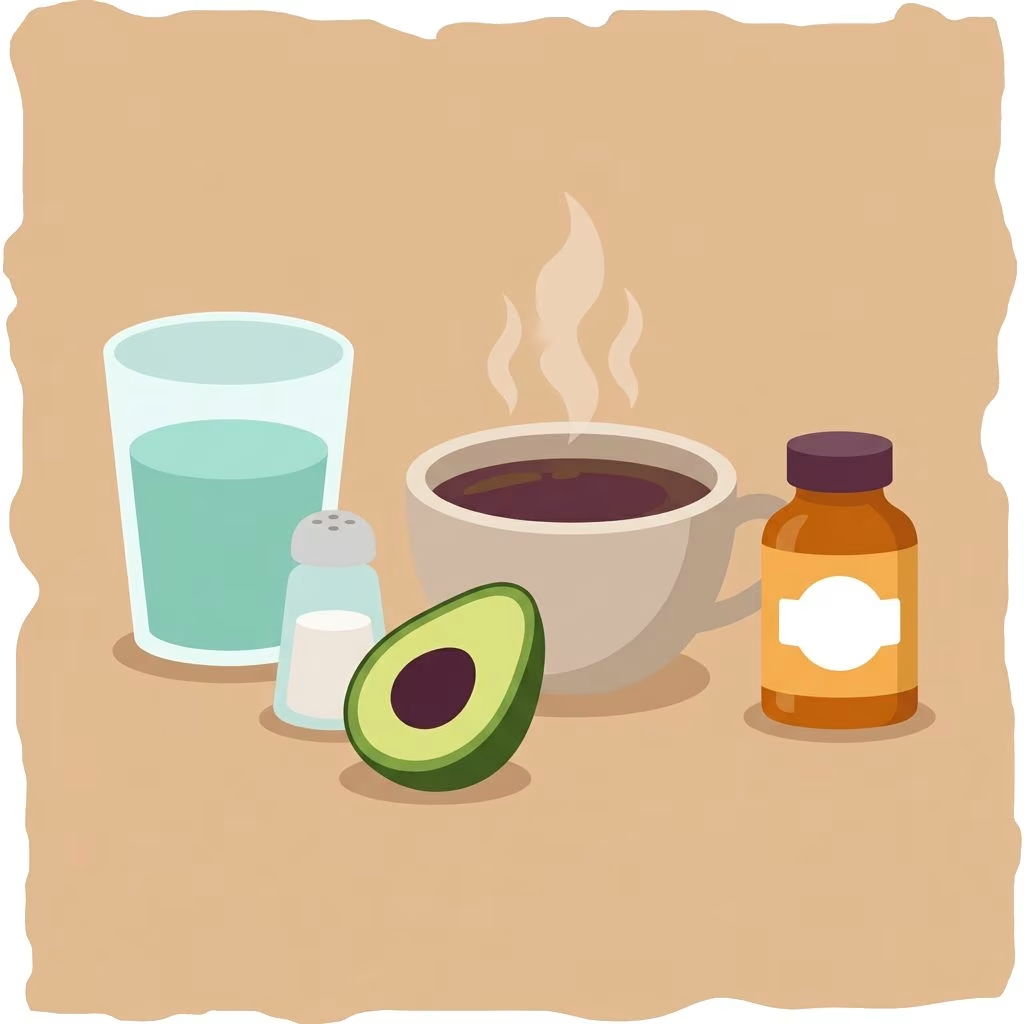
Days 3-5: The hard part. This is where most people hit a wall. You might experience:
- Fatigue – your body is shifting fuel sources and isn’t fully efficient at burning fat yet
- Headaches – almost always an electrolyte issue, specifically low sodium
- Irritability and brain fog – your brain is used to running on glucose and hasn’t fully adapted to ketones
- Sugar cravings – these are real, they’re intense, and they pass
- Digestive changes – some people get constipated, others have the opposite problem, as their gut adjusts
These symptoms are commonly called the “keto flu,” and they’re not actually the flu – they’re your body adjusting to a new fuel source. A 2020 review in Nutrition & Metabolism noted that most transition symptoms are attributable to fluid and electrolyte shifts that occur as insulin levels drop and the kidneys begin excreting more sodium.Soto-Mota et al. (2025) in Frontiers in Nutrition conducted a scoping review of symptoms during ketogenic diet initiation and found that the majority are attributable to sodium and fluid losses driven by reduced insulin, with most resolving within 1-2 weeks when electrolyte intake is adequate.
The fix is simple:
- Add 1-2 extra grams of sodium per day (drink a cup of broth, salt your food more generously)
- Eat potassium-rich foods (avocado, spinach, mushrooms)
- Consider a magnesium supplement (200-400mg magnesium glycinate at bedtime)
- Drink plenty of water – but not so much that you’re flushing out electrolytes
Days 5-7: The turn. For most people, the worst is over by day 5. Energy starts coming back, cravings dial down significantly, and you start noticing that you’re going longer between meals without getting hungry. This is your body getting more efficient at using fat for fuel. It’s not complete adaptation yet – that takes 2-4 weeks – but the acute discomfort passes fairly quickly.
Research on keto-adaptation supports this timeline. A 2021 review found that insulin sensitivity improvements can happen within the first four weeks of carb restriction, with many metabolic changes becoming apparent even sooner.Foley (2021) in Current Opinion in Endocrinology, Diabetes and Obesity found that low-carb diets can reverse insulin resistance within 4 weeks independent of weight loss, with measurable metabolic improvements beginning in the first week of carbohydrate restriction. Your body adapts faster than you’d expect – the problem is that most people quit during days 3-5 before the adaptation kicks in.
Common Mistakes New Low-Carbers Make
After watching thousands of people go through this process, the same mistakes come up over and over. Here are the ones that trip people up the most.
1. Not eating enough fat. This is the single most common mistake. People cut out carbs but also avoid fat (because decades of “low-fat” messaging is hard to shake), and they end up eating what’s basically a high-protein, low-everything-else diet. That’s miserable. Fat is your primary energy source now – cook with butter and olive oil, eat the skin on your chicken, don’t pick the low-fat cheese. If you’re constantly hungry on low-carb, you’re probably not eating enough fat.
2. Not getting enough salt. On a standard diet, you get plenty of sodium from processed foods, bread, and restaurant meals. When you cut all of that out, your sodium intake drops dramatically at the same time your body is excreting more of it. The result: headaches, fatigue, dizziness, and cramps. A 2020 observational study found that individuals on carbohydrate-restricted diets excreted 50-100% more urinary sodium in the first week compared to baseline, driven by reduced insulin levels.Athinarayanan et al. (2020) in Cardiovascular Diabetology tracked metabolic markers in patients on sustained carbohydrate restriction and observed significant increases in urinary sodium excretion, particularly in the first weeks, supporting the need for increased salt intake during dietary transition. Don’t be afraid of salt. You need more now, not less.
3. Obsessing over the scale. You’ll probably lose 3-7 pounds in the first week. That’s almost entirely water. Then the scale will stall, or even go up slightly, for a few days. This is normal. Fat loss is happening underneath the water weight fluctuations, but the scale doesn’t show it linearly. Weigh yourself once a week at most, first thing in the morning, and track the trend over weeks – not daily movements.
4. Eating too many “low-carb” processed foods. Low-carb bars, shakes, tortillas, and breads are everywhere now, and most of them use ingredients that can stall your progress or cause digestive issues. Some sugar alcohols (like maltitol) spike blood sugar almost as much as regular sugar despite being marketed as “net carb free.” For your first month, stick to real, whole foods. Add the specialty products later once you know how your body responds to the basics.
5. Going it alone without a plan. “I’ll just eat fewer carbs” isn’t a plan – it’s an intention. Research consistently shows that structured approaches outperform unstructured ones for dietary adherence. A 2019 meta-analysis of 23 trials found that low-carb dieters who followed a defined meal structure lost significantly more weight and maintained it longer than those who received general dietary advice alone.Churuangsuk et al. (2019) in Obesity Reviews conducted a meta-analysis of 23 randomized controlled trials comparing structured low-carb interventions with standard dietary advice and found that structured approaches produced greater weight loss (WMD -1.30 kg, 95% CI: -2.02 to -0.57) over 3-36 months. Use a meal plan, track your food for at least the first two weeks, and have a list of go-to meals you can default to.
6. Skipping vegetables. Low-carb doesn’t mean no-carb, and it definitely doesn’t mean no-plants. Non-starchy vegetables are low in carbs, high in fiber and micronutrients, and keep your digestion running smoothly. Broccoli, spinach, cauliflower, zucchini, asparagus, and peppers should all be staples. A good low-carb food list will show you just how many vegetables fit comfortably within even a strict keto budget.
When You’re Ready for Keto
Here’s something I tell everyone: you don’t have to go keto to get benefits from eating low-carb. Plenty of people do great at 50-100g of carbs per day and stay there permanently. But if you want to take it further – for faster fat loss, stronger appetite control, or the mental clarity that comes with ketosis – here’s how the transition works.
The gradual path (recommended for most people):
- Weeks 1-2: Eat at your initial low-carb target (50-100g). Get comfortable with the food, build your go-to meals, clear the worst of the cravings.
- Weeks 3-4: Drop to 30-50g. You’ll start entering ketosis intermittently. Notice how your hunger patterns change.
- Week 5+: Settle into 20-30g of net carbs. This is the range I recommend for sustained ketosis, and it’s where most people land on a well-formulated keto diet.
A 2022 meta-analysis of 25 randomized controlled trials found that low-carb diets produced significantly greater weight loss at 3-4 months (-2.59 kg, p=.0001) and 6-8 months (-2.64 kg, p=.002) compared to standard diets.Silverii et al. (2022) in Diabetes, Obesity and Metabolism meta-analyzed 25 RCTs involving 2,442 obese individuals and found low-carb diets produced statistically significant additional weight loss at 3-4 months (MD -2.59 kg) and 6-8 months (MD -2.64 kg) versus balanced diets. And the deeper you go into carb restriction, the more pronounced the appetite-suppressing effects become – a 2015 meta-analysis in Obesity Reviews found that people in ketosis reported less hunger and reduced desire to eat, even while losing weight.Gibson et al. (2015) in Obesity Reviews systematically reviewed the evidence and found that individuals in ketosis experienced less hunger and a reduced desire to eat compared to non-ketotic dieters, with the main benefit being prevention of the appetite increase that typically accompanies weight loss.
The biggest shift when going from low-carb to keto is tracking more carefully. At 100g of carbs, you have room for error. At 20-30g, a handful of the wrong snack can knock you out of ketosis. Most people benefit from using a food tracking app for the first month of keto until they develop an intuitive sense for portions.
Signs you’re in ketosis:
- Reduced appetite (the most reliable subjective sign)
- Stable, sustained energy without afternoon crashes
- Slightly fruity or metallic breath (temporary)
- Increased thirst and urination (especially early on)
- Better mental focus and clarity
You can also use urine test strips or a blood ketone meter to confirm, but most people find that paying attention to how they feel is enough. If you’re interested in diving deeper, our beginner’s guide to keto covers everything in detail.
Key Takeaways
- Set a specific carb target before you start – 50-100g per day for general low-carb, 20-30g for keto – and use a calculator to figure out your protein and fat needs too.
- Clean out your kitchen first. Removing high-carb temptations from your environment is more effective than relying on willpower.
- Stock up on proteins, healthy fats, and non-starchy vegetables. Every meal follows the same formula: protein + fat + vegetable.
- Plan your first week of meals in advance. Even a rough plan dramatically improves your chances of sticking with it.
- Expect temporary symptoms in days 3-5 (headaches, fatigue, cravings) and manage them with extra salt, potassium, and hydration.
- Avoid the big mistakes: eating too little fat, skipping salt, obsessing over daily scale changes, and relying on processed “low-carb” products.
- Transitioning to keto is optional but simple – drop your carbs gradually over 4-5 weeks until you hit 20-30g of net carbs per day.
The research consistently shows that low-carb diets work for weight loss, blood sugar improvement, and appetite control – but the single biggest factor in your success is whether you actually stick with it. Start with preparation, keep your first week simple, push through the adjustment period, and build from there. If you want to ease in with a broader overview first, the low-carb diet for beginners guide covers the nutritional fundamentals.
Frequently Asked Questions
How many carbs should I eat when starting a low-carb diet?
It depends on your goals. For a standard low-carb approach, aim for 50-130g of carbs per day – that’s enough to see real changes in energy, hunger, and weight without a dramatic adjustment period. If you want the metabolic benefits of ketosis (faster fat loss, appetite suppression, stable energy), you’ll need to drop to 20-30g of net carbs per day. A 2024 expert consensus defined low-carb as under 130g/day and very-low-carb (ketogenic) as under 50g/day. Most people do well starting in the 50-100g range and adjusting from there based on how they feel.
What should I eat on my first week of low carb?
Focus on whole foods you already enjoy, just without the starchy sides. Meals built around protein (meat, fish, eggs), healthy fats (olive oil, avocado, butter, nuts), and non-starchy vegetables (leafy greens, broccoli, peppers, zucchini) form the foundation. A typical day might look like: eggs with spinach and cheese for breakfast, a big salad with grilled chicken and olive oil dressing for lunch, and salmon with roasted broccoli and butter for dinner. Snack on cheese, nuts, or deli meat if you get hungry between meals. Keep it simple your first week – this isn’t the time for complicated recipes.
Will I feel bad when I start a low-carb diet?
Some people experience temporary symptoms during the first 3-7 days, including fatigue, headaches, irritability, and brain fog. This is often called the keto flu, and it’s largely caused by electrolyte shifts as your body excretes more sodium and water. Most of these symptoms can be prevented or reduced by increasing your salt intake (an extra 1-2g of sodium per day), eating potassium-rich foods like avocado and leafy greens, and staying well hydrated. A gradual approach – dropping from your current intake by 50g each week – can make the transition smoother.
Should I go low carb gradually or all at once?
Both approaches work, and the research supports either one. A 2020 systematic review found that dietary adherence is the strongest predictor of long-term success regardless of the specific approach used. If you’re someone who does better ripping off the bandaid, cutting straight to your target gets you adapted faster. If you tend to struggle with big changes, a gradual reduction – dropping about 50g per week – produces fewer transition symptoms and gives you time to build new habits. The best method is whichever one you’ll actually stick with.
What’s the difference between low carb and keto?
Low-carb is a broad category that includes any diet under about 130g of carbs per day. Keto is a specific subset of low-carb where you eat so few carbs (typically 20-30g of net carbs per day) that your body switches to burning fat as its primary fuel and starts producing ketone bodies. Keto offers some additional benefits – stronger appetite suppression, more stable energy, and potentially faster fat loss – but it requires stricter tracking and has a bigger adjustment period. Many people start with a general low-carb approach and transition to keto once they’ve built the habits. Think of low-carb as the on-ramp and keto as the highway.
Sources
- Volek et al. (2024). Carbohydrate restriction expert consensus and definitions. Frontiers in Nutrition.
- Kwasnicka et al. (2016). Theoretical explanations for maintenance of behavior change: A systematic review of health behavior theories. Health Psychology Review.
- Memon et al. (2022). Dietary adherence strategies in low-carbohydrate diets: A systematic review of 49 studies. Obesity Reviews.
- Soto-Mota et al. (2025). Symptoms during initiation of a ketogenic diet: A scoping review. Frontiers in Nutrition.
- Foley (2021). Effect of low carbohydrate diets on insulin resistance and the metabolic syndrome. Current Opinion in Endocrinology, Diabetes and Obesity.
- Athinarayanan et al. (2020). Long-term effects of a novel continuous remote care intervention on cardiometabolic parameters. Cardiovascular Diabetology.
- Churuangsuk et al. (2019). Impacts of carbohydrate-restricted diets on micronutrient intakes and status: A systematic review. Obesity Reviews.
- Silverii et al. (2022). Effectiveness of low-carbohydrate diets for long-term weight loss in obese individuals: A meta-analysis of 25 randomized controlled trials. Diabetes, Obesity and Metabolism.
- Gibson et al. (2015). Do ketogenic diets really suppress appetite? A systematic review and meta-analysis. Obesity Reviews.
- StatPearls – Low-Carbohydrate Diet (updated 2023). Clinical reference on low-carbohydrate diet definitions and metabolic effects.