

The idea of “good carbs vs bad carbs” comes up constantly – in nutrition articles, on food labels, in conversations with people who are trying to figure out what to eat. And while there’s something to it, the framing is more oversimplified than most people realize.
The real story is more nuanced. There are measurable differences between carb sources – fiber content, glycemic response, how your body processes them. A bowl of lentils and a bowl of candy both contain carbohydrates, but they don’t behave remotely the same way in your body. That part is real. What’s misleading is the idea that eating “good carbs” automatically means you’re eating well, because you can eat plenty of nutritious carbs and still blow past the amount your body can handle without consequences.
This article breaks down what carb quality actually means, where the research lands on glycemic index and fiber, which “good carbs” still don’t work for keto, and how to think about all of this if you’re eating low-carb. The short version: quality matters, but so does quantity – and if you’re doing keto at 20-30g of net carbs per day, this conversation takes on a completely different shape.
For a detailed breakdown of how many carbs per day to aim for based on your specific goals, that guide has the numbers.
Jump to a section:
- What Makes a Carb “Good” or “Bad”?
- Glycemic Index and Glycemic Load: What Actually Matters
- Fiber: The Carb Quality Multiplier
- The “Good Carbs” That Don’t Fit Keto
- What Does Fit: Low-Carb Vegetables, Nuts, and Berries
- How Carb Quality Applies If You’re Low-Carb or Keto
- The Real Answer: It’s About Total Amount AND Quality
- Key Takeaways
- Frequently Asked Questions
What Makes a Carb “Good” or “Bad”?
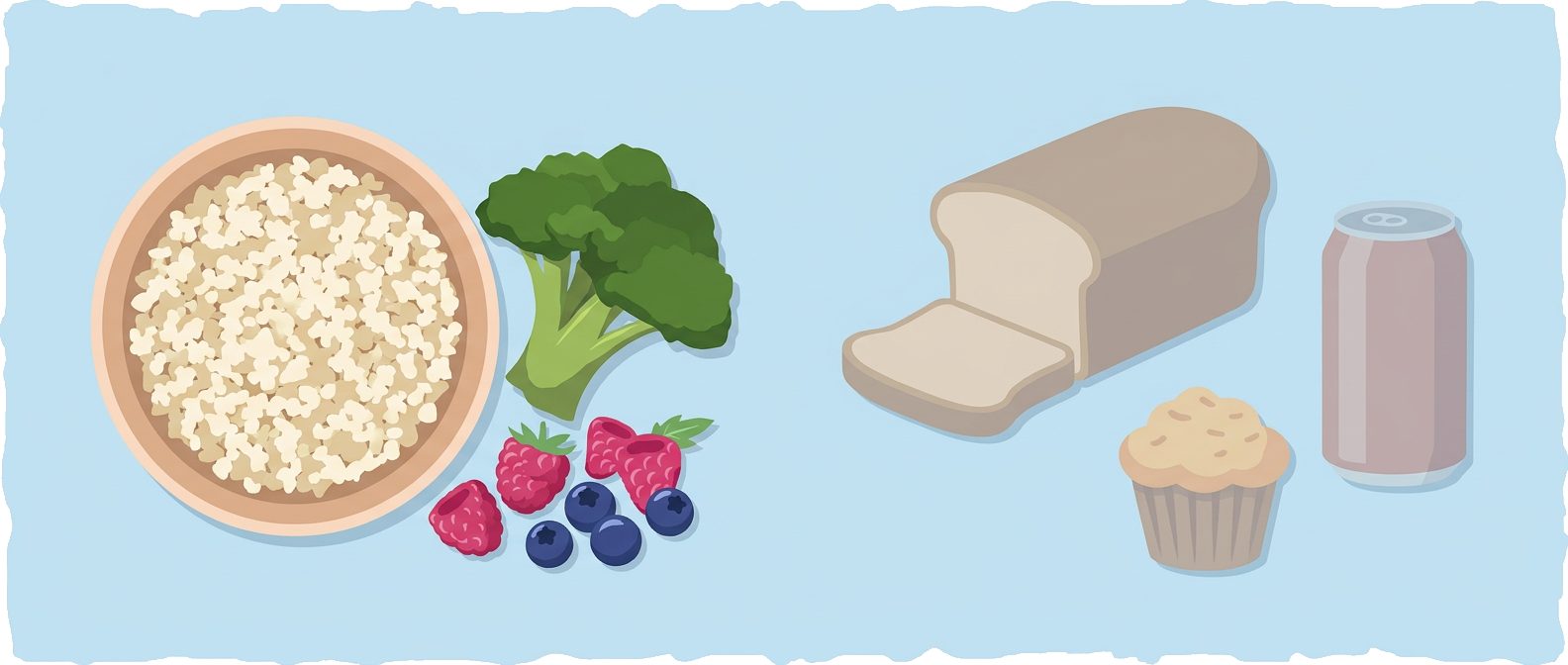
At the molecular level, all carbohydrates break down into sugars during digestion. Simple carbohydrates (monosaccharides and disaccharides) have one or two sugar molecules and absorb rapidly. Complex carbohydrates (oligosaccharides and polysaccharides) are longer chains that take more time to digest.Per the StatPearls reference on carbohydrate physiology, simple carbohydrates consist of one or two sugars in a simple chemical structure and are rapidly absorbed, while complex carbohydrates contain three or more sugars bonded in a more complex structure and digest slowly.
That speed difference is where the “good vs bad” idea comes from. Faster absorption means a quicker blood sugar spike, a bigger insulin response, and a faster crash. Slower absorption means a more gradual rise, a more measured insulin response, and more stable energy. In broad strokes, complex carbs tend to be the “good” ones and simple sugars the “bad” ones.
But it’s not that clean. A baked potato is technically a complex carb, and it spikes blood sugar faster than table sugar in some people. Fruit contains simple sugars (fructose), but the fiber slows absorption enough that most fruit has a low to moderate glycemic impact. So the simple-vs-complex distinction is a starting point, not the full picture.
The factors that actually determine carb quality are more specific: glycemic index and glycemic load, fiber content, degree of processing, and what else comes packaged with the carbs (vitamins, minerals, phytonutrients vs. nothing at all). That’s what separates a serving of broccoli from a serving of white bread, even though both technically contain carbohydrates.
Glycemic Index and Glycemic Load: What Actually Matters
The glycemic index (GI) ranks carbohydrate-containing foods from 0 to 100 based on how quickly they raise blood sugar compared to pure glucose (which scores 100). The most recent international tables, published in 2021, catalog over 4,000 foods.The 2021 International Tables of Glycemic Index and Glycemic Load in the American Journal of Clinical Nutrition contain over 4,000 food items, a 61% increase over the 2008 edition.
Here’s how the ranges break down:
| GI Category | Score Range | Examples | Blood Sugar Effect |
|---|---|---|---|
| Low | 55 or below | Lentils, most beans, steel-cut oats, sweet potato (boiled), berries, non-starchy vegetables | Gradual rise, moderate insulin response |
| Medium | 56-69 | Brown rice, whole-wheat bread, quick oats, bananas | Moderate rise, moderate insulin |
| High | 70 or above | White bread, white rice, baked potatoes, rice cakes, instant oats, most breakfast cereals | Rapid spike, strong insulin response |
But GI alone can be misleading. It measures the response to a fixed amount of carbohydrate (usually 50g), not to a real-world serving. Watermelon has a high GI (around 76) but a typical serving only contains about 11g of carbs. That’s where glycemic load (GL) comes in. GL multiplies a food’s GI by the actual carbs in a serving and divides by 100, giving you a more practical number.
A GL under 10 is low, 11-19 is medium, and 20+ is high. That watermelon serving? Its GL is about 8 – low. A cup of white rice with a GI of 73 and 45g of carbs? Its GL is roughly 33 – high.
A dose-response meta-analysis of 40 prospective studies found that higher GI and GL diets increased the risk of type 2 diabetes, with the strongest effects in Asian populations (25% increased risk from high GI) and overweight women.Hardy et al. (2020) in Nutrition, Metabolism and Cardiovascular Diseases analyzed 40 prospective studies and found high-GI diets increased type 2 diabetes risk by 14% in US populations and 25% in Asian populations, with overweight/obese females showing the highest risk magnitude. So glycemic load does matter for metabolic health – but there’s a catch. That same Lancet analysis of 135 million person-years found that when it comes to reducing mortality and chronic disease, fiber intake matters more than GI or GL. The evidence for fiber was moderate quality; for glycemic index, it was low to very low.Reynolds et al. (2019) in The Lancet analyzed 185 prospective studies (135 million person-years) and 58 clinical trials. Fiber showed 15-30% decreased all-cause and cardiovascular mortality. GI and GL showed “smaller or no risk reductions,” with evidence quality rated low to very low.
That’s a significant finding. It means that when people talk about “good carbs,” the fiber content of those foods may matter more than their glycemic score.
Fiber: The Carb Quality Multiplier
If there’s one factor that separates high-quality carb sources from everything else, it’s fiber. And the data backing this up is substantial.
The Lancet analysis mentioned above found that people eating the most fiber had a 15-30% lower risk of dying from all causes, cardiovascular disease, stroke, type 2 diabetes, and colorectal cancer compared to those eating the least. The sweet spot was 25-29g per day, though higher intakes showed additional benefits.Per the same Lancet meta-analysis (Reynolds et al., 2019), risk reduction was greatest with daily fiber intake between 25-29g, with dose-response curves suggesting even greater protection at higher intakes for cardiovascular disease, type 2 diabetes, and colorectal cancer.
Here’s what fiber actually does. Soluble fiber (found in oats, beans, and some fruits) dissolves in water and forms a gel-like substance in your gut. That gel slows carbohydrate absorption, which blunts the blood sugar spike you’d otherwise get. One review found that soluble fiber can reduce the glycemic index of a meal by 63-74%.Bulsiewicz (2023) in the American Journal of Lifestyle Medicine reported that soluble fiber attenuates carbohydrate absorption speed and can reduce the glycemic index of a meal by 63-74%, while fermentable fiber produces short-chain fatty acids that activate GLP-1 and PYY hormones for satiety. Insoluble fiber (bran, seeds, vegetable skins) doesn’t dissolve but adds bulk, supports gut motility, and feeds beneficial bacteria.
Both types produce short-chain fatty acids through fermentation in your colon, particularly butyrate. These SCFAs activate hormones like GLP-1 and PYY that promote satiety, improve insulin sensitivity, and support metabolic health across the board.
The problem? Only about 6% of Americans actually hit the recommended daily fiber intake of 25-38g. And on a standard American diet heavy in refined grains and added sugars, there’s very little fiber coming through. That’s one reason why the “good carbs” conversation keeps circling back to fiber – most people eating high-carb diets aren’t getting enough of the one component that makes carbs less harmful.
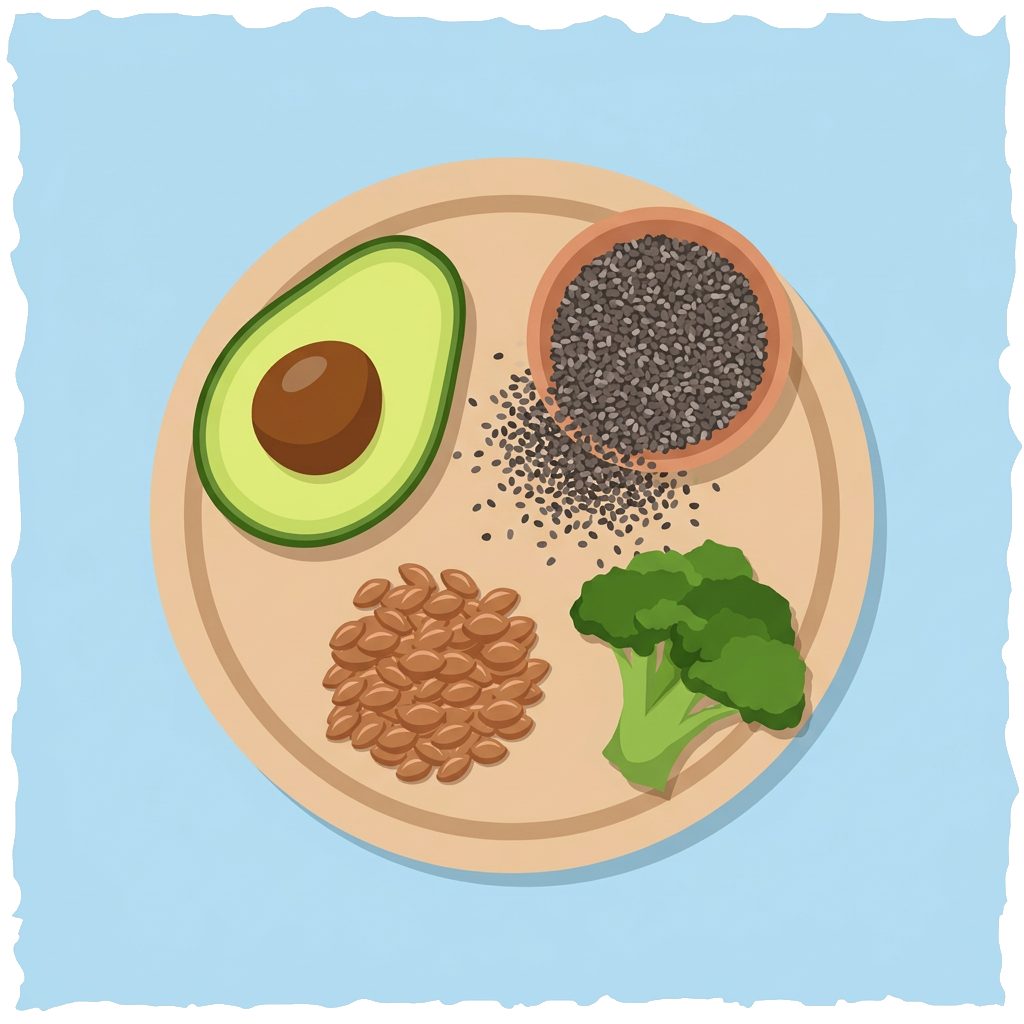
This is where I want to flag something for keto readers specifically. Fiber doesn’t count toward your net carbs because your body can’t digest it into glucose. So when I say 20-30g of net carbs per day, fiber is already excluded. You should still be prioritizing it. Avocado, chia seeds, flaxseed, broccoli, spinach – these are all keto staples, and they’re loaded with fiber. A well-designed keto diet can actually deliver more fiber per net carb than most standard diets, if you’re choosing the right foods.
The “Good Carbs” That Don’t Fit Keto
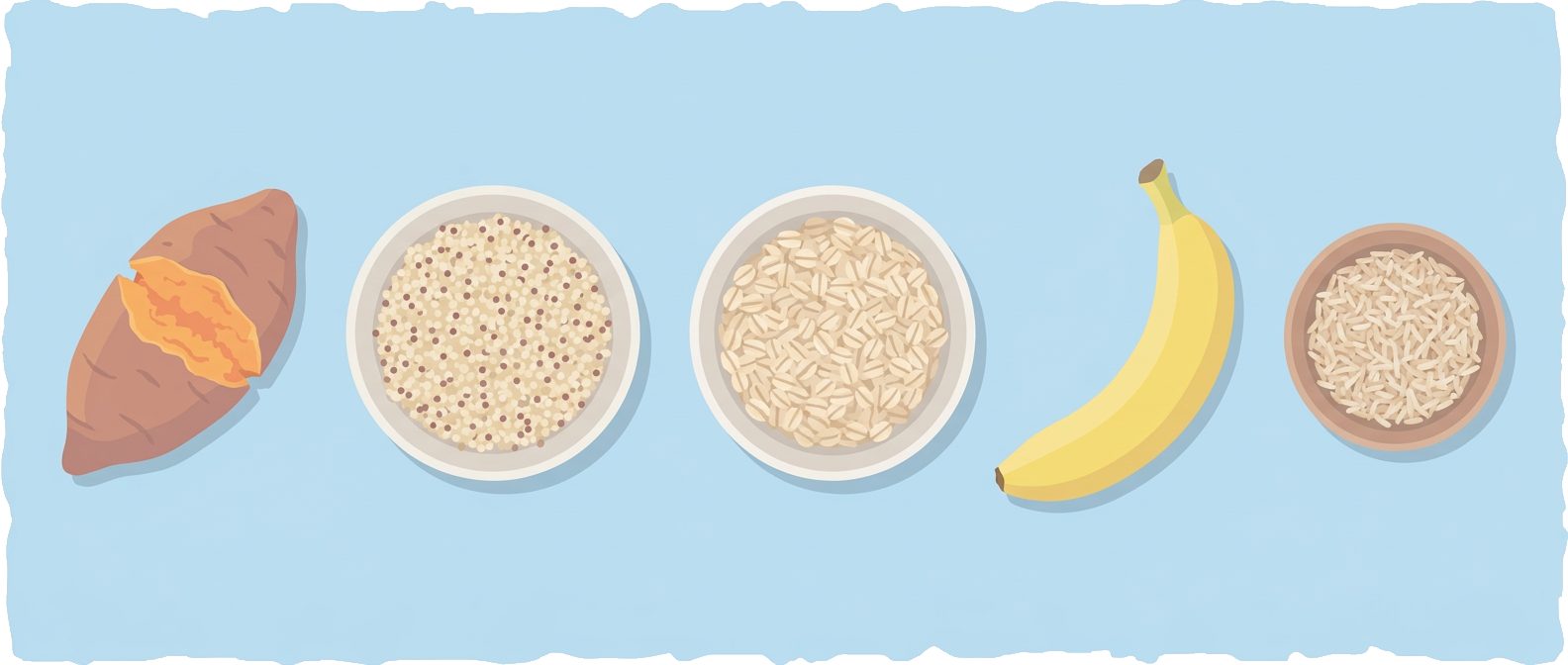
This is the part of the conversation that trips people up, and I’ve seen it play out hundreds of times with readers. Someone starts keto, reads that sweet potatoes and quinoa are “good carbs,” and figures they must be fine. They’re not – at least not in any quantity that makes sense on keto.
Here’s the math on some of the most commonly recommended “good carbs”:
| Food | Serving Size | Total Carbs | Fiber | Net Carbs | GI (Approx.) |
|---|---|---|---|---|---|
| Sweet potato (baked) | 1 medium (150g) | 26g | 4g | 22g | 44-94* |
| Quinoa (cooked) | 1 cup (185g) | 39g | 5g | 34g | 53 |
| Steel-cut oats (cooked) | 1 cup (234g) | 27g | 4g | 23g | 42-55 |
| Brown rice (cooked) | 1 cup (202g) | 52g | 3g | 49g | 68 |
| Banana | 1 medium | 27g | 3g | 24g | 51 |
| Black beans (cooked) | 1/2 cup (86g) | 20g | 7.5g | 12.5g | 30 |
*Sweet potato GI varies dramatically with cooking method – boiled is lowest (44-61), baked can reach 94.
Every single one of these foods would eat up most or all of your daily 20-30g net carb budget in a single serving. Quinoa alone, at 34g net carbs per cup, exceeds it entirely. And that’s before counting the carbs in anything else you eat that day.
These foods aren’t “bad.” In the context of a moderate-carb or standard diet, they’re perfectly reasonable choices. Sweet potatoes are rich in beta-carotene and potassium. Quinoa is a complete protein with a solid mineral profile. Oats contain beta-glucan, a soluble fiber linked to lower cholesterol. But “nutritious” and “keto-compatible” aren’t the same thing. A food can be perfectly healthy and still push you out of ketosis if it has 25g of net carbs per serving.
I made this exact mistake early on. I kept eating small amounts of foods I thought were “healthy carbs” – a quarter cup of oats here, half a sweet potato there – and wondered why I kept drifting in and out of ketosis. The carbs add up faster than you’d think when you’re pulling from multiple sources, and the metabolic disruption from bouncing in and out of ketosis is worse than either staying in or staying out.
What Does Fit: Low-Carb Vegetables, Nuts, and Berries
Here’s the good news: you don’t have to give up carb quality to eat keto. The lowest-carb foods on the planet also happen to be some of the most nutrient-rich and fiber-rich. They just don’t get the same marketing treatment as quinoa bowls and overnight oats.
Non-starchy vegetables are the foundation. Spinach, kale, broccoli, cauliflower, zucchini, asparagus, bell peppers, Brussels sprouts – these average 2-6g of net carbs per cup and come loaded with vitamins, minerals, and fiber. You can eat large volumes without approaching your carb limit. Two cups of mixed greens? About 1g of net carbs.
Berries are the best keto-friendly fruit option. Raspberries, blackberries, and strawberries sit in the 3-6g net carb range per half-cup serving and carry meaningful amounts of fiber and polyphenols. A quarter cup of blueberries is about 4.5g net carbs. These are the fruits that give you the antioxidant benefits everyone associates with “good carbs” without the sugar load of bananas, grapes, or mangoes.
Nuts and seeds add healthy fats alongside their carbs. Almonds, macadamias, pecans, walnuts, chia seeds, and flaxseed all fall under 4g of net carbs per ounce. Chia seeds in particular pack about 5g of fiber per tablespoon, making them one of the most fiber-dense foods per net carb you can find.

Avocado deserves its own mention. A whole avocado gives you roughly 3-4g of net carbs, 10g of fiber, plenty of potassium, and a dose of monounsaturated fat. It’s one of the few foods that ticks every box on the carb quality checklist while fitting comfortably into keto macros.
The point isn’t that keto foods are “better” than sweet potatoes or quinoa. It’s that you can get every nutritional benefit people associate with “good carbs” – fiber, vitamins, minerals, antioxidants – from foods that fit within 20-30g of net carbs per day. You just need to know which ones to reach for. Our keto food list has the complete breakdown.
How Carb Quality Applies If You’re Low-Carb or Keto
There’s an argument that if you’re already eating very few carbs, carb quality doesn’t matter much. After all, whether you get 25g of carbs from broccoli or from a few bites of bread, the total impact on ketosis is similar. But that argument misses something important.
A 2023 study in JAMA Network Open followed 123,332 people and found that the quality of macronutrients on a low-carb diet significantly affected weight outcomes. People on “healthy” low-carb diets (emphasizing whole grains, plant protein, and unsaturated fats) gained 0.36 kg less over four-year periods. Those on “unhealthy” low-carb diets (refined carbs, animal protein, saturated fat) gained 0.39 kg more.Liu et al. (2023) in JAMA Network Open analyzed 123,332 participants and found healthy low-carb diets correlated with 0.36 kg less weight gain per standard deviation increase, while unhealthy low-carb diets showed 0.39 kg more weight gain. The benefit was most pronounced in obese individuals (0.88 kg less gain). The effect was even stronger for obese participants, at nearly a kilogram difference.
A review in Nutrition Reviews reinforced this: low-carb diets emphasizing plant-based proteins and unsaturated fats were associated with lower mortality, while those heavy on animal-based proteins showed the opposite.Storz (2020) in Nutrition Reviews found that low-carb diets favoring plant-based protein and unsaturated fat were associated with reduced mortality, while animal-based low-carb diets showed increased mortality. A network meta-analysis of 48 RCTs (7,286 participants) found no weight loss differences between varying macronutrient distributions at 6-12 months.
What does this mean practically? Even within a 20-30g net carb budget, the carbs you choose matter. Getting your carbs from spinach, avocado, nuts, and berries is measurably different from getting them from processed low-carb snack bars and artificial sweeteners. The fiber, the micronutrients, and the food matrix all influence how those carbs interact with your metabolism.
The carb limit guide walks you through finding your personal threshold, but here’s the principle: aim for your carbs to come from the most nutrient-rich, fiber-rich sources available. On keto, that means non-starchy vegetables first, then nuts and seeds, then berries. Everything else is an exception, not a staple.
The Real Answer: It’s About Total Amount AND Quality
If you take one thing from this article, it’s that the “good carbs vs bad carbs” framework is incomplete. It gets half the story right (quality matters) and ignores the other half (quantity matters too).
The Lancet Public Health study on carbohydrate intake and mortality illustrates this perfectly. Researchers followed over 15,000 adults for 25 years and found a U-shaped curve: both very low carb intake (under 40% of calories) and very high carb intake (over 70%) were associated with higher mortality, with the lowest risk at 50-55%.Seidelmann et al. (2018) in The Lancet Public Health followed 15,428 adults for a median of 25 years and found a U-shaped association between carb intake and mortality. Below 40% of calories from carbs: hazard ratio 1.20. Above 70%: hazard ratio 1.23. Lowest risk at 50-55%. But here’s the critical detail: when low-carb diets replaced carbs with plant-based protein and fat (vegetables, nuts, whole grains), mortality actually decreased (hazard ratio 0.82). When they replaced carbs with animal sources (beef, chicken, cheese), it increased (1.18).
That distinction is huge. It’s not just how many carbs you eat – it’s what you’re eating instead, and what form your carbs take when you do eat them.
On a well-formulated ketogenic diet, you’re doing both things right: keeping total carbs low (20-30g net) and getting those carbs from high-quality sources (vegetables, nuts, berries). You’re replacing the rest with healthy fats and moderate protein. That’s the approach that aligns with what the research actually supports.
The worst dietary pattern, by this logic, is neither “low carb” nor “high carb.” It’s a high quantity of low-quality carbs – refined grains, added sugars, processed foods with minimal fiber – combined with inadequate protein and micronutrients. That’s the standard American diet in a nutshell, and the health outcomes reflect it.
A 2023 meta-analysis of 24 articles covering 1.6 million participants found that each additional 30g of daily whole grain consumption reduced cardiovascular disease risk by 8% and all-cause mortality by 6%. Refined grains showed no significant protective effect at all.A 2023 meta-analysis in the American Journal of Clinical Nutrition (24 articles, 1,624,407 participants) found each 30g/day increase in whole grains reduced CVD risk by 8% and all-cause mortality by 6%. Refined grain intake showed no significant influence on stroke, CHD, heart failure, or CVD. And the data on added sugar is even more striking: people who got 25% or more of their calories from added sugar had nearly triple the cardiovascular mortality risk compared to those under 10%.Yang et al. (2014) in JAMA Internal Medicine found a dose-response relationship between added sugar and CVD mortality among 11,733 US adults. Those consuming 10-24.9% of calories from added sugar had a 30% higher CVD mortality risk; those at 25%+ had a hazard ratio of 2.75 (nearly triple the risk).
So yes, carb quality matters. The science on that is clear. But quality without attention to quantity is half a solution, and for anyone eating low-carb or keto, the quantity piece is already built into the approach. Focus on filling your carb budget with the highest-quality sources you can – and you’re covering both bases.
Key Takeaways
- “Good carbs vs bad carbs” is a useful starting point, but it oversimplifies what actually drives metabolic health. Fiber content is a stronger predictor of health outcomes than glycemic index alone.
- Glycemic load matters more than glycemic index because it accounts for serving size. A food’s GI score in isolation can be misleading.
- Many “good carbs” (sweet potatoes, quinoa, oats, brown rice) are too carb-dense for keto. A single serving of quinoa has 34g of net carbs – more than an entire day’s allowance at 20-30g.
- Keto-friendly foods like non-starchy vegetables, berries, nuts, and avocado deliver the same nutritional benefits (fiber, vitamins, minerals, antioxidants) within a fraction of the carb budget.
- Even on a low-carb diet, carb quality matters. Research shows that healthy low-carb diets (plant-based fats, whole food sources) produce better long-term outcomes than unhealthy versions (refined carbs, processed meats).
Frequently Asked Questions
Sources
- Physiology, Carbohydrates – StatPearls / NCBI Bookshelf
- International tables of glycemic index and glycemic load values 2021: a systematic review – American Journal of Clinical Nutrition
- Carbohydrate quality, glycemic index, glycemic load and cardiometabolic risks: A dose-response meta-analysis – Nutrition, Metabolism and Cardiovascular Diseases
- Carbohydrate quality and human health: a series of systematic reviews and meta-analyses – The Lancet
- The Importance of Dietary Fiber for Metabolic Health – American Journal of Lifestyle Medicine
- Consumption of whole grains and refined grains and associated risk of CVD and all-cause mortality – American Journal of Clinical Nutrition
- Added Sugar Intake and Cardiovascular Diseases Mortality Among US Adults – JAMA Internal Medicine
- Dietary carbohydrate intake and mortality: a prospective cohort study and meta-analysis – Lancet Public Health
- Low-Carbohydrate Diet – StatPearls / NCBI Bookshelf
- Low-Carbohydrate Diet Macronutrient Quality and Weight Change – JAMA Network Open
- Low-carbohydrate diets and cardiometabolic health: the importance of carbohydrate quality over quantity – Nutrition Reviews
The information in this article is not medical advice and is not a substitute for professional medical guidance. Always consult a qualified healthcare provider before making changes to your diet or health regimen.