
Understanding how ketosis works is an important part when starting a keto diet. Ketosis is a process that the body goes through on an everyday basis, regardless of the number of carbs you eat. This is because this process provides us with energy from ketones whenever sugar is not readily available.
In fact, you may have already experienced a very mild level of ketosis if you ever skipped a meal or two, didn’t eat many carbs during the day or exercised for longer than an hour. By doing one of these three things, you can initiate the process of ketosis.
Whenever the need for energy increases and carbohydrates aren’t available to meet that demand, the body starts increasing its ketone levels. If carbs are restricted for a more significant amount of time (i.e., longer than three days), then the body will increase ketone levels even further. These deeper levels of ketosis confer many positive effects throughout the body — effects that are experienced in the safest and healthiest way possible by following the ketogenic diet.
However, most people are rarely in ketosis and never experience its benefits because the body prefers to use sugar as its primary fuel source — especially if plenty of carbs and protein are provided by the diet.
What Happens When We Aren’t in Ketosis
Your body adapts to what is put in it, processing different types of nutrients into the energy that it needs. Proteins, fats, and carbs can all be converted into fuel using various metabolic processes.
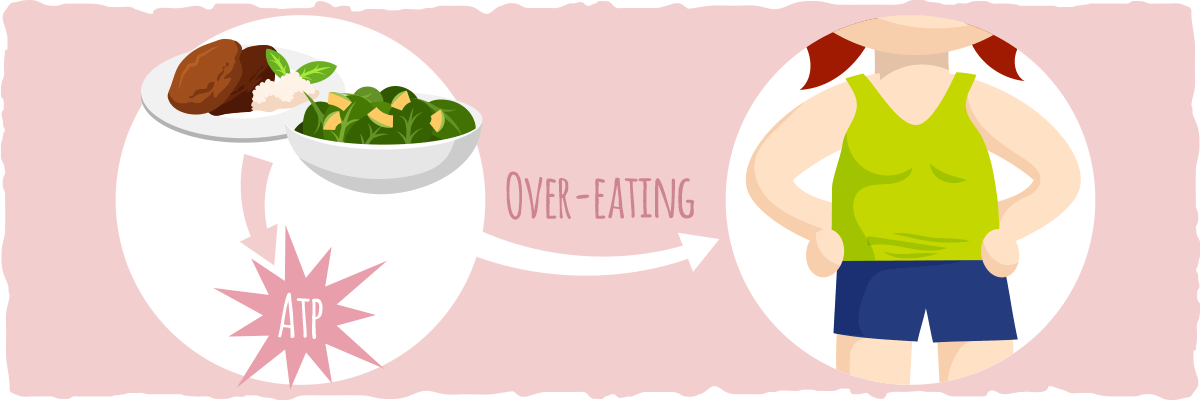
When you eat high-carbohydrate foods or excessive amounts of protein, your body will break it down into a simple sugar called glucose. This happens because glucose provides the cells with the quickest source of ATP, which is the primary energy molecule needed to fuel almost everything that goes on in the body.
In other words, more ATP means more cellular energy and more calories lead to more ATP. In fact, every calorie you consume from carbohydrates, fats, and proteins can be used to increase your ATP levels in some way.
If you’ve ever used our keto calculator to determine your caloric needs, you will see that your body uses up quite a lot of calories. Our bodies use up much of these nutrients just to maintain itself on a daily basis. If you eat more than enough food, however, there will be an excess of glucose that your body doesn’t need. What does your body do with the extra sugar?
Given the fact that most of us are within driving distance of seemingly endless amount of food, our bodies should just excrete it from the body. However, the body isn’t evolved to deal with the abundant food environment we have today.
Instead, it is constantly preparing itself for a future famine. So, rather than excreting excess calories that the body doesn’t need now, it stores them so that the cells will, without a doubt, have energy later.
The body saves up for the future in two ways:
- Glycogenesis. During this process, excess glucose is converted to glycogen (the body’s stored form of sugar) and stored in the liver and muscles. Researchers estimate that the body stores approximately 2000 calories in the form of muscle and liver glycogen. Depending on the person, this means that glycogen levels will be depleted within 6-24 hours when no other calories are consumed. Luckily, we have an alternative method of energy storage that can help sustain us when glycogen levels are low — lipogenesis.
- Lipogenesis. If there’s already enough glycogen in your muscles and liver, any extra glucose will be converted into fats and stored via a process called lipogenesis. In contrast to our limited glycogen stores, our fat stores are virtually unlimited. They provide us with the ability to sustain ourselves for weeks to months without adequate food.
When food carbohydrates or calories are restricted, glycogenesis and lipogenesis are no longer active. Instead, glycogenolysis and lipolysis take their place, freeing energy from glycogen and fat stores.
However, something unexpected happens to you once your body has no more glucose or glycogen? Yes, fat is still used as fuel, but an alternative fuel source called ketones is produced as well. As a result, ketosis happens. Our guide on the practical signs you’ve reached ketosis covers what to look for – from breath changes to reduced hunger – so you know when your body has made that shift.
Why Ketosis Happens
When your body has no access to food, like when you are sleeping, fasting, or following the ketogenic diet, the body will convert some of its stored fat to highly efficient energy molecules called ketones. (We can thank our body’s ability to switch metabolic pathways for that.) These ketones are synthesized after the body breakdowns fat into fatty acids and glycerol.
But why does this happen? Why not stick with using fat for fuel?
Although the fatty acids and glycerol can be directly turned into fuel in many cells throughout the body, they are not used as energy by brain cells at all. This is because they are converted into energy too slowly to support the function of the brain.
This is why sugar tends to be the primary source of fuel for the brain. Surprisingly, this also helps us understand why we produce ketones.
Without having an alternative energy source, our brain would be extremely vulnerable when we don’t consume enough calories. Our muscle would be broken down rapidly and converted into glucose to feed our sugar-hungry brains until we didn’t have enough strength left to find food. Without ketones, the human race would most likely be extinct.
How Ketones Are Formed: The Process
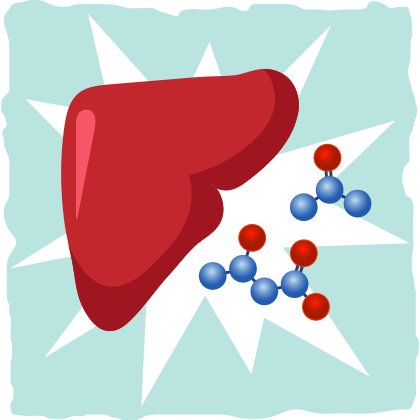
Earlier we found out that the body breaks down fat into fatty acids and glycerol, which can be used for fuel in the cells directly but not by the brain. To meet the needs of your brain, the fatty acids and the glycerol enter the liver where they are converted into sugar and ketones.
More specifically, the glycerol undergoes a process called gluconeogenesis, which converts it into sugar, while the fatty acids are converted into ketone bodies during a process called ketogenesis.
As a result of ketogenesis, a ketone body called acetoacetate is produced.
Acetoacetate is then converted into two other types of ketone bodies:
- Beta-hydroxybutyrate (BHB) – After being keto-adapted for a couple of weeks, you will begin to convert the acetoacetate into BHB as it is a much more efficient source of fuel (it undergoes an additional chemical reaction that provides more energy for the cell than acetoacetate). In general, studies show that the body and brain prefer using BHB and acetoacetate for energy because the cells can use it 70% more efficiently than glucose.
- Acetone – Can sometimes be metabolized into glucose, but is mostly excreted as waste. This gives the distinct smelly breath that most ketogenic dieters know.
Over time, your body will expel less excess ketone bodies (acetone), and if you use keto sticks to track your levels of ketosis, you may think it is slowing down.
That’s not the case, as your brain is burning the BHB as fuel, and your body is trying to give your brain as much efficient energy as possible. This is commonly why long-time low carbohydrate consumers will not show deep levels of ketosis on their urine tests.
In fact, long-time keto dieters will derive up to 50% of their basal energy requirements and 70% of their brain’s energy needs from ketones, so don’t let the urine tests fool you. If you are looking for more accurate methods to track ketosis, read through our guide on measuring ketosis.
Ketosis Can’t Fuel The Body By Itself: The Importance of Gluconeogenesis
No matter how keto-adapted you become, many of your cells will still need glucose to survive. To meet the energy needs of the brain and body that cannot be met by ketones, the liver uses a process called gluconeogenesis.
Remeber how we mentioned earlier that glycerol (a component of fat) is converted into glucose via gluconeogenesis? Well, amino acids from proteins and lactate from the muscles can be converted into sugar as well.
By converting amino acids, glycerol, and lactate into sugar, the liver is able to meet the glucose needs of the body and brain during times of fasting and carbohydrate restriction. This is why there is no essential requirement for carbohydrates in the diet. Your liver will, in most cases, make sure you have enough glucose in the bloodstream for your cells to survive.
How You Can Get in the Way of Ketosis
Although gluconeogenesis and ketogenesis work together when carbohydrates are limited, this doesn’t mean that ketones will steadily increase. Certain factors like eating too much protein can get in the way of ketosis and increase the need for gluconeogenesis.
This is due to the fact insulin levels and ketone production are intimately linked, and the protein sources that are commonly consumed on keto raise insulin levels. In response to an increase in insulin levels, ketogenesis is downregulated, which increases the need for gluconeogenesis to produce more sugar.
This is why eating too much protein can impair your ability to get into ketosis. However, this does not mean that you should restrict your protein consumption either. By limiting protein intake, your muscle tissues will be used to make the glucose that your body and brain need for fuel.
The best approach is to use our keto calculator to find out how much protein and fat you should eat every day. By eating in this way, you will not eat so much protein that it keeps you from ketosis or so little protein that you lose precious muscle mass.
Instead, you’ll be eating the ideal amount of protein that your body needs to maintain muscle mass and meet your sugar needs while you are on the path to ketosis.
Understanding How Ketones Work
Most of our knowledge about ketosis comes from studies on people who are fasting from all foods, not from ketogenic dieters. However, we can make many inferences about the ketogenic diet from what the
researchers found in the studies on fasting.
First, let’s look at the stages that the body goes through during fasting:
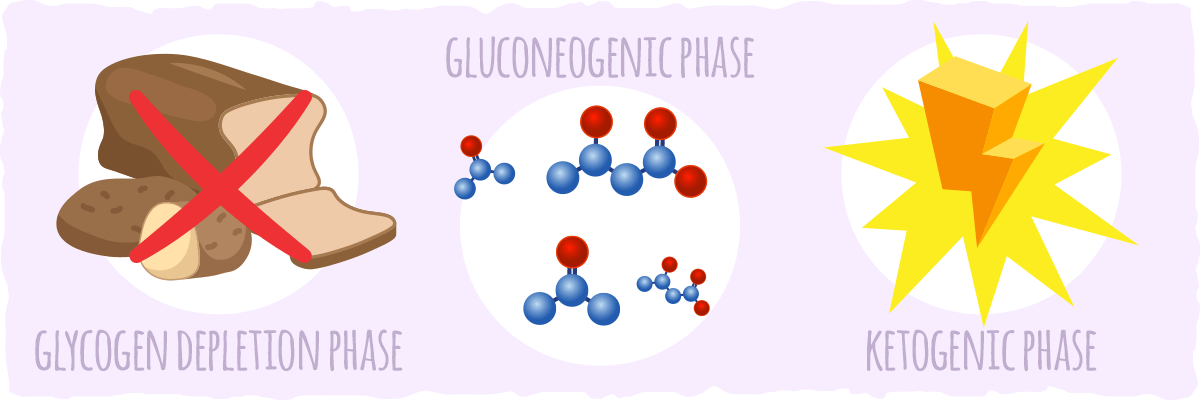
Stage 1 — The glycogen depletion phase — 6 to 24 hours of fasting
During this phase, most energy is provided by glycogen. At this point, hormone levels are shifting, causing increases in gluconeogenesis and fat burning, but ketone production is not active yet.
Stage 2 — The gluconeogenic phase — 2 to 10 days of fasting
During this phase, glycogen is fully depleted, and gluconeogenesis takes over to provide the body with energy. Ketones are starting to be produced, but at lower levels. You may notice that you have keto breath and are urinating more often because of increased acetone levels in your blood. The window of time for this phase is so broad (two to ten days) because it depends on who is fasting. For example, healthy males and obese individuals tend to stay in the gluconeogenic phase for more extended periods of time than healthy women.
Stage 3 — The ketogenic phase — after 2 days of fasting or more
This phase is characterized by a decrease in protein breakdown for energy and an increase in fat and ketone use. At this point, you will definitely be in ketosis. Each person will enter this stage at different rates depending on genetic and lifestyle factors, their activity levels, and how many times they fasted/restricted carbs before.
There you have it — the three stages that everyone goes through on the path to ketosis. Whether you are fasting from carbohydrates (the ketogenic diet) or fasting from all food, you will go through these stages. However, this doesn’t mean that you’ll get the same benefits from fasting as you do from following the ketogenic diet.
The Difference Between Ketogenic Diet Ketosis and Starvation Ketosis
The ketosis that you experience on the ketogenic diet is much safer and healthier than the ketosis you get into as a result of fasting. While you are fasting, your body has no food sources, so it starts converting the protein in your muscles to glucose. This causes rapid muscle loss.
Yes, you lose weight in starvation; your body will still convert the fat from your fat cells into energy to survive. But this is not healthy. Do you want to look like a ragdoll of skin and bones? Didn’t think so.
The ketogenic diet, on the other hand, provides us with the safest and healthiest way to experience the benefits of ketosis. Why? Because restricting carbohydrates while maintaining adequate caloric intake from fat and protein allows the ketogenic process to preserve muscle tissue by using ketosis and the ketone bodies we create for fuel (without needing to use precious muscle mass).
However, muscle mass preservation isn’t the only unique benefit that the ketogenic diet and ketosis provide our bodies. Many research studies have found that ketones have a plethora of beneficial effects throughout the body as well.
Five Health Benefits of Ketosis
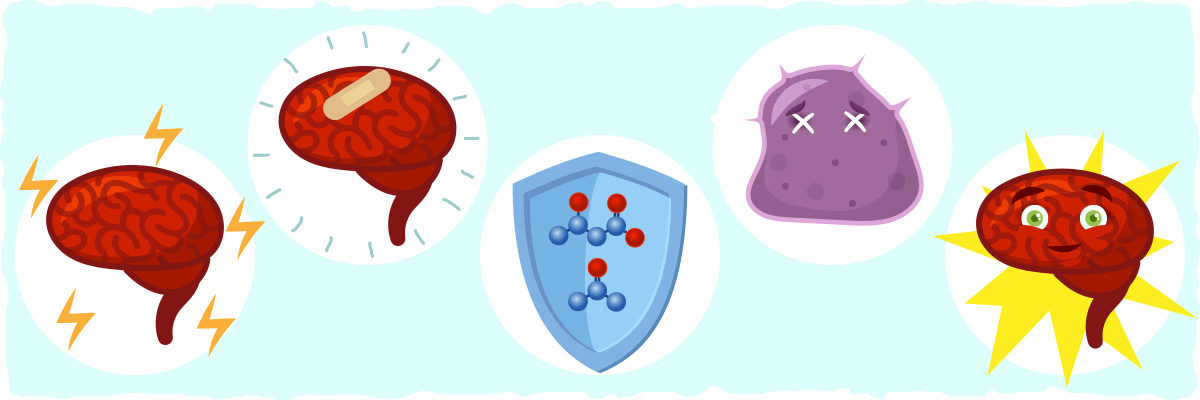
1. Ketones Stimulate Mitochondrial Production
New mitochondria are formed in cells that burn ketones for fuel. This occurs especially in the brain cells of ketogenic dieters.
Why does this matter? Because the extra mitochondria help improve the energy production and health of the cells.
2. Ketosis Protects and Regenerates The Nervous System
Ketones help preserve the function of aging nerve cells and aid in the regeneration of damaged and malfunctioning nervous system cells. For example, many studies have found that ketones help acute brain injuries improve significantly.
3. Ketones Act Like an Antioxidant
Earlier we found out that ketones are a more efficient fuel source than sugar. One of the reasons why is this the case is that ketones produce less reactive oxygen species and free radicals than sugar when they are used. By burning ketones for fuel, the body is able to protect itself from the damage and disease that reactive oxygen species and free radicals can cause.
4. Ketones Help Prevent The Growth of Some Cancers
Research shows that ketones can help fight various types of cancer. This is because most cancer cells cannot use ketones as fuel. Without fuel, the cancer cells have no energy for growth, and the immune system can finally eliminate them from the body.
5. Ketones Improve Brain Function Tremendously
There are many research studies on how burning ketones for fuel can help people with autism, epilepsy, Alzheimer’s disease, and Parkinson’s disease. In many cases, the ketogenic diet and ketones are more effective than conventional treatments.
These promising research results can mostly be explained by two factors:
- Brain cells function more efficiently when they use ketones for fuel rather than sugar.
- Ketones can have an inhibitory effect on nerve cells.
What happens when you make a hyper-excitable nervous system more efficient and less active? Less autism-like behavior, fewer seizures, and better brain function.
This list of benefits (and our article on the benefits of the ketogenic diet) is not even close to being complete. Scientists are just beginning to understand the effects that ketones have on the body, so we will be keeping our eyes open for new discoveries regarding ketones, ketosis, and the ketogenic diet.
Now, you may be thinking that ketosis sounds great, but is there any downside? Other than the mild dehydration that may occur in the first few days of carbohydrate restriction called “the keto flu”, there are no downsides to using the ketogenic diet to get into ketosis. The only time ketosis can be dangerous is when insulin is either unavailable or not functioning properly. When this happens, ketoacidosis may occur.
Ketoacidosis: The Bad Side of Ketosis
Ketoacidosis is a potentially lethal state that occurs when excess ketones accumulate in the blood. Some doctors may advise against raising your ketone levels using the ketogenic diet because they fear you may go into ketoacidosis.
These fears, however, are misguided. The process of ketosis is closely regulated by the liver, and the body rarely produces more ketones then it needs for fuel. This is why the ketogenic diet is so safe and effective.
Ketoacidosis, on the other hand, will most likely occur in type 1 and type 2 diabetics that don’t have their blood sugar levels under control.
The combination of insulin deficiency and high blood sugar levels that are commonly found in people with diabetes create a vicious cycle that causes ketones to build up excessively in the blood.
By restricting carbs, however, healthy individuals and people with diabetes can keep their blood sugar levels under control and experience the benefits of using ketones for fuel.
Putting It All Together
When you restrict carbohydrates, your liver uses two processes to fuel your cells — ketogenesis and gluconeogenesis.
Ketogenesis takes fatty acids from stored fat and dietary fat and converts them into ketones. The ketones are then released into the blood to fuel cells like our brain and muscle cells. The process by which the body burns ketones for fuel is called ketosis.
However, This does not mean that every cell in the body can survive on ketones. Some cells always need to use sugar for energy. To meet the energy demands that can’t be met by ketones, your liver uses a process called gluconeogenesis. Gluconeogenesis is like a magic trick that the liver uses to convert non-sugar substrates like glycerol from fatty acids, amino acids from protein, and lactate from muscles into sugar.
Together, ketogenesis and gluconeogenesis create the ketones and sugar that meet all of the body’s energy needs when food isn’t available or when carbohydrates are restricted.
Although ketones are most well-known for being an alternative fuel source, they provide us with many unique benefits as well. The most effective and safest way to get all of the benefits of ketosis is by following the ketogenic diet. By doing so, you won’t run the risk of losing precious muscle mass or entering the potentially lethally state of ketoacidosis.
However, the ketogenic diet is a bit more nuanced than many people think. It’s not only about restricting carbohydrates — ensuring adequate protein, fat, and calorie consumption are essential to your success as well.
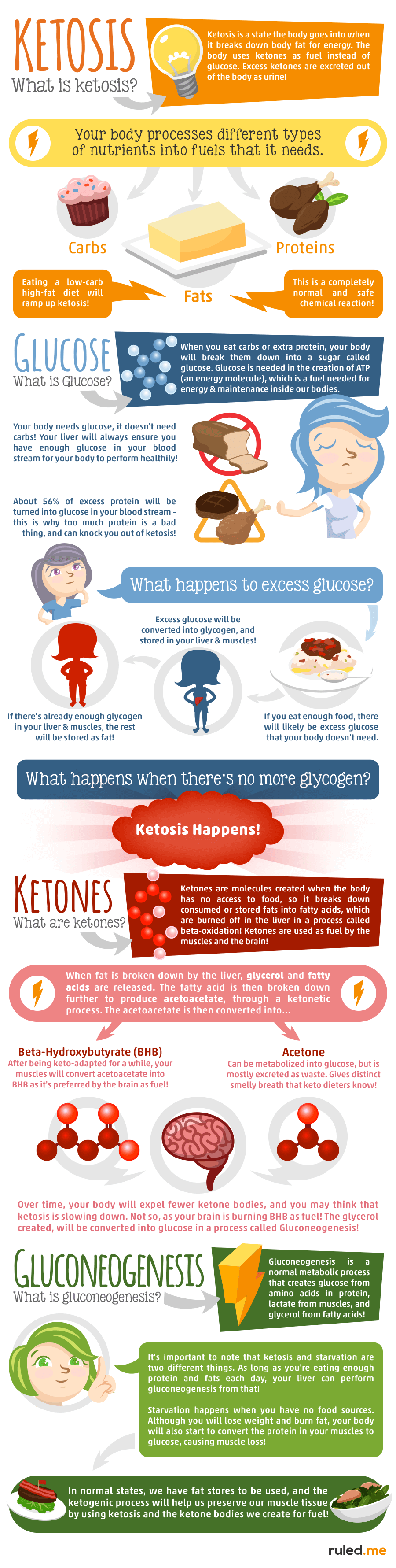
Below, we have a simplified graphic on what ketosis is and how it works:
Sources
- What Are Ketones? Everything You Need to Know — Ruled.me
- What is Gluconeogenesis? — Ruled.me
- Glycogen Supercompensation Enhances Athletic Performance — The Journal of Performance Enhancement
- Energy metabolism, fuel selection and body weight regulation — NCBI
- Why does brain metabolism not favor burning of fatty acids to provide energy? – Reflections on disadvantages of the use of free fatty acids as fuel for brain — NCBI
- Desperately seeking sugar: glial cells as hypoglycemia sensors — NCBI
- [Nitrogen balance during modified fasting (author’s transl)]. — NCBI
- Protein Controversies in Diabetes — Diabetes Spectrum
- Hormonal regulation of ketone-body metabolism in man. — NCBI
- Ketone bodies, potential therapeutic uses. — NCBI
- The neuroprotective properties of calorie restriction, the ketogenic diet, and ketone bodies. — NCBI
So I take it glucose produced via gluconeogenesis doesn’t generate an insulin response?
Ryan, it does create an insulin response but not a large one. The glucose that is formed during gluconeogenesis is normally used to keep our glucose at a necessary baseline. If you’re overconsuming on protein, the excess glucose can cause an increased insulin response, though.
Great breakdown of ketosis. I liked the point about not detecting urine ketones after awhile of being in ketosis. Any data on blood ketones dropping after awhile? Many of us use blood meters now, which detect blood ketones (and is a lot more accurate).
Thanks a lot!
Your blood ketones don’t usually drop too much unless you’re starting to bring up your other macros like protein and carbs. Although, after a while, your body will be using your ketones more effectively than when it isn’t deeply keto-adapted. Hope that answers your question – I try to keep it relatively simple for people just starting out.
Out of curiosity – what effect would stevia, erythritol, xylitol or other non-caloric sweeteners have on insulin and blood sugar? Are there any studies on this? Thanks in advance!
I would anticipate the sweet taste to activate the part of our brain that is connected to our GI tract, hence stimulating a little insulin surge… making one a little hypoglycemic afterwards. I ponder however if the magnitude of an insulin surge of this nature would demand a change in epinephrine or cortisol levels for gluconeogenesis or glycogenolysis… food for thought…
Great article and info graphic!
Cheers,
Nik
Nik,
It depends totally on the sweeteners. The glycemic index will be what determines the raise (or non-raising qualities) that the sweetener has. Erythritol and stevia are 2 sweeteners that have a glycemic index of 0 and don’t raise blood sugars:
https://www.ncbi.nlm.nih.gov/pubmed/8039489
https://www.ncbi.nlm.nih.gov/pmc/articles/PMC2900484/
However, xylitol, sucralose, and most of the other sweeteners out there will. Of course, these studies are done on healthy individuals in most cases, so there may be a SLIGHT raise in insulin levels with regular sweet sensations for the folks who are overweight and have hormone issues (as I’ve also seen studies on images of food raising insulin levels in regular folks). But, I think it’s a lot better than having a huge spike in insulin (or an insulin surge, as you put it). I haven’t really seen many studies on the use of sweeteners in overweight/out of whack hormone individuals, though.
Hi I am new to this ketosis. I already have high cholesterol, if I start consuming high fat, would it harm me?
Ann
Anne, as long as you’re consuming healthy fats and are strict, then you should be fine. Actually, you should see a reduction in your LDL and an increase in HDL. Generally, your cholesterol numbers will go up across the board in the beginning – so give it about 3 months before getting bloodwork done.
Hi! I’ve recently increased proteins from 60 to 75-90 due to more workouts and wanting to gain muscle. However, since then I keep getting dropped from ketosis. My LBM is 95. What’s going on? I certainly don’t want to decrease proteins while I’m working out as I am- lifting 3 days a week,running 1-2 and HIIT 2 x week for 30 min. Any ideas?? I’m using blood meter.
Make sure that your fats are balancing out with the proteins. That will most likely help. There’s also a glucose response when you do more exercise, so that could be part of the issue if you’re measuring post workouts.
“Yes, you lose weight in starvation; your body also converts the fat in your stores to glucose in order to survive. But this is not healthy. Do you want to look like a ragdoll of skin and bones? Didn’t think so.” Way to bastardize science. It’s called a caloric deficit. Ketosis or not, if you are in a caloric deficit,(i.e. losing fat) you will burn the fat in your stores, which is the ONLY way to lose fat. No need to screw over science or ben alarmist in order to make Ketosis sound special or superior. Which it is not.
Yep – I put that in as more of a warning to open people’s eyes. I often come across many people trying to go into a super restrictive caloric deficit to lose weight – and it usually doesn’t go well for them. Not trying to bastardize the science. I am also fully aware that many of the studies done on keto vs. normal dieting shows no difference in weight loss results at the end – and I mention this in many of the articles on the site.
“This is important, because if you are not eating enough protein, your muscle tissues will be burned to make the glucose that your body needs.”
But…..wouldn’t this happen only after all of one’s fat reserves were metabolized for fuel? I had read that the body burns fat before muscle.
It amplifies it, but muscle loss will happen before total body fat is gone.
Craig, can you provide the reference for the point “56% of excess protein is turned into glucose”? Im clear that excess protien can inhibit adaption, but im looking to substantiate the idea that excess protein is turned into glucose and can kick one out of being adapted.
I just personally wouldn’t go over 1.3g protein per pound of lean body mass if you’re lifting competitively. Otherwise, you shouldn’t need to worry. From the studies I’ve read on protein and glucose, it can vary greatly based on what you’re doing and what you’re LBM is.
Thanks, but .. If one is in keto, will excess protien consumption be turned into glucose and take one out of keto or reduce the level of ketosis. Im looking for references. Hope you can help.
Craig, you are saying that 56% of excess protein is converted to glucose. What happens to 44% of the remaining excess. Thx
Sorry about the late reply, I wasn’t getting notifications of the comments (I usually get e-mailed). That’s generally correct, yes. Some of the amino acids are able to be turned into ketones while most of the remaining aminos are turned into glucose.
My gall bladder has been removed. How will that affect going into ketosis. I’m having all the signs but not registering on my Ketonix.
Hi I recently started 21 day Bone broth diet without any dairy, grain, soy, gluten and sugar. It wasn’t easy and I stuck to it but had cake on the 7th day (friend’s bday party..). I feel so bad now and the book that I followed said my body will get thrown out of ketosis and i have to start again. Is that true? Will it undo a whole week’s effort?
That’s true, but a half truth. You will get knocked out of ketosis, but your body will be more efficient at getting back into it. 1 week isn’t that much, but after months on the ketogenic diet, the body gets back into a ketotic state within 1-2 days max.
As a diabetic (with keytone measuring equipment) I disagree slightly with other comments.
The above basically says.. keytones = keytosis – and i can say with certainty that within hours of resuming a zero carb diet your body will be creating keytones (and therefore burning bodyfat again)
If you think about it carbohydrates are famously a very short lived energy source so this makes sense to me based on my medical testing.
Thanks
hi craig, if on a keto diet our bodies burn fat reserves first, then what about the high fat we’re putting in on a daily basis? when do they get burned off? isnt this counterproductive? or is there something i dont understand? thanks!
That’s why you put yourself into a caloric deficit. While it’s still not true to argue “calories in calories out” it does hold some truth and that’s what I generally recommend going off of. Your body can’t live off of nothing – so the food on your plate helps supplement the body fat that you’re using for energy 🙂
“the liver can perform gluconeogenesis from the amino acids and fatty acids you ingest”. Not from the fatty acids. Only glycerol is used in gluconeogenesis.
You’re right, Emmanuel. Thanks for pointing that out.
We recently updated the article with more in-depth information that makes the subtleties of gluconeogenesis more clear.
Should cholesterol lowering medication be stopped when following this diet? Will it still do it’s job if taking Lipitor?
Hi JPS, I think that’s something you should bring up with your doctor. They will likely want to have you do blood tests and make sure that everything is going smoothly before changing your medication.
I think the question I should have asked is will my body still go into Ketosis while I’m taking Lipitor
Yes, it should. Make sure that you are informing your doctor so they can monitor your medication needs.
is there anyone using this diet currently..
Yes! 🙂
hows it working for you..and what foods did you you eat such as snack foods..
Hey Dave, stealing an answer away from Laura. I’ve been on keto for over 8 years now and it’s worked very well. At first, it reduced my weight, and now it’s kept my bloodwork under control. If you’re starting out for weight loss, I recommend not snacking. You want to keep insulin spikes at a minimum during the day and snacking will spike your insulin. If you’re doing it for maintenance, then you can snack during the day when you’re hungry as long as it fits within your goals.
Yes, Since July of last year. Down 40 lbs of fat. Except for the initial six weeks it took me to get adapted, the diet has been painless. As an added bonus, I stopped getting migraine headaches (which I have had for 30+ years). Turns out being in ketosis for some is a cure for migraines.
What are your thoughts on a plant based/vegan version of the Keto diet?
It can be done!
https://www.ruled.me/compre…
I have one question about this..
Are keytones created by eating fat, or by burning it?
For example… if i eat a load of cheese will my keytones drop (because my body doesn’t need to break down my fat stores anymore?)
Or will keytosis continue? Basically are keytones a sign that your burning bodily fat rather than diet based fat?
Thanks 🙂
Hey Richie,
You will find all the info you are looking for in this article on ketones:
https://www.ruled.me/ketone…
In short, ketones are created when we convert fatty acids (or ketogenic amino acids) into ketones in the liver. This typically happens when our insulin levels are low, carbs are restricted, and our brain needs an alternative fuel source.
Your body fat and your dietary fat are both used to create ketones when carbs are being restricted. When you eat fewer calories than you need to maintain your weight, you will start burning more of your body fat for fuel.
If you eat A LOT of cheese, your ketones may drop. This will happen because the complete protein in the cheese will raise insulin levels, resulting in decreased ketone production in the liver.
Remembered Leonardo’s lechon owners in May Puhunan stating that lechon was his answer to losing 30 lbs, and so with his brother. It seems the theory makes sense after reading this article about the function of ketones produced in our liver. But how long will you go on
practising ketogenesis diet?
Hey Annamarie,
Yes, lechon is keto-friendly. It sounds like they were naturally following a low carb, that’s awesome!
I’m not sure exactly what you are trying to ask.
Are you asking about how long you can stay on the ketogenic diet for? If so, you can stay on it for as long as you are healthy and getting the results you want.
If that isn’t what you were asking, would you be willing to rephrase the question? Thanks.
Great info, thanks!
New to keto, can you comment on the intermittent fasting (eat in daily 8hr window fast 16hrs) addition to eating a balanced keto diet to ones ability to enter ketosis?
Roc
Thanks for the support!
Intermittent fasting can definitely help you enter ketosis more quickly and get you into deeper levels of ketosis once you are in ketosis.
If you’d like to learn more about using intermittent fasting with keto, check out this article:
https://www.ruled.me/intermittent-fasting-on-keto-diet/
Just getting started. I am having a hard time eating enough fat and proteins each day. I should be at about 130 fat and 120 protein but am running about 50 short each day in both categories. I am just so full all day, it’s hard to eat enough. How important is it to get to my goal numbers, and if I can’t are there ratios I should at least meet. (Do I need to be sure I’m eating more fat than protein, etc) Carbs haven’t been a problem and calories are obviously low as well. THANKS!
Hey Brad,
To give you specific recommendations, I’d need to see pretty much everything you entered into the keto calculator.
In general, from a calorie standpoint, make sure you don’t have more than a 30% calorie deficit. When it comes to protein, eat more than 0.6 grams per pound of lean bodyweight day. By sticking to these suggestions, you will be able lose weight in a healthy way.
This is by far the best article that hits right in the head explaining the entire science behind the entire keto diet process.
I landed here while searching for eating fats to burn fats, and i still partially get it. You address it with this sentence “Ketogenesis takes fatty acids from stored fat and dietary fat and converts them into ketone”. So i get that dietary fat becomes essential for ketegeneis to function right, but in what ratio does it burn the stored fat? Isn’t that a function of how much ketone the body needs to generate and how much fat is available for it right now to burn, since stores fat is readily available then should it just burn it all up from that store?
Hey Anirudh,
Thanks for the praise! It means a lot.
Ketogenesis is a complex process that depends on many factors. In general, you’ll be in ketosis as long as insulin levels are low enough and the energy substrates in the liver favor ketone production.
In between meals you’ll burn more of your stored fat as ketones while you are on keto and right after meals you’ll tend to burn the fat you ate.
The ratio to which stored fat is burned depends on how many calories you eat and your activity levels. If you are in a calorie deficit from exercising and/or eating fewer calories, you will burn more stored fat. Conversely, if you are in a calorie excess, you will burn more of the dietary fat.
Does that make sense? If you have any other questions, please let me know.
Great article and very insightful to read. It’s surprising to learn that ketones are so much better than glucose. Why hasn’t the human body naturally evolved into generating ketones instead of glucose? Wouldn’t that create a much superior human race?
actually, because of the increasing amount of “quick” food, or “fast” food, more and more people have evolved FROM consuming more fat and protein to consuming more carb, less fat and protein. The evolution has gone downhill instead.
Yes – first time I tried this diet migraines disappeared for good and never came back.
“The ketosis that you experience on the ketogenic diet is much safer and
healthier than the ketosis you get into as a result of fasting. While
you are fasting, your body has no food sources, so it starts converting
the protein in your muscles to glucose. This causes rapid muscle loss.”
This is simply not true.
There are many studies now that have proven lengthy fasts do not diminish protein levels from your muscles. In fact, in deep states of fasting, the amino acid leucine is produced by the body in larger amounts which allows for the preservation of muscle.
One study showed that there was no muscle loss from a two week continuous fast. On the contrary, studies where there was less caloric intake compared to zero caloric intake (fasting) demonstrated muscle loss of up to 30% in the same period.
Secondly, you make the assumption that the body has no food sources in fasting yet the premise of ketosis is the formation of ketones from adipose tissue – which we all have. Therefore, the statement of “while fasting, your body has no food sources” is not an accurate one. Even individuals with a lower BMI will still have fat reserves, only rare circumstances will demonstrate otherwise.
I think more research is necessary before we can make any conclusive judgements regarding nutrition like most people do but to me it is for certain that we really don’t know whats going on and yet we discuss things like we do.
Hey Fedortist,
Thanks for your input. Would you be willing to send me the studies you are referring to?
Here is my take on what you said:
Since the purpose of this article was not meant to dig deep into the physiology of fasting, we didn’t explore the research that went into what I meant by my statement.
In general, if you have no food sources (meaning actual food that you consume, not energy you have stored away), your body will break down muscle mass to meet the energy needs that cannot be met by burning fat. The amount of muscle that is broken down will decrease over time as more and more cells burn ketones for fuel, but muscle breakdown won’t just stop completely.
All of your cells cannot run purely on fat and ketones, even if you are fully keto adapted. Therefore, you still have glucose needs that must be met at all times.
How will you meet these needs if there are no food sources available? Breakdown your other energy sources that can be converted into sugar like skeletal muscle.
“Altogether, ketogenesis (the process of burning ketones for fuel) cuts down the amount of lean mass lost during fasting by 5-fold. In other words, rather than breaking down 200 grams of muscle per day, using ketones for fuel reduces our need to burn muscle for fuel to 40 grams of muscle per day.”
This is from another one of our articles that goes a bit deeper into fasting physiology (and the sources that I derived that statement from can be found at the bottom of the article):
https://www.ruled.me/3-reas…
If you send me the studies you are referring to, I would love to look through them and see where my knowledge of fasting is inaccurate so I can update it.
Thanks again for taking the time write this. We need conversations like this to uncover more research and reach a deeper understanding of physiology and health.
Thank you for addressing this part of the article. I’ve also seen research that fasting upregulates human growth hormone and BDNF which acts to help preserve muscle mass and stimulate brain function, so even though muscle loss can and will occur, the body has mechanisms to spare muscle mass and increase neural pathways for survival. There are also many other health benefits to fasting like autophagy (I understand fasting is another topic, but that paragraph caught my attention as well).
I thought the article on the whole was an exceptional breakdown of ketosis and metabolic flexibility – thank you for presenting it in such a concise and understandable manner. I’ve been doing keto and IF for 2 years and have heavily researched both and this info is excellent.
Do you have other articles that talk about the importance of micronutrients and the healthy carbs and fiber needed while on a keto diet?
Hey Kyle,
Well said! I highly appreciate your comments.
To answer your question, we have a comprehensive guide to micronutrients on keto that you can find here:
https://www.ruled.me/guide-…
And we have some in-depth info on carbs (and other macros) in our article on macronutrients and keto:
https://www.ruled.me/macron…
Regarding fiber, we emphasize the importance of consuming whole plant foods (e.g., low-carb veggies, nuts, seeds, etc.) for their fiber and micronutrient content throughout our articles, but there isn’t any specific article I can point you toward.
If you have any further questions, let me know. Thanks again for the feedback.
I’m trying to follow a keto diet with a calorie deficit to lose fat, doing well so far. I think I have been conned into buying a keto-supplement to help me get into ketosis quicker (if I’ve fallen off the wagon and eaten cake….) I’m trying to understand what impact this will have – If you take beta-hydroxybutyrate in a supplement am I just providing my body with extra fuel (albeit good fuel) or can this force your body to get into a ketosis state quicker? Very worried I’ve just spent loads of money on something that will reduce my calorie deficit and not help…
Hey Sarah,
Your supplement will reduce your deficit, but only by an insignificant amount. Regarding ketosis, it will only keep you in ketosis for as long as it takes your body to use the ketones from the supplement. The only way to have sustained ketosis is by fasting or following the keto diet.
If you want to learn more about beta-hydroxybutyrate supplements, we actually wrote an article about one of the most popular ones:
https://www.ruled.me/keto-os-side-effects-benefits-worth/
Does all of this make sense? If you have any questions, please let me know.
Great info for my life time, I’m going to start my keto diet from June 1st 2018 after reading this info. My best regards to author.
Good luck, Vik! Let me know if you need help with anything.
I have one point I’m still confused on and ive struggled to find an answer…
Do ketones come JUST from burning body fat? or do they come from the actual fat you eat too?
E.g if I eat a fatty meal, would my ketones “ramp up” to burn that dietary fat before starting on my body fat? – or are the ketones directly related to how much body fat your burning?
Thanks 🙂
Yes, you should see an increase in ketones when you eat fat. Your body will burn dietary fat first, then body fat. Usually you want to be in ~20% deficit to your body’s needs to lose weight.
Great thanks!!
How do sweeteners affect ketosis? I’ve seen a LOT of recipes for the keto diet using sweeteners, but I wasn’t sure if the chemicals that make up sweeteners (eg stevia) would affect bodily processes – either ketosis specifically, or just in general.
In general, it depends on the sweetener. However, the sweeteners we tend to recommend (stevia and Erythritol) don’t have any effect on ketosis.
If you want to read more about sweeteners, feel free to check out this article:
https://www.ruled.me/keto-diet-plan-best-and-worst-sweeteners/
I’d like an answer to the following, if anyone with the knowledge has time to explain:
I generally follow a ketogenic diet. I wake up in the morning, take a blood ketone strip reading of 1.4 mmol, on average. Then I work out fasted (weight training and LISS walking), and eat a meal – after a 16 hour fast – that includes 10 net carbs from a small slice of whole grain bread, but the meal has a glycemic load of 6. My eating window ends after 6-8 hours, during which I consume a total of 30-40 net grams for the day. My calorie balance is net negative to the tune of 500-900 calories. The next day, I repeat this. For 60 straight days, I do this, and knock 5.5 inches off my waist measurement, lose 20 pounds, and see my strength increase. At no point in those 60 days does my blood ketone level dip below 1.0.
Do I assume that I am keto-adapted? If I suddenly consume 40 grams of carbs, like oatmeal, in one sitting after 60 days of being in the state I described above, does the ketogenesis pathway completely halt, or does it get down regulated until the oatmeal is metabolized?
Yes, from what I’ve seen in the research your body probably has undergone most of the adaptations needed for you to be keto-adapted.
If you were to eat one meal like what you described, it would probably just take you out of ketosis (yes, this means ketogenesis would be halted) until you used up the carbs and insulin levels dropped again.
However, just because ketogenesis will be halted temporarily doesn’t mean that you would have to go through the whole process of adapting to keto again. In fact, you’d probably be back in ketosis within the next day (assuming you go right back to keto dieting). If you exercise after having that carb-rich meal, you will be able to decrease the amount of time it will take you to get back into ketosis even further.
In other words, having one higher carb meal is not enough to reverse your keto adaptations. You’d probably have to eat a higher carb diet for several weeks for this to happen.
Does this all make sense? If you have any other questions, please let me know. 🙂
I have a question about IF and ketosis when amino acids are involved. I’ve recently started school again 2 days a week and needed a pick me up in the morning. I’m not a fan of coffee and have found that the new 0 carb 0 calorie energy drink Bang is right up my alley. It contains amino acids. Would the amino acids run a risk of countering my IF if I drink it outside of my eating window?
Keto since 07/18 starting weight 324lb current weight 255lb
Hey Dave,
It will impair some of the mechanisms that are triggered by intermittent fasting (like autophagy), but it’s tough to determine exactly how much of an impact a drink like that would have. Since it is zero calories, zero carbs, and what I assume is a small amount of amino acids, I doubt it will have a significant impact.
From a weight loss perspective, it will definitely not have a significant impact unless it triggers cravings that make you want to eat more than usual.
Just to add to this, there have been mixed reviews on artificial sweeteners, such as sucralose, and that it may raise insulin short term, and possibly have negative long term effects on blood sugar levels. As far as it kicking you out of ketogensis, I am not sure. Probably depends on the severity of insulin spike, if any.
Hey Kevin,
Thanks for the input. I’ve come across similar findings but doubt that it would have any substantial impact on ketone production.
Would you be willing to provide links to the research you’re referencing? I’m curious to see what studies you came across.
I have read several articles on this keto diet and its all wrong. Do you have a degree in biology? Carbs break down into glucose and are used as fuel for the body. Excess carbs not used are stored as glycogen/fat. If you use all the body’s carbs and the body breaks down its fat stores for fuel it is broken down into glycerol and fatty acids. The glycerol is easily converted into glucose for fuel and the fatty acids into ketone bodies as a byproduct expelled via urine. Its true ketone bodies can be converted into acetly coa for energy but this is a high expenditure process that takes only a little less energy than it results in and is not the body’s go to for energy. I could get into the binding of receptors to the alpha g proteins and the other 7 subsequent processes it takes to convert 1 fatty acid molecule to acetyl coa but it would be over most people’s heads. So to save time I’ll just say ketones are a waste product. Also, proteins are NOT converted into glucose unless under the most dire of circumstances. Only after the body has depleted all glucose reserves, and ALL fat reserves, will the body turn to proteins to convert into glucose. Your muscles are made of protein, including your heart, which means if your body is eating its muscles to provide you with fuel you are starving and near death and shouldn’t be on any damn diet and/or live in a third world country. All of our muscles and most of the inner workings of our cells are made up of proteins. In fact, our bodies are made up of about 70% proteins, 28% carbs, and 2% fat, on average, coincidentally exactly the same amounts that our diet should be made of. Its not just you I’ve read repeat these proposterous statements about ketosis and the keto diet but I felt I needed speak up because its very misleading. That much fat in a diet is sure to lead to an exponential amount of problems that have not yet come forth…kind of like the tragic consequences of new vaccines not yet duly tested. Much more protein than fat should be consumed and on average 20-80g of carbs a day. Its fine to stay in ketosis to lose weight for a short amount of time because the extra weight is more dangerous to the body than ketosis is for 3-6 months. However, in the scientific community it is generally regarded that ketones in your blood and urine is a sign of imminent death, especially if you’re not doing it on purpose.
I understand where you are coming from. There is so much misleading information regarding the keto diet out there, and I too feel the need to speak up about it (which is why I write for Ruled.me). However, I find many of your statements misleading as well.
In this case, it seems that we disagree on these key points:
-“the glycerol is easily converted into glucose for fuel and the fatty acids into ketone bodies as a byproduct expelled via urine.”
Why would your body waste the ridiculous amount of ATP potential found in fatty acids by turning them into ketone bodies and excreting them out of the body? Why would your body even go through ketogenesis if ketones are just a waste product?
-“Only after the body has depleted all glucose reserves, and ALL fat reserves, will the body turn to proteins to convert into glucose.”
The body doesn’t work by all-or-nothing energy metabolism. It adapts to the available energy substrates in the most efficient way possible to protect against death and maintain the function of our vital organs. Arguably the most vital organ of them all is the brain. Unfortunately, most of the brain cells can’t use fatty acids for energy. To maintain the function of our brain, we MUST produce an alternative fuel source that brain cells can use or else we will HAVE to convert protein to glucose at a rate that will cause us to rapidly deteriorate before we have a chance to find more food.
-“Your muscles are made of protein, including your heart, which means if your body is eating its muscles to provide you with fuel you are starving and near death and shouldn’t be on any damn diet and/or live in a third world country.”
Your body doesn’t just burn off any muscle. Your skeletal muscle will be the first to go (typically the skeletal muscle that is used the least). Luckily, ketones will be produced to help fuel the brain and spare some of that muscle loss.
-“That much fat in a diet is sure to lead to an exponential amount of problems that have not yet come forth…kind of like the tragic consequences of new vaccines not yet duly tested. Much more protein than fat should be consumed and on average 20-80g of carbs a day. Its fine to stay in ketosis to lose weight for a short amount of time because the extra weight is more dangerous to the body than ketosis is for 3-6 months. “
Excess fat in the diet can lead to issues for some people. No diet is best for everyone (the same goes for your dietary recommendations). Some people experience the best health of their life (verified via blood biomarkers and subjective well-being) while on the keto diet, while others may increase their heart disease risk or just not handle low-carb dieting well on a hormonal level or a subjective level.
-“However, in the scientific community it is generally regarded that ketones in your blood and urine is a sign of imminent death, especially if you’re not doing it on purpose.”
You are referring to ketoacidosis, not nutritional ketosis. When blood sugar levels are out of control in an insulin resistant or insulin deficient person, this can be lethal because the mechanisms that help regulate blood sugar levels and ketone production are not working properly. As a result, blood sugar and ketone levels will keep increasing, making the blood ridiculously acidic.
This is completely different from what happens in a person who is keto dieting so that they are in nutritional ketosis. Their blood sugar levels and insulin levels will decrease, and they will start to increase fat burning and ketone production as they continue to restrict carbs. If ketone levels get a bit high or insulin/blood sugar levels increase while on a keto diet, then the regulatory mechanisms will still be intact to prevent the body from ever getting close to ketoacidosis.
Thanks for your input. I hope this helps clear up any confusion about what I am trying to communicate with this article.
I agree with you on many of these points. Thank you for replying. I appreciate the effort and research you have put into this. The keto diet is really just Atkins revisited. And believe me I myself use this exact diet to lose weight. I will have to respond to your statements after more research as you raise some interesting points. I am aware nutritional ketosis and ketoacidosis are different things. However, there is a thin line between the two. Ketoacidosis is just the next step if not monitored properly, which is why I said if not done purposely it is a precursor to death. Let me check into ketogenesis more before I can respond properly. Glucogenesis however has just presented as a theory and has not been verified as a viable possibility.
Looking forward to your response. I have a couple of important points to make regarding what you wrote in this comment that may be worth looking into as well:
“However, there is a thin line between the two. Ketoacidosis is just the next step if not monitored properly, which is why I said if not done purposely it is a precursor to death.”
For most people on the keto diet, this line is much much thicker than you think. A significant degree of insulin resistance (type 2 diabetes without medication or undergoing extreme stress levels) or insulin deficiency (type 1 diabetes without medication) is required before the body will even start to accumulate such a dangerous amount of blood sugar and ketones.
“Glucogenesis however has just presented as a theory and has not been verified as a viable possibility.”
How is a biological process that your body synthesizes specific enzymes for just a theory? Also, what causes the muscle loss that occurs when we are in a calorie deficit (and not stimulating muscle growth via resistance training and increased protein consumption)? Without gluconeogenesis, your body would simply be shedding off muscle and wasting away precious amino acids.
I have a feeling I am misinterpreting what you are saying here, so disregard any of my tangents if they are not necessary. Nonetheless, I am curious to see what you dig up with your research.
Excellent article on keto expecially the infographics. I hope you can shed some light on my very hight ketones reading of 5.1mmol after 6 days on a strct keto diet with 2 of the days i was totally fasting. I looked around all over the internet and most of them are saying that 1.5 to 3.0 is normal. I was afraid that my high levels is getting dangerous so I stoped the diet immediately. Does this mean my body is good at producing ketones but not good at burning them?
Hey Shankar,
The combination of the keto diet and 2 days of fasting can naturally cause your ketones to get that high. This probably isn’t a cause for concern unless your blood sugar is high along with your ketone levels being high.
Did you measure your ketone levels while you were following the keto diet (before the fast)? I am thinking that your ketone levels were probably normal (0.5 to 3.0 mmol/L) before the fast, and the fast is what brought them even higher. Also, if you went back to eating a keto diet after that 2-day fast, you would probably drop back down to normal ketone levels.
Hey Tyler, unfortunately I got my meter after my fasting period. I guess you might be right. My blood sugar was 4.3 mmol while my ketones were 5.1 mmol. It was very frustrating to get the right assurance on my ketones level. I only found 2 sources all over the internet, one was from ketosummit.com and the other was from healthline.com/health/ketos…. After looking at the chart from healthline.com I panicked and stopped the diet. Attached bellow are both. Would love to hear your thoughts https://uploads.disquscdn.c… https://uploads.disquscdn.c… .
Hi, amazing article. I was just wondering what you would say is the approximate time it takes for the body to adapt to using ketone as a fule source? Also, when my body has adapted would I be kicked out of ketosis if I were to eat some carbs couple hours before working out couple days a week?
Good question. Unfortunately, it doesn’t come with a clear, precise answer.
There is no definitive threshold of time spent in ketosis that guarantees “keto adaptation”. Keto adaptation is more like a continuous process of small adjustments that accumulate overtime so you can better handle carb restriction.
In general, you will burn ketones when your body produces them, and it will get better at using ketones for fuel as it stays in ketosis.
Some studies indicate that it can take anywhere from a few weeks to months for the body to enter deep ketosis and reach a significantly higher ketone burning capacity. (Hopefully this gives you a better idea of what to expect.)
To answer your second question:
The diet strategy you are hinting at is actually known as a targeted ketogenic diet. If you’d like to learn more about this approach, feel free to check out our guide on the topic:
https://www.ruled.me/target…
If you have any further questions, please let me know.
Fasting does not immediately cause break down of muscle as you suggest, that makes no sense from an evolutionary perspective and is just incorrect. You should remove this as it is misleading. Fasting actually increases HGH, and has been shown in studies to be muscle sparing. Your body would not start breaking down muscle every time you don’t eat for a while, how would any species survive like that?
Hey Michael,
This is likely why we evolved the ability to produce and use ketones. Along with HGH, this helps with muscle sparing, but it doesn’t prevent muscle breakdown altogether.
Some of the research I’ve seen suggests that even when we are keto-adapted, 30% of the brain’s energy needs will still come from glucose. (We wrote about this in our “What are Ketones?” article: https://www.ruled.me/ketone… )
In the absence of carbohydrate and protein intake, we must get that glucose from somewhere. Fortunately, our bodies will use the protein from muscle rather than organs or bones. This likely helps to preserve our lives longer than if the opposite occurred.
I hope this answers your question and bridges the gap between our understandings of this complex topic. If you have any further questions or concerns, let me know.
Exactly. As far as I know the muscle breakdown theory has not been proven. It has been shown to break down protein, but it does not necessarily mean that the protein comes from muscles. That is just a theory. It could very well come from other sources of protein such as loose skin which is a good thing.